
Barbara Goldsmith (1931–2016)
Author of Obsessive Genius: The Inner World of Marie Curie
About the Author
Barbara Goldsmith was born Barbara Joan Lubin on May 18, 1931 in Manhattan, New York. She received a bachelor's degree in English and art history from Wellesley College in 1953. After college, she worked for Art News as a critic before becoming an editor at Woman's Home Companion, where she created show more an entertainment section. Later, she worked at Town and Country, where she started a series called The Creative Environment, for which she interviewed important figures in the arts. She wrote for The New York Herald Tribune and then became one of the founding editors of New York magazine. She was a senior editor at Harper's Bazaar in the early 1970s, but soon left to write the novel The Straw Man. Her account of the 1934 custody battle over Gloria Vanderbilt entitled Little Gloria ¿ Happy at Last was published in 1980 and was turned into an NBC mini-series in 1982. Her other non-fiction works included Johnson v. Johnson; Other Powers: The Age of Suffrage, Spiritualism and the Scandalous Victoria Woodhull; and Obsessive Genius: The Inner World of Marie Curie. She died from heart failure on June 26, 2016 at the age of 85. (Bowker Author Biography) show less
Image credit: Head shot of author and historian Barbara L. Goldsmith (1931 - ).
Works by Barbara Goldsmith
Other Powers: The Age of Suffrage, Spiritualism, and the Scandalous Victoria Woodhull (1998) 384 copies, 5 reviews
Associated Works
Know the Past, Find the Future: The New York Public Library at 100 (2011) — Contributor — 133 copies, 4 reviews
Tagged
Common Knowledge
- Other names
- Lubin, Barbara Joan (birth)
- Birthdate
- 1931-05-18
- Date of death
- 2016-06-26
- Gender
- female
- Education
- Wellesley College
Columbia University - Occupations
- historian
editor
philanthropist
biographer
journalist - Organizations
- New York Public Library, trustee
American Academy of Arts and Sciences
PEN, trustee - Awards and honors
- Knight's Cross of the Order of Merit, Republic of Poland 2009
3 Emmy awards for "Little Gloria - Happy at Last" and "Bacall and the Boys"
New York Public Library Literary Lion
Author's Guild Award for Distinguished Literary Achievement 2007
National Archives Award - Relationships
- Perry, Frank (husband)
- Short biography
- Barbara Goldsmith was born in New York City. She graduated with a bachelor of arts degree from Wellesley College, after which she took art courses at Columbia University. Her first assignments as a journalist were in the art field, and then she wrote a series of prize-winning profiles of Hollywood stars such as Clark Gable, Cary Grant, Joan Crawford, and Audrey Hepburn. In 1967, she became a founding editor and writer of New York Magazine, for which she wrote about art and colorful figures in the art world. Tom Wolfe called her one of the originators of the New Journalism movement. Goldsmith wrote “Bacall and the Boys, ” a 1968 television special about Lauren Bacall in Paris with the young designers Yves St. Laurent and Giorgio Armani, which won her an Emmy award.
Her first book, a novel called The Straw Man (1975), was a bestseller. It was followed by Little Gloria...Happy At Last (1980), a nonfiction account of the 1930s custody battle for Gloria Vanderbilt, which was another bestseller and was adapted into both a film and a television mini-series. Her book on the the bitter family feud behind the lawsuit of Johnson vs. Johnson (1987), also was a bestseller. Other Powers: The Age of Suffrage, Spiritualism and the Scandalous Victoria Woodhull, was published in 1998, and Obsessive Genius: The Inner World of Marie Curie, came out in 2005. - Cause of death
- heart failure
- Nationality
- USA
- Birthplace
- New York, New York, USA
- Places of residence
- New York, New York, USA
New Rochelle, New York, USA
East Hampton, New York, USA - Place of death
- Manhattan, New York, USA
- Associated Place (for map)
- New York, USA
Members
Reviews

Reading this book is like watching a train wreck in slow motion. We know it’s painful and really shouldn’t watch, yet the grinding and twisting of the family members, bashing each other and causing pain and suffering to each other, has a salacious interest that draws the reader in for more. It’s truly a Bleak House.
Americans suffer from the conflict of two myths: the lottery get-rich-quick syndrome versus the Puritan ethic of hard work and avoidance of luxury. The result of this show more struggle means that we love to see the rich suffer and be unhappy despite, or especially because, of all that money.
This Johnson family will battle presents a good case for why inheritances over, say $1,000,000, should be taxed at 100%. Not to mention a lesson in why there should be better oversight over the trustees. It’s a sad story of kids fighting over huge amounts of money they have done nothing to earn. The whole idea that a will could be successfully contested makes a mockery of the legal system. Johnson had a battery of lawyers drawing up the 48 page will. The children, after his death, didn’t like the result so it was challenged in court. It wasn’t fair,” was their argument. The lawyers didn't care, they were making millions off the battle. So why bother with a will if a court can intervene and change how the money is allocated? Just go straight to probate and let the court decide. Or, as I noted above, tax it all at 100%.
The trusts were set up in a rather bizarre fashion so that the children were skipped and the benefits devolved onto the grandchildren. They were also designed in such a way that control of the huge corporation remained in the hands of the family and not stockholders which provided substantial tax benefits. The trustees were virtually untouchable and exerted control at the expense of everyone but themselves, making themselves quite rich.
The book is structured in an unusual way, laced with snippets of interviews with the family members, often contradicting each other, always hostile. It sometimes feels disjointed with little sense of connectedness or linear feeling. Lots of interesting detail, but little of substance. You feel empty, sad, bewildered, and not a little angry at the selfishness and stupidity of nearly everyone.
The first part of the book is background, family history, setting the stage for the longest trial relating to a will in US history. When the elder J. Seward Johnson died in 1983, he left the bulk of his estate to Basia Johnson, his most recent wife, who was 42 years his junior.
The trial occupies the last section and here the anomalies were most apparent. One juror was heard to exclaim how she couldn't live on $12 a day and what was she to do. She was being asked to sit in judgement on a family, the individual members of which had a net worth of $50 to $100 million each and were fighting over the distribution of another $500 million. In the end, the trial, which lasted 17 weeks before it was settled, was hog heaven for the more than 200 lawyers who participated and who shared more than $24 million in legal fees. There were over 300,000 pages of documents. Had it gone to the jury (many of whom reported being totally appalled at the time they had spent for very little money when` a settlement ultimately resulted) no matter who had won, there would have been decades of appeals until, most likely, all of the inheritance had been transferred from the defendants and plaintiffs to the lawyers. Even lawyers who observed the case thought it represented a nadir of American trial law. I would disagree. We haven’t seen the bottom yet.
Audiobook that’s good shower listening. The dirt can be washed off immediately. show less
Americans suffer from the conflict of two myths: the lottery get-rich-quick syndrome versus the Puritan ethic of hard work and avoidance of luxury. The result of this show more struggle means that we love to see the rich suffer and be unhappy despite, or especially because, of all that money.
This Johnson family will battle presents a good case for why inheritances over, say $1,000,000, should be taxed at 100%. Not to mention a lesson in why there should be better oversight over the trustees. It’s a sad story of kids fighting over huge amounts of money they have done nothing to earn. The whole idea that a will could be successfully contested makes a mockery of the legal system. Johnson had a battery of lawyers drawing up the 48 page will. The children, after his death, didn’t like the result so it was challenged in court. It wasn’t fair,” was their argument. The lawyers didn't care, they were making millions off the battle. So why bother with a will if a court can intervene and change how the money is allocated? Just go straight to probate and let the court decide. Or, as I noted above, tax it all at 100%.
The trusts were set up in a rather bizarre fashion so that the children were skipped and the benefits devolved onto the grandchildren. They were also designed in such a way that control of the huge corporation remained in the hands of the family and not stockholders which provided substantial tax benefits. The trustees were virtually untouchable and exerted control at the expense of everyone but themselves, making themselves quite rich.
The book is structured in an unusual way, laced with snippets of interviews with the family members, often contradicting each other, always hostile. It sometimes feels disjointed with little sense of connectedness or linear feeling. Lots of interesting detail, but little of substance. You feel empty, sad, bewildered, and not a little angry at the selfishness and stupidity of nearly everyone.
The first part of the book is background, family history, setting the stage for the longest trial relating to a will in US history. When the elder J. Seward Johnson died in 1983, he left the bulk of his estate to Basia Johnson, his most recent wife, who was 42 years his junior.
The trial occupies the last section and here the anomalies were most apparent. One juror was heard to exclaim how she couldn't live on $12 a day and what was she to do. She was being asked to sit in judgement on a family, the individual members of which had a net worth of $50 to $100 million each and were fighting over the distribution of another $500 million. In the end, the trial, which lasted 17 weeks before it was settled, was hog heaven for the more than 200 lawyers who participated and who shared more than $24 million in legal fees. There were over 300,000 pages of documents. Had it gone to the jury (many of whom reported being totally appalled at the time they had spent for very little money when` a settlement ultimately resulted) no matter who had won, there would have been decades of appeals until, most likely, all of the inheritance had been transferred from the defendants and plaintiffs to the lawyers. Even lawyers who observed the case thought it represented a nadir of American trial law. I would disagree. We haven’t seen the bottom yet.
Audiobook that’s good shower listening. The dirt can be washed off immediately. show less

Barbara Goldsmith's biography of Marie Curie is a wonderful portrait of the scientist and the woman. Her work is placed in the context of the science in Europe in the early 1900s, so that you can truly understand its groundbreaking nature. You learn about other scientists whose work intersected with and competed against the Curies, such as Roentgen, Becquerel and many others. Goldsmith also addresses Marie Curie's struggle for recognition, for simple acceptance, as a woman in a show more male-dominated world: how she would have been passed over for the Nobel Prize if her husband, Pierre Curie, had not stood up for her, how she was rejected from scientific academies, how she had to beg for money even after winning the Nobel Prize. Her personal struggles with depression as well as her relationships with her loving husband, children and others in her world are also finely depicted. Altogether a very worthwhile read. show less
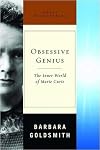
Starts off well, but author Barbara Goldsmith quickly gets in over her head. This is one of a series on great scientific discoveries; the editors made an idiosyncratic choice of Goldsmith, a best-selling and well regarded biographer but with no discernible scientific background, to do a life of Marie Curie. The result tells a lot about Marie Curie as a person, but it could have just as easily been about a great artist or a great writer overcoming adversity rather than a great scientist doing show more the same. Goldsmith spends a lot of time telling us how rough Curie’s early life was – and it was – and how much prejudice there was against her as woman – and there was – but not enough about what she did. Thus we get the trials of growing up in Russian-dominated Poland, living in a garret in Paris while attending the Sorbonne, working in a laboratory not much better than a cow barn, grudgingly bestowed awards, loss of the love of her life, difficulties with the establishment, alienation from her children, and unpleasant death from the side of effects of her work. And, oh yeah, that radium stuff.
Even when there is some scientific detail, it’s not all that appropriate. There’s a discussion – including a line drawing – of a Curie electrometer, but the main emphasis is on how difficult it was to operate, as if Marie Curie’s principal genius was manual dexterity. (I will mention one thing that really impressed me – Marie Curie may be the only person who ever saw, or who ever will see, radium. Not a radium compound or a radium spectroscopic line, but actual radium metal – she prepared a miniscule sample apparently just to show that she could. Magnificent).
Don’t get me wrong; Marie Curie wins the race for greatest scientist with the roughest life in a walk. But I fear the message here is wrong – it’s if you want to be a scientist you’ll have to overcome prejudice against you race or gender or ethnicity, you’ll have to deal with disrespect from the public and your peers and the Establishment, and you’ll risk alienating your family and friends. What the message should be is that if you want to be a scientist it will be so fascinating you won’t even notice the other stuff. show less
Even when there is some scientific detail, it’s not all that appropriate. There’s a discussion – including a line drawing – of a Curie electrometer, but the main emphasis is on how difficult it was to operate, as if Marie Curie’s principal genius was manual dexterity. (I will mention one thing that really impressed me – Marie Curie may be the only person who ever saw, or who ever will see, radium. Not a radium compound or a radium spectroscopic line, but actual radium metal – she prepared a miniscule sample apparently just to show that she could. Magnificent).
Don’t get me wrong; Marie Curie wins the race for greatest scientist with the roughest life in a walk. But I fear the message here is wrong – it’s if you want to be a scientist you’ll have to overcome prejudice against you race or gender or ethnicity, you’ll have to deal with disrespect from the public and your peers and the Establishment, and you’ll risk alienating your family and friends. What the message should be is that if you want to be a scientist it will be so fascinating you won’t even notice the other stuff. show less
Other powers : the age of suffrage, spiritualism, and the scandalous Victoria Woodhull by Barbara Goldsmith
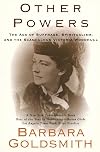
This book taught me a lot about a period of post-Civil War society I knew very little about. I had read about the suffragettes and how they divided over whether to support black suffrage unaccompanied by female suffrage. But I never knew much about the personal relationships and spiritual ideas that motivated and inspired them, and about how their hypocrisies set their cause back an entire generation. Woodhull is a fascinating character, in some ways a throwback to the Great Awakening, in show more others a rebel against Victorian conservatism. Henry Ward Beecher emerges as the great viilian of the period. show less
Lists
Awards


You May Also Like


Associated Authors
Statistics
- Works
- 7
- Also by
- 2
- Members
- 1,121
- Popularity
- #22,921
- Rating
- 3.8
- Reviews
- 22
- ISBNs
- 40
- Languages
- 6