

Catherine Clinton
Author of Harriet Tubman: The Road to Freedom
About the Author
Catherine Clinton is the author of Harriet Tubman: The Road to Freedom and Fanny Kemble's Civil Wars. Educated at Harvard, Sussex, and Princeton, She is a member of the advisory committee to the Abraham Lincoln Bicentennial Commission, and holds a chair in U.S. history at Queen's University Belfast.
Image credit: Catherine Clinton
Works by Catherine Clinton
Fanny Kemble's Civil War: The Story of America's Most Unlikely Abolitionist (2000) 126 copies, 1 review
Stepdaughters of History: Southern Women and the American Civil War (Walter Lynwood Fleming Lectures in Southern History) (2016) 13 copies
Women in Slavery: Selections from her Journal of Residence on a Georgian Plantation, 1838-1839 (2012) — Editor — 3 copies
Associated Works
Reminiscences of My Life in Camp with the 33d United States Colored Troops (1988) — Introduction, some editions — 185 copies, 4 reviews
Forgotten Heroes: Inspiring American Portraits from Our Leading Historians (1999) — Contributor — 124 copies, 1 review
The Women's War in the South: Recollections and Reflections of the American Civil War (1999) — Introduction — 47 copies, 1 review
Manners and southern history essays by Catherine Clinton ... [et al.] (2007) — Contributor — 4 copies
Cultural correspondence : No. 9 Sex roles & humor — Contributor — 1 copy
Tagged
Common Knowledge
- Canonical name
- Clinton, Catherine
- Other names
- Colbert, C.C.
- Birthdate
- 1952-04-05
- Gender
- female
- Education
- Princeton University (PhD|1980)
University of Sussex, (M.A.|1974)
Harvard University (A.B.|1973) - Occupations
- historian
professor - Organizations
- University of Texas at San Antonio
Queen's University, Belfast
Abraham Lincoln Presidential Bicentennial Commission
Civil War History
Civil War Times
The President’s Cottage and Soldier's Home (show all 14)
Ford’s Theatre
Southern Association for Women Historians
Southern Association for Women Historians
Society of Civil War Historians
Biography International Organization
British Early American History Group
Historians of the Contemporary United States (UK)
British Association of Nineteenth Century Historians - Awards and honors
- Fleming Lectures, Louisiana State University (2012)
Society of American Historians
British Academy Award (2007)
Southern Historical Association
Pulitzer Prize: Biography Jury Chair (1993)
Pulitzer Prize: History Jury (1986) (show all 18)
Frank Klement Lecture (1999-2000)
Francis Parkman Prize Committee (1991)
Lincoln Prize Jury (1995)
Averitt Lectures, Georgia State College (1996)
President of Southern Association for Women Historians (1997-98)
Alex W. Bealer Prize, Atlanta Historical Society (1998)
Bank Street Poetry Prize, Bank Street College of Education (1998)
Fellowship: National Endowment for the Humanities (2002-2003)
Biographers International Organization; founding meeting at City University of New York (March 26, 2009) Study Leader of Smithsonian Journey: “Lost Worlds, The American South Past and Present,” 2003, 2004, 2005 & 2006 Gilder Lehrman Summer Institute, NYU University, July 2004 & 2005; Seminar Leader: “Freedom” (March 26 ∙ 2009)
Biographers International Organization, 1st International Conference, Boston ( [2010])
udy Leader of Smithsonian Journey: “Lost Worlds, The American South Past and Present,” (2003, 2004, 2005 & 2006) Gilder Lehrman Summer Institute, NYU University, July 2004 & 2005; Seminar Leader: “Freedom” (2003 ∙ 2004 ∙ [2005, 2006])
Gilder Lehrman Summer Institute, NYU University; Seminar Leader: “Freedom” ( [2004, 2005]) - Agent
- Kristine Dahl (International Creative Management)
- Nationality
- USA
- Associated Place (for map)
- USA
Members
Reviews
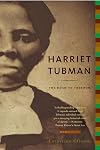
(Reprinted from the Chicago Center for Literature and Photography [cclapcenter.com]. I am the original author of this essay, as well as the owner of CCLaP; it is not being reprinted illegally.)
(UPDATE: Since writing this review, I've learned that US Treasury Secretary Jacob Lew specifically mentioned this book as one of the big reasons his department chose Tubman for the new face of the twenty-dollar bill, high praise indeed for this decade-plus-old volume.)
Like many Americans, when it was show more announced this year that Harriet Tubman would be the new face of the twenty-dollar bill, I realized with a bit of shame that I didn't actually know anything about Harriet Tubman, minus the half a day in fourth grade when we learned in public school that she had had something to do with the Civil War; and so to rectify this fact before the release of the new currency, I recently picked up Catherine Clinton's 2004 biography of Tubman (amazingly, one of the only Tubman bios expressly for grown-ups ever written in the entirety of history), where I learned that Harriet Tubman was actually a badass who more than earned her right to be on the twenty-dollar bill, especially poignant because she so thoroughly embodies the stubborn, resilient, libertarian mythos of America that Americans so enjoy projecting onto ourselves.
Born a slave in the deep South in the 1820s, Tubman essentially ran away to freedom in her twenties, but this wasn't enough for her; she eventually became one of the only black women ever involved with the famed "Underground Railroad" of the pre-Civil War era, a guerrilla fighter who made rescue missions back into the South at least once a year all the way until the Emancipation Proclamation, doing such smart things as scheduling her raids in the middle of the winter so that as few of the fat, lazy racists down there would want to bother chasing her, and starting fugitive slave flights on Saturday nights, since at the time it was a law that slaves got Sundays off to go to church, which meant that masters would not realize the slaves were missing until Monday morning, and so were not able to get a notice in the local paper about it until Tuesday morning, long after Tubman and her party were gone. This made her singlehandedly responsible for rescuing literally hundreds of former slaves in the years before the Civil War; then when the war actually happened, she became a secret freaking agent for the Union army, using her skills in stealth and intel gathering to give detailed reports to generals about the size and location of Confederate troops they were about to launch attacks on, turning all the battles she was a part of into routs which Union forces overwhelming won with almost no casualties at all. And all of this, mind you, happened before Tubman had even turned forty; then she managed to live for another half-century after all this, becoming the revered civil-rights leader and national hero that she deserved to be honored as.
Make no mistake, Tubman suffered the kinds of Reconstruction-era indignities that all black people did in the years after the war, including it taking literally decades to get the proper compensation from the US government for her wartime activities that she had earned (and had deferred at the time so that the army could buy more supplies and medicine); and her life was not without its own controversies either, including a mysterious young woman in her life who may or may not have been an illegitimate daughter sired from a white father, her public snubbing of Abraham Lincoln during the war for being "soft on abolition," as well as Tubman's full public embrace of avowed terrorist John Brown, to the extent of Brown eventually referring to her as "General Tubman" in his talks about his coming war against the US government. But all that said, it's hard to imagine a more apt person to be brought to the forefront of the US consciousness right now in this newest low point of race relations, a woman who is well worth taking the time to know and understand. This bio is a great place to start, and it comes recommended to those like me who barely know anything about who Tubman was or why you're going to be seeing a lot more of her starting next year. show less
(UPDATE: Since writing this review, I've learned that US Treasury Secretary Jacob Lew specifically mentioned this book as one of the big reasons his department chose Tubman for the new face of the twenty-dollar bill, high praise indeed for this decade-plus-old volume.)
Like many Americans, when it was show more announced this year that Harriet Tubman would be the new face of the twenty-dollar bill, I realized with a bit of shame that I didn't actually know anything about Harriet Tubman, minus the half a day in fourth grade when we learned in public school that she had had something to do with the Civil War; and so to rectify this fact before the release of the new currency, I recently picked up Catherine Clinton's 2004 biography of Tubman (amazingly, one of the only Tubman bios expressly for grown-ups ever written in the entirety of history), where I learned that Harriet Tubman was actually a badass who more than earned her right to be on the twenty-dollar bill, especially poignant because she so thoroughly embodies the stubborn, resilient, libertarian mythos of America that Americans so enjoy projecting onto ourselves.
Born a slave in the deep South in the 1820s, Tubman essentially ran away to freedom in her twenties, but this wasn't enough for her; she eventually became one of the only black women ever involved with the famed "Underground Railroad" of the pre-Civil War era, a guerrilla fighter who made rescue missions back into the South at least once a year all the way until the Emancipation Proclamation, doing such smart things as scheduling her raids in the middle of the winter so that as few of the fat, lazy racists down there would want to bother chasing her, and starting fugitive slave flights on Saturday nights, since at the time it was a law that slaves got Sundays off to go to church, which meant that masters would not realize the slaves were missing until Monday morning, and so were not able to get a notice in the local paper about it until Tuesday morning, long after Tubman and her party were gone. This made her singlehandedly responsible for rescuing literally hundreds of former slaves in the years before the Civil War; then when the war actually happened, she became a secret freaking agent for the Union army, using her skills in stealth and intel gathering to give detailed reports to generals about the size and location of Confederate troops they were about to launch attacks on, turning all the battles she was a part of into routs which Union forces overwhelming won with almost no casualties at all. And all of this, mind you, happened before Tubman had even turned forty; then she managed to live for another half-century after all this, becoming the revered civil-rights leader and national hero that she deserved to be honored as.
Make no mistake, Tubman suffered the kinds of Reconstruction-era indignities that all black people did in the years after the war, including it taking literally decades to get the proper compensation from the US government for her wartime activities that she had earned (and had deferred at the time so that the army could buy more supplies and medicine); and her life was not without its own controversies either, including a mysterious young woman in her life who may or may not have been an illegitimate daughter sired from a white father, her public snubbing of Abraham Lincoln during the war for being "soft on abolition," as well as Tubman's full public embrace of avowed terrorist John Brown, to the extent of Brown eventually referring to her as "General Tubman" in his talks about his coming war against the US government. But all that said, it's hard to imagine a more apt person to be brought to the forefront of the US consciousness right now in this newest low point of race relations, a woman who is well worth taking the time to know and understand. This bio is a great place to start, and it comes recommended to those like me who barely know anything about who Tubman was or why you're going to be seeing a lot more of her starting next year. show less

https://fromtheheartofeurope.eu/fanny-kembles-civil-wars-by-catherine-clinton/
As my regular reader knows, I am fascinated by the nineteenth century actress and writer Fanny Kemble. I first encountered her witnessing the first ever fatal train accident, and then read her controversial memoir of living as the wife of a Georgian plantation owner in the 1830s. She seems a really attractive character, and my problem has been that none of the books I had previously read about her grasps the whole show more of her personality and career; Fanny Kemble: A Performed Life, by Deirdre David, concentrates on her theatrical activity and aspirations; Fanny Kemble and the lovely land, by Constance Wright, emphasises the American part of her life; and Fanny Kemble: The Reluctant Celebrity, by Rebecca Jenkins, is just poorly written.
To refresh your memory, when Fanny Kemble was born in 1809, her father’s family completely dominated the British theatre world; her aunt was the famous actress Sarah Siddons, the oldest of a dozen Kemble siblings who all went into show business. The family fell on hard times in the 1820s and ruthlessly marketed her as Juliet, both in London and in North America. She married a charming American in 1834, but discovered that the foundation of his wealth was slavery; they separated and eventually divorced. Her ex-husband also fell on hard times and auctioned off 436 slaves, the largest slave auction in American history, in 1859. Her book about life on the plantation, based on letters written in 1838-39, was published in 1862 and effectively deterred British sympathy for the Confederacy. She returned to London in 1877 and lived there for the rest of her life, performing on stage occasionally, but usually doing solo readings (she was clearly very good at it). She died in 1893.
I’m glad to say that I’ve finally found a book about her that I can recommend to the curious. Like Constance Wright, Catherine Clinton in Fanny Kemble’s Civil Wars concentrates on her American experience, but gives a lot more context and depth, and gives due regard to the English parts of her life. (We think of her as English, but her mother was born in Vienna to a Swiss mother and French father.) She does not shy away from the political side of Kemble’s life, and it’s made clear that a large part of what drove her was determination to improve the situation of women (though she rejects “organised feminism” on page 235). As I mentioned in one of my previous reviews, while audiences (and her husband) loved to see her as Juliet, her favourite Shakespeare character was Portia. (Merchant of Venice Portia, not Brutus’ wife in Julius Caesar.)
Clinton also adds much more about Kemble’s family than I think I had seen before. The fact that her favourite aunt died as the result of a coach accident soon after they had arrived together in America must have resonated profoundly for her. Clinton also traces her and her siblings’ descendants in America – her two daughters were estranged to different degrees by their parents’ bitter separation, and ended up basically on opposite sides in the Civil War; in 1874, her English nephew married the daughter of the President of the United States in a ceremony at the White House.
Due to my interest in Doctor Who, I’ve read a fair number of showbiz memoirs, and I have come to the conclusion that most actors are interested in themselves and in acting, usually in that order, and in not much else. I think it’s appropriate that Clinton treats Kemble’s theatrical career as of secondary importance to her writing and her activism. Although Kemble is always remembered as an actress, in fact she spent only five years out of her eighty-four as a regular performer in plays; but she leveraged the reputation that she had earned for the rest of her career. (And the revenue from her later solo readings cannot have done her any harm.) She enlivened a rich life experience by writing well, and I should start reading some more of her original work. show less
As my regular reader knows, I am fascinated by the nineteenth century actress and writer Fanny Kemble. I first encountered her witnessing the first ever fatal train accident, and then read her controversial memoir of living as the wife of a Georgian plantation owner in the 1830s. She seems a really attractive character, and my problem has been that none of the books I had previously read about her grasps the whole show more of her personality and career; Fanny Kemble: A Performed Life, by Deirdre David, concentrates on her theatrical activity and aspirations; Fanny Kemble and the lovely land, by Constance Wright, emphasises the American part of her life; and Fanny Kemble: The Reluctant Celebrity, by Rebecca Jenkins, is just poorly written.
To refresh your memory, when Fanny Kemble was born in 1809, her father’s family completely dominated the British theatre world; her aunt was the famous actress Sarah Siddons, the oldest of a dozen Kemble siblings who all went into show business. The family fell on hard times in the 1820s and ruthlessly marketed her as Juliet, both in London and in North America. She married a charming American in 1834, but discovered that the foundation of his wealth was slavery; they separated and eventually divorced. Her ex-husband also fell on hard times and auctioned off 436 slaves, the largest slave auction in American history, in 1859. Her book about life on the plantation, based on letters written in 1838-39, was published in 1862 and effectively deterred British sympathy for the Confederacy. She returned to London in 1877 and lived there for the rest of her life, performing on stage occasionally, but usually doing solo readings (she was clearly very good at it). She died in 1893.
I’m glad to say that I’ve finally found a book about her that I can recommend to the curious. Like Constance Wright, Catherine Clinton in Fanny Kemble’s Civil Wars concentrates on her American experience, but gives a lot more context and depth, and gives due regard to the English parts of her life. (We think of her as English, but her mother was born in Vienna to a Swiss mother and French father.) She does not shy away from the political side of Kemble’s life, and it’s made clear that a large part of what drove her was determination to improve the situation of women (though she rejects “organised feminism” on page 235). As I mentioned in one of my previous reviews, while audiences (and her husband) loved to see her as Juliet, her favourite Shakespeare character was Portia. (Merchant of Venice Portia, not Brutus’ wife in Julius Caesar.)
Clinton also adds much more about Kemble’s family than I think I had seen before. The fact that her favourite aunt died as the result of a coach accident soon after they had arrived together in America must have resonated profoundly for her. Clinton also traces her and her siblings’ descendants in America – her two daughters were estranged to different degrees by their parents’ bitter separation, and ended up basically on opposite sides in the Civil War; in 1874, her English nephew married the daughter of the President of the United States in a ceremony at the White House.
Due to my interest in Doctor Who, I’ve read a fair number of showbiz memoirs, and I have come to the conclusion that most actors are interested in themselves and in acting, usually in that order, and in not much else. I think it’s appropriate that Clinton treats Kemble’s theatrical career as of secondary importance to her writing and her activism. Although Kemble is always remembered as an actress, in fact she spent only five years out of her eighty-four as a regular performer in plays; but she leveraged the reputation that she had earned for the rest of her career. (And the revenue from her later solo readings cannot have done her any harm.) She enlivened a rich life experience by writing well, and I should start reading some more of her original work. show less
If you’re anything like me, you think you already know most of Harriet Tubman’s story. But—again, if you’re anything like me—you don’t.
What an incredible life, and what an underrated legacy. I think we often tend to relegate Tubman to the status of a fable for children, sort of a vague “Wasn’t she brave?” myth, but that drastically undersells her biography. Even the recent film about her, which took plenty of liberties to make the story more accessible and romantic (in the show more literary sense), doesn’t fully expose the steely determination that must have driven this woman on. There are at least half a dozen points in her life when she could have simply stopped, never done another thing, and still been one of the most impressive individuals in American history. And then, at each such point, she went on to do much more.
To be honest, I wasn’t expecting much when I began reading this book with my pre-teen daughter. As Clinton points out, Tubman’s role as “one of the most popular heroines of the elementary school set” has really limited our sense of her full story, and I’ve been as prone to that as anyone. Really glad I picked up a biography of her, and glad that it turned out to be as good as it is. Truthfully, there are few books I would recommend more highly. More people need to know this history, and Clinton’s telling of it is a compelling and enjoyable read. show less
What an incredible life, and what an underrated legacy. I think we often tend to relegate Tubman to the status of a fable for children, sort of a vague “Wasn’t she brave?” myth, but that drastically undersells her biography. Even the recent film about her, which took plenty of liberties to make the story more accessible and romantic (in the show more literary sense), doesn’t fully expose the steely determination that must have driven this woman on. There are at least half a dozen points in her life when she could have simply stopped, never done another thing, and still been one of the most impressive individuals in American history. And then, at each such point, she went on to do much more.
To be honest, I wasn’t expecting much when I began reading this book with my pre-teen daughter. As Clinton points out, Tubman’s role as “one of the most popular heroines of the elementary school set” has really limited our sense of her full story, and I’ve been as prone to that as anyone. Really glad I picked up a biography of her, and glad that it turned out to be as good as it is. Truthfully, there are few books I would recommend more highly. More people need to know this history, and Clinton’s telling of it is a compelling and enjoyable read. show less
Review of: Harriet Tubman: The Road to Freedom, by Catherine Clinton
by Stan Prager (7-16-23)
In 2016, Jack Lew, President Obama’s treasury secretary, announced a redesign of the twenty-dollar bill that would feature on its front a likeness of Harriet Tubman, arguably the most significant African American female of the Civil War era, while displacing Andrew Jackson, who not only owned slaves but championed the institution of human chattel slavery, and was likewise a driving force behind the show more Indian Removal Act, one of the most shameful episodes in our national saga. Immediate controversy ensued, which was ratcheted up when Donald Trump stepped into the White House. Many have correctly styled Trump as having almost no sense of history, but he did seem to have had a kind of boyhood crush on Jackson, who like Trump did whatever he liked with little regard for the consequences to others, especially the weak and powerless. Trump relocated a portrait of Jackson to a position of prominence in the Oval Office, and his new treasury secretary postponed the currency redesign, almost certainly an echo of Trump’s campaign grievance that putting Tubman on the bill was nothing but “pure political correctness.” Meanwhile, resistance on the left grew, as well, as many pointed to the disrespect of putting the face of one who was formerly enslaved on legal tender that is a direct descendant of that once used to buy and sell human beings. Then there is the paradox in the redesign that puts Tubman on the obverse while maintaining Jackson’s presence on the reverse side of the bill, perhaps reflecting with a dose of disturbing irony the glaring sense of polarization that manifests the national character these days, much as it did in Tubman’s time. Still, the Biden Administration has pledged to accelerate the pace of issuing the new currency, but there remains no sign that anyone will be buying groceries with Tubman twenties anytime soon. We can only imagine what Harriet Tubman, who was illiterate and lived most of her life in poverty, would make of all this!
A dozen years before all this hoopla over who will adorn the paper money, acclaimed historian Catherine Clinton published Harriet Tubman: The Road to Freedom [2004], a well-written, engaging study that turns out to be one of a string of books on Tubman to hit the press nearly at the same—the others are by Kate Larson and Jean Humez—which collectively represented the first scholarly biographies of her life in more than six decades. (There have since been additional contributions to the historiography.) Surprisingly, Tubman proves a tough subject to chronicle: a truly larger-than-life heroic figure who can be credited with verifiable exploits to free the enslaved both before and during the Civil War—admirers nicknamed her “Moses” for her role in spiriting fugitives to freedom, and she was later dubbed “General” by John Brown—her achievements have also long been distorted by myth and embellishment, something nourished early on by a subjective biography of sorts by her friend Sarah Bradford that is said to play loose with facts and events. Then there is the challenge in fashioning an accurate account of someone who spent much of her consequential years living in the shadows, both by the circumstance of anonymity imposed by her condition of enslavement, as well as the deliberate effort to wear a mask of invisibility by one operating outside the law where the penalty for detection would be a return to slavery or, much more likely, death. For the historian, that translates into a delicate—and precarious—balancing act.
Clinton’s approach is to recreate Tubman’s life as close to the colorful adventure it certainly was, without falling victim to sensationalism. She relies on scholarship to sketch the skeletal framework for Tubman’s life, then turns to a variety of sources and reports to put flesh upon it, sharing with the reader when she resorts to surmise to shade aspects of the complexion. In this effort, she largely succeeds.
Born Araminta Ross in Maryland in perhaps 1822—like many of the enslaved she could only guess at her date of birth—Tubman survived an especially brutal upbringing in bondage that witnessed family members sold, a series of vicious beatings and whippings, and a severe head injury incurred in adolescence when a heavy metal weight tossed by an overseer at another struck her instead, which left her with a lingering dizziness, headaches, seizures, and what was likely chronic hypersomnia, a neurological disorder of excessive sleepiness. It also spawned vivid dreams and visions that reinforced religious convictions that God was communicating with her. By then, she was no stranger to physical abuse. Tubman was first hired out as a nursemaid when she herself was only about five years old, responsible for rocking a baby while it slept. If the baby woke and cried she was lashed as punishment. She recalled once being whipped five times before breakfast. She was left scarred for life. Tubman’s experiences serve as a strong rebuke to those deluded by “Lost Cause” narratives that would cast antebellum slavery as a benign institution.
Despite her harsh treatment at the hands of various enslavers, Tubman proved strong and resilient. Rather than break her, the cruelties she endured galvanized her, sustained by a religious devotion infused with Old Testament promises of deliverance. Still enslaved, she married John Tubman, a free black man, and changed her first name to Harriet shortly thereafter. When she fled to freedom in Philadelphia a few short years later, he did not accompany her. Tubman’s journey out of slavery was enabled by the so-called “Underground Railroad,” a route of safehouses hosted by sympathetic abolitionists and their allies.
For most runaways, that would be the end of the story, but for Tubman it proved just the beginning. Committed to liberating her family and friends, Tubman covertly made more than a dozen missions back to Maryland over a period of eight years and ultimately rescued some seventy individuals, while also confiding escape methods to dozens of others who successfully absconded. In the process, as Clinton points out, she leapfrogged from the role as a “conductor” on the Underground Railroad to an “abductor.” Now known to many as Moses, she was a master of disguise and subterfuge; the illiterate Tubman once famously pretended to read a newspaper in order to avoid detection. To those who knew her, she seemed to be utterly fearless. She carried a pistol, not only to defend herself against slavecatchers if needed, but also to threaten the fainthearted fugitive who entertained notions of turning back. She never lost a passenger.
At the same time, Harriet actively campaigned for abolition, which brought her into the orbit of John Brown, who dubbed her “General Tubman.” Unlike other antislavery allies, she concurred with his advocacy for armed insurrection, and she proved a valuable resource for him with her detailed knowledge of support networks in border states. Brown’s raid on Harper’s Ferry was, of course, a failure, and Brown was hanged, but her admiration for the man never diminished. With the onset of the Civil War, Tubman volunteered to help “contrabands” living in makeshift refugee camps, and also served as a nurse before immersing herself in intelligence-gathering activities. Most spectacularly, Tubman led an expedition of United States Colored Troops (USCT) on the remarkable 1863 Combahee River Raid in South Carolina that freed 750 of the formerly enslaved—then recruited more than 100 of them to enlist to fight for Union. She is thus credited as the first woman to lead American forces in combat! She was even involved with Colonel Robert Gould Shaw in his preparations for the assault on Fort Wagner, later dramatized in the film Glory. When the war ended, Tubman went on to lobby for women’s suffrage, and died in her nineties in 1913—the end of a life that was given to legend because so very much of it more closely resembled imagined epic than authentic experience.
In this biography, Clinton the historian wrestles against the myth, yet sometimes seems seduced by it. She reports claims of the numbers of the enslaved Tubman liberated that seem exaggerated, and references enormous sums slaveowners offered as reward for her capture that defy documented evidence. There’s also a couple of egregious factual errors that any student of the Civil War would stumble upon with mouth agape: she misidentifies the location of the battle of Shiloh from Tennessee to Virginia, and declares Delaware a free state, which would have been a surprise to the small but yet enduring population of the enslaved that lived there. For these blunders, I am inclined to give Clinton the benefit of the doubt; she is an esteemed scholar who likely relied on a lousy editor. Perhaps these mistakes have been corrected in later editions.
In June 2023, shortly after I read this volume, I had the pleasure to sit in on Catherine Clinton’s lecture on the life of Harriet Tubman at the Civil War Institute (CWI) Summer Conference at Gettysburg College. Unlike all too many academics, Clinton is hardly dull on stage, and her presentation was as lively and colorful as her subject certainly must have been in the days when she walked the earth. During a tangent that drifted to the currency controversy, she noted that one of the more superficial objections to the rebranding of the twenty was that there are no existing images of Tubman smiling, something Clinton—grinning mischievously—reminded the audience should hardly be surprising since Harriet once dealt with a toothache while smuggling human beings out of bondage by knocking her own tooth out with her pistol, an episode recounted in the book, as well. Harriet Tubman’s life was an extraordinary one. If you want to learn more, pick up Clinton’s book.
I reviewed an earlier book by Clinton here: Review of: Tara Revisited: Women, War & The Plantation Legend, by Catherine Clinton
Review of: Harriet Tubman: The Road to Freedom, by Catherine Clinton – Regarp Book Blog https://regarp.com/2023/07/16/review-of-harriet-tubman-the-road-to-freedom-by-ca... show less
by Stan Prager (7-16-23)
In 2016, Jack Lew, President Obama’s treasury secretary, announced a redesign of the twenty-dollar bill that would feature on its front a likeness of Harriet Tubman, arguably the most significant African American female of the Civil War era, while displacing Andrew Jackson, who not only owned slaves but championed the institution of human chattel slavery, and was likewise a driving force behind the show more Indian Removal Act, one of the most shameful episodes in our national saga. Immediate controversy ensued, which was ratcheted up when Donald Trump stepped into the White House. Many have correctly styled Trump as having almost no sense of history, but he did seem to have had a kind of boyhood crush on Jackson, who like Trump did whatever he liked with little regard for the consequences to others, especially the weak and powerless. Trump relocated a portrait of Jackson to a position of prominence in the Oval Office, and his new treasury secretary postponed the currency redesign, almost certainly an echo of Trump’s campaign grievance that putting Tubman on the bill was nothing but “pure political correctness.” Meanwhile, resistance on the left grew, as well, as many pointed to the disrespect of putting the face of one who was formerly enslaved on legal tender that is a direct descendant of that once used to buy and sell human beings. Then there is the paradox in the redesign that puts Tubman on the obverse while maintaining Jackson’s presence on the reverse side of the bill, perhaps reflecting with a dose of disturbing irony the glaring sense of polarization that manifests the national character these days, much as it did in Tubman’s time. Still, the Biden Administration has pledged to accelerate the pace of issuing the new currency, but there remains no sign that anyone will be buying groceries with Tubman twenties anytime soon. We can only imagine what Harriet Tubman, who was illiterate and lived most of her life in poverty, would make of all this!
A dozen years before all this hoopla over who will adorn the paper money, acclaimed historian Catherine Clinton published Harriet Tubman: The Road to Freedom [2004], a well-written, engaging study that turns out to be one of a string of books on Tubman to hit the press nearly at the same—the others are by Kate Larson and Jean Humez—which collectively represented the first scholarly biographies of her life in more than six decades. (There have since been additional contributions to the historiography.) Surprisingly, Tubman proves a tough subject to chronicle: a truly larger-than-life heroic figure who can be credited with verifiable exploits to free the enslaved both before and during the Civil War—admirers nicknamed her “Moses” for her role in spiriting fugitives to freedom, and she was later dubbed “General” by John Brown—her achievements have also long been distorted by myth and embellishment, something nourished early on by a subjective biography of sorts by her friend Sarah Bradford that is said to play loose with facts and events. Then there is the challenge in fashioning an accurate account of someone who spent much of her consequential years living in the shadows, both by the circumstance of anonymity imposed by her condition of enslavement, as well as the deliberate effort to wear a mask of invisibility by one operating outside the law where the penalty for detection would be a return to slavery or, much more likely, death. For the historian, that translates into a delicate—and precarious—balancing act.
Clinton’s approach is to recreate Tubman’s life as close to the colorful adventure it certainly was, without falling victim to sensationalism. She relies on scholarship to sketch the skeletal framework for Tubman’s life, then turns to a variety of sources and reports to put flesh upon it, sharing with the reader when she resorts to surmise to shade aspects of the complexion. In this effort, she largely succeeds.
Born Araminta Ross in Maryland in perhaps 1822—like many of the enslaved she could only guess at her date of birth—Tubman survived an especially brutal upbringing in bondage that witnessed family members sold, a series of vicious beatings and whippings, and a severe head injury incurred in adolescence when a heavy metal weight tossed by an overseer at another struck her instead, which left her with a lingering dizziness, headaches, seizures, and what was likely chronic hypersomnia, a neurological disorder of excessive sleepiness. It also spawned vivid dreams and visions that reinforced religious convictions that God was communicating with her. By then, she was no stranger to physical abuse. Tubman was first hired out as a nursemaid when she herself was only about five years old, responsible for rocking a baby while it slept. If the baby woke and cried she was lashed as punishment. She recalled once being whipped five times before breakfast. She was left scarred for life. Tubman’s experiences serve as a strong rebuke to those deluded by “Lost Cause” narratives that would cast antebellum slavery as a benign institution.
Despite her harsh treatment at the hands of various enslavers, Tubman proved strong and resilient. Rather than break her, the cruelties she endured galvanized her, sustained by a religious devotion infused with Old Testament promises of deliverance. Still enslaved, she married John Tubman, a free black man, and changed her first name to Harriet shortly thereafter. When she fled to freedom in Philadelphia a few short years later, he did not accompany her. Tubman’s journey out of slavery was enabled by the so-called “Underground Railroad,” a route of safehouses hosted by sympathetic abolitionists and their allies.
For most runaways, that would be the end of the story, but for Tubman it proved just the beginning. Committed to liberating her family and friends, Tubman covertly made more than a dozen missions back to Maryland over a period of eight years and ultimately rescued some seventy individuals, while also confiding escape methods to dozens of others who successfully absconded. In the process, as Clinton points out, she leapfrogged from the role as a “conductor” on the Underground Railroad to an “abductor.” Now known to many as Moses, she was a master of disguise and subterfuge; the illiterate Tubman once famously pretended to read a newspaper in order to avoid detection. To those who knew her, she seemed to be utterly fearless. She carried a pistol, not only to defend herself against slavecatchers if needed, but also to threaten the fainthearted fugitive who entertained notions of turning back. She never lost a passenger.
At the same time, Harriet actively campaigned for abolition, which brought her into the orbit of John Brown, who dubbed her “General Tubman.” Unlike other antislavery allies, she concurred with his advocacy for armed insurrection, and she proved a valuable resource for him with her detailed knowledge of support networks in border states. Brown’s raid on Harper’s Ferry was, of course, a failure, and Brown was hanged, but her admiration for the man never diminished. With the onset of the Civil War, Tubman volunteered to help “contrabands” living in makeshift refugee camps, and also served as a nurse before immersing herself in intelligence-gathering activities. Most spectacularly, Tubman led an expedition of United States Colored Troops (USCT) on the remarkable 1863 Combahee River Raid in South Carolina that freed 750 of the formerly enslaved—then recruited more than 100 of them to enlist to fight for Union. She is thus credited as the first woman to lead American forces in combat! She was even involved with Colonel Robert Gould Shaw in his preparations for the assault on Fort Wagner, later dramatized in the film Glory. When the war ended, Tubman went on to lobby for women’s suffrage, and died in her nineties in 1913—the end of a life that was given to legend because so very much of it more closely resembled imagined epic than authentic experience.
In this biography, Clinton the historian wrestles against the myth, yet sometimes seems seduced by it. She reports claims of the numbers of the enslaved Tubman liberated that seem exaggerated, and references enormous sums slaveowners offered as reward for her capture that defy documented evidence. There’s also a couple of egregious factual errors that any student of the Civil War would stumble upon with mouth agape: she misidentifies the location of the battle of Shiloh from Tennessee to Virginia, and declares Delaware a free state, which would have been a surprise to the small but yet enduring population of the enslaved that lived there. For these blunders, I am inclined to give Clinton the benefit of the doubt; she is an esteemed scholar who likely relied on a lousy editor. Perhaps these mistakes have been corrected in later editions.
In June 2023, shortly after I read this volume, I had the pleasure to sit in on Catherine Clinton’s lecture on the life of Harriet Tubman at the Civil War Institute (CWI) Summer Conference at Gettysburg College. Unlike all too many academics, Clinton is hardly dull on stage, and her presentation was as lively and colorful as her subject certainly must have been in the days when she walked the earth. During a tangent that drifted to the currency controversy, she noted that one of the more superficial objections to the rebranding of the twenty was that there are no existing images of Tubman smiling, something Clinton—grinning mischievously—reminded the audience should hardly be surprising since Harriet once dealt with a toothache while smuggling human beings out of bondage by knocking her own tooth out with her pistol, an episode recounted in the book, as well. Harriet Tubman’s life was an extraordinary one. If you want to learn more, pick up Clinton’s book.
I reviewed an earlier book by Clinton here: Review of: Tara Revisited: Women, War & The Plantation Legend, by Catherine Clinton
Review of: Harriet Tubman: The Road to Freedom, by Catherine Clinton – Regarp Book Blog https://regarp.com/2023/07/16/review-of-harriet-tubman-the-road-to-freedom-by-ca... show less
Lists
Awards


You May Also Like


Associated Authors
Statistics
- Works
- 33
- Also by
- 11
- Members
- 3,020
- Popularity
- #8,453
- Rating
- 3.8
- Reviews
- 92
- ISBNs
- 118
- Languages
- 1
- Favorited
- 2