
Susan Ware
Author of America's History: Since 1865
About the Author
Susan Ware is the author of American Women's History: A Very Short Introduction and Letter to The World: Seven Women Who Shaped the American Century, and the Editor of the Library of America's American Women's Suffrage: Voices From the Long Struggle for the Vote, 1776-1965. She has written many show more women back into history as general editor of the American National Biography. Ware is Honorary Women's Suffrage Centennial Historian at Radcliffe's Schlesinger Library. show less
Works by Susan Ware
Forgotten Heroes: Inspiring American Portraits from Our Leading Historians (1999) — Editor; Contributor — 123 copies, 1 review
American Women's Suffrage: Voices from the Long Struggle for the Vote 1776-1965 (LOA #332) (The Library of America) (2020) 75 copies, 1 review
Notable American Women: A Biographical Dictionary, 5: Completing the Twentieth Century (2005) 37 copies, 1 review
Title IX: A Brief History wtih Documents (The Bedford Series in History And Culture) (2007) 33 copies
Associated Works
Tagged
Common Knowledge
- Birthdate
- 1950
- Gender
- female
- Education
- Wellesley College (BA)
Harvard University (MA, PhD) - Occupations
- historian
Senior Advisor to the Schlesinger Library on the History of Women in America at the Radcliffe Institute for Advanced Study, Harvard University - Nationality
- USA
- Birthplace
- Minneapolis, Minnesota, USA
- Places of residence
- Cambridge, Massachusetts, USA
Hopkinton, New Hampshire, USA - Map Location
- USA
Members
Reviews
American Women's Suffrage: Voices from the Long Struggle for the Vote 1776-1965 (LOA #332) (The Library of America) by Susan Ware
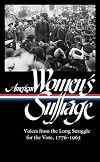
American Women’s Suffrage is the newest edition in the Library of America’s incredible collection of American literature and historical writings. In this collection, advocates and opponents of women’s suffrage from 1776 to 1965 are heard once again. It’s an extensive anthology and took me quite some time to read as I tended to read one or two pieces and then read something else.
We first hear from Abigail Adams as she fruitlessly encouraged her husband to ensure women’s rights. We show more also hear from him citing the still common, and false, assertion that women actually are in charge. “We are the subjects. We have only the Name of Masters, and rather than give up this, which would compleatly subject Us to the Despotism of the Peticoat.” There is, indeed, nothing new under the sun.
The last person we hear from is Fannie Lou Hamer who described how she was dispossessed of her home, arrested, and beaten for registering to vote to the credentials committee of the Democratic National Committee.
In between, many women write of their desire for suffrage, to be full citizens in their country. We hear from Black women organizing and speaking for women’s suffrage even before the Civil War, not just during the Civil Rights Era. This book does an excellent job of restoring women to their place in history. We also hear from the men, the editorials moaning about all the terrible consequences. Seriously, Rush Limbaugh is unimaginative compared to the 1852 “New York Herald.”
American Women’s Suffrage is excellent. It has the comprehensive coverage I expect from the Library of America. It fills in the gaps and erasures in the story of organizing for the vote. In this year where turnout exceeded all expectations in spite of so many things that could have suppressed the vote, it seems an ideal time to study how women won the right to vote.
I received an e-galley of American Women’s Suffrage from NetGalley.
American Women’s Suffrage at the Library of America
Susan Ware author site
https://tonstantweaderreviews.wordpress.com/2021/01/09/9781598536645/ show less
We first hear from Abigail Adams as she fruitlessly encouraged her husband to ensure women’s rights. We show more also hear from him citing the still common, and false, assertion that women actually are in charge. “We are the subjects. We have only the Name of Masters, and rather than give up this, which would compleatly subject Us to the Despotism of the Peticoat.” There is, indeed, nothing new under the sun.
The last person we hear from is Fannie Lou Hamer who described how she was dispossessed of her home, arrested, and beaten for registering to vote to the credentials committee of the Democratic National Committee.
In between, many women write of their desire for suffrage, to be full citizens in their country. We hear from Black women organizing and speaking for women’s suffrage even before the Civil War, not just during the Civil Rights Era. This book does an excellent job of restoring women to their place in history. We also hear from the men, the editorials moaning about all the terrible consequences. Seriously, Rush Limbaugh is unimaginative compared to the 1852 “New York Herald.”
American Women’s Suffrage is excellent. It has the comprehensive coverage I expect from the Library of America. It fills in the gaps and erasures in the story of organizing for the vote. In this year where turnout exceeded all expectations in spite of so many things that could have suppressed the vote, it seems an ideal time to study how women won the right to vote.
I received an e-galley of American Women’s Suffrage from NetGalley.
American Women’s Suffrage at the Library of America
Susan Ware author site
https://tonstantweaderreviews.wordpress.com/2021/01/09/9781598536645/ show less

Review first posted on BookLikes: http://brokentune.booklikes.com/post/922003/game-set-match-billie-jean-king-and-...
Almost exactly a year ago I read and reviewed a little known book written by seven-times Wimbledon champion Dorothea Lambert Chambers on Lawn Tennis for Ladies.
Chambers' book was published in 1910.
It is both remarkable and incredibly sad that Billie Jean King still had to battle with the same (if not worse) sexist bullshit that Chambers tried to fight 50 years earlier, that show more only a few decades ago the idea of women engaging in sports, or even exercise, was a cause of social pariah and in need of justification. There is still a lot of work to be done today for women athletes to be recognised on an equal level as male athletes, but what Ware describes in quite detailed statistics is just incredible: that it took the enactment of Title IX of the Education Amendments of 1972 (in the US) to enable women to receive athletic scholarships from universities and thus a more equal opportunity to access higher education.
The sponsor of the Amendment, Senator Bayh summarised a prevailing attitude towards women in higher education as follows:
"We are all familiar with the stereotype of women as pretty things who go to college to find a husband, go on to graduate school because they want a more interesting husband, and finally marry, have children, and never work again. The desire of many schools not to waste a 'man's place' on a woman stems from such stereotyped notions. But the facts absolutely contradict these myths about the 'weaker sex' and it is time to change our operating assumptions."
So, what has the change in legislation to do with Billie Jean King?
Well, Ware uses the backdrop of social history as a canvas to draw out a biography of Billie Jean King in which the author emphasizes the resistance and sexism King encountered and how she and her husband played a vital role in becoming lobbyists for gender equality in sports.
Ware, in my opinion, is not very successful in combining the two aspects of social and legal history and biography in this book. Apart from Ware's over-emphasis on King's "identity issues" (i.e. her sexuality), the main issue with Ware's attempt - which had me rolling my eyes continuously throughout the book - was that her writing seemed to want to attribute the shift in social attitudes towards women's sports entirely to Billie Jean King. It is only in the closing chapters of the book that Ware pays tribute to other leading athletes and sports promoters who supported the movement for equality.
However, the book is still a fantastic exploration of the legal and social history of the USA, and the aspects of trying to legislate for equality in education. show less
Almost exactly a year ago I read and reviewed a little known book written by seven-times Wimbledon champion Dorothea Lambert Chambers on Lawn Tennis for Ladies.
Chambers' book was published in 1910.
It is both remarkable and incredibly sad that Billie Jean King still had to battle with the same (if not worse) sexist bullshit that Chambers tried to fight 50 years earlier, that show more only a few decades ago the idea of women engaging in sports, or even exercise, was a cause of social pariah and in need of justification. There is still a lot of work to be done today for women athletes to be recognised on an equal level as male athletes, but what Ware describes in quite detailed statistics is just incredible: that it took the enactment of Title IX of the Education Amendments of 1972 (in the US) to enable women to receive athletic scholarships from universities and thus a more equal opportunity to access higher education.
The sponsor of the Amendment, Senator Bayh summarised a prevailing attitude towards women in higher education as follows:
"We are all familiar with the stereotype of women as pretty things who go to college to find a husband, go on to graduate school because they want a more interesting husband, and finally marry, have children, and never work again. The desire of many schools not to waste a 'man's place' on a woman stems from such stereotyped notions. But the facts absolutely contradict these myths about the 'weaker sex' and it is time to change our operating assumptions."
So, what has the change in legislation to do with Billie Jean King?
Well, Ware uses the backdrop of social history as a canvas to draw out a biography of Billie Jean King in which the author emphasizes the resistance and sexism King encountered and how she and her husband played a vital role in becoming lobbyists for gender equality in sports.
Ware, in my opinion, is not very successful in combining the two aspects of social and legal history and biography in this book. Apart from Ware's over-emphasis on King's "identity issues" (i.e. her sexuality), the main issue with Ware's attempt - which had me rolling my eyes continuously throughout the book - was that her writing seemed to want to attribute the shift in social attitudes towards women's sports entirely to Billie Jean King. It is only in the closing chapters of the book that Ware pays tribute to other leading athletes and sports promoters who supported the movement for equality.
However, the book is still a fantastic exploration of the legal and social history of the USA, and the aspects of trying to legislate for equality in education. show less
FORGOTTEN HEROES: INSPIRING AMERICAN PORTRAITS FROM OUR LEADING HISTORIANS (Society of American Historians Book) by Susan Ware
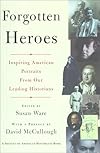
This is an interesting book which covers the lives and historic contributions to American history of some fairly unknown and forgotten people. Most were unknown to me, which is the purpose of reading the book. However, I was distressed that their contribution was actually only covered tangentially in explaining the situation. For example, George Druillard, a member of the Lewis and Clark expedition--most time was spent on L&C, not the subject, George. Good book, though.

Three biographical essays that gave both different facets and different slants. Turns out Earhart was a fascinating woman. The photo section illustrates clearly how hard she worked to maintain her celebrity status so that she could continue to raise money to fly. Recommended to fans of history, feminism, and photojournalism.
Awards


You May Also Like


Associated Authors
Statistics
- Works
- 21
- Also by
- 1
- Members
- 952
- Popularity
- #27,036
- Rating
- 3.7
- Reviews
- 8
- ISBNs
- 79
- Languages
- 1