
Linda K. Kerber
Author of Women's America: Refocusing the Past
About the Author
Linda K. Kerber is May Brodbeck Professor in the Liberal Arts and Professor of History at the University of Iowa Jane Sherron De Hart is Professor of History at the University of California, Santa Barbara.
Image credit: from University of Iowa faculty page
Works by Linda K. Kerber
U.S. History as Women's History: New Feminist Essays (1995) — Editor; Contributor — 68 copies, 1 review
Associated Works
American Quarterly, Vol. 37, No. 4: Republicanism in the History and Historiography of the United States (1985) — Contributor — 2 copies
Tagged
Common Knowledge
- Other names
- Kerber, Linda Kaufman
- Birthdate
- 1940-01-23
- Gender
- female
- Education
- Columbia University (PhD - History)
New York University (MA)
Barnard College (BA)
Forest Hills High School - Occupations
- Liberal Arts professor, University of Iowa
historian
professor (Liberal Arts)
lecturer (Law) - Organizations
- American Historical Association (President, 2006)
Organization of American Historians
American Studies Association - Nationality
- USA
- Birthplace
- Brooklyn, New York, USA
- Places of residence
- Iowa City, Iowa, USA
- Map Location
- USA
Members
Reviews
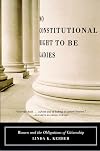
A really fascinating look at women's history in the United States from the late eighteenth century through to the nineties, framed not in terms of the struggle to gain equal rights, but in terms of the struggle to gain equal obligations under the law--whether to vote, to serve on juries, to fight on the front lines in combat situations, etc.
Meticulously researched and cogently argued, Kerber looks at how the refusal to legislate for women's obligations within these spheres had a negative show more impact on their ability to exercise what rights they did have, and on the movement to gain equal rights. It gave me a number of tools with which to re-evaluate the fields of women's history I've already studied, and gave me a basic education in American women's history, which I was only vaguely acquainted with before; not to mention that it made my jaw drop a number of times in sheer disbelief. I found the comparisons between the civil rights movement and the feminist movement to be especially interesting; how advocates from the two separate movements (or both) learned to identify with one another, their points of commonality and their differences with one another.
Highly, highly recommended if you have any interest at all in this area of history. Don't let the fact that it focuses on constitutional law put you off; normally, legal history ranks only slightly above economic history with me for topics to switch me off, and I still sped through this and wished for more show less
Meticulously researched and cogently argued, Kerber looks at how the refusal to legislate for women's obligations within these spheres had a negative show more impact on their ability to exercise what rights they did have, and on the movement to gain equal rights. It gave me a number of tools with which to re-evaluate the fields of women's history I've already studied, and gave me a basic education in American women's history, which I was only vaguely acquainted with before; not to mention that it made my jaw drop a number of times in sheer disbelief. I found the comparisons between the civil rights movement and the feminist movement to be especially interesting; how advocates from the two separate movements (or both) learned to identify with one another, their points of commonality and their differences with one another.
Highly, highly recommended if you have any interest at all in this area of history. Don't let the fact that it focuses on constitutional law put you off; normally, legal history ranks only slightly above economic history with me for topics to switch me off, and I still sped through this and wished for more show less
Women of the Republic: Intellect and Ideology in Revolutionary America (Institute of Early American History) by Linda K. Kerber
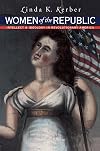
Published in 1980, Women of the Republic asserts itself within the historical scholarship of that time period as a rare attempt to tell the story of Revolutionary America from the perspective of its women as opposed to the conventional telling which relied heavily upon “accounts of battles or constitutional conventions—events from which women were necessarily absent” (xi). In order to do this Kerber effectively draws from a diversity of sources, including letters, diaries, court show more records, petitions to legislatures, books, pamphlets and broadsides, making the case that the politics of the Revolutionary War with its call for independence and freedom was instrumental in enabling women to gain some access to civic life without allowing them to identify as “political beings” (11). Subsequently, Kerber’s argument follows that women played a large role in developing the ideology that she names “Republican Motherhood.” Kerber writes, “They [women] devised their own interpretation of what the Revolution had meant to them as women, and they began to invent an ideology of citizenship that merged the domestic domain of the pre-industrial woman with the new public ideology of individual responsibility and civic virtue”(269). Republican Motherhood both justified and tempered women’s political behavior by placing it within the home, where as mothers, they would impart the republican civic virtues of freedom, liberty and equality to their sons who would then go on to patriotically participate within the political domain.
Kerber’s legal and social history demonstrates that the language of Revolutionary America, replete with the promise of liberty and justice for all ultimately excluded women from its vision. Kerber’s analysis moves through nine chapters, providing rich examples of women who found themselves acting politically and responding to the call of the Revolution at the same time that the dominant political and philosophical ideology of the Revolution rooted in Enlightenment thought excluded them. For example, during the war women participate in boycotts of English clothing and tea, patriotically spinning their own clothes at home. They collect rags for making paper and bandages, sew blankets and clothing for the soldiers and work as nurses in the army camps, even though they are underpaid and scorned. However, at the same time, women found their homes to be at the mercy of the troops, and were forced to provide the soldiers with food and lodging. Kerber is quick to point out that although women during wartime engaged in political acts, they did not shift their identities from domestic to political and most did not understand themselves to be politically conscious outside of their domestic domains. Women did have the right to petition the legislatures for preservation of property rights, and while Kerber acknowledges the fact that they did petition demonstrates an act of individual choice, usually the petitions were ineffective. For example when the wives of loyalists are asked to make political choices of allegiance many chose to stay rather than follow their husbands, simultaneously expressing allegiance to the republic and also supposedly protecting their rights to their husbands’ property. Upon this “civil death” of their Loyalist husbands, wives were supposed to be rewarded with their dower after the war, but according to individual women’s petitions for property, court cases and decisions, Kerber finds that these promises were not realized and that in fact, the post-revolutionary period saw the breakdown of a widow’s right to her dower. Also, Kerber spends a thorough chapter analyzing divorce petitions and laws, and cases, finding that a civil divorce, while easier to obtain on behalf of women in certain parts of New England, overall was not easily granted in the new republic.
The development of what Kerber calls Republican Motherhood becomes most explicit when she discusses the shift in improvements in female education from 1790 onward. Even though education for women continued to face opposition during this time, the shift from an agrarian to industrial society coupled with the political revolution necessitated improvements in education for women. This shift occurs, explains Kerber, due to the nature of republics, which are believed by its leaders to depend on a civic virtue handed down from generation to generation. Rather than officially assign this role to a fourth branch of government, the role fell to the mothers of the republic who would impart moral and religious training to their children. In order to accomplish this, these mothers would need to be properly educated in such a manner that her ties to her domestic duties were not threatened and her political activities were confined to the home. Ultimately Republican Motherhood left a woman in limbo. “She was a citizen but not really a constituent” (283). Kerber does an excellent job in this portion of the book in illuminating the paradoxes inherent within an ideology that empowered women to a degree but also kept them from truly acting as political beings.
However, the overall structure of the book appears disjointed at times. Occasionally it becomes difficult to see through the heavy details towards the larger theoretical framework. Indeed according to her Preface to the 1986 edition, Kerber claims that a deadline forced her to “impose structure on a confusion of materials”(v). Nevertheless, Kerber’s analysis offers great insight into the lives of women during the Revolutionary Era, allowing us to view them as active participants. Through the ideology of “Republican Motherhood” they attempted to forge a productive role for themselves within the confines of a political and legal system that spoke to them through the language of liberty yet actively excluded them. Kerber’s research contributes to the historical scholarship of the American Revolution with its thorough exploration of women’s experiences in the early Republic. Furthermore, Women of the Republic’s charting of the paradoxical nature of Republican Motherhood will prove crucial to students of nineteenth and twentieth-century women’s history. Kerber mentions that Republican Motherhood’s ideology would later be both absorbed and invoked in conservative and reformist ways to promote ideologies like the “cult of domesticity” and women’s Progressive reform movements. Her book will provide students and scholars of American women’s history an excellent framework for understanding the development of these later periods. show less
Kerber’s legal and social history demonstrates that the language of Revolutionary America, replete with the promise of liberty and justice for all ultimately excluded women from its vision. Kerber’s analysis moves through nine chapters, providing rich examples of women who found themselves acting politically and responding to the call of the Revolution at the same time that the dominant political and philosophical ideology of the Revolution rooted in Enlightenment thought excluded them. For example, during the war women participate in boycotts of English clothing and tea, patriotically spinning their own clothes at home. They collect rags for making paper and bandages, sew blankets and clothing for the soldiers and work as nurses in the army camps, even though they are underpaid and scorned. However, at the same time, women found their homes to be at the mercy of the troops, and were forced to provide the soldiers with food and lodging. Kerber is quick to point out that although women during wartime engaged in political acts, they did not shift their identities from domestic to political and most did not understand themselves to be politically conscious outside of their domestic domains. Women did have the right to petition the legislatures for preservation of property rights, and while Kerber acknowledges the fact that they did petition demonstrates an act of individual choice, usually the petitions were ineffective. For example when the wives of loyalists are asked to make political choices of allegiance many chose to stay rather than follow their husbands, simultaneously expressing allegiance to the republic and also supposedly protecting their rights to their husbands’ property. Upon this “civil death” of their Loyalist husbands, wives were supposed to be rewarded with their dower after the war, but according to individual women’s petitions for property, court cases and decisions, Kerber finds that these promises were not realized and that in fact, the post-revolutionary period saw the breakdown of a widow’s right to her dower. Also, Kerber spends a thorough chapter analyzing divorce petitions and laws, and cases, finding that a civil divorce, while easier to obtain on behalf of women in certain parts of New England, overall was not easily granted in the new republic.
The development of what Kerber calls Republican Motherhood becomes most explicit when she discusses the shift in improvements in female education from 1790 onward. Even though education for women continued to face opposition during this time, the shift from an agrarian to industrial society coupled with the political revolution necessitated improvements in education for women. This shift occurs, explains Kerber, due to the nature of republics, which are believed by its leaders to depend on a civic virtue handed down from generation to generation. Rather than officially assign this role to a fourth branch of government, the role fell to the mothers of the republic who would impart moral and religious training to their children. In order to accomplish this, these mothers would need to be properly educated in such a manner that her ties to her domestic duties were not threatened and her political activities were confined to the home. Ultimately Republican Motherhood left a woman in limbo. “She was a citizen but not really a constituent” (283). Kerber does an excellent job in this portion of the book in illuminating the paradoxes inherent within an ideology that empowered women to a degree but also kept them from truly acting as political beings.
However, the overall structure of the book appears disjointed at times. Occasionally it becomes difficult to see through the heavy details towards the larger theoretical framework. Indeed according to her Preface to the 1986 edition, Kerber claims that a deadline forced her to “impose structure on a confusion of materials”(v). Nevertheless, Kerber’s analysis offers great insight into the lives of women during the Revolutionary Era, allowing us to view them as active participants. Through the ideology of “Republican Motherhood” they attempted to forge a productive role for themselves within the confines of a political and legal system that spoke to them through the language of liberty yet actively excluded them. Kerber’s research contributes to the historical scholarship of the American Revolution with its thorough exploration of women’s experiences in the early Republic. Furthermore, Women of the Republic’s charting of the paradoxical nature of Republican Motherhood will prove crucial to students of nineteenth and twentieth-century women’s history. Kerber mentions that Republican Motherhood’s ideology would later be both absorbed and invoked in conservative and reformist ways to promote ideologies like the “cult of domesticity” and women’s Progressive reform movements. Her book will provide students and scholars of American women’s history an excellent framework for understanding the development of these later periods. show less

Kerber is the May Brodbeck Professor of History at the University of Iowa. In this book, she discusses how the history of the struggle for women's rights has been just as much a history of the struggle for the obligations of citizenship. By denying that women had such obligations as jury service, paying taxes, etc., men succeeded for a long time in treating women as second-class citizens.
An interesting, and not sufficiently considered, view.
An interesting, and not sufficiently considered, view.
Final Chapter discusses the obligations of military service, the connections to citizenship and what that means in contemporary American life. Points out entitlements that veterans receive (G.I. Bill, veterans preference in hiring, etc.) Discusses legal cases brought by women challenging veterans preferences and the Supreme Court decisions involving registration and the draft. Emphasizes the negative connotations brought on the ERA by the requirement to darft women.
Lists
Awards


You May Also Like


Associated Authors
Statistics
- Works
- 9
- Also by
- 7
- Members
- 1,047
- Popularity
- #24,609
- Rating
- 3.8
- Reviews
- 6
- ISBNs
- 42
- Languages
- 1