
George Johnson (1) (1952–)
Author of The Ten Most Beautiful Experiments
For other authors named George Johnson, see the disambiguation page.
About the Author
George Johnson was born in 1952, in Fayetteville, Ark. He has worked for newspapers in Albuquerque, N.Mex. and Minneapolis, Minn., and is a science writer for the New York Times. His first book, Architects of Fear: Conspiracy Theories and Paranoia in American Politics (1984), won a special show more achievement award in nonfiction from the Los Angeles chapter of International PEN. Many of Johnson's other books evidence thoughtful, spiritual examinations of the relation between man and science. Fire in the Mind: Science, Faith and the Search for Order (1995) is about the diversity of ideas in New Mexico. Johnson draws parallels between Los Alamos and the worshipful view of scientific discovery and the high desert, a sacred place for the Tewa Indians and Hermanos Penitentes. (Bowker Author Biography) show less
Image credit: screen shot from a BloggingHeads.tv video podcast
Works by George Johnson
Strange Beauty: Murray Gell-Mann and the Revolution in Twentieth-Century Physics (1999) 284 copies, 2 reviews
Miss Leavitt's Stars : The Untold Story of the Woman Who Discovered How to Measure the Universe (2005) 248 copies, 7 reviews
Associated Works
Tagged
Common Knowledge
- Birthdate
- 1952-01-20
- Gender
- male
- Education
- University of New Mexico (BA|Journalism, English minor|1975)
American University (MA|Journalism and Public Affairs|1979) - Occupations
- science writer
journalist
jornalist - Awards and honors
- American Association for the Advancement of Science journalism award (twice)
- Agent
- Esther Newberg
- Short biography
- I am a writer working from my office in Santa Fe, New Mexico. My next book, The Cancer Chronicles: Unlocking Medicine's Deepest Mystery, will be published in August 2013 by Alfred A. Knopf in the United States and The Bodley Head in the UK. Articles from my research have recently appeared in the New York Times: Unearthing Prehistoric Tumors and Cancer's Secrets Come Into Sharper Focus.
My previous book, The Ten Most Beautiful Experiments, is out in paperback, and foreign rights have been sold in 15 languages. The Folio Society has published a special collector's edition. My books have been translated into Italian, German, French, Portuguese, Czech, Japanese, Polish, Swedish, Spanish, Korean, Chinese, Greek, and Thai with editions forthcoming in Turkish, Romanian, Russian and Arabic. Two of them were shortlisted for the Royal Society book prize.
Three of my articles for the Times have won the AAAS Science Journalism Award from the American Association for the Advancement of Science and one is included in The Best American Science Writing, edited by James Gleick. I've also written for National Geographic, Slate, Scientific American, Time, Wired, and The Atlantic. I appear on bloggingheads.tv with my friend John Horgan for a show called Science Faction, and my blog, Fire in the Mind, is at Discover.com.
My essay The Books in the Basement is in the collection My Einstein: Essays by Twenty-four of the World's Leading Thinkers on the Man, His Work, and His Legacy. Two others, Worshipping in the Church of Einstein (or How I Found Fischbeck's Rule) and On the Trail of the Illuminati: A Journalist's Search for The Conspiracy That Rules the World, were published in the anthology Secrets of Angels and Demons.
I described some of my thoughts about science writing in Inside the Black Box, which appeared in a different form in The Field Guide to Science Writing.
I am co-founder with Sandra Blakeslee of the Santa Fe Science Writing Workshop. My observations about Santa Fe politics and other matters are in my anti-blog, The Santa Fe Review, which includes glimpses of the surroundings through my web cams.
Here are links to my shocking appearance on The Colbert Report and a video of my being pickpocketed by Apollo Robbins at a consciousness conference on the Las Vegas Strip. I wrote about the experience in Sleights of Mind.
http://sciwrite.org/glj/ - Nationality
- USA
- Birthplace
- Fayetteville, Arkansas, USA
- Associated Place (for map)
- Arkansas, USA
Members
Reviews
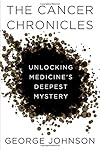
George Johnson opens his book, on the page preceding chapter one, with an epigraph from Reynolds Price's memoir about his own struggle with cancer that left him in a paraplegic state. I mention this because I was moved by my reading of Price's book almost two decades ago and, while it was an eloquent expression of the experience of cancer it did not, as I remember, inform me significantly about the nature of the disease itself. With The Cancer Chronicles George Johnson, a writer whose book show more Fire in the Mind impressed me several years ago, shares both the history and nature of the disease called Cancer and a memoir of his wife's own battle with that disease.
The history of cancer begins very far back in prehistoric times for it seems that scientists have found that the disease was already present in the age of Dinosaurs. This revelation along with others made the book both informative and interesting to read. His chronicle of the history of the science of cancer explores the realms of epidemiology. clinical trials, laboratory experiments while sharing information from evolutionary biology and other sciences. Even the economics of the Cancer research juggernaut is described -- an industry that has grown to an immense size in the search for an elusive "cure" for cancer.
Cancer the disease is at the core of the book and permeates the narrative, but the chronicles reveal what is in reality multiple different diseases. Each cancer affects different parts of the body and different groups of humans in unique ways. This is an important part of the story and represents some of the basis for many of the obstacles scientists continue to face in analyzing how to stop or prevent the disease.
Johnson capably personalizes the story with interludes where he shares his wife's struggle with Cancer. In doing this he reveals a view of the disease from the point of view of the everyday person who must deal with the practicalities of diagnoses and treatments and hospital stays. For those of us who have family or close friends who have had the experience of this disease the narrative is a moving personal story. I also appreciated the literary allusions whether explicit, like the reference to Solzhenitsyn's masterpiece Cancer Ward, or implicit. The author is eloquent both in his telling analysis of the disease and in his personal memoir; he demonstrates an ability to convey scientific concepts lucidly enough for the layman to understand. These characteristics and the fascination that the author shares for scientific discovery make this a great book full of insights into the deep mysteries of some of the most complex areas of modern medicine. show less
The history of cancer begins very far back in prehistoric times for it seems that scientists have found that the disease was already present in the age of Dinosaurs. This revelation along with others made the book both informative and interesting to read. His chronicle of the history of the science of cancer explores the realms of epidemiology. clinical trials, laboratory experiments while sharing information from evolutionary biology and other sciences. Even the economics of the Cancer research juggernaut is described -- an industry that has grown to an immense size in the search for an elusive "cure" for cancer.
Cancer the disease is at the core of the book and permeates the narrative, but the chronicles reveal what is in reality multiple different diseases. Each cancer affects different parts of the body and different groups of humans in unique ways. This is an important part of the story and represents some of the basis for many of the obstacles scientists continue to face in analyzing how to stop or prevent the disease.
Johnson capably personalizes the story with interludes where he shares his wife's struggle with Cancer. In doing this he reveals a view of the disease from the point of view of the everyday person who must deal with the practicalities of diagnoses and treatments and hospital stays. For those of us who have family or close friends who have had the experience of this disease the narrative is a moving personal story. I also appreciated the literary allusions whether explicit, like the reference to Solzhenitsyn's masterpiece Cancer Ward, or implicit. The author is eloquent both in his telling analysis of the disease and in his personal memoir; he demonstrates an ability to convey scientific concepts lucidly enough for the layman to understand. These characteristics and the fascination that the author shares for scientific discovery make this a great book full of insights into the deep mysteries of some of the most complex areas of modern medicine. show less

In the author's preamble to The Ten Most Beautiful Experiments, I was slightly alarmed to see Cormac McCarthy thanked for his help composing the manuscript of this scientific history. Presumably this is a different Cormac McCarthy, but one does wonder.
JOHNSON: Now then, Cormac, where were we. Chapter Eight; new paragraph. Quote: ‘Edward Morley, a chemist at neighboring Western Reserve University, was as meticulous a scientist as Michelson. The two men agreed that it would be pointless to show more make another attempt to detect the Earth's absolute motion unless they could first confirm Fresnel's hypothesis – that the celestial backdrop is fixed in space with only pinches of aether dragged along by transparent objects.’ Just read that back for me, would you?
MCCARTHY: The sky was clear and Michelson's heart was clear and only in the far west the clarity was broken where the last cloudbank bled over the land like a jugged hare; and yet all was in motion, heart, blood and sky, spiraling forever into the measureless void and haling the ether along with it like the caul over a miscarried infant's soft and innocent head. Innocent? Nay – rife with original sin.
Michelson spat on the ground, and the parched land accepted his meager gift.
—Reckon Fresnel might have been on to something after all, Morley said, studying the westering sun.
JOHNSON: Perhaps we should take a break.
(Edit – as has been pointed out to me, it was in fact almost certainly the Cormac McCarthy. See e.g. here.)
Distracting Acknowledgements aside, this is an engaging, if slight, description of ten key experiments from across the sciences: Harvey's demonstration that blood circulates through the body, Newton's refraction of light, Michelson-Morley, Pavlov's dogs, and so on. As with any such selection, there are some surprising omissions (no double-slit experiment?), but, more fundamentally, and although the writing is decent, the chapters are a little too short and they fail to generate the sort of excitement that following these efforts should have generated.
The chapters also function as mini-biographies of the scientists involved, and in part this book is a love-letter to the ‘great men’ (they're all men) who have driven science forward through insight combined with exhaustive slog. One of the things we're left wondering at the end is whether this kind of single moving spirit may be anachronistic now: Johnson notes that there were 439 names on the paper announcing the discovery of the top quark. So lots more beautiful experiments to come, we can be sure – but most of them are likely to have been designed by committee. show less
JOHNSON: Now then, Cormac, where were we. Chapter Eight; new paragraph. Quote: ‘Edward Morley, a chemist at neighboring Western Reserve University, was as meticulous a scientist as Michelson. The two men agreed that it would be pointless to show more make another attempt to detect the Earth's absolute motion unless they could first confirm Fresnel's hypothesis – that the celestial backdrop is fixed in space with only pinches of aether dragged along by transparent objects.’ Just read that back for me, would you?
MCCARTHY: The sky was clear and Michelson's heart was clear and only in the far west the clarity was broken where the last cloudbank bled over the land like a jugged hare; and yet all was in motion, heart, blood and sky, spiraling forever into the measureless void and haling the ether along with it like the caul over a miscarried infant's soft and innocent head. Innocent? Nay – rife with original sin.
Michelson spat on the ground, and the parched land accepted his meager gift.
—Reckon Fresnel might have been on to something after all, Morley said, studying the westering sun.
JOHNSON: Perhaps we should take a break.
(Edit – as has been pointed out to me, it was in fact almost certainly the Cormac McCarthy. See e.g. here.)
Distracting Acknowledgements aside, this is an engaging, if slight, description of ten key experiments from across the sciences: Harvey's demonstration that blood circulates through the body, Newton's refraction of light, Michelson-Morley, Pavlov's dogs, and so on. As with any such selection, there are some surprising omissions (no double-slit experiment?), but, more fundamentally, and although the writing is decent, the chapters are a little too short and they fail to generate the sort of excitement that following these efforts should have generated.
The chapters also function as mini-biographies of the scientists involved, and in part this book is a love-letter to the ‘great men’ (they're all men) who have driven science forward through insight combined with exhaustive slog. One of the things we're left wondering at the end is whether this kind of single moving spirit may be anachronistic now: Johnson notes that there were 439 names on the paper announcing the discovery of the top quark. So lots more beautiful experiments to come, we can be sure – but most of them are likely to have been designed by committee. show less
This was one of the easiest books on cancer for me to read. I found it informative and in certain ways comforting. The concept that there's more cancer these days because we're not dying from other diseases and that there are dinosaur skeletons with signs of cancer.
I was a cancer patient, I was lucky, I responded in a textbook fashion to chemotherapy regime I was put on. My lottery ticked may have been stamped by the glandular fever I had earlier in my life (apparently all patients who have show more Hodgkins Lymphoma had glandular fever but not all people who get glandular fever get Hodgkins), by the genetics that link geeks in our family with cancer (stomach - grandfather; liver - uncle) or the environmental issues with having worked late shifts and living for a few years in a bustling city centre. Whatever happened I had cancer, some books make me very stressed but this book reasured me that there are people working on this and trying to find solutions to ensure that future generations won't suffer from this.
Through the science he also weaves the story of his wife's cancer. Her treatment and the aftermath and the afterword including his brother's cancer. It's touching in parts and you can see his path to try to understand this while his wife is going through all the trauma of treatment and testing and heartbreak. You can see how he's trying to understand this and trying, in the face of a situation where he has no power or agency over this thing that's happening.
I found it a compelling read and would recommend it to almost everyone. show less
I was a cancer patient, I was lucky, I responded in a textbook fashion to chemotherapy regime I was put on. My lottery ticked may have been stamped by the glandular fever I had earlier in my life (apparently all patients who have show more Hodgkins Lymphoma had glandular fever but not all people who get glandular fever get Hodgkins), by the genetics that link geeks in our family with cancer (stomach - grandfather; liver - uncle) or the environmental issues with having worked late shifts and living for a few years in a bustling city centre. Whatever happened I had cancer, some books make me very stressed but this book reasured me that there are people working on this and trying to find solutions to ensure that future generations won't suffer from this.
Through the science he also weaves the story of his wife's cancer. Her treatment and the aftermath and the afterword including his brother's cancer. It's touching in parts and you can see his path to try to understand this while his wife is going through all the trauma of treatment and testing and heartbreak. You can see how he's trying to understand this and trying, in the face of a situation where he has no power or agency over this thing that's happening.
I found it a compelling read and would recommend it to almost everyone. show less
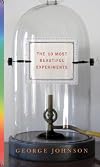
I remember sitting through the many science classes in high school -- biology, chemistry, physics, and so on -- listening to the teachers lecture on different theories and then having us put them to use. Interesting stuff, but we were working with already-proven theories: how many calories in such and such food, how does a prism bend light, a2 + b2 = c2. Honestly, back then I just wanted to get through the classes, so I just accepted the theories and moved on.
Now that I'm older, my mind show more wants to know why this theory is correct, how did it come about. So when I randomly pulled George Johnson's book "The Ten Most Beautiful Experiments" off a bookstore shelf, I was intrigued. And how can you not when the description in the dust jacket reads: "...and [Sir Isaac] Newton carefully inserting a needle behind his eye to learn how light causes vibrations in the retina."? (That hooked the horror fiend in me.)
Johnson takes a chronological approach to the experiments, beginning with Galileo's experiments with accurately measuring the speed at objects move, Newton's use of prisms and the aforementioned needle to determine what makes color, and onward through Faraday's making the connection between magnetism and electricity and Millikan's work discovering the electron. But, instead of just stating the theory, Johnson provides the back stories, what sparked the scientists to push the envelope farther, what obstacles they had to overcome, how the mindsets at their points in history affected their experiments. And that's the fascinating part, walking with each scientist step by step through the trials, successes and failures to reach some new insight into how the world works.
On a few occasions, I did find myself re-reading sections to make sure I understood what was going on. I'm not a scientist so certain facts were glossed over as if I should have known them, such as the speed of light in A.A. Michelson's study of the velocity of the Earth. In spite of that, "The Ten Most Beautiful Experiments" is fascinating and well worth a read. show less
Now that I'm older, my mind show more wants to know why this theory is correct, how did it come about. So when I randomly pulled George Johnson's book "The Ten Most Beautiful Experiments" off a bookstore shelf, I was intrigued. And how can you not when the description in the dust jacket reads: "...and [Sir Isaac] Newton carefully inserting a needle behind his eye to learn how light causes vibrations in the retina."? (That hooked the horror fiend in me.)
Johnson takes a chronological approach to the experiments, beginning with Galileo's experiments with accurately measuring the speed at objects move, Newton's use of prisms and the aforementioned needle to determine what makes color, and onward through Faraday's making the connection between magnetism and electricity and Millikan's work discovering the electron. But, instead of just stating the theory, Johnson provides the back stories, what sparked the scientists to push the envelope farther, what obstacles they had to overcome, how the mindsets at their points in history affected their experiments. And that's the fascinating part, walking with each scientist step by step through the trials, successes and failures to reach some new insight into how the world works.
On a few occasions, I did find myself re-reading sections to make sure I understood what was going on. I'm not a scientist so certain facts were glossed over as if I should have known them, such as the speed of light in A.A. Michelson's study of the velocity of the Earth. In spite of that, "The Ten Most Beautiful Experiments" is fascinating and well worth a read. show less
Lists
Awards


You May Also Like


Associated Authors
Statistics
- Works
- 9
- Also by
- 1
- Members
- 2,137
- Popularity
- #12,039
- Rating
- 3.6
- Reviews
- 42
- ISBNs
- 119
- Languages
- 12