
Susan Quinn (1) (1940–)
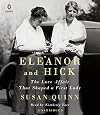
Author of Eleanor and Hick: The Love Affair That Shaped a First Lady
For other authors named Susan Quinn, see the disambiguation page.
Works by Susan Quinn
Furious Improvisation: How the WPA and a Cast of Thousands Made High Art out of Desperate Times (2008) 99 copies, 2 reviews
Tagged
Common Knowledge
- Birthdate
- 1940-03-16
- Gender
- female
- Education
- Oberlin College
- Occupations
- journalist
biographer
musician - Organizations
- PEN Center New England
- Short biography
- Susan Quinn was born in Chillicothe, Ohio, and graduated from Oberlin College. She began her writing career as a newspaper reporter on a suburban daily outside of Cleveland. In 1967, she published her first book, On Stage, under her married name of Susan Jacobs. In 1972, after moving to Boston, she wrote for the Cambridge aternative weekly, The Real Paper, then became a contributor and staff writer on Boston Magazine. She has written articles for many publications, including the New York Times Magazine, The Atlantic Monthly and Ms. Magazine and won awards for her investigative reporting.
In 1987, she published her first biography, A Mind of Her Own; The Life of Karen Horney. She won a Guggenheim Fellowship and a Rockefeller Foundation writing residency at Bellagio in Italy for her next book, Marie Curie: A Life. In 2001, she published Human Trials: Scientists, Investors and Patients in the Quest for a Cure. She has lectured throughout the USA and has given talks in France and Poland about her book on Madame Curie. She has served as the chair of PEN New England
and plays the flute in chamber music groups. - Nationality
- USA
- Birthplace
- Chillocothe, Ohio, USA
- Places of residence
- Brookline, Massachusetts, USA
- Associated Place (for map)
- USA
Members
Reviews
Really kind of a 3.5, and that's because I'm super interested in the historical time periods it covers. I'm interested to read both more of Susan Quinn's work and more books about ER, and maybe I liked it all the more because I didn't know much about the relationship between FDR and ER or between ER and Hick. Fascinating details about various power lesbian couples slip in here and there; I could have used a lot more context and information about them, but it's a nice start or reminder to show more read more queer history! Which this ... sort of isn't. Also, as a fat diabetic lesbian, I got annoyed at the constant attitude the book pulled toward Hick about those details.
FINALLY, I was unhappy with how racist Hick appeared in one portion of the book, and it made me not read it for a few days because I just couldn't face Hick. One reviewer on GR mentioned that it's deeply about White Feminism(TR) & yes, part of it definitely is. Again, that makes me seek out other histories of the times, ones that foreground Black and Latina and Asian and Native lesbians, or at least as much as we can know.
OK. Off to find those other books and give them my attention. Interesting listen though. show less
FINALLY, I was unhappy with how racist Hick appeared in one portion of the book, and it made me not read it for a few days because I just couldn't face Hick. One reviewer on GR mentioned that it's deeply about White Feminism(TR) & yes, part of it definitely is. Again, that makes me seek out other histories of the times, ones that foreground Black and Latina and Asian and Native lesbians, or at least as much as we can know.
OK. Off to find those other books and give them my attention. Interesting listen though. show less

Eleanor in this context being of course Eleanor Roosevelt, wife of Franklin and niece of Theodore. And Hick being less obviously Lorena Hickok, a respected reporter for the Associated Press who fell in love with Eleanor while writing a series of articles about her just before FDR's first presidential election victory. And Eleanor, it seems, loved Hick back, although such a love affair was destined to be thwarted by the individual circumstances of their lives.
Much of the author's evidence for show more the love affair between Eleanor and Hick is drawn from an archive of letters exchanged between them. The letters were donated by Hick to the FDR Library, with the proviso that they not be made available until after she died (Eleanor had died several years earlier). I appreciated that Quinn was careful not to draw unsupported conclusions about whether their love affair was physically consummated — there simply is no evidence to tell us either way. But it seems clear that the two women at the very least shared an extremely deep emotional bond and attachment that lasted the rest of their lives, even though it didn't always make them happy. Hick, in particular, comes across as someone who wanted much more than Eleanor was able to give her, and suffered jealously whenever the First Lady spent time with other close friends than her.
Apart from the personal relationship between Eleanor and Hick, time and again I was struck by the ways that times were different in the 1930s and 1940s. The Roosevelts seem to have treated the White House as their personal Howard Johnson Motor Lodge, with any number of people actually living in the White House with them for months or years at a time — close friends, extended family, pets of friends and family. And the press, including Hick, were privy to many personal details about the marriage and family life of FDR and Eleanor that would doubtless have created scandal, and tacitly agreed not to write about them. Bill Clinton must weep a bitter tear and then toss back some whiskey whenever he thinks about that.
I've been meaning to read a biography of Eleanor Roosevelt for some time, and I learned a lot to admire about her here even beyond what I already knew. Quinn is clear-eyed about the personal faults in Hick, Eleanor, FDR, and their children, all of whom suffered to varying degrees from the stifling attention of being in the close orbit of a beloved President. I'd still like to read a more comprehensive biography of this remarkable woman sometime, but this was a good place to start. show less
Much of the author's evidence for show more the love affair between Eleanor and Hick is drawn from an archive of letters exchanged between them. The letters were donated by Hick to the FDR Library, with the proviso that they not be made available until after she died (Eleanor had died several years earlier). I appreciated that Quinn was careful not to draw unsupported conclusions about whether their love affair was physically consummated — there simply is no evidence to tell us either way. But it seems clear that the two women at the very least shared an extremely deep emotional bond and attachment that lasted the rest of their lives, even though it didn't always make them happy. Hick, in particular, comes across as someone who wanted much more than Eleanor was able to give her, and suffered jealously whenever the First Lady spent time with other close friends than her.
Apart from the personal relationship between Eleanor and Hick, time and again I was struck by the ways that times were different in the 1930s and 1940s. The Roosevelts seem to have treated the White House as their personal Howard Johnson Motor Lodge, with any number of people actually living in the White House with them for months or years at a time — close friends, extended family, pets of friends and family. And the press, including Hick, were privy to many personal details about the marriage and family life of FDR and Eleanor that would doubtless have created scandal, and tacitly agreed not to write about them. Bill Clinton must weep a bitter tear and then toss back some whiskey whenever he thinks about that.
I've been meaning to read a biography of Eleanor Roosevelt for some time, and I learned a lot to admire about her here even beyond what I already knew. Quinn is clear-eyed about the personal faults in Hick, Eleanor, FDR, and their children, all of whom suffered to varying degrees from the stifling attention of being in the close orbit of a beloved President. I'd still like to read a more comprehensive biography of this remarkable woman sometime, but this was a good place to start. show less
This book tackles one of those lesser known bits of history -- specifically, the relationship between First Lady Eleanor Roosevelt and AP reporter Lorena Hickok. It has been suggested in the past that these two were more than friends, and this book takes a definite stand on that, noting the author's belief that the Roosevelt and Hickok had a romantic, physical relationship. While there were times that I felt Quinn's own research did not 100 percent support that stand,* I found this book to show more be a gem overall.
The book works as almost a dual biography. It gives information on both women, starting from their childhoods all the way through to their deaths. In addition, lots of historical context is given, so that the reader learns much about life in the U.S. during the Great Depression, the World's Fair, World War II, etc. An insider's look at the political scene is explored as well. There was definitely a lot that I learned about this era in history from reading Eleanor and Hick. Also, with both women being ahead of their time, there was so much that was applicable to today, especially issues related to social justice.
Quinn certainly did her research for this book, using a multitude of sources for it. These include letters exchanged between the two women (more than 3,300 over a 30-year period beginning in 1932), the unpublished autobiography of Lorena Hickok, Eleanor Roosevelt's memoirs and "My Day" columns, various newspaper articles, and occasional bits of other people's memoirs (e.g., Roosevelt's grandson Curtis). Furthermore, Quinn's writing style is easy and accessible, making this a smooth-flowing and enjoyable read. Although many historical facts are included, it never feels dull or taxing. I highly recommend this book for those who love history and/or biographies.
*Although many of the letters do suggest that there was perhaps a romantic relationship, it appears that Roosevelt had several other similarly passionate friendships. And, there was also indication that Hickok resumed a previous love affair during the same time she was supposedly in a relationship with Roosevelt. show less
The book works as almost a dual biography. It gives information on both women, starting from their childhoods all the way through to their deaths. In addition, lots of historical context is given, so that the reader learns much about life in the U.S. during the Great Depression, the World's Fair, World War II, etc. An insider's look at the political scene is explored as well. There was definitely a lot that I learned about this era in history from reading Eleanor and Hick. Also, with both women being ahead of their time, there was so much that was applicable to today, especially issues related to social justice.
Quinn certainly did her research for this book, using a multitude of sources for it. These include letters exchanged between the two women (more than 3,300 over a 30-year period beginning in 1932), the unpublished autobiography of Lorena Hickok, Eleanor Roosevelt's memoirs and "My Day" columns, various newspaper articles, and occasional bits of other people's memoirs (e.g., Roosevelt's grandson Curtis). Furthermore, Quinn's writing style is easy and accessible, making this a smooth-flowing and enjoyable read. Although many historical facts are included, it never feels dull or taxing. I highly recommend this book for those who love history and/or biographies.
*Although many of the letters do suggest that there was perhaps a romantic relationship, it appears that Roosevelt had several other similarly passionate friendships. And, there was also indication that Hickok resumed a previous love affair during the same time she was supposedly in a relationship with Roosevelt. show less
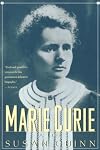
Marie Curie should have been a spy. She certainly did a good job of being an international woman of mystery.
This is the fullest of five biographies of Curie I have read -- possibly a little too full. There is arguably a little too much about her social context; at times, this starts to bury the story. And yet, this book deserves credit for not holding anything back. For example, it says straight-out that Curie had an affair with the younger scientist Paul Langevin after Marie's husband show more Pierre was killed. Indeed, it says it so straight-out that it doesn't really prove it -- it makes a better case for friendship than for actual relationship.
Still, the honesty of this portrayal has much to commend it. There is only one thing that is really lacking: An acknowledgment that both Marie and Pierre Curie were autistic -- and that it was probably their autism that brought them together and made their relationship such a success. But which also brought such grief to Marie after his death; she had no emotional resources to deal with such a loss, and (like most autistics) she was strongly depressive. Perhaps even more strongly so than this book brings out.
That's a nitpick -- after all, autism was still pretty obscure when this book was published. (Maybe someday someone will add a new preface explaining that.) You can find out about Curie's autism on the web.
A bigger nitpick is that author Quinn is clearly not a scientist, and at some places gets a few things wrong. They don't matter much in the big picture, but they can be a little grating for those who do have scientific training. But even those don't really interfere with the broad story.
A final nitpick: The printing job on my copy was lousy; it appears to have been copied from a bad dot-matrix printer. This might be something to watch for; surely by now someone has typeset this thing properly!
Bottom line: This is not an ideal biography. It will probably be many years before we see a proper Curie biography. But it is the best now available. If you want to know how "Manya" Sklowdowska became "Madame Curie," this is a very good place to start. show less
This is the fullest of five biographies of Curie I have read -- possibly a little too full. There is arguably a little too much about her social context; at times, this starts to bury the story. And yet, this book deserves credit for not holding anything back. For example, it says straight-out that Curie had an affair with the younger scientist Paul Langevin after Marie's husband show more Pierre was killed. Indeed, it says it so straight-out that it doesn't really prove it -- it makes a better case for friendship than for actual relationship.
Still, the honesty of this portrayal has much to commend it. There is only one thing that is really lacking: An acknowledgment that both Marie and Pierre Curie were autistic -- and that it was probably their autism that brought them together and made their relationship such a success. But which also brought such grief to Marie after his death; she had no emotional resources to deal with such a loss, and (like most autistics) she was strongly depressive. Perhaps even more strongly so than this book brings out.
That's a nitpick -- after all, autism was still pretty obscure when this book was published. (Maybe someday someone will add a new preface explaining that.) You can find out about Curie's autism on the web.
A bigger nitpick is that author Quinn is clearly not a scientist, and at some places gets a few things wrong. They don't matter much in the big picture, but they can be a little grating for those who do have scientific training. But even those don't really interfere with the broad story.
A final nitpick: The printing job on my copy was lousy; it appears to have been copied from a bad dot-matrix printer. This might be something to watch for; surely by now someone has typeset this thing properly!
Bottom line: This is not an ideal biography. It will probably be many years before we see a proper Curie biography. But it is the best now available. If you want to know how "Manya" Sklowdowska became "Madame Curie," this is a very good place to start. show less
Lists
Awards


You May Also Like


Associated Authors
Statistics
- Works
- 5
- Members
- 887
- Popularity
- #28,886
- Rating
- 3.8
- Reviews
- 23
- ISBNs
- 66
- Languages
- 7