
Ken Wytsma
Author of The Myth of Equality: Uncovering the Roots of Injustice and Privilege
About the Author
Ken Wytsma is the lead pastor of Village Church in Beaverton, Oregon. He is also the founder of The Justice Conference. His books include Pursuing Justice, The Grand Paradox, Create vs. Copy, and Redeeming How We Talk.
Works by Ken Wytsma
The Grand Paradox: The Messiness of Life, the Mystery of God and the Necessity of Faith (2015) 42 copies, 1 review
Redeeming How We Talk: Discover How Communication Fuels Our Growth, Shapes Our Relationships, and Changes Our Lives (2018) 39 copies, 1 review
Create vs. Copy: Embrace Change. Ignite Creativity. Break Through with Imagination (2016) 25 copies, 1 review
Tagged
Common Knowledge
There is no Common Knowledge data for this author yet. You can help.
Members
Reviews
The Grand Paradox: The Messiness of Life, the Mystery of God and the Necessity of Faith by Ken Wytsma
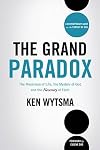
If you want a simple, step-by-step approach to the Christian faith don't read The Grand Paradox by Ken Wytsma. Like his earlier volume, Pursuing Justice, Wytsma examines an idea from many different angles. In the former book he looked at the mosaic of justice. Here he turns around the jewel of 'faith' in all its mysterious and messy glory. This isn't a book about easy faith with pat answers. Wytsma is much more interested in the paradoxical nature of faith--how walking by faith calls us to show more 'live the questions' (13). In the place of answers, Wytsma calls us to something deeper: trust in God.
That Wytsma examines a topic from various angles shouldn't be too surprising, he wears a few different hats. He is the lead pastor of Antioch in Bend, Oregon and a philosopher who teaches at Kilns College. As the founder of The Justice Conference he moderates a discussion on biblical justice and how to care for the vulnerable. He is also a C.S. Lewis aficionado. So in these pages Wytsma offers reflections that are pastoral, theologically rich, philosophically deep and practically engaged. There are a number of rich insights here, though not always 'easy reading.'
Wytsma begins his paradoxical look at faith by examining Joshua's defeat of Jericho. The plan that God gave Joshua was to walk around Jericho with the ark and blow horns, watch the walls fall down and take the city. From a strategic perspective this is a terrible plan, but through it God demonstrated that the victory was his and not the might of Joshua and Israel (4). The Jericho example sets us up for the nature of faith--where we are called to walk by faith and not by sight. Sometimes the stuff God calls us to makes no sense, from a human point of view. Wytsma writes, "Walking by faith doesn't bring the control or sense of satisfaction we desire, and over time, it guarantees a measure of suffering. Walking by faith on the other hand, can feel like walking blind--an even more dangerous idea--and we know that it, too, will involve suffering. Both alternatives seem undesirable." If that was where things ended, faith or no faith carries no special promise. But Wytsma goes on, " It is the faithfulness, the promise, and presence of God that give us a way out of the catch-22" (16). God, and God alone provides a way through the paradox.
In chapter three Wytsma (with a great deal of Kierkegaard) describes he nature of authentic faith as trust in God, though we don't understand him (26). In chapter four he discusses how Christian wisdom may look like folly to the uninitiated and therefore close-communion with God is required for us to know that we are on the right track. In chapter five, Wytsma examines the imperative of justice for all who claim Jesus as savior. Chapter six examines how the pursuit of happiness (in the ancient sense) encapsulates all that is necessary for human flourishing and therefore is a necessary component of the virtuous and godly life. Chapter seven examines the interplay between doubt and faith, Chapters eight and nine examine personal calling where chapters ten and eleven examine the wider cultural landscapes. Chapter twelve examines the role of church and the final three chapters unfold the eschatological dimensions of faith.
I appreciate many of the insights Wytsma has here. I am a new pastor who has been preaching on discipleship through Lent and I've been thinking a lot about the paradox of discipleship. Wytsma has been a good dialogue partner and has pointed me to other theologians too. Where a lot of pastor/authors are light on content, and where justice practitioners sometimes lack thoughtfulness it is refreshing to read a book from a justice-loving-pastor which is meaty, challenging, theological and inspiring. This is a comprehensive guide to the pursuit of God and it gives space for questions, doubt and uncertainty while still calling us to greater trust and obedience. That I appreciate.
My convoluted (and small) critique of this book is that I think he emphasizes the personal dimensions of faith at the beginning of the book to the exclusion of its communal aspects. Wytsma doesn't explore the church until chapter twelve. Eschatology comes later. Yes, I know he is a pastor and he cares about justice (which he addresses beautifully in chapter five), I just wish the company of witnesses was named earlier and given their due throughout. I give this book a solid four stars.
Notice of material connection: I received this book from the publisher in exchange for my honest review. show less
That Wytsma examines a topic from various angles shouldn't be too surprising, he wears a few different hats. He is the lead pastor of Antioch in Bend, Oregon and a philosopher who teaches at Kilns College. As the founder of The Justice Conference he moderates a discussion on biblical justice and how to care for the vulnerable. He is also a C.S. Lewis aficionado. So in these pages Wytsma offers reflections that are pastoral, theologically rich, philosophically deep and practically engaged. There are a number of rich insights here, though not always 'easy reading.'
Wytsma begins his paradoxical look at faith by examining Joshua's defeat of Jericho. The plan that God gave Joshua was to walk around Jericho with the ark and blow horns, watch the walls fall down and take the city. From a strategic perspective this is a terrible plan, but through it God demonstrated that the victory was his and not the might of Joshua and Israel (4). The Jericho example sets us up for the nature of faith--where we are called to walk by faith and not by sight. Sometimes the stuff God calls us to makes no sense, from a human point of view. Wytsma writes, "Walking by faith doesn't bring the control or sense of satisfaction we desire, and over time, it guarantees a measure of suffering. Walking by faith on the other hand, can feel like walking blind--an even more dangerous idea--and we know that it, too, will involve suffering. Both alternatives seem undesirable." If that was where things ended, faith or no faith carries no special promise. But Wytsma goes on, " It is the faithfulness, the promise, and presence of God that give us a way out of the catch-22" (16). God, and God alone provides a way through the paradox.
In chapter three Wytsma (with a great deal of Kierkegaard) describes he nature of authentic faith as trust in God, though we don't understand him (26). In chapter four he discusses how Christian wisdom may look like folly to the uninitiated and therefore close-communion with God is required for us to know that we are on the right track. In chapter five, Wytsma examines the imperative of justice for all who claim Jesus as savior. Chapter six examines how the pursuit of happiness (in the ancient sense) encapsulates all that is necessary for human flourishing and therefore is a necessary component of the virtuous and godly life. Chapter seven examines the interplay between doubt and faith, Chapters eight and nine examine personal calling where chapters ten and eleven examine the wider cultural landscapes. Chapter twelve examines the role of church and the final three chapters unfold the eschatological dimensions of faith.
I appreciate many of the insights Wytsma has here. I am a new pastor who has been preaching on discipleship through Lent and I've been thinking a lot about the paradox of discipleship. Wytsma has been a good dialogue partner and has pointed me to other theologians too. Where a lot of pastor/authors are light on content, and where justice practitioners sometimes lack thoughtfulness it is refreshing to read a book from a justice-loving-pastor which is meaty, challenging, theological and inspiring. This is a comprehensive guide to the pursuit of God and it gives space for questions, doubt and uncertainty while still calling us to greater trust and obedience. That I appreciate.
My convoluted (and small) critique of this book is that I think he emphasizes the personal dimensions of faith at the beginning of the book to the exclusion of its communal aspects. Wytsma doesn't explore the church until chapter twelve. Eschatology comes later. Yes, I know he is a pastor and he cares about justice (which he addresses beautifully in chapter five), I just wish the company of witnesses was named earlier and given their due throughout. I give this book a solid four stars.
Notice of material connection: I received this book from the publisher in exchange for my honest review. show less
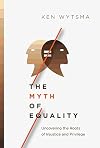
Summary: A white pastor explores the reality of white privilege from the perspectives of both American history and the gospel of the kingdom and how white Christians might pursue justice.
We all like to believe the best about ourselves.Most of us want to believe we are a society where everyone is equal. Most of us would like to believe racism and racial injustices are a thing of the past. And most of us, if we are white, squirm a bit when we hear the phrase "white privilege." I can imagine show more some who are reading this composing arguments as you read for what you want to say in the comments section.
Ken Wytsma is a white pastor who believes Christians need to have honest conversations about these matters if we are to contribute to healing the racial divides within our churches and society. He speaks of a conversation with a young, white landscaper who has worked hard to build his business and didn't think he'd enjoyed privilege. Wytsma recounts their dialogue:
"I asked him in what part of town he did most of his work.
'In the suburbs,' he said,
I then asked where, specifically, he did his work.
'Mostly in people's backyards,' he answered.
I asked him when he did most of his work.
'Well, during the day, of course,' he quickly retorted.
I asked if I could pose one more question, and he said yes. So I asked him how he got most of his business.
He responded, 'I put flyers in people's doors and sometimes knock at houses where I think there's a particular opportunity I can offer them.'
Having gathered all this information about his business and how his work functions, I asked, 'If you were a young man of color in those mostly white suburbs, is it possible you would be received differently by some of the potential clients?'
. . .
He nodded, and I could see from the look on his face that he finally understood white privilege. White privilege doesn't mean your life isn't hard. It means that if you are a person of color, simply by virtue of that, your life might be harder." (pp. 25-26)
Wytsma's book is broken into three parts. The first, titled "The Story of Race" explores the history of race in America through several historical lenses. He considers the history of immigration and the emergence of white supremacy. He steps back into European history and explores the roots of racism in Shakespeare, philosophy, colonization, and post-conquest treatment of Native Americans. He explores the history of slavery in the U.S., and the failed post-Civil War effort of Reconstruction succeeded by the rise of Jim Crow, disenfranchisement, political strategies of the Republican party to win the White south, and the war on drugs. The concluding chapter in this section is on the Great Migration to northern and western cities, and how redlining practices shaped these cities long after they were outlawed. He mentions the FHA/HOLC maps from the 1930's that "graded" neighborhoods for the purpose of granting loans, with "D" areas in red, and deemed uncreditworthy. (Here is the map [https://dsl.richmond.edu/panorama/redlining/#loc=12/41.0861/-80.6618&opacity=0.8&city=youngstown-oh] of my hometown of Youngstown; I grew up in a "C" or yellow area, but it was still part of the "white west side" and indeed, most Blacks lived in the "red" areas of town).
Part two focuses on theology as Wytsma considers "Equality and the Kingdom of God." He speaks tellingly of all the "off limit" subjects in our "authentic" churches and how they reveal our conflicted loyalties between "empire" and "the kingdom of God." He explores our truncated gospel, and how we leave out justice, not realizing that "justice," "righteousness" and "justify" derive from the same words. To be in right relationship or justified with God and to be in right or just relation with neighbor are part of one gospel of the kingdom. He discusses what he calls our "salvation-industrial" complex that reduces salvation to how many have prayed a "sinner's prayer," a metric that can translate into enhanced donations for a ministry. This becomes a very individualized experience that fails to reckon with what it means to be incorporated into a new humanity that transcends all human-made divisions and national boundaries.
In Part Three, Wytsma outlines how we begin to address white privilege. He describes how implicit racial bias can shape our thinking, whether in an interview or a police stop.and how this may be overcome. He challenges our Christian conference complex that is often pervaded by white speakers from the platform, and other ways we simply don't recognize people of other ethnicities and give them a place at the table, or even yield the table (or podium) to them. Finally he speaks of the steps we may take to open ourselves to the other, and even find ourselves in the other--listening and learning, lamenting, confessing, and laying down our privilege to raise up others.
What I appreciate throughout the book is that the point is not shaming or laying guilt but helping us understand and wake up to something to which we may have been oblivious. Wytsma helps us follow his own journey of understanding. Along the way, he helped me see that to attempt to deny or defend privilege is to carry a heavy burden, and one that isolates me from the manifold riches of a diverse community of believers. Recognizing privilege, honestly facing and lamenting the way it has hurt others, and laying it down as a gift to others, to bless others and share that privilege with them is liberating.
We are also facing a major demographic challenge as a nation, in which people of color will be in the numerical majority by 2050. It is one that faces white Christians with a challenge and an opportunity. Will we try to hang onto something of which others are desperately seeking a share, or will we both enrich, and allow ourselves to be enriched by brothers and sisters whose skin color is darker than ours? Instead of fearing what we might lose, might we consider both what we may give and gain? show less
We all like to believe the best about ourselves.Most of us want to believe we are a society where everyone is equal. Most of us would like to believe racism and racial injustices are a thing of the past. And most of us, if we are white, squirm a bit when we hear the phrase "white privilege." I can imagine show more some who are reading this composing arguments as you read for what you want to say in the comments section.
Ken Wytsma is a white pastor who believes Christians need to have honest conversations about these matters if we are to contribute to healing the racial divides within our churches and society. He speaks of a conversation with a young, white landscaper who has worked hard to build his business and didn't think he'd enjoyed privilege. Wytsma recounts their dialogue:
"I asked him in what part of town he did most of his work.
'In the suburbs,' he said,
I then asked where, specifically, he did his work.
'Mostly in people's backyards,' he answered.
I asked him when he did most of his work.
'Well, during the day, of course,' he quickly retorted.
I asked if I could pose one more question, and he said yes. So I asked him how he got most of his business.
He responded, 'I put flyers in people's doors and sometimes knock at houses where I think there's a particular opportunity I can offer them.'
Having gathered all this information about his business and how his work functions, I asked, 'If you were a young man of color in those mostly white suburbs, is it possible you would be received differently by some of the potential clients?'
. . .
He nodded, and I could see from the look on his face that he finally understood white privilege. White privilege doesn't mean your life isn't hard. It means that if you are a person of color, simply by virtue of that, your life might be harder." (pp. 25-26)
Wytsma's book is broken into three parts. The first, titled "The Story of Race" explores the history of race in America through several historical lenses. He considers the history of immigration and the emergence of white supremacy. He steps back into European history and explores the roots of racism in Shakespeare, philosophy, colonization, and post-conquest treatment of Native Americans. He explores the history of slavery in the U.S., and the failed post-Civil War effort of Reconstruction succeeded by the rise of Jim Crow, disenfranchisement, political strategies of the Republican party to win the White south, and the war on drugs. The concluding chapter in this section is on the Great Migration to northern and western cities, and how redlining practices shaped these cities long after they were outlawed. He mentions the FHA/HOLC maps from the 1930's that "graded" neighborhoods for the purpose of granting loans, with "D" areas in red, and deemed uncreditworthy. (Here is the map [https://dsl.richmond.edu/panorama/redlining/#loc=12/41.0861/-80.6618&opacity=0.8&city=youngstown-oh] of my hometown of Youngstown; I grew up in a "C" or yellow area, but it was still part of the "white west side" and indeed, most Blacks lived in the "red" areas of town).
Part two focuses on theology as Wytsma considers "Equality and the Kingdom of God." He speaks tellingly of all the "off limit" subjects in our "authentic" churches and how they reveal our conflicted loyalties between "empire" and "the kingdom of God." He explores our truncated gospel, and how we leave out justice, not realizing that "justice," "righteousness" and "justify" derive from the same words. To be in right relationship or justified with God and to be in right or just relation with neighbor are part of one gospel of the kingdom. He discusses what he calls our "salvation-industrial" complex that reduces salvation to how many have prayed a "sinner's prayer," a metric that can translate into enhanced donations for a ministry. This becomes a very individualized experience that fails to reckon with what it means to be incorporated into a new humanity that transcends all human-made divisions and national boundaries.
In Part Three, Wytsma outlines how we begin to address white privilege. He describes how implicit racial bias can shape our thinking, whether in an interview or a police stop.and how this may be overcome. He challenges our Christian conference complex that is often pervaded by white speakers from the platform, and other ways we simply don't recognize people of other ethnicities and give them a place at the table, or even yield the table (or podium) to them. Finally he speaks of the steps we may take to open ourselves to the other, and even find ourselves in the other--listening and learning, lamenting, confessing, and laying down our privilege to raise up others.
What I appreciate throughout the book is that the point is not shaming or laying guilt but helping us understand and wake up to something to which we may have been oblivious. Wytsma helps us follow his own journey of understanding. Along the way, he helped me see that to attempt to deny or defend privilege is to carry a heavy burden, and one that isolates me from the manifold riches of a diverse community of believers. Recognizing privilege, honestly facing and lamenting the way it has hurt others, and laying it down as a gift to others, to bless others and share that privilege with them is liberating.
We are also facing a major demographic challenge as a nation, in which people of color will be in the numerical majority by 2050. It is one that faces white Christians with a challenge and an opportunity. Will we try to hang onto something of which others are desperately seeking a share, or will we both enrich, and allow ourselves to be enriched by brothers and sisters whose skin color is darker than ours? Instead of fearing what we might lose, might we consider both what we may give and gain? show less
So. Is privilege in the United States real, or is it something that people imagine, for any number of reasons? Author Ken Wytsma takes a look at this issue in The Myth of Equality: Uncovering the Roots of Injustice and Privilege.
In my book reviews, I normally don’t make a big point of the author’s race or gender. Nevertheless, I’ll note that this book, which is directed toward a Christian audience, was written by a white man. And, yes, a lot of people—especially white people—should show more read it. It’s important to bear in mind that the fight for racial equality in the U.S. isn’t something any one race should be fighting for alone.
I’ll also note that this book isn’t out to just broadcast grievances, to shame the country, and to make people feel guilty. No, this is about seeing the historical roots of a very real problem, as you can’t truly remedy anything without getting to the bottom of it. The author also includes action points, so readers won’t be left with this problem without any idea what to do next.
The book has so many compelling points, like the need not to merely do acts of justice, but to become just. Or the idea that people might think they’re following the golden rule (“Do unto others as you would have them do unto you”) when really they’re following the silver rule (“Don’t do to others what you wouldn’t have them do to you.”) The silver rule is passive. The golden rule requires action.
I highly recommend this book for the Christian community. If you think racial issues are “just politics” or not something that Christians should be too concerned about, I’d encourage you all the more to read this.
_______________________
I received a complimentary copy of this book from the publisher via NetGalley for an honest review. show less
In my book reviews, I normally don’t make a big point of the author’s race or gender. Nevertheless, I’ll note that this book, which is directed toward a Christian audience, was written by a white man. And, yes, a lot of people—especially white people—should show more read it. It’s important to bear in mind that the fight for racial equality in the U.S. isn’t something any one race should be fighting for alone.
I’ll also note that this book isn’t out to just broadcast grievances, to shame the country, and to make people feel guilty. No, this is about seeing the historical roots of a very real problem, as you can’t truly remedy anything without getting to the bottom of it. The author also includes action points, so readers won’t be left with this problem without any idea what to do next.
The book has so many compelling points, like the need not to merely do acts of justice, but to become just. Or the idea that people might think they’re following the golden rule (“Do unto others as you would have them do unto you”) when really they’re following the silver rule (“Don’t do to others what you wouldn’t have them do to you.”) The silver rule is passive. The golden rule requires action.
I highly recommend this book for the Christian community. If you think racial issues are “just politics” or not something that Christians should be too concerned about, I’d encourage you all the more to read this.
_______________________
I received a complimentary copy of this book from the publisher via NetGalley for an honest review. show less
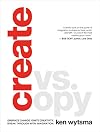
If I were to copy anyone, I'd copy Ken Wytsma. He is lead pastor of Antioch in Bend, Oregon, president of Kilns College (where he teaches philosophy and justice), creative advisor for non-profits and founder of the Justice Conference. Additionally, he is the author of three great books. His latest, Create vs. Copy, digs deep into the theology and practice of creativity. So yeah, I'm overawed and would love to copy Wytsma. Only I couldn't (and shouldn't).
Create vs. Copy doesn't have much to show more say about copying, outside its introduction and first chapter (SPOILER ALERT: don't do it!). Wytsma's focus is on creating. Creativity leads us to blazes trails, innovate, and try new things(14). Copying does not (although there is space for creative borrowing).
The book unfolds in two parts. Part one presents a theology of creativity. Part two explores the practices which bring creativity to life. Of course it isn't quite that neat. Wystma's thoughtfulness about the 'why' behind the creative process underpins his practical suggestion; practice bleeds out of his theology. The whole book is an invitation toward creative action. Here is a closer look at what to expect:
Part 1
In chapter one, Wytsma quotes Genesis 1:27, observing the one aspect of God's nature described in the verse is this: God creates (24). So Wytsma identifies creativity as part of what it means for us to bear God's image. This means all of us:
Chapter two, "Continuous Creativity," begins with Wytsma's reflections on the Second Law of Thermodynamics (Increased Entropy) which states "All closed systems tend to move toward a state of greater disorder and dissipated energy" (37). Wytsma connects this with our experience:
But entropy characterizes closed systems and creativity is our means to crack them open to allow life back in (39). Wytsma links the work of ongoing, continuous creativity to our image bearing and Gods redemptive plan: God created the world, is in the process of creating, and will create a new heaven and a new earth (42-43); we were created as creative, are creating and are reaching forward with our creative potential. Wytsma closes this chapter with practices for incorporating creativity at home and work (48-52).
Chapter three gives shape to how creativity brings life to our decaying systems. A closed system leads to narrowing horizons, creativity is aimed at making space for life to flourish (51-53). The process is organic: a narrowing horizon is a fear-inducing-context or problem requiring a solution; by responding with intentional creativity (a pattern of life emerging from a nourished imagination) innovation occurs (67). Chapter four describes the outworking of this theology of creativity and innovation in our globalizing world.
Part 2
In chapter five, Wytsma explores the ways imagination helps us see what is and what should be. As we age, our capacity to imagine possibilities is constrained by our culture and peer group (110). Our creative impulse atrophies, but Wytsma contends, through its exercise, we can reignite our creativity (114).
Chapter six probes the role of imagination in creative process. The comprehensive imagination names our ability to understand the relevant data for seeing current problems (120-121). Our artistic imagination helps us envision what could be (122). Our practical imagination helps envision and enact solutions which will work, leading to innovation (122-123). Wytsma also identifies challenges to our imagination (i.e. knowing what ideas to 'prune' and convincing people that imagination isn't the purview of the few).
Chapter seven identifies the process of intentional creativity as both movement and alignment (136). Movement means doing something. "Our natural response to change is to buck against it, to dig in our heels, to wish things would stay the way they are or go back to the way they used to be" (136-137). But inaction leads to the dissipation of entropy, and our best ideas will come in the midst of our work. Drawing on Robert Epstein, Wytsma suggests we sharpen our creative skills by taking notes of new ideas, seeking out challenging tasks, broadening our knowledge, and surrounding ourselves with interesting things and people (138-140). Yet undirected creativity without healthy constraints won't get you where you want to go (142). Our creativity is aligned when we understanding our role in "God's creative, redemptive work" (143). Wytsma observes, "When our values guide our whole creative process—imagination, intentional creativity, and innovation—something beautiful happens" (147).
The final chapter discusses 'generous creativity': the ways in which creativity is collaborative, 'in-processs' and is aimed at relationship more than results. One example of creative-collaboration is how each chapter is punctuated with Paul Crouse's stunning illustrations, making this book practical AND beautiful. A brief conclusion summons us to creative action (don't just be a copier or a critic).
I was predisposed to like this book. I am artistic and have read Wytsma's previous books appreciatively. I also love the interactive aspects like the additional reading suggestions from Ken's blog and reflection questions appended to each chapter. But this book was also very helpful for me. Despite my love of creativity, my last leadership role was in an entropic system where I failed to lead a process toward vitality. I didn't know how to lead innovation. Wytsma gives shape to how the creativity makes space for life to flourish. As a rookie pastor this would have saved me a lot of grief (in a way vision-casting exercises didn't).
According to Wytsma, all of us have the capacity and ability for creativity; however he favors leadership in his examples. He states, "Those who create blaze trails, take risks, and try new ways. . . . They lead. . . .Copiers by definition, will always follow" (14). Creativity is defined as leading; copying means following. Maybe so, but not everyone leads (processes or people). More ought to be said about creative following. For leaders and artists, creativity is explicit. It is what they need to do in order to thrive in business, art and life. In other vocations creativity is implicit. How does creativity play out in the lives of accountants (creative accounting isn't good, right?), nurses, housekeepers, or whatever? Creativity is essential to all our image-bearing, so I wish there were more examples from ordinary lives.
None of this detracts from my enjoyment. This was a fun,fruitful read which pushed me to think and act with more creativity in ministry and life. I give this five stars and recommend it for leaders, artists, innovators, and yes, copycats, followers and ordinary folk. It calls us to embody the spacious and life giving. ★★★★★
Note: I received a copy of Create vs. Copy as part of the launch team for the book. I was asked for my honest review. The book is slated for release on March 1, 2016 and is currently available for pre-order on Amazon and can be ordered directly from the publisher's website.
show less
Create vs. Copy doesn't have much to show more say about copying, outside its introduction and first chapter (SPOILER ALERT: don't do it!). Wytsma's focus is on creating. Creativity leads us to blazes trails, innovate, and try new things(14). Copying does not (although there is space for creative borrowing).
The book unfolds in two parts. Part one presents a theology of creativity. Part two explores the practices which bring creativity to life. Of course it isn't quite that neat. Wystma's thoughtfulness about the 'why' behind the creative process underpins his practical suggestion; practice bleeds out of his theology. The whole book is an invitation toward creative action. Here is a closer look at what to expect:
Part 1
In chapter one, Wytsma quotes Genesis 1:27, observing the one aspect of God's nature described in the verse is this: God creates (24). So Wytsma identifies creativity as part of what it means for us to bear God's image. This means all of us:
Yes, artists, but also everyone else. While artistic ability is a talent few possess (and/or cultivate with time and hard work), creative capacity is something all of us are born with. Put another way, artists are skilled with unique talents, but creativity is part of what makes us human. (27)
Chapter two, "Continuous Creativity," begins with Wytsma's reflections on the Second Law of Thermodynamics (Increased Entropy) which states "All closed systems tend to move toward a state of greater disorder and dissipated energy" (37). Wytsma connects this with our experience:
This dissipation is familiar in nearly every area of life. If not renewed, donor bases will erode over time. Congregations will shrink. Family dynamics will tense up. Relationships will fade. Leadership strategies become stale and ineffective. Even our bodies and minds lose their vigor (38).
But entropy characterizes closed systems and creativity is our means to crack them open to allow life back in (39). Wytsma links the work of ongoing, continuous creativity to our image bearing and Gods redemptive plan: God created the world, is in the process of creating, and will create a new heaven and a new earth (42-43); we were created as creative, are creating and are reaching forward with our creative potential. Wytsma closes this chapter with practices for incorporating creativity at home and work (48-52).
Chapter three gives shape to how creativity brings life to our decaying systems. A closed system leads to narrowing horizons, creativity is aimed at making space for life to flourish (51-53). The process is organic: a narrowing horizon is a fear-inducing-context or problem requiring a solution; by responding with intentional creativity (a pattern of life emerging from a nourished imagination) innovation occurs (67). Chapter four describes the outworking of this theology of creativity and innovation in our globalizing world.
Part 2
In chapter five, Wytsma explores the ways imagination helps us see what is and what should be. As we age, our capacity to imagine possibilities is constrained by our culture and peer group (110). Our creative impulse atrophies, but Wytsma contends, through its exercise, we can reignite our creativity (114).
Chapter six probes the role of imagination in creative process. The comprehensive imagination names our ability to understand the relevant data for seeing current problems (120-121). Our artistic imagination helps us envision what could be (122). Our practical imagination helps envision and enact solutions which will work, leading to innovation (122-123). Wytsma also identifies challenges to our imagination (i.e. knowing what ideas to 'prune' and convincing people that imagination isn't the purview of the few).
Chapter seven identifies the process of intentional creativity as both movement and alignment (136). Movement means doing something. "Our natural response to change is to buck against it, to dig in our heels, to wish things would stay the way they are or go back to the way they used to be" (136-137). But inaction leads to the dissipation of entropy, and our best ideas will come in the midst of our work. Drawing on Robert Epstein, Wytsma suggests we sharpen our creative skills by taking notes of new ideas, seeking out challenging tasks, broadening our knowledge, and surrounding ourselves with interesting things and people (138-140). Yet undirected creativity without healthy constraints won't get you where you want to go (142). Our creativity is aligned when we understanding our role in "God's creative, redemptive work" (143). Wytsma observes, "When our values guide our whole creative process—imagination, intentional creativity, and innovation—something beautiful happens" (147).
The final chapter discusses 'generous creativity': the ways in which creativity is collaborative, 'in-processs' and is aimed at relationship more than results. One example of creative-collaboration is how each chapter is punctuated with Paul Crouse's stunning illustrations, making this book practical AND beautiful. A brief conclusion summons us to creative action (don't just be a copier or a critic).
I was predisposed to like this book. I am artistic and have read Wytsma's previous books appreciatively. I also love the interactive aspects like the additional reading suggestions from Ken's blog and reflection questions appended to each chapter. But this book was also very helpful for me. Despite my love of creativity, my last leadership role was in an entropic system where I failed to lead a process toward vitality. I didn't know how to lead innovation. Wytsma gives shape to how the creativity makes space for life to flourish. As a rookie pastor this would have saved me a lot of grief (in a way vision-casting exercises didn't).
According to Wytsma, all of us have the capacity and ability for creativity; however he favors leadership in his examples. He states, "Those who create blaze trails, take risks, and try new ways. . . . They lead. . . .Copiers by definition, will always follow" (14). Creativity is defined as leading; copying means following. Maybe so, but not everyone leads (processes or people). More ought to be said about creative following. For leaders and artists, creativity is explicit. It is what they need to do in order to thrive in business, art and life. In other vocations creativity is implicit. How does creativity play out in the lives of accountants (creative accounting isn't good, right?), nurses, housekeepers, or whatever? Creativity is essential to all our image-bearing, so I wish there were more examples from ordinary lives.
None of this detracts from my enjoyment. This was a fun,fruitful read which pushed me to think and act with more creativity in ministry and life. I give this five stars and recommend it for leaders, artists, innovators, and yes, copycats, followers and ordinary folk. It calls us to embody the spacious and life giving. ★★★★★
Note: I received a copy of Create vs. Copy as part of the launch team for the book. I was asked for my honest review. The book is slated for release on March 1, 2016 and is currently available for pre-order on Amazon and can be ordered directly from the publisher's website.
show less
Lists
Awards

You May Also Like


Statistics
- Works
- 5
- Members
- 373
- Popularity
- #64,663
- Rating
- 4.2
- Reviews
- 11
- ISBNs
- 23