
Soong-Chan Rah
Author of The Next Evangelicalism: Freeing the Church from Western Cultural Captivity
About the Author
Soong-Chan Rah is Milton B. Engerbretson Associate Professor of Church Growth and Evangelism at North Park Theological Seminary in Chicago. His books include The Next Evangelicalism and Many Colors.
Works by Soong-Chan Rah
The Next Evangelicalism: Freeing the Church from Western Cultural Captivity (2009) 331 copies, 3 reviews
Unsettling Truths: The Ongoing, Dehumanizing Legacy of the Doctrine of Discovery (2019) 270 copies, 6 reviews
Return to Justice: Six Movements That Reignited Our Contemporary Evangelical Conscience (2016) 42 copies, 1 review
Tagged
Common Knowledge
- Gender
- male
Members
Reviews
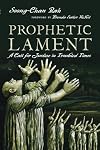
Summary: A commentary and exposition of the book of Lamentations that advocates for the restoration of the practice of lament as part of the worship of American churches, particularly majority culture evangelical churches.
Have you every experienced terrible suffering, or terrible loss, or have witnessed horrible events such as have dominated our news of late and been deeply moved to turmoil and grief that cries out to God, or even the four walls around you, "how long?" Now, when was the last show more time that you did this as part of a service of worship in your church, if you regularly attend one?
Soong-Chan Rah contends that this was an important part of the worship life of ancient Israel that has been lost in many of our churches in North America. We focus on triumph and victory and success. We see problems and we go around the world to solve them. And we begin to believe we are the answers to the world's problems--whether they be the problems of the inner city or the problems of the countries in the majority world.
Rah contends that our celebration and praise must be balanced with lament. He writes:
"What do we lose as a result of this imbalance? American Christians that flourish under the existing system seek to maintain the existing dynamics of inequality and remain in the theology of celebration over and against the theology of suffering. Promoting one perspective over the other, however, diminishes our theological discourse. To only have a theology of celebration at the cost of a theology of suffering is incomplete. The intersection of the two threads provides the opportunity to engage in the fullness of the gospel message. Lament and praise must go hand in hand."
Rah seeks to redress this imbalance by an exposition (part of InterVarsity Press's Resonate series) of the book of Lamentations, a book attributed to the prophet Jeremiah. Rah contends that in addition to Jeremiah, the book incorporates the voices of the sufferers left behind in Jerusalem after the Babylonians destroyed the city walls and took into exile the best and the brightest and the wealthiest of the city. What were left were women, children, the elderly and other marginalized people to mourn over the death of their city and the loss of loved ones as they struggle to survive.
The book is organized according to the five chapters, or "laments" of the book, with several chapters devoted to each lament. Chapter 1 mourns the death of the city. Chapter 2 struggles with what it means that all of this has come about by the providence of God. Chapter 3 which is three times as long as the other chapters forms a climax to the lament and calls us into deep identification with the suffering. Chapter 4 reminds us of the hollowness of all human achievements in the eyes of God. Chapter 5 concludes with a corporate lament that looks to God for answers even when their don't seem to be any answers.
Along the way Rah provides textual and historical insight into the book, discussing the "dirge-like" character of these laments, appropriate at the funeral for a city, the death of a vision of national greatness. He helps us understand the acrostic structure of the first four chapters, including the threefold intensification of this pattern in the climatic chapter 3. Perhaps of greatest value is that Rah helps us identify some of the voices of the marginalized, particularly the women who have lost husbands, perhaps children--who often are the voices of suffering.
Perhaps the greatest challenge of the book is Rah's pointed applications of the book to the American church, particularly dominant culture, white evangelicalism. We have failed to listen to the voices of lament around us, from the native peoples robbed and subjugated and exterminated and marginalized, from African Americans forcibly enslaved, raped, lynched, and then "freed" to live in a racialized society, and other poor and marginalized in our society. Instead of taking their laments to heart and understanding our own complicity and our own paradoxical enslavement to hate and privilege, we deny the problem, or plant our own urban churches or give "handups" which assumes a certain superiority. What we do here, we do around the world, instead of acknowledging the riches of every culture and our partnership with other believers. We make enterprises out of even our justice ministries while failing to face either our cultural or political captivities.
Lament is the place we come to, according to Rah, when we realize that none of that is really working, when even our well-intended efforts contribute to the inequities of the world and that we are deeply impoverished in the midst of our affluence. It is a place of both repentance and the grace of God.
This is an uncomfortable book, and like Rah's The Next Evangelicalism (reviewed here), an incisive critique of American evangelicalism. Don't read this if you are looking for a "feel good" book! But if your heart aches because of the predominance of violence and hatred despite so much "progress," if the glitzy celebrations of your church life don't seem in touch with the ragged realities of our land, and if your stomach turns with the pronouncements and alliances of some of our religious "leaders," then a book on lamenting and making the prayers of Lamentations our own might be timely. It was for me. show less
Have you every experienced terrible suffering, or terrible loss, or have witnessed horrible events such as have dominated our news of late and been deeply moved to turmoil and grief that cries out to God, or even the four walls around you, "how long?" Now, when was the last show more time that you did this as part of a service of worship in your church, if you regularly attend one?
Soong-Chan Rah contends that this was an important part of the worship life of ancient Israel that has been lost in many of our churches in North America. We focus on triumph and victory and success. We see problems and we go around the world to solve them. And we begin to believe we are the answers to the world's problems--whether they be the problems of the inner city or the problems of the countries in the majority world.
Rah contends that our celebration and praise must be balanced with lament. He writes:
"What do we lose as a result of this imbalance? American Christians that flourish under the existing system seek to maintain the existing dynamics of inequality and remain in the theology of celebration over and against the theology of suffering. Promoting one perspective over the other, however, diminishes our theological discourse. To only have a theology of celebration at the cost of a theology of suffering is incomplete. The intersection of the two threads provides the opportunity to engage in the fullness of the gospel message. Lament and praise must go hand in hand."
Rah seeks to redress this imbalance by an exposition (part of InterVarsity Press's Resonate series) of the book of Lamentations, a book attributed to the prophet Jeremiah. Rah contends that in addition to Jeremiah, the book incorporates the voices of the sufferers left behind in Jerusalem after the Babylonians destroyed the city walls and took into exile the best and the brightest and the wealthiest of the city. What were left were women, children, the elderly and other marginalized people to mourn over the death of their city and the loss of loved ones as they struggle to survive.
The book is organized according to the five chapters, or "laments" of the book, with several chapters devoted to each lament. Chapter 1 mourns the death of the city. Chapter 2 struggles with what it means that all of this has come about by the providence of God. Chapter 3 which is three times as long as the other chapters forms a climax to the lament and calls us into deep identification with the suffering. Chapter 4 reminds us of the hollowness of all human achievements in the eyes of God. Chapter 5 concludes with a corporate lament that looks to God for answers even when their don't seem to be any answers.
Along the way Rah provides textual and historical insight into the book, discussing the "dirge-like" character of these laments, appropriate at the funeral for a city, the death of a vision of national greatness. He helps us understand the acrostic structure of the first four chapters, including the threefold intensification of this pattern in the climatic chapter 3. Perhaps of greatest value is that Rah helps us identify some of the voices of the marginalized, particularly the women who have lost husbands, perhaps children--who often are the voices of suffering.
Perhaps the greatest challenge of the book is Rah's pointed applications of the book to the American church, particularly dominant culture, white evangelicalism. We have failed to listen to the voices of lament around us, from the native peoples robbed and subjugated and exterminated and marginalized, from African Americans forcibly enslaved, raped, lynched, and then "freed" to live in a racialized society, and other poor and marginalized in our society. Instead of taking their laments to heart and understanding our own complicity and our own paradoxical enslavement to hate and privilege, we deny the problem, or plant our own urban churches or give "handups" which assumes a certain superiority. What we do here, we do around the world, instead of acknowledging the riches of every culture and our partnership with other believers. We make enterprises out of even our justice ministries while failing to face either our cultural or political captivities.
Lament is the place we come to, according to Rah, when we realize that none of that is really working, when even our well-intended efforts contribute to the inequities of the world and that we are deeply impoverished in the midst of our affluence. It is a place of both repentance and the grace of God.
This is an uncomfortable book, and like Rah's The Next Evangelicalism (reviewed here), an incisive critique of American evangelicalism. Don't read this if you are looking for a "feel good" book! But if your heart aches because of the predominance of violence and hatred despite so much "progress," if the glitzy celebrations of your church life don't seem in touch with the ragged realities of our land, and if your stomach turns with the pronouncements and alliances of some of our religious "leaders," then a book on lamenting and making the prayers of Lamentations our own might be timely. It was for me. show less
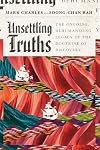
Summary: Shows how "The Doctrine of Discovery," an outgrowth of a Christendom of power rather than relationship has shaped a narrative of the United States, to the dehumanizing of Native Peoples, slaves, and other non-white peoples.
Columbus discovered America, right? Pilgrims, Puritans, and other Europeans "settled" America and drove out the "Indians" who threatened their settlements. That's what I learned in history class.
That's not how the Native Peoples of Turtle Island (what they call show more North America) saw it. They were invaded and had the land of their ancestors taken from them, were displaced, often with genocidal marches, to inferior lands. Unfortunately, victors usually write the history.
The two authors of this work show the complicity of the church in the "Doctrine of Discovery" that justified the settlement of Native lands, and the subjugation of Native Peoples that resulted, as well as the dehumanizing treatment of African slaves. They trace this back to the transition the church underwent under Constantine, when church and state became Christendom, and Constantine's "faith" was written into the narrative by Eusebius. The crusades led to classifying "infidels" as inferior human beings and the church baptized the early explorers efforts as "evangelistic," and the early settlers appropriated Israel's land covenant and Jesus' "city on a hill" to articulate their justification for "settling" the Native lands.
The most disturbing part of this narrative is the genocidal effects of this settlement reducing a population of approximately six million to under 240,000 at one point. Some was disease. Some was warfare. Some was outright massacre, like Wounded Knee, and some, like the Trail of Tears or the Navajo and Apache removal to Bosque Redondo, when thousands died. Proportionally, the death rate of the latter was greater than the Holocaust.
Another "unsettling truth" was the equivocal character of the "Great Emancipator," Abraham Lincoln. There is a plaque at the base of the Lincoln Memorial that records these words of Lincoln:
"I would save the Union. My paramount object in this struggle is to save the Union, and it is not to save or destroy slavery. If I could save the Union without freeing any slave, I would do it; and if I could save it by freeing all the slaves I would do it; and if I could save it by freeing some and leaving others alone I would also do that."
An uprising of Dakota initially led to 2 of 40 being sentenced to death. Lincoln expanded the criteria for death sentences resulting in the execution of 39. Subsequently, Lincoln signed into law a bill nullifying treaties with the Dakota and Winnebago tribes in Minnesota and mandating their forced removal to the Dakota Territory. Bounties were set on those who who tried to escape the roundup.
The authors conclude with how we react to these unsettling truths, including the efforts of Christian boarding schools designed to "kill the Indian to save the man.". One of the most interesting ideas, but also one on which I'd like to see more research is what they termed Perpetrator Induced Traumatic Stress (PITS). They contend that Native Peoples and African Americans are not the only ones traumatized by the Doctrine of Discovery. White America is also traumatized. The authors propose that this may explain the "triggering" effect of the election of Barack Obama as president. They also propose that healing can come only through lament, relational apologies to the Tribal People whose lands were taken and the children of slaves forcibly brought here, and with Tribal peoples, and acknowledgement of thanks to them as hosts in a land where we are guests. That's only a beginning, but a necessary one.
The "unsettling truths" of this book don't appear in traditional histories, and I'm sure there are those who will contest them, particularly because of the sweeping nature of this account, from the beginnings of Christendom to white trauma. While there is extensive documentation in the form of endnotes, the case of this book would be helped with a bibliography of further readings for each chapter. From other readings, I found much to warrant this cumulative case. Furthermore, the authors write both unsparingly, and yet with the hope that their narrative will contribute to the equivalent of South Africa's Truth and Reconciliation Commissions. The question is whether there will be leaders in local communities as well as national bodies willing to acknowledge the truth, make honest and sincere apologies to the peoples whose lands they occupy.
________________________________
Disclosure of Material Connection: I received a complimentary review copy of this book from the publisher. The opinions I have expressed are my own. show less
Columbus discovered America, right? Pilgrims, Puritans, and other Europeans "settled" America and drove out the "Indians" who threatened their settlements. That's what I learned in history class.
That's not how the Native Peoples of Turtle Island (what they call show more North America) saw it. They were invaded and had the land of their ancestors taken from them, were displaced, often with genocidal marches, to inferior lands. Unfortunately, victors usually write the history.
The two authors of this work show the complicity of the church in the "Doctrine of Discovery" that justified the settlement of Native lands, and the subjugation of Native Peoples that resulted, as well as the dehumanizing treatment of African slaves. They trace this back to the transition the church underwent under Constantine, when church and state became Christendom, and Constantine's "faith" was written into the narrative by Eusebius. The crusades led to classifying "infidels" as inferior human beings and the church baptized the early explorers efforts as "evangelistic," and the early settlers appropriated Israel's land covenant and Jesus' "city on a hill" to articulate their justification for "settling" the Native lands.
The most disturbing part of this narrative is the genocidal effects of this settlement reducing a population of approximately six million to under 240,000 at one point. Some was disease. Some was warfare. Some was outright massacre, like Wounded Knee, and some, like the Trail of Tears or the Navajo and Apache removal to Bosque Redondo, when thousands died. Proportionally, the death rate of the latter was greater than the Holocaust.
Another "unsettling truth" was the equivocal character of the "Great Emancipator," Abraham Lincoln. There is a plaque at the base of the Lincoln Memorial that records these words of Lincoln:
"I would save the Union. My paramount object in this struggle is to save the Union, and it is not to save or destroy slavery. If I could save the Union without freeing any slave, I would do it; and if I could save it by freeing all the slaves I would do it; and if I could save it by freeing some and leaving others alone I would also do that."
An uprising of Dakota initially led to 2 of 40 being sentenced to death. Lincoln expanded the criteria for death sentences resulting in the execution of 39. Subsequently, Lincoln signed into law a bill nullifying treaties with the Dakota and Winnebago tribes in Minnesota and mandating their forced removal to the Dakota Territory. Bounties were set on those who who tried to escape the roundup.
The authors conclude with how we react to these unsettling truths, including the efforts of Christian boarding schools designed to "kill the Indian to save the man.". One of the most interesting ideas, but also one on which I'd like to see more research is what they termed Perpetrator Induced Traumatic Stress (PITS). They contend that Native Peoples and African Americans are not the only ones traumatized by the Doctrine of Discovery. White America is also traumatized. The authors propose that this may explain the "triggering" effect of the election of Barack Obama as president. They also propose that healing can come only through lament, relational apologies to the Tribal People whose lands were taken and the children of slaves forcibly brought here, and with Tribal peoples, and acknowledgement of thanks to them as hosts in a land where we are guests. That's only a beginning, but a necessary one.
The "unsettling truths" of this book don't appear in traditional histories, and I'm sure there are those who will contest them, particularly because of the sweeping nature of this account, from the beginnings of Christendom to white trauma. While there is extensive documentation in the form of endnotes, the case of this book would be helped with a bibliography of further readings for each chapter. From other readings, I found much to warrant this cumulative case. Furthermore, the authors write both unsparingly, and yet with the hope that their narrative will contribute to the equivalent of South Africa's Truth and Reconciliation Commissions. The question is whether there will be leaders in local communities as well as national bodies willing to acknowledge the truth, make honest and sincere apologies to the peoples whose lands they occupy.
________________________________
Disclosure of Material Connection: I received a complimentary review copy of this book from the publisher. The opinions I have expressed are my own. show less
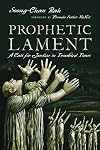
A powerful work challenging the triumphalist narrative of modern American Evangelicalism and a call to recover the lament traditions of the Bible through an exploration of Lamentations both in context and in light of modern American experience.
The author rightly exposes the overwrought emphasis on praise and triumphalism in much of modern Christianity: it's all positive and successful all the time, and that's not life, and that's not even the lived experience of many. Such triumphalism show more cannot bear the exposure of the witness of those who have suffered or been oppressed so as to sustain that triumphalism. The author never denies the place or importance of praise; instead, he seeks to balance praise with another prevalent form of discourse in Scripture, the lament.
To this end the author leads the reader through a study of Lamentations, which he believes is Jeremiah's response to the destruction of Jerusalem. The author does well to show the power, value, and need for the lament tradition, and how it works. He speaks of the need to identify that which needs to be lamented, to confess the sin and expose it as such, for as long as the corpse is not identified as such it will continue to cause the room to smell of death. He has no difficulty specifically identifying the legacy of racism and white supremacy in American Evangelicalism as something needing confessing and lamenting and has pointed out the rotten consequences of the attempt to minimize, hide, or justify past behaviors which demand lament. American consumerist culture also comes under indictment.
The author continues on through Lamentations, noting the importance of both individual and communal lament, recapitulation in lament, the reason and ground of hope and trust in God, and the ability to persevere in faith through persistence in lament. There will be the great ending when justice is served, mercy is displayed, and life is found in resurrection, but there's no guarantee that the lament will have to stop while we are on the earth: Lamentations, as the author says, ends in a "minor key," and the kind of resolution we all desire and the comfort from that resolution are not guaranteed in this life. The lament penned in the epilogue regarding Ferguson and other travails of the early 21st century is compelling and haunting.
This is no doubt a challenging read, especially for those who are white Christians; nevertheless, it is a powerful and important read, and worthwhile to sit in its discomfort. Highly recommended. show less
The author rightly exposes the overwrought emphasis on praise and triumphalism in much of modern Christianity: it's all positive and successful all the time, and that's not life, and that's not even the lived experience of many. Such triumphalism show more cannot bear the exposure of the witness of those who have suffered or been oppressed so as to sustain that triumphalism. The author never denies the place or importance of praise; instead, he seeks to balance praise with another prevalent form of discourse in Scripture, the lament.
To this end the author leads the reader through a study of Lamentations, which he believes is Jeremiah's response to the destruction of Jerusalem. The author does well to show the power, value, and need for the lament tradition, and how it works. He speaks of the need to identify that which needs to be lamented, to confess the sin and expose it as such, for as long as the corpse is not identified as such it will continue to cause the room to smell of death. He has no difficulty specifically identifying the legacy of racism and white supremacy in American Evangelicalism as something needing confessing and lamenting and has pointed out the rotten consequences of the attempt to minimize, hide, or justify past behaviors which demand lament. American consumerist culture also comes under indictment.
The author continues on through Lamentations, noting the importance of both individual and communal lament, recapitulation in lament, the reason and ground of hope and trust in God, and the ability to persevere in faith through persistence in lament. There will be the great ending when justice is served, mercy is displayed, and life is found in resurrection, but there's no guarantee that the lament will have to stop while we are on the earth: Lamentations, as the author says, ends in a "minor key," and the kind of resolution we all desire and the comfort from that resolution are not guaranteed in this life. The lament penned in the epilogue regarding Ferguson and other travails of the early 21st century is compelling and haunting.
This is no doubt a challenging read, especially for those who are white Christians; nevertheless, it is a powerful and important read, and worthwhile to sit in its discomfort. Highly recommended. show less
Return to Justice: Six Movements That Reignited Our Contemporary Evangelical Conscience by Soong-Chan Rah
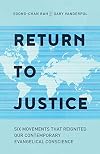
Excellent. Nice brief survey of past and current evangelicalism as it relates to justice. Don't look here for an exhaustive, academic treatment. It broadened and enhanced my other reading in this area. All of conservative, white America especially needs to wake up to the changing world around us. For those who don't even want to be called an evangelical anymore, there is hope.
Awards
You May Also Like


Associated Authors
Statistics
- Works
- 7
- Members
- 1,085
- Popularity
- #23,679
- Rating
- 4.0
- Reviews
- 16
- ISBNs
- 16