
Christena Cleveland
Author of Disunity in Christ: Uncovering the Hidden Forces that Keep Us Apart
About the Author
Christena Cleveland (PhD, University, of California, Santa Barbara) is a social psychologist who teaches at St. Catherine University. She is an award-winning researcher, and gifted teacher who brings organizational experience to her efforts to build unity. She consults with pastors and show more organizational leaders on multicultural issues and speaks regularly at organizations, churches, conferences, universities and schools. show less
Works by Christena Cleveland
Christ Our Black Mother Speaks 2 copies
Tagged
Common Knowledge
- Gender
- female
Members
Reviews
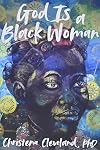
In this timely, much-needed book, theologian, social psychologist, and activist Christena Cleveland recounts her personal journey to dismantle the cultural “whitemalegod” and uncover the Sacred Black Feminine, introducing a Black Female God who imbues us with hope, healing, and liberating presence.
For years, Christena Cleveland spoke about racial reconciliation to congregations, justice organizations, and colleges. But she increasingly felt she could no longer trust in the God she’d show more been implicitly taught to worship—a white male God who preferentially empowered white men despite his claim to love all people. A God who clearly did not relate to, advocate for, or affirm a Black woman like Christena.
Her crisis of faith sent her on an intellectual and spiritual journey through history and across France, on a 400-mile walking pilgrimage to the ancient shrines of Black Madonnas to find healing in the Sacred Black Feminine. God Is a Black Woman is the chronicle of her liberating transformation and a critique of a society shaped by white patriarchal Christianity and culture. Christena reveals how America’s collective idea of God as a white man has perpetuated hurt, hopelessness, and racial and gender oppression. Integrating her powerful personal story, womanist ideology, as well as theological, historical, and social science research, she invites us to take seriously the truth that God is not white nor male and gives us a new and hopeful path for connecting with the divine and honoring the sacredness of all Black people. show less
For years, Christena Cleveland spoke about racial reconciliation to congregations, justice organizations, and colleges. But she increasingly felt she could no longer trust in the God she’d show more been implicitly taught to worship—a white male God who preferentially empowered white men despite his claim to love all people. A God who clearly did not relate to, advocate for, or affirm a Black woman like Christena.
Her crisis of faith sent her on an intellectual and spiritual journey through history and across France, on a 400-mile walking pilgrimage to the ancient shrines of Black Madonnas to find healing in the Sacred Black Feminine. God Is a Black Woman is the chronicle of her liberating transformation and a critique of a society shaped by white patriarchal Christianity and culture. Christena reveals how America’s collective idea of God as a white man has perpetuated hurt, hopelessness, and racial and gender oppression. Integrating her powerful personal story, womanist ideology, as well as theological, historical, and social science research, she invites us to take seriously the truth that God is not white nor male and gives us a new and hopeful path for connecting with the divine and honoring the sacredness of all Black people. show less
Cleveland is an American Christian academic who writes in a very accessible way, about issues that are relevant worldwide, and in almost every context of life. The book revolves around the idea of ‘ingroups’ and ‘outgroups’, showing that we all classify other people in various ways. In some instances this may be useful; but in many cases generalisations are negative, often based on stereotypes or bad experiences.
The writing is excellent and well-researched; I found every chapter show more thought-provoking. It’s relevant for church leaders and members, and indeed anyone who tends to stereotype ‘outgroups’, whether related to diet, or education, or skin colour, or nationality or religion, or anything else that separates people.
If nothing else I’m now aware of ways in which I and those around me tend to see ‘outgroups’, and as the author points out, just the awareness can lead to putting aside some prejudices.
Very highly recommended to all. show less
The writing is excellent and well-researched; I found every chapter show more thought-provoking. It’s relevant for church leaders and members, and indeed anyone who tends to stereotype ‘outgroups’, whether related to diet, or education, or skin colour, or nationality or religion, or anything else that separates people.
If nothing else I’m now aware of ways in which I and those around me tend to see ‘outgroups’, and as the author points out, just the awareness can lead to putting aside some prejudices.
Very highly recommended to all. show less
Read this before hearing her speak at a conference. Cleveland is a compelling and accessible author who really knows her stuff! As a white guy who cares about racial reconciliation and promoting diversity, Cleveland gave me some actionable steps, while keeping me mindful of where my white privilege and comfortable homogeneity may be poisoning the well. Thoughtful good stuff!
My disappointment was my own fault: I made a cross-stitch of the Polish Black Madonna and posted it on FaceBook. In all humility, it is absolutely stunning, and I received a gazillion comments from friends. One, my mentor from the days of my internship at a retirement community, recommended this book. I thought he said that Cleveland had visited Black Madonnas all around the world. In reality she visited 18 statues in France. Fair enough, but she did not write much about their histories show more except for the Madonna of the Rock.
One reason why I did not like the book is that she wrote extensively about her anger with, and dissatisfaction with, what she termed the "angry white male God." I gave up my childhood belief in a "male" God, or any other type of human god decades ago. Every time she said this it jerked me back. Another reason was personal sadness about Cleveland herself: she was abused, physically and emotionally, by her parents, perhaps especially by her father. I hope that writing this book helped her heal from this.
I listened, rather than actually read, this book. I would recommend actually reading it: my French is nearly non-existent, and I could not quite catch the names of the villages which house these statues. show less
One reason why I did not like the book is that she wrote extensively about her anger with, and dissatisfaction with, what she termed the "angry white male God." I gave up my childhood belief in a "male" God, or any other type of human god decades ago. Every time she said this it jerked me back. Another reason was personal sadness about Cleveland herself: she was abused, physically and emotionally, by her parents, perhaps especially by her father. I hope that writing this book helped her heal from this.
I listened, rather than actually read, this book. I would recommend actually reading it: my French is nearly non-existent, and I could not quite catch the names of the villages which house these statues. show less
You May Also Like


Statistics
- Works
- 3
- Members
- 413
- Popularity
- #58,990
- Rating
- 4.2
- Reviews
- 6
- ISBNs
- 12