
Mark A. Noll
Author of Turning Points: Decisive Moments in the History of Christianity
About the Author
Mark A. Noll is the Francis A. McAnancy Professor Emeritus of History at the University of Notre Dame. His many other books include A History of Christianity on the Untied States and Canada. The Civil War as a Theological Crisis, Jesus Christ and the Life of the Mind, and America's God: From show more Jonathan Edwards to Abraham Lincoln. show less
Image credit: Used by permission of Baker Publishing Group, copyright © 2008. All rights to this material are reserved. Materials are not to be distributed to other web locations for retrieval, published(see © info.)
Works by Mark A. Noll
The Rise of Evangelicalism: The Age of Edwards, Whitefield, and the Wesleys (History of Evangelicalism) (2003) 643 copies, 2 reviews
The Civil War as a Theological Crisis (The Steven and Janice Brose Lectures in the Civil War Era) (2006) 464 copies, 5 reviews
Is the Reformation Over?: An Evangelical Assessment of Contemporary Roman Catholicism (2005) 322 copies, 1 review
The New Shape of World Christianity: How American Experience Reflects Global Faith (2009) 259 copies, 2 reviews
Between Faith and Criticism: Evangelicals, Scholarship, and the Bible in America (1987) 199 copies, 1 review
The Princeton Theology 1812-1921 : Scripture, Science, and Theological Method from Archibald Alexander to Benjamin Breckinridge Warfield (1983) 169 copies
In the Beginning Was the Word: The Bible in American Public Life, 1492-1783 (2015) 113 copies, 1 review
Wonderful Words of Life: Hymns in American Protestant History and Theology (2004) — Editor; Contributor — 111 copies
Evangelicalism: Comparative Studies of Popular Protestantism in North America, The British Isles, and Beyond, 1700-1990 (1994) 63 copies
Christian Faith and Practice in the Modern World: Theology from an Evangelical Point of View (1988) 60 copies
Where Shall My Wond'ring Soul Begin? : The Landscape of Evangelical Piety and Thought (2000) 57 copies
Princeton and the Republic, 1768-1822: The Search for a Christian Enlightenment in the Era of Samuel Stanhope Smith (1989) 27 copies
Singing the Lord's Song in a Strange Land: Hymnody in the History of North American Protestantism (Religion & American Culture) (2004) 23 copies
The Christian Life Through Creeds 2 copies
One Cup-Many Interpretations 1 copy
When God and Science Meet 1 copy
Mehr als Schein 1 copy
Evangelical Theology Today 1 copy
Associated Works
The Life of Meaning: Reflections on Faith, Doubt, and Repairing the World (2007) — Contributor — 132 copies, 5 reviews
A Documentary History of Religion in America since 1877 (2003) — Editor, some editions — 108 copies, 1 review
Must Christianity Be Violent?: Reflections on History, Practice, and Theology (2003) — Contributor — 94 copies
The Unfettered Word: Southern Baptists Confront the Authority-Inerrancy Question (1987) — Foreword, some editions — 58 copies
Christianity Reborn: The Global Expansion of Evangelicalism in the Twentieth Century (Studies in the History of Christian Missions) (2004) — Contributor — 45 copies
Making Higher Education Christian: The History and Mission of Evangelical Colleges in America (1987) — Contributor — 24 copies
Religion and Public Life in the Midwest: Americas Common Denominator? (Religion By Region) (2004) — Contributor — 20 copies
Revival, Renewal, and the Holy Spirit [Studies in Evangelical History and Thought] (2009) — Contributor — 11 copies
History and Women, Culture and Faith, Volume 4: Selected Writings of Elizabeth Fox-Genovese: Explorations and Commitments: Religion, Faith, and Culture (2012) — Foreword, some editions — 1 copy
Tagged
Common Knowledge
- Legal name
- Noll, Mark Allan
- Other names
- 樂馬可
- Birthdate
- 1946-07-18
- Gender
- male
- Education
- Wheaton College (BA | 1968 | English)
University of Iowa (MA | 1970 | English)
Trinity Evangelical Divinity School (MA | 1972 | Church History and Theology)
Vanderbilt University (MA | 1974 | PhD | 1975 | History of Christianity) - Occupations
- professor of history
Professor of Christian Thought (Wheaton) - Organizations
- Wheaton College
University of Notre Dame
American Academy of Arts and Letters
Society of Historians
Christian Reformed Church
Institute for the Study of American Evangelicals (show all 7)
Regent College, Illinois - Awards and honors
- National Humanities Medal (2006)
- Nationality
- USA
- Birthplace
- Iowa City, Iowa, USA
- Places of residence
- South Bend, Indiana, USA
Wheaton, Illinois, USA - Associated Place (for map)
- USA
Members
Reviews
The Civil War as a Theological Crisis (The Steven and Janice Brose Lectures in the Civil War Era) by Mark A. Noll
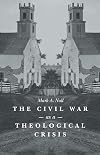
There are a couple of paragraphs in this interesting book about how African-Americans interpreted the Bible and how American Jews did, but mostly it’s about how white Americans and Europeans, Protestant and Catholic, thought about the American Civil War, slavery, and race in terms of theological debates. Was Catholicism akin to slavery because of its adherence to the Pope, or was the individual interpretation of the Bible promoted by Protestantism the foundation for chaos and sectionalism? show more Could God’s intent be seen directly, as evangelical Christianity generally claimed, or only obscurely, as Lincoln suggested in the Gettysburg Address? Did the New Testament reject slavery, or enshrine it? The whole idea of not debating with a sacred text is a bit alien to me, but I was particularly interested in the idea that things that American Christians found troubling were distinct from the things that European Christians did. Most prominently, American Christians, pro and anti-slavery, took very seriously the question of whether the Bible supported slavery, while Europeans were much more likely to see American racial, hereditary slavery as easily distinguishable from Hebrew slavery and to focus on American racism. show less
Read this to prepare for the church history portion of my ordination trials (PCA). As a general survey, it was quite helpful. I found his assessment of 18th century evangelical and pietist movements especially interesting, considering most American evangelicals today assume they’ve been corrupted by Enlightenment values from without when really, as Noll demonstrates, evangelicalism has been an Enlightenment project from the start. Unfortunately, his evaluation of Christendom is too colored show more with anabaptist sympathies that he ends up leveling the same, cliched critique against Christendom as he does the various Reformation churches of the 16th century. Apparently very few Christians since Constantine have been able to resist the lure of earthly power. show less
I agree with jstamp26's assessment: Noll is quite right in arguing that evangelicals have abandoned all meaningful intellectual pursuits (save perhaps for those involving certain aspects of Biblical studies, like philology), but he is sorely mistaken in two aspects. First, the picture he paints of evangelicals of the past in either too naive or incomplete - if there has ever been a vigorous evangelical intellectual life, it existed in spite, not because of the faith of those who practised it show more and it all went to hell (quite literally, this Catholic feels compelled to add) with the advent of dispensationalism. Secondly, and most importantly, Noll calls for something that is quite impossible: sectarian science and scholarship. He defines 'evangelical life of the mind' as 'the effort to think like a Christian ... across the whole spectrum of modern learning, including economics and political science, literary criticism, and imaginative writing, historical inquiry and philosophical studies, linguistics and the history of science.' This shows an astonishing lack of understanding of what modern learning actually is and how scientists operate. It is impossible to imagine what, say, specifically Christian linguistics - let alone specifically evangelical linguistics - supposed to look like. Do we abandon the scientific method and use quotations from the Bible to support whatever our argument is? Noll doesn't say, but every time he brings up this issue, he cites the example of many Catholic, Lutheran or Orthodox scientists and scholars, always failing to be specific. In the end, it is obvious that he does not understand that any Catholic who becomes a top-rated scientist or a scholar is first and foremost a scientist and a scholar who just happens to be a Catholic. According to Noll, the problem with evangelicals is that "they neglected sober analysis of nature and human society" when in fact they purposefully ignored it believing, the literalists that they are, that the Bible has all the answers. How do you become a scholar when you believe the are no questions to be answered?
In short, 'The Scandal of the Evangelical Mind' is a wonderful history of evangelical anti-intellectualism, but Noll's failure to recognize that this is a feature, not a bug, makes it at times an infuriating read. show less
In short, 'The Scandal of the Evangelical Mind' is a wonderful history of evangelical anti-intellectualism, but Noll's failure to recognize that this is a feature, not a bug, makes it at times an infuriating read. show less
The Civil War as a Theological Crisis (The Steven and Janice Brose Lectures in the Civil War Era) by Mark A. Noll
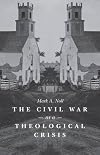
This is another fascinating book by Mark Noll, taken from a series of lectures he delivered in 2003. The Civil War, I learned, was perhaps the most "Christian" war ever fought because both sides were deeply Christian (Protestant, specifically) and grounded their arguments about slavery (and to some extent about secession) on their readings of the Bible. Pastors and politicians on both sides denounced the other side in strong terms for their abandonment of Christian morality.
Especially in show more areas where slavery was common, preachers rebuked abolitionists as rejecting Biblical authority and careful Biblical interpretation. Slaveholders did have an argument that seemed more straightforward, as the Bible discusses slavery at many points and regulates the way in which it should be practiced, but never forbids the practice. Proof-texting from passages like Old Testament slavery laws, household codes, and the book of Philemon were received as powerful arguments, especially for those who benefited from the service of slaves and who had to change their lifestyle and culture to adapt to the emancipation of those men and women. Abolitionists, on the other hand, had to form more nuanced arguments from general biblical principles and the overall character of God and teaching of Christ that the inherent dignity, equality, and freedom in Christ of all people negates the option for one person to hold another as property.
Noll also offers unique discussions of how the Civil War was viewed by the international community and how the issue of racism and slavery were so conflated that is was difficult for most to see that both issues were at play. And there's a transcript of a great speech by Jonathan Blanchard, big supporter of abolition and founder of Wheaton College~ show less
Especially in show more areas where slavery was common, preachers rebuked abolitionists as rejecting Biblical authority and careful Biblical interpretation. Slaveholders did have an argument that seemed more straightforward, as the Bible discusses slavery at many points and regulates the way in which it should be practiced, but never forbids the practice. Proof-texting from passages like Old Testament slavery laws, household codes, and the book of Philemon were received as powerful arguments, especially for those who benefited from the service of slaves and who had to change their lifestyle and culture to adapt to the emancipation of those men and women. Abolitionists, on the other hand, had to form more nuanced arguments from general biblical principles and the overall character of God and teaching of Christ that the inherent dignity, equality, and freedom in Christ of all people negates the option for one person to hold another as property.
Noll also offers unique discussions of how the Civil War was viewed by the international community and how the issue of racism and slavery were so conflated that is was difficult for most to see that both issues were at play. And there's a transcript of a great speech by Jonathan Blanchard, big supporter of abolition and founder of Wheaton College~ show less
Lists
Awards


You May Also Like


Associated Authors
Statistics
- Works
- 63
- Also by
- 18
- Members
- 10,737
- Popularity
- #2,211
- Rating
- 4.0
- Reviews
- 49
- ISBNs
- 168
- Languages
- 2
- Favorited
- 13
