
George M. Marsden
Author of Jonathan Edwards: A Life
About the Author
George M. Marsden is the Francis A. McAnaney Professor of History Emeritus at the University of Notre Dame. His books include Fundamentalism and American Culture, Jonathan Edwards: A Life, and The Outrageous Idea of Christian Scholarship.
Image credit: Jonathan Edwards Center
Works by George M. Marsden
The Soul of the American University: From Protestant Establishment to Established Nonbelief (1994) 267 copies, 2 reviews
The Twilight of the American Enlightenment: The 1950s and the Crisis of Liberal Belief (2014) 137 copies, 2 reviews
An Infinite Fountain of Light: Jonathan Edwards for the Twenty-First Century (2023) 49 copies, 1 review
Associated Works
The Salvation of Souls: Nine Previously Unpublished Sermons on the Call of Ministry and the Gospel by Jonathan Edwards (2002) — Foreword, some editions — 189 copies
John Calvin, His Influence in the Western World (Contemporary Evangelical Perspectives) (1982) — Contributor — 83 copies
A Catholic Modernity?: Charles Taylor's Marianist Award Lecture, with responses by William M. Shea, Rosemary Luling Haughton, George Marsden, and Jean Bethke Elshtain (1999) — Contributor, some editions — 56 copies
Making Higher Education Christian: The History and Mission of Evangelical Colleges in America (1987) — Contributor — 26 copies
By the Vision of Another World: Worship in American History (The Calvin Institute of Christian Worship Liturgical Studies) (2012) — Contributor — 8 copies
Tagged
Common Knowledge
- Other names
- 喬治.馬斯登
馬斯丹 - Birthdate
- 1939
- Gender
- male
- Education
- Haverford College (BA)
Westminster Theological Seminary (BD)
Yale University (MA, PhD) - Occupations
- Professor of History, Emeritus (Notre Dame)
- Organizations
- University of Notre Dame
Duke University
Calvin College
Members
Reviews
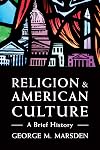
Summary: A survey of the interaction of religion and American civil culture from the nation's beginnings up to 2016.
"The United States is both remarkably religious and remarkably profane."
The opening line of this survey of the history of the interaction of religion and American culture is an accurate thesis summary of this work. In part, it reflects the point of view of the author, George M. Marsden. He notes in the introduction to the work that his thinking is shaped by an Augustinian show more outlook that recognizes both the dignity of humans in God's image and the reality of human evil, the parallel cultures of "City of God" and the "City of Man," and that Christians inhabit both cities.
Marsden traces this interaction from the Protestant heritage of the early immigrants, which held sway in the country until the Civil War and the conflicted engagement with Native Peoples--from uneasy coexistence, to violent displacement, to occasional mission efforts--a conflicted record. He examines the different streams of thought contributing to the American revolution--and how they converged and diverged. He examines the heritage of dissent, the secular and deist founders, and the ideas shared in common by Locke and the Puritans. He notes a paradox of high ideals of liberty and justice, and the beginnings of manifest destiny and the use of power to displace native peoples, and hold Africans in servitude. These threads continue into the nineteenth century with the revivalist spread of evangelical culture, marked by increasing levels of education as frontier denominations establish colleges. This culminates in institutions like Oberlin College, motivated by religious revival, enrolling female students, and advocating abolition in an increasingly divided evangelical church along the geographic lines of north and south.
The post-Civil war era on its face seemed to reflect a continued advance of Protestantism, including Protestant missions. At the same time developments of both social progressivism, and the advent of Darwinism and higher critical theories brought the first cracks in the established position of both mainline and evangelical Protestants. They also faced an increasingly plural situation with the immigration of large numbers of Catholics and Jews, as well as the growing influence of the African-American church, which in turn, made its contribution to the rise of pentecostalism.
The fault lines become more pronounced in the early twentieth century with divides in mainline denominations between north and south, a rise of fundamentalism in reaction to liberal scholarship. John Dewey's secular ideals prevail in the educational establishment. The Niebuhr brothers and Karl Barth offer a neo-orthodox alternative to liberal scholarship in more mainline contexts while those of evangelical belief retreat into fundamentalism.
Marsden notes another great reversal post-World War 2 with the rise in church membership, the baby boom, the ministry of Billy Graham, a re-framed culturally engaged evangelicalism, as well as the growth of Jewish and Catholic influence in the country. The African-American church led by Dr. King awakens and asserts its call for justice and civil rights. Then a rising evangelical movement becomes increasingly politically engaged and Marsden traces this history from the rise of Jimmy Carter to the election of 2016, chronicling an increasingly fragmented, secularized, and polarized country.
This "brief history," as the subtitle calls it, covers extensive ground, and various movements, sects, and various religious communities, in a history at once descriptive, and illustrative of the "religious and profane" theme. Marsden particularly portrays the conflict between religious ideals and our treatment of native peoples and African-Americans, the changing face of Protestant privilege, the unholy alliances that have existed between Christians and our government throughout our history, the growing pluralism, both religious and irreligious, and the perennial tension between the country's religious and secular ideals.
Marsden concludes with a few thoughts on preserving a truly pluralistic society, which he believes begins with clarifying the rules that protect free speech and genuine diversity within various sub-communities, protecting them from the tyranny of the majority. He concludes by noting why knowledge of our history is so vital to this project:
"This book is a history, and it is much easier to describe how the United States got to the point it has reached with respect to its secular and religious diversity than it is to prescribe exactly how its future with respect to those diversities might be improved. Still, we can safely say that there will be no improvement without historical understanding of how we got to be where we are. One lesson is sure. When it comes to religion, it will not do to resort to easy generalizations; evaluation of its roles must always be nuanced. Such nuance will help us see that religion, even at what we may regard its best, appears in human affairs almost always as a mixed blessing."
Marsden has given us the resources for that nuanced "understanding of how we have gotten to be where we are." This seems critical for religious and political leaders alike, to enable wise and humble decisions that avoid the hubris and folly that sadly has too often characterized our history.
___________________________
Disclosure of Material Connection: I received a complimentary review copy of this book from the publisher in exchange for an honest review. The opinions I have expressed are my own. show less
"The United States is both remarkably religious and remarkably profane."
The opening line of this survey of the history of the interaction of religion and American culture is an accurate thesis summary of this work. In part, it reflects the point of view of the author, George M. Marsden. He notes in the introduction to the work that his thinking is shaped by an Augustinian show more outlook that recognizes both the dignity of humans in God's image and the reality of human evil, the parallel cultures of "City of God" and the "City of Man," and that Christians inhabit both cities.
Marsden traces this interaction from the Protestant heritage of the early immigrants, which held sway in the country until the Civil War and the conflicted engagement with Native Peoples--from uneasy coexistence, to violent displacement, to occasional mission efforts--a conflicted record. He examines the different streams of thought contributing to the American revolution--and how they converged and diverged. He examines the heritage of dissent, the secular and deist founders, and the ideas shared in common by Locke and the Puritans. He notes a paradox of high ideals of liberty and justice, and the beginnings of manifest destiny and the use of power to displace native peoples, and hold Africans in servitude. These threads continue into the nineteenth century with the revivalist spread of evangelical culture, marked by increasing levels of education as frontier denominations establish colleges. This culminates in institutions like Oberlin College, motivated by religious revival, enrolling female students, and advocating abolition in an increasingly divided evangelical church along the geographic lines of north and south.
The post-Civil war era on its face seemed to reflect a continued advance of Protestantism, including Protestant missions. At the same time developments of both social progressivism, and the advent of Darwinism and higher critical theories brought the first cracks in the established position of both mainline and evangelical Protestants. They also faced an increasingly plural situation with the immigration of large numbers of Catholics and Jews, as well as the growing influence of the African-American church, which in turn, made its contribution to the rise of pentecostalism.
The fault lines become more pronounced in the early twentieth century with divides in mainline denominations between north and south, a rise of fundamentalism in reaction to liberal scholarship. John Dewey's secular ideals prevail in the educational establishment. The Niebuhr brothers and Karl Barth offer a neo-orthodox alternative to liberal scholarship in more mainline contexts while those of evangelical belief retreat into fundamentalism.
Marsden notes another great reversal post-World War 2 with the rise in church membership, the baby boom, the ministry of Billy Graham, a re-framed culturally engaged evangelicalism, as well as the growth of Jewish and Catholic influence in the country. The African-American church led by Dr. King awakens and asserts its call for justice and civil rights. Then a rising evangelical movement becomes increasingly politically engaged and Marsden traces this history from the rise of Jimmy Carter to the election of 2016, chronicling an increasingly fragmented, secularized, and polarized country.
This "brief history," as the subtitle calls it, covers extensive ground, and various movements, sects, and various religious communities, in a history at once descriptive, and illustrative of the "religious and profane" theme. Marsden particularly portrays the conflict between religious ideals and our treatment of native peoples and African-Americans, the changing face of Protestant privilege, the unholy alliances that have existed between Christians and our government throughout our history, the growing pluralism, both religious and irreligious, and the perennial tension between the country's religious and secular ideals.
Marsden concludes with a few thoughts on preserving a truly pluralistic society, which he believes begins with clarifying the rules that protect free speech and genuine diversity within various sub-communities, protecting them from the tyranny of the majority. He concludes by noting why knowledge of our history is so vital to this project:
"This book is a history, and it is much easier to describe how the United States got to the point it has reached with respect to its secular and religious diversity than it is to prescribe exactly how its future with respect to those diversities might be improved. Still, we can safely say that there will be no improvement without historical understanding of how we got to be where we are. One lesson is sure. When it comes to religion, it will not do to resort to easy generalizations; evaluation of its roles must always be nuanced. Such nuance will help us see that religion, even at what we may regard its best, appears in human affairs almost always as a mixed blessing."
Marsden has given us the resources for that nuanced "understanding of how we have gotten to be where we are." This seems critical for religious and political leaders alike, to enable wise and humble decisions that avoid the hubris and folly that sadly has too often characterized our history.
___________________________
Disclosure of Material Connection: I received a complimentary review copy of this book from the publisher in exchange for an honest review. The opinions I have expressed are my own. show less
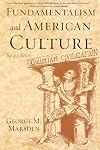
George Marsden is an American historian, specializing in the interface of American culture and religion. He was born in Eastern Pennsylvania and raised in a religious household. He has an extensive and prestigious academic career, holding degrees from institutions such as Haverford, Westminster Theological Seminary, and Yale, while he has held professorships at Calvin College, Duke Divinity School, and the University of Notre Dame. He remains the professor emeritus of history at that show more university. He has written extensively, and his best-known works include Jonathan Edwards: A Life, the book here under review, Fundamentalism and American Culture, and The Soul of the American University.
Marsden wrote the book in five parts, carefully analyzing and expounding upon the historical events and forces at play throughout the years that shaped the fundamentalist movement. Part one was written to lay down the historical context that led to the fundamentalist movement. Part two of the book comprises twelve chapters covering four broad themes. Marsden sought to demonstrate the diversity of the coalition of fundamentalists in their doctrines, utilizing various approaches to the modern age, the millennium, holiness, defending the faith, and culture to highlight these differences. As he rightly observed. “Fundamentalism was a mosaic of divergent and sometimes contradictory traditions and tendencies that could never be totally integrated.” (Marsden 2006, 43) Section three is the meat of the book, and the portion in which Marsden covered what those familiar with the history would know as the era of fundamentalism. The background provided thus far is crucial to a historical contextual understanding, but section three covers the years from 1917 to 1925, when the real changes and controversies occurred. In the fourth part of the book, spanning four chapters, Marsden presented four interpretations of the fundamentalist movement from various perspectives, including social, political, intellectual, and the uniqueness of American fundamentalism. In the final section of his book, Marsden tried to bring the understanding of fundamentalism up to date. The first edition of his book was written at a time when history was relevant to a resurging “fundamentalistic” movement among evangelicals. Thus, writing in 2005, there was extensive material for Marsden to develop further. Marsden tracked several things, including the shift from the term evangelical to fundamentalism and back to evangelical, the increasing role the South served in the new rise of fundamentalistic thinking among evangelicals, the world impact of fundamentalism, and the practical branches of fundamentalism and how it affected and affects real people.
Marsden wrote an excellent and in-depth work that is of great value for the student of Christian history, especially in the early 20th century of North America. His writing is thorough and heavy with information that will help one formulate a complete and accurate picture of American Fundamentalism. Moreover, his work is not partisan and offers a nuanced picture that reveals his interest in gathering a full picture. In fact, this nuanced neutrality is one of the few negatives of the book. Marsden was almost too neutral and objective, in that he offered little judgment as to what was right or wrong. Thus, things that should be called out as sinful pass by unaddressed. Another weakness is that there is little theological analysis. Marsden seems to have anticipated this criticism because he clarified the historian’s role in his afterword. However, while the history may be understood apart from theological analysis, helpful conclusions require more theological critique. Overall, however, Marsden wrote with a generally charitable tone toward both fundamentalists and modernists. As such, both liberals and conservatives will find great historical value in the work, if not support for their doctrinal position. Anyone interested in the subject matter will thus find this book a worthy addition to their study. show less
Marsden wrote the book in five parts, carefully analyzing and expounding upon the historical events and forces at play throughout the years that shaped the fundamentalist movement. Part one was written to lay down the historical context that led to the fundamentalist movement. Part two of the book comprises twelve chapters covering four broad themes. Marsden sought to demonstrate the diversity of the coalition of fundamentalists in their doctrines, utilizing various approaches to the modern age, the millennium, holiness, defending the faith, and culture to highlight these differences. As he rightly observed. “Fundamentalism was a mosaic of divergent and sometimes contradictory traditions and tendencies that could never be totally integrated.” (Marsden 2006, 43) Section three is the meat of the book, and the portion in which Marsden covered what those familiar with the history would know as the era of fundamentalism. The background provided thus far is crucial to a historical contextual understanding, but section three covers the years from 1917 to 1925, when the real changes and controversies occurred. In the fourth part of the book, spanning four chapters, Marsden presented four interpretations of the fundamentalist movement from various perspectives, including social, political, intellectual, and the uniqueness of American fundamentalism. In the final section of his book, Marsden tried to bring the understanding of fundamentalism up to date. The first edition of his book was written at a time when history was relevant to a resurging “fundamentalistic” movement among evangelicals. Thus, writing in 2005, there was extensive material for Marsden to develop further. Marsden tracked several things, including the shift from the term evangelical to fundamentalism and back to evangelical, the increasing role the South served in the new rise of fundamentalistic thinking among evangelicals, the world impact of fundamentalism, and the practical branches of fundamentalism and how it affected and affects real people.
Marsden wrote an excellent and in-depth work that is of great value for the student of Christian history, especially in the early 20th century of North America. His writing is thorough and heavy with information that will help one formulate a complete and accurate picture of American Fundamentalism. Moreover, his work is not partisan and offers a nuanced picture that reveals his interest in gathering a full picture. In fact, this nuanced neutrality is one of the few negatives of the book. Marsden was almost too neutral and objective, in that he offered little judgment as to what was right or wrong. Thus, things that should be called out as sinful pass by unaddressed. Another weakness is that there is little theological analysis. Marsden seems to have anticipated this criticism because he clarified the historian’s role in his afterword. However, while the history may be understood apart from theological analysis, helpful conclusions require more theological critique. Overall, however, Marsden wrote with a generally charitable tone toward both fundamentalists and modernists. As such, both liberals and conservatives will find great historical value in the work, if not support for their doctrinal position. Anyone interested in the subject matter will thus find this book a worthy addition to their study. show less

Summary: A brief introduction to the life and thought of Jonathan Edwards, setting him alongside two of his contemporaries, Benjamin Franklin and George Whitefield.
George Marsden is one of the outstanding scholars we have in the area of American religious history, His biography of Jonathan Edwards, Jonathan Edwards: A Life, won the Bancroft Prize in 2004, a prize recognizing outstanding works of American history and diplomacy. This work, much briefer, introduces us to some key ideas of show more Edwards, setting him alongside two contemporaries, Benjamin Franklin and George Whitefield. The chapters began as the Stone Lectures at Princeton Theological Seminary in 2008 and have been developed in subsequent presentations.
What Marsden hopes to do here, as he explains in his first lecture, is to translate Edwards, who spoke and wrote for his time, for us, at least a few of his profound ideas about the beauty of God who is light and love, and about how we might recognize rightly ordered love of God in the life of one who claims to be in Christ. He then offers a short biography of Edwards focusing on his pastoral ministry and oversight of revivals, his role as an apologist for the “New Light” movement and his publication of the Religious Affections.. He briefly covers his alienation from his congregation in Northampton over who may participate in communion, his ministry with Native peoples in Stockbridge, and his presidency at Princeton and connections to the Burr family.
The second lecture considers Benjamin Franklin and how his ideas cleared the way for the modern/post-modern immanent framing of life, focused on a material universe, human initiative and activity, the autonomous individual. While Franklin and Edwards were acquainted they were worlds apart. Franklin held to vaguely theistic beliefs and believed religion played an important role in motivating the moral life necessary for the democratic ordering of society. Yet his vision of the self made person anticipated Charles Taylor’s “buffered self.”
I thought the third chapter was worth the price of admission in elucidating Edwards ideas of the “new light” of God’s beauty Edwards apprehended in his conversion. In contrast to Franklin’s materialist outlook, Edwards saw “that the universe is most essentially an ongoing expression of a loving God [that] offered a dramatically radical alternative to the emerging perspective on the universe shared by Franklin and others in the era following the work of Isaac Newton” (p. 48). Far from a distant deity, Edwards saw all of this as a personal expression of the Triune God. Edwards was enthralled with the beauty of this love both in creation and the sacrificial work of Christ. He further saw the beauty of God’s love and joy in creation and salvation as a “fountain of light” illumining and transforming the life of one who believes, leading to a life of love ordered by the One whose loving light has shown into the believer’s life.
In Chapter Four, Marsden considers Edwards’ other contemporary, George Whitefield. Edwards welcomed and defended Whitefield’s preaching in New England, hoping that he would stir the revival fires that had died down. While Edwards defended New Light ideas within an establishment shaped by the Reformers, Whitefield innovated both in message and methods of promotion that anticipated modern evangelicalism, anticipating the Wesleyan movement and those which followed. His conversionist message would be recognizable to evangelicals today, and its core paved the way for movements with far less stress on education than that which Edwards and Whitefield shared. It also paved the way for the diversity of churches dotting the American landscape.
The concluding chapter considers the Religious Affections or as Marsden translates the term, the rightly order loves that distinguish those who are truly regenerate from the falsity of those who are not. Such love begins with the indwelling Holy Spirit who makes real God’s love in the believer. This results in love centered on the loving God rather than the self. Such love is drawn to the moral beauty of God. This is more than rational knowledge of the love and beauty of God; it is a heart enthralled by that love and beauty. Yet rightly ordered love also involves right understanding shaped by the scriptures. Such love is humble. It is lamb-like, not proud, arrogant, or self-asserting. It is tender of spirit. The true believer’s life will be one of symmetry and proportion, reflecting an eigthteenth century idea of beauty. Rather than fading, the appetite for the beloved grows, and finally eventuates in a life of actively growing in grace. Against the shallow spirituality and cults of personality in the present day church, Marsden sees the vision of the “infinite fountain of light and love” and the “rightly ordered loves” of Edwards offering profound insight for the growth of believers in Christ.
Marsden appends to this material an edited version of Edwards’ sermon “A Divine and Supernatural Light” from 1733, in which we can see how Edwards develops the ideas Marsden has discussed. If only this were the preferred sermon rather than “Sinners in the Hands of an Angry God” as representative of Edwards.
This is a delightful little book that both introduces the reader to some important strands of Edwards’ thought, worthy of translation into our contemporary context, and considers the shaping influence of his contemporaries Franklin and Whitefield on both secular belief and evangelical practice. This left me reflecting why the latter have had far greater influence, it seems, than Edwards, when he is often deemed America’s foremost theologian. Perhaps it is this matter of translation. We seem to be better at translating Edwards flaws, whether they be the “Sinners” sermon or his slave holding, than his striking insights into the nature of God and how this bears on true spirituality. Perhaps this book and the renaissance of Edwards studies will help redress this balance, if we keep the necessity of translating well, as Marsden has done, in mind.
________________________________
Disclosure of Material Connection: I received a complimentary review copy of this book from the publisher. show less
George Marsden is one of the outstanding scholars we have in the area of American religious history, His biography of Jonathan Edwards, Jonathan Edwards: A Life, won the Bancroft Prize in 2004, a prize recognizing outstanding works of American history and diplomacy. This work, much briefer, introduces us to some key ideas of show more Edwards, setting him alongside two contemporaries, Benjamin Franklin and George Whitefield. The chapters began as the Stone Lectures at Princeton Theological Seminary in 2008 and have been developed in subsequent presentations.
What Marsden hopes to do here, as he explains in his first lecture, is to translate Edwards, who spoke and wrote for his time, for us, at least a few of his profound ideas about the beauty of God who is light and love, and about how we might recognize rightly ordered love of God in the life of one who claims to be in Christ. He then offers a short biography of Edwards focusing on his pastoral ministry and oversight of revivals, his role as an apologist for the “New Light” movement and his publication of the Religious Affections.. He briefly covers his alienation from his congregation in Northampton over who may participate in communion, his ministry with Native peoples in Stockbridge, and his presidency at Princeton and connections to the Burr family.
The second lecture considers Benjamin Franklin and how his ideas cleared the way for the modern/post-modern immanent framing of life, focused on a material universe, human initiative and activity, the autonomous individual. While Franklin and Edwards were acquainted they were worlds apart. Franklin held to vaguely theistic beliefs and believed religion played an important role in motivating the moral life necessary for the democratic ordering of society. Yet his vision of the self made person anticipated Charles Taylor’s “buffered self.”
I thought the third chapter was worth the price of admission in elucidating Edwards ideas of the “new light” of God’s beauty Edwards apprehended in his conversion. In contrast to Franklin’s materialist outlook, Edwards saw “that the universe is most essentially an ongoing expression of a loving God [that] offered a dramatically radical alternative to the emerging perspective on the universe shared by Franklin and others in the era following the work of Isaac Newton” (p. 48). Far from a distant deity, Edwards saw all of this as a personal expression of the Triune God. Edwards was enthralled with the beauty of this love both in creation and the sacrificial work of Christ. He further saw the beauty of God’s love and joy in creation and salvation as a “fountain of light” illumining and transforming the life of one who believes, leading to a life of love ordered by the One whose loving light has shown into the believer’s life.
In Chapter Four, Marsden considers Edwards’ other contemporary, George Whitefield. Edwards welcomed and defended Whitefield’s preaching in New England, hoping that he would stir the revival fires that had died down. While Edwards defended New Light ideas within an establishment shaped by the Reformers, Whitefield innovated both in message and methods of promotion that anticipated modern evangelicalism, anticipating the Wesleyan movement and those which followed. His conversionist message would be recognizable to evangelicals today, and its core paved the way for movements with far less stress on education than that which Edwards and Whitefield shared. It also paved the way for the diversity of churches dotting the American landscape.
The concluding chapter considers the Religious Affections or as Marsden translates the term, the rightly order loves that distinguish those who are truly regenerate from the falsity of those who are not. Such love begins with the indwelling Holy Spirit who makes real God’s love in the believer. This results in love centered on the loving God rather than the self. Such love is drawn to the moral beauty of God. This is more than rational knowledge of the love and beauty of God; it is a heart enthralled by that love and beauty. Yet rightly ordered love also involves right understanding shaped by the scriptures. Such love is humble. It is lamb-like, not proud, arrogant, or self-asserting. It is tender of spirit. The true believer’s life will be one of symmetry and proportion, reflecting an eigthteenth century idea of beauty. Rather than fading, the appetite for the beloved grows, and finally eventuates in a life of actively growing in grace. Against the shallow spirituality and cults of personality in the present day church, Marsden sees the vision of the “infinite fountain of light and love” and the “rightly ordered loves” of Edwards offering profound insight for the growth of believers in Christ.
Marsden appends to this material an edited version of Edwards’ sermon “A Divine and Supernatural Light” from 1733, in which we can see how Edwards develops the ideas Marsden has discussed. If only this were the preferred sermon rather than “Sinners in the Hands of an Angry God” as representative of Edwards.
This is a delightful little book that both introduces the reader to some important strands of Edwards’ thought, worthy of translation into our contemporary context, and considers the shaping influence of his contemporaries Franklin and Whitefield on both secular belief and evangelical practice. This left me reflecting why the latter have had far greater influence, it seems, than Edwards, when he is often deemed America’s foremost theologian. Perhaps it is this matter of translation. We seem to be better at translating Edwards flaws, whether they be the “Sinners” sermon or his slave holding, than his striking insights into the nature of God and how this bears on true spirituality. Perhaps this book and the renaissance of Edwards studies will help redress this balance, if we keep the necessity of translating well, as Marsden has done, in mind.
________________________________
Disclosure of Material Connection: I received a complimentary review copy of this book from the publisher. show less

I remember – from my Bradley-Beatty-Long Anthology of American Literature that we used in high school in the late 60s, before Norton came up with their own anthology of American literature – reading what I recall as the very weird sermon "Sinners in the Hands of an Angry God" as one of our examples of very early American literature. (This was in an era that had not yet started exalting the diversity of American literature to include Native Americans and women from its earliest show more inception.)
George Marsden very successfully shows that Edwards was much more than a "hell-and-damnation" sermonizer. While still adhering to Calvinistic predestination as well as to eternal damnation for some, Edwards envisaged a much broader contingent of the "saved" that would result from evangelical "awakenings" as well as missionary work to the not-yet-Christianized, Edwards himself showing definite personal interest in missionary work to the Indians of New England.
Edwards is arguably the greatest American theologian prior to the Civil War (though Edwards, living from 1704 to 1758, regarded himself as "British" and the inhabitant of a British province in North America). As an evangelical Calvinist, he emphasized an Augustinian "affection" of the emotions rather than Thomistic rationalism, but he also insisted that emotions alone did not suffice and that they needed to be kept under reasoned restraint.
And his An Inquiry into the Modern Prevailing Notions of the Freedom of the Will which is Supposed to be Essential to Moral Agency, Virtue and Vice, Reward and Punishment, Praise and Blame (more simply, Freedom of the Will), is certainly one of the most significant works of American philosophy prior to the Civil War.
I have the Library of American anthology of Edwards: Writings from the Great Awakening and plan to get on to it, but unfortunately it doesn't include Freedom of the Will and I think emphasizes Edwards's evangelical "awakening" works rather than the broad scope of his Calvinistic theology.
Although the LoA edition seems to have some limitations, I'll be aware of these having had the benefit of Marsden's biography. show less
George Marsden very successfully shows that Edwards was much more than a "hell-and-damnation" sermonizer. While still adhering to Calvinistic predestination as well as to eternal damnation for some, Edwards envisaged a much broader contingent of the "saved" that would result from evangelical "awakenings" as well as missionary work to the not-yet-Christianized, Edwards himself showing definite personal interest in missionary work to the Indians of New England.
Edwards is arguably the greatest American theologian prior to the Civil War (though Edwards, living from 1704 to 1758, regarded himself as "British" and the inhabitant of a British province in North America). As an evangelical Calvinist, he emphasized an Augustinian "affection" of the emotions rather than Thomistic rationalism, but he also insisted that emotions alone did not suffice and that they needed to be kept under reasoned restraint.
And his An Inquiry into the Modern Prevailing Notions of the Freedom of the Will which is Supposed to be Essential to Moral Agency, Virtue and Vice, Reward and Punishment, Praise and Blame (more simply, Freedom of the Will), is certainly one of the most significant works of American philosophy prior to the Civil War.
I have the Library of American anthology of Edwards: Writings from the Great Awakening and plan to get on to it, but unfortunately it doesn't include Freedom of the Will and I think emphasizes Edwards's evangelical "awakening" works rather than the broad scope of his Calvinistic theology.
Although the LoA edition seems to have some limitations, I'll be aware of these having had the benefit of Marsden's biography. show less
Lists
Awards


You May Also Like


Associated Authors
Statistics
- Works
- 30
- Also by
- 11
- Members
- 5,263
- Popularity
- #4,741
- Rating
- 4.1
- Reviews
- 37
- ISBNs
- 76
- Languages
- 1
- Favorited
- 7