
D. G. Hart
Author of With Reverence and Awe: Returning to the Basics of Reformed Worship
About the Author
D. G. Hart is director of academic projects and faculty development at the Intercollegiate Studies Institute in Wilmington, Delaware.
Image credit: Used by permission of Baker Publishing Group, copyright © 2008. All rights to this material are reserved. Materials are not to be distributed to other web locations for retrieval, published(see © info.)
Works by D. G. Hart
Defending the Faith: J. Gresham Machen and the Crisis of Conservative Protestantism in Modern America (1994) 359 copies, 1 review
Deconstructing Evangelicalism: Conservative Protestantism in the Age of Billy Graham (2004) 225 copies, 1 review
John Williamson Nevin: High-Church Calvinist (American Reformed Biographies) (2005) 172 copies, 3 reviews
Fighting the Good Fight: A Brief History of the Orthodox Presbyterian Church (1995) 150 copies, 1 review
The Lost Soul of American Protestantism (American Intellectual Culture) (2002) 110 copies, 2 reviews
Reckoning With the Past: Historical Essays on American Evangelicalism from the Institute for the Study of American Evangelicals (1995) 106 copies, 1 review
That Old-Time Religion in Modern America: Evangelical Protestantism in the Twentieth Century (2002) 94 copies, 1 review
From Billy Graham to Sarah Palin: Evangelicals and the Betrayal of American Conservatism (2011) 59 copies
Between the Times: The Orthodox Presbyterian Church in Transition, 1945-1990 (2011) 52 copies, 1 review
Damning Words: The Life and Religious Times of H. L. Mencken (Library of Religious Biography) (2016) 28 copies
American Catholic: The Politics of Faith During the Cold War (Religion and American Public Life) (2020) 17 copies
A New Old School 1 copy
John Williamson Nevin 1 copy
Associated Works
John Calvin: A Heart for Devotion, Doctrine, Doxology (2008) — Contributor, some editions — 991 copies, 2 reviews
The Law Is Not of Faith: Essays on Works and Grace in the Mosaic Covenant (2009) — Contributor — 160 copies, 1 review
Colonial Presbyterianism: Old Faith in a New Land (Princeton Theological Monograph) (2007) — Contributor — 55 copies, 1 review
Evangelicals and the Early Church: Recovery, Reform, Renewal (Wheaton Center for Early Christian Studies) (2011) — Contributor — 12 copies
Tagged
Common Knowledge
- Legal name
- Hart, Darryl
- Birthdate
- 1951
- Gender
- male
- Occupations
- profession
- Organizations
- Hillsdale College
- Nationality
- USA
- Associated Place (for map)
- USA
Members
Reviews
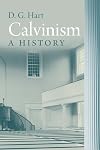
It’s hard to overstate how good this book is. I’ve enjoyed other books by Hart, but this is really on a different level. It is both masterful scholarship and incredibly accessible. As other Reformed Protestants know, the history of splits, mergers, followed by more splits can be indiscernible at times. Not to mention the breadth of Reformed orthodoxy and all the various projects of retrieval throughout the years and from various contexts. But Hart presents a narrative that is easy to show more follow and rarely misses a thing.
The main takeaway, I think, is to remember how dependent Calvinistic expressions of Protestantism were on political realities. It’s easy to criticize Christendom now but the simple fact is there would be no Protestant churches if magistrates in Switzerland, Germany, and England didn’t protect Reformation leaders. Over time, new political realities led to new developments, even embracing voluntarism—sometimes when there was no other option left. And of course, how different Calvinism looked in Europe where establishment was the norm compared to America and other colonial contexts where there was no such expectation.
The best histories inspire humility. One will put down Calvinism: A History appreciating the faith of many of its torchbearers and thankful for their commitment to the doctrines they held so dear. These were more then mere intellectual dictums—they sustained the faithful through persecution in France, war in Scotland, and the rugged terrain in New England. It inspired great institutions in the Netherlands and transformed Korea. May we too have the faith to press on in our times, committed to our Reformed heritage and with confidence in the gospel of our Lord Jesus Christ. show less
The main takeaway, I think, is to remember how dependent Calvinistic expressions of Protestantism were on political realities. It’s easy to criticize Christendom now but the simple fact is there would be no Protestant churches if magistrates in Switzerland, Germany, and England didn’t protect Reformation leaders. Over time, new political realities led to new developments, even embracing voluntarism—sometimes when there was no other option left. And of course, how different Calvinism looked in Europe where establishment was the norm compared to America and other colonial contexts where there was no such expectation.
The best histories inspire humility. One will put down Calvinism: A History appreciating the faith of many of its torchbearers and thankful for their commitment to the doctrines they held so dear. These were more then mere intellectual dictums—they sustained the faithful through persecution in France, war in Scotland, and the rugged terrain in New England. It inspired great institutions in the Netherlands and transformed Korea. May we too have the faith to press on in our times, committed to our Reformed heritage and with confidence in the gospel of our Lord Jesus Christ. show less
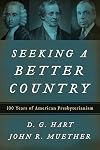
Truly an excellent treatment of American Presbyterian history. I read it in preparation for an ordination exam, but I know I will return to it often throughout my ministry.
The authors' thesis is basically this: there is something called an American Presbyterian tradition that is distinct from Scottish or Irish Presbyterianism. The latter was able transplant in the colonies without losing its identity. The former, the authors argue, was in a perpetual identity crisis of sorts, never quite show more comfortable with its past and never satisfied with its new home. Indeed, the unique feature of American Presbyterianism is its "Americanism," a love affair with the country it helped settle and a source of denominational and confessional confusion for the church.
Though they stress their objectivity, the authors share a mostly negative evaluation of American Presbyterianism. The group that receives the most praise is the 19th century Old School whose mission to free the church of worldly concerns and achieve complete independence from any earthly home culminated in J. Gresham Machen and the founding of the Orthodox Presbyterian Church. In that sense, the book suggests the greatest triumph of American Presbyterianism was actually a repudiation of all those things which make American Presbyterianism unique.
I share the authors' concerns about certain influences on our shared tradition (ecumenism, evangelicalism, etc.). However, my personal opinion is that to wage war against one's own tradition is not only folly but foolish (I suspect the authors would agree but would argue against my own conclusions). As a member of the PCA-a continuing church of the American Presbyterian tradition-it seems clear from this book that we are a mix of Puritan piety, New Side evangelicalism, and Old School orthodoxy (particularly of a Southern flavor). I'd rather not spend my time trying to relitigate any one part but find the healthy balance of the three. show less
The authors' thesis is basically this: there is something called an American Presbyterian tradition that is distinct from Scottish or Irish Presbyterianism. The latter was able transplant in the colonies without losing its identity. The former, the authors argue, was in a perpetual identity crisis of sorts, never quite show more comfortable with its past and never satisfied with its new home. Indeed, the unique feature of American Presbyterianism is its "Americanism," a love affair with the country it helped settle and a source of denominational and confessional confusion for the church.
Though they stress their objectivity, the authors share a mostly negative evaluation of American Presbyterianism. The group that receives the most praise is the 19th century Old School whose mission to free the church of worldly concerns and achieve complete independence from any earthly home culminated in J. Gresham Machen and the founding of the Orthodox Presbyterian Church. In that sense, the book suggests the greatest triumph of American Presbyterianism was actually a repudiation of all those things which make American Presbyterianism unique.
I share the authors' concerns about certain influences on our shared tradition (ecumenism, evangelicalism, etc.). However, my personal opinion is that to wage war against one's own tradition is not only folly but foolish (I suspect the authors would agree but would argue against my own conclusions). As a member of the PCA-a continuing church of the American Presbyterian tradition-it seems clear from this book that we are a mix of Puritan piety, New Side evangelicalism, and Old School orthodoxy (particularly of a Southern flavor). I'd rather not spend my time trying to relitigate any one part but find the healthy balance of the three. show less
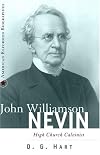
I've just finished reading the biography of John Williamson Nevin written by DG Hart.
Hart only briefly addresses the childhood of Nevin before charging into the narrative of Nevin's ministry. The bulk of the book is an attempt to explain what Nevin had to say, the context in which he said it, and the impact (or lack of) that his work had in the German Reformed Church and the American Evangelical church-at-large.
Hart's work is helpful and well worth the time spent learning about this amazing show more theologian from our reformed past. However, the greatest work in this volume is the conclusion, in which Hart does a masterful job of demonstrating the importance of Nevin's contribution, and even criticism, of the church in America. While the lion's share of church historians consider the late 19th century to be the "critical period" in church history, Hart argues forcefully that given a different (more appropriate?) set of criteria, it can be demonstrated that by the late 19th century, the church had long since passed the critical period. This critique (drawn by Hart from Nevin) is most fascinating since it demonstrates Nevin's incredible insight into his own period. But more to the point, Nevin's arguments against the American church are no less true today than they were in his day, making this work, and particularly Hart's conclusion, decisively relevant for today's reader.
I leave you with a quote from the conclusion:
"...if the church is primarily an agency of grace through word and sacrament, then when those means of salvation become marginal, Christianity has entered an era fraught with abiding significance."
Isn't this the American church of today? Hasn't it been the American church since at least the 2nd Great Awakening? show less
Hart only briefly addresses the childhood of Nevin before charging into the narrative of Nevin's ministry. The bulk of the book is an attempt to explain what Nevin had to say, the context in which he said it, and the impact (or lack of) that his work had in the German Reformed Church and the American Evangelical church-at-large.
Hart's work is helpful and well worth the time spent learning about this amazing show more theologian from our reformed past. However, the greatest work in this volume is the conclusion, in which Hart does a masterful job of demonstrating the importance of Nevin's contribution, and even criticism, of the church in America. While the lion's share of church historians consider the late 19th century to be the "critical period" in church history, Hart argues forcefully that given a different (more appropriate?) set of criteria, it can be demonstrated that by the late 19th century, the church had long since passed the critical period. This critique (drawn by Hart from Nevin) is most fascinating since it demonstrates Nevin's incredible insight into his own period. But more to the point, Nevin's arguments against the American church are no less true today than they were in his day, making this work, and particularly Hart's conclusion, decisively relevant for today's reader.
I leave you with a quote from the conclusion:
"...if the church is primarily an agency of grace through word and sacrament, then when those means of salvation become marginal, Christianity has entered an era fraught with abiding significance."
Isn't this the American church of today? Hasn't it been the American church since at least the 2nd Great Awakening? show less
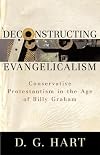
What is an evangelical? When the boundaries of a definition are broadened wide enough, eventually the definition collapses in on itself, and the meaning of the movement becomes meaningless.
D. G. Hart writes a great book declaring that "Evangelicalism" is not a real identity, but instead is a well-intended construction of conservative Christians in the post-World War II climate of modernism vs. fundamentalism. Seeking to define a segment of Christianity in opposition to either the show more Fundamentalism or modernism, a large swath of pastors, theologians, pollsters, historians, evangelists, musicians, etc. worked to create a unified "Conservative Protestantism". The resulting edifice is known as "Evangelicalism".
Fifty+ years later it is painfully obvious that the only "unity" of evangelicalism is a unity that is so devoid of biblical theological substance that... who cares about evangelicalism? In a nutshell, Hart argues that it is time to dump the idea of Evangelicalism.
I have read dozens and dozens of books on the history of American Christianity, with a great number of these focusing on Evangelicalism. I say that because it is hard to tell if this would be an enjoyable book to read if you haven't already consumed a lot on the history of Evangelicalism. For me, the book was a delight. I love discovering new historical insight into key figures such as Carl Henry, Billy Graham, Fuller Seminary, the CCM industry, religious pollsters, etc. I think Hart writes exceedingly well. He is one of those authors that is not afraid to state his strong convictions. He calls it like he sees it - and this makes for good reading.
Here are some quotes from early on in the book:
"This book is about the way neo-evangelicals built the evangelical edifice and how academics have maintained the facade of the building commonly known as conservative Protestantism."(28)
"But the chief aim is to document the construction of evangelicalism as a scholarly tool of analysis and the concomitant deconstruction of evangelicalism as an expression of Christian faith and practice." (29)
"The first part of the book examines the scholarly construction of evangelicalism during the last twenty-five years... The last half of the book explores the way evangelicalism as a post-World War II religious movment has fragmented." (29)
"Without a self-conscious notion about ministry, a common theology, and a coherent understanding of worship, evangelicalism has deconstructed."(29)
One of the best quotes in the book comes in the last paragraph:
Was it actually conceivable that the word evangelical could hold together disparate Protestant beliefs and practices and mold them into some kind of unified whole? Even more basic was whether such an evangelical identity was desirable. The idea to make evangelicalism the conservative version of Protestantism was an interesting attempt to create an alternative religious voice that would counter mainline Protestantism and Roman Catholicism and would beat fundamentalism at the public relations game. But this evangelical movement was simply duplicating work already being done, not to shape a nation but to shepherd God's flock. Before evangelicalism, Christians had churches to hear the Word preached, to receive the sacraments, and to hear sound counsel and correction.Without evangelicalism, Protestant Christianity may not be as unified (when has it ever been?), but it will go one. And without the burden of forming a nationally influential coalition, American Protestants in all their Heinz 57 varieties, from Presbyterian to Calvary Chapel, may even be healthier.
Hart's book is both entertaining and thought-provoking.
One negative thing - why is there only one passing mention of Francis Schaeffer? show less
D. G. Hart writes a great book declaring that "Evangelicalism" is not a real identity, but instead is a well-intended construction of conservative Christians in the post-World War II climate of modernism vs. fundamentalism. Seeking to define a segment of Christianity in opposition to either the show more Fundamentalism or modernism, a large swath of pastors, theologians, pollsters, historians, evangelists, musicians, etc. worked to create a unified "Conservative Protestantism". The resulting edifice is known as "Evangelicalism".
Fifty+ years later it is painfully obvious that the only "unity" of evangelicalism is a unity that is so devoid of biblical theological substance that... who cares about evangelicalism? In a nutshell, Hart argues that it is time to dump the idea of Evangelicalism.
I have read dozens and dozens of books on the history of American Christianity, with a great number of these focusing on Evangelicalism. I say that because it is hard to tell if this would be an enjoyable book to read if you haven't already consumed a lot on the history of Evangelicalism. For me, the book was a delight. I love discovering new historical insight into key figures such as Carl Henry, Billy Graham, Fuller Seminary, the CCM industry, religious pollsters, etc. I think Hart writes exceedingly well. He is one of those authors that is not afraid to state his strong convictions. He calls it like he sees it - and this makes for good reading.
Here are some quotes from early on in the book:
"This book is about the way neo-evangelicals built the evangelical edifice and how academics have maintained the facade of the building commonly known as conservative Protestantism."(28)
"But the chief aim is to document the construction of evangelicalism as a scholarly tool of analysis and the concomitant deconstruction of evangelicalism as an expression of Christian faith and practice." (29)
"The first part of the book examines the scholarly construction of evangelicalism during the last twenty-five years... The last half of the book explores the way evangelicalism as a post-World War II religious movment has fragmented." (29)
"Without a self-conscious notion about ministry, a common theology, and a coherent understanding of worship, evangelicalism has deconstructed."(29)
One of the best quotes in the book comes in the last paragraph:
Was it actually conceivable that the word evangelical could hold together disparate Protestant beliefs and practices and mold them into some kind of unified whole? Even more basic was whether such an evangelical identity was desirable. The idea to make evangelicalism the conservative version of Protestantism was an interesting attempt to create an alternative religious voice that would counter mainline Protestantism and Roman Catholicism and would beat fundamentalism at the public relations game. But this evangelical movement was simply duplicating work already being done, not to shape a nation but to shepherd God's flock. Before evangelicalism, Christians had churches to hear the Word preached, to receive the sacraments, and to hear sound counsel and correction.Without evangelicalism, Protestant Christianity may not be as unified (when has it ever been?), but it will go one. And without the burden of forming a nationally influential coalition, American Protestants in all their Heinz 57 varieties, from Presbyterian to Calvary Chapel, may even be healthier.
Hart's book is both entertaining and thought-provoking.
One negative thing - why is there only one passing mention of Francis Schaeffer? show less
Lists
You May Also Like


Associated Authors
Statistics
- Works
- 49
- Also by
- 9
- Members
- 2,975
- Popularity
- #8,575
- Rating
- 4.0
- Reviews
- 20
- ISBNs
- 57
- Favorited
- 3