
Michael O. Emerson
Author of Divided by Faith: Evangelical Religion and the Problem of Race in America
About the Author
Michael O. Emerson is the Allyn R. and Gladys M. Cline Professor of Sociology and founding director of the Center on Race, Religion, and Urban Life at Rice University Dr. Rodney M. Woo is senior pastor at Wilcrest Baptist Church in Houston, Texas
Image credit: Rice University
Works by Michael O. Emerson
Divided by Faith: Evangelical Religion and the Problem of Race in America (2000) — Author — 709 copies, 4 reviews
Tagged
Common Knowledge
Members
Reviews
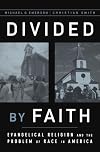
This book, when it was published, confirmed what I knew in my gut.
The sad fact is that we, as a nation, are guilty before God in making Sunday morning "the most segregated hour in America" and ignoring the words of Matthew 25. The failure of American Church, Black as well as White, has led us to this moment. Emerson's study is a stinging indictment of the church. In a very sophisticated study he opens the evangelical, and the protestant mainline church for a careful analysis of why racial show more reconciliation has failed. The only thing that can be said about American Christianity? "Mene, mene, tekel, parsin". show less
The sad fact is that we, as a nation, are guilty before God in making Sunday morning "the most segregated hour in America" and ignoring the words of Matthew 25. The failure of American Church, Black as well as White, has led us to this moment. Emerson's study is a stinging indictment of the church. In a very sophisticated study he opens the evangelical, and the protestant mainline church for a careful analysis of why racial show more reconciliation has failed. The only thing that can be said about American Christianity? "Mene, mene, tekel, parsin". show less
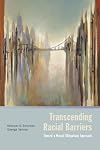
This book is a great, short primer on addressing racial issues in the United States. Yancey and Emerson focus primarily on the tension between blacks and whites, so, it is not quite universally applicable. The core thesis of the book is that (i) proposed solutions to racial tensions fall along a spectrum of majority-group obligations (i.e. what whites need to change) to minority-group obligations (i.e. what people of color need to change) and (ii) most of these models fail because they fall show more too far to either ends of the spectrum. In place of these failed models, Yancey and Emerson propose a new, centrist model called the "mutual-obligations" approach. The basic contention is not all that controversial: white people and people of color have to agree on the solution if said solution is going to be successful. Saying that whites need to fix the broken system that we have created and benefitted from will not work because (i) it creates an unnecessary sense of powerlessness among people of color and (ii) heck no, we like our white privilege. Saying that we need to all just be colorblind will not work because (i) it allows the very real systemic problems to be ignored and (ii) it devalues the uniqueness of culture. Thus, Yancey and Emerson suggest that each group has obligations to the other if there is going to be long lasting reform. To evaluate this empirically, they analyze (through interviews) successful interracial communities: the U.S. military, interracial churches, and interracial marriages. In all of these cases, there was a "critical core" identity around which the communities aligned themselves and for which they sacrificed their self-interests.
In interracial churches, the interviewees expressed a common identity in Christ and need of His grace - truly an equalizing factor unlike any other. Because of this, they did not let their station as white or black influence how valuable they saw others that were unlike them. (Historical note: this has been a defining part of the church since its founding. The absolute scandal in the 1st century Mediterranian culture was that people of all social strata would participate in worship. Slaves and owners, while treated differently by their peers were equal before Christ. There is some speculation that this factored into later abolitionist movements, but, I'm not versed enough on the topic to speak intelligently one way or the other). Moreover, these churches allowed for self-reflection on the part of the leadership because they had to make decisions about conducting corporate worship in a ways such that it was mindful of all of the cultures present. The members of the church benefitted from communing with members of different backgrounds and expressions of faith. My favorite interview was of a Japanese-American who talked about how he adjusted when greeting Latino members of his church. He was shocked and uncomfortable the first time that he was greeted by a stranger with a hug where in the same situation, he would have used a simple handshake. Yet, he learned that in their culture, cold handshakes are considered distant and aloof. I identified with this man's story because the first time I met Ada's family and friends, they looked at me like I was performing a professional business transaction. In fact, before Ada and I started dating, I don't think I ever gave her a hug but maybe once or twice.
It was also in these close, interracial communities that honest discussions about race relations can be had. If the environment is not political and you know the other person is not against everything you hold dear, it allows for more open conversation. Indeed, this was what helped me, as a white guy, to start to see things differently. My exposure to racial tension had always been through angry liberals in protests and it was easy for me to dismiss their opinions just like it's easy for everyone to dismiss opinions of people you don't relate to. But, a few years ago when I started hearing some of the same concerns being calmly stated by conservative black Christians who I respected, it was easier to accept that there might be more to the issue. Indeed, Yancey and Emerson point out this effect in interracial communities: whites began to be more aware and sympathetic to the difficulties faced by their brothers and sisters of color. Interestingly, in interracial marriages, the white spouse would show changes in their attitude toward racial tensions but the spouse of color would not. Also interestingly, the white spouse did not show a substantial increase in their socioeconomic status as a result of the marriage, but the non-white spouse on average did increase their socioeconomic status after the marriage.
There are several more interesting anecdotes and empirical results of interracial communities. The main point of this book is fairly simple: common goals, mutual obligations. I definitely recommend it if you are interested in racial tension in the U.S. and are unsure of where to start. It's a short read, not overly ideological, and there are 15 pages of references at the end for further reading.
Overall: 4.0 show less
In interracial churches, the interviewees expressed a common identity in Christ and need of His grace - truly an equalizing factor unlike any other. Because of this, they did not let their station as white or black influence how valuable they saw others that were unlike them. (Historical note: this has been a defining part of the church since its founding. The absolute scandal in the 1st century Mediterranian culture was that people of all social strata would participate in worship. Slaves and owners, while treated differently by their peers were equal before Christ. There is some speculation that this factored into later abolitionist movements, but, I'm not versed enough on the topic to speak intelligently one way or the other). Moreover, these churches allowed for self-reflection on the part of the leadership because they had to make decisions about conducting corporate worship in a ways such that it was mindful of all of the cultures present. The members of the church benefitted from communing with members of different backgrounds and expressions of faith. My favorite interview was of a Japanese-American who talked about how he adjusted when greeting Latino members of his church. He was shocked and uncomfortable the first time that he was greeted by a stranger with a hug where in the same situation, he would have used a simple handshake. Yet, he learned that in their culture, cold handshakes are considered distant and aloof. I identified with this man's story because the first time I met Ada's family and friends, they looked at me like I was performing a professional business transaction. In fact, before Ada and I started dating, I don't think I ever gave her a hug but maybe once or twice.
It was also in these close, interracial communities that honest discussions about race relations can be had. If the environment is not political and you know the other person is not against everything you hold dear, it allows for more open conversation. Indeed, this was what helped me, as a white guy, to start to see things differently. My exposure to racial tension had always been through angry liberals in protests and it was easy for me to dismiss their opinions just like it's easy for everyone to dismiss opinions of people you don't relate to. But, a few years ago when I started hearing some of the same concerns being calmly stated by conservative black Christians who I respected, it was easier to accept that there might be more to the issue. Indeed, Yancey and Emerson point out this effect in interracial communities: whites began to be more aware and sympathetic to the difficulties faced by their brothers and sisters of color. Interestingly, in interracial marriages, the white spouse would show changes in their attitude toward racial tensions but the spouse of color would not. Also interestingly, the white spouse did not show a substantial increase in their socioeconomic status as a result of the marriage, but the non-white spouse on average did increase their socioeconomic status after the marriage.
There are several more interesting anecdotes and empirical results of interracial communities. The main point of this book is fairly simple: common goals, mutual obligations. I definitely recommend it if you are interested in racial tension in the U.S. and are unsure of where to start. It's a short read, not overly ideological, and there are 15 pages of references at the end for further reading.
Overall: 4.0 show less
I had heard for quite some time that Divided By Faith: Evangelical Religion and the Problem of Race in America, by Michael Emerson and Christian Smith, was the seminal work on race in the American church. And while I began reading it with high expectations, the authors failed to provide a convincing argument. The book was full of many useful statistics, anecdotes, and themes, but Emerson and Smith failed to tie it all together in a meaningful and persuasive way.
The central thesis of Divided show more By Faith is twofold: we live in a racialized society, and, despite good intentions, Evangelicals actually make the problem worse, rather than better. By “racialized society,” the authors simply mean that we live in a place where race still matters “for life experiences, life opportunities, and social relationships,” opting for this term over the more common phrases of prejudice or racism. But even here, we do not get a clear explanation of why it matters that we live in a racialized society, at least not from a biblical perspective. They point to problems such as income disparity, education differences, and de facto segregation—all of which are certainly bad things—as proof of our racialized society. But what they never tie together is the idea that these bad outcomes are the result of racialization.
Secondly, Emerson and Smith say that Evangelicals make the problem worse by having access to a limited “toolbox” from which to draw solutions to this problem. White evangelicals, the authors find, focus on freewill individualism as the chief explanation for the difference in outcomes between whites and blacks, while African Americans point to structural problems, spiritual warfare, and incipient racism as the reason for inequality in America. Additionally, they find that the more time a white Evangelical spends with African Americans, the more likely he or she will cite structural problems as well. Here again, unfortunately, we see Emerson and Smith’s inability to tie loose ends together. Both explanations may very well be true, or perhaps only one or the other is correct, but instead of making a convincing case as to why one is right and the other is wrong, the authors just assume that the explanations African Americans give are correct. Let me be clear, I am not saying that that is not the case, I simply wish that Emerson and Smith would have done a better job proving their thesis.
The second half of the author’s thesis—that white Evangelicals make the race problem worse—is initially harder to swallow, but interestingly, this is actually the strongest part of their work. The problem is clearly stated in their description that, following the civil war, whites and blacks went from sitting in separate pews in the same church, to attending different churches entirely. This is due to the fact that in a free market such as ours consumers choose the product that fits them the best. In the church world this means that parishioners will attend the church that is the easiest fit for them; the one with the least amount of friction. Since inter-racial relationships carry with them a certain amount of friction, the authors assert, races will tend to congregate together. This then strengthens the bonds that already existed between people of the same race, only furthering the de facto segregation that exists in America. It is from these relationships that better jobs can be acquired, along with a host of other economic and social benefits. Therefore, separate churches only add to the disparity between the races.
Overall Divided By Faith was certainly an interesting read, and while they failed to convince on many points, the book was thought provoking enough to make it worth the time. No one can deny that, while things have certainly improved, the race problem in America is still an issue that needs to be dealt with, especially for the Evangelical church. Let us all pray that as we continue to grow in Christ, we would grow closer to racial reconciliation in the Church. show less
The central thesis of Divided show more By Faith is twofold: we live in a racialized society, and, despite good intentions, Evangelicals actually make the problem worse, rather than better. By “racialized society,” the authors simply mean that we live in a place where race still matters “for life experiences, life opportunities, and social relationships,” opting for this term over the more common phrases of prejudice or racism. But even here, we do not get a clear explanation of why it matters that we live in a racialized society, at least not from a biblical perspective. They point to problems such as income disparity, education differences, and de facto segregation—all of which are certainly bad things—as proof of our racialized society. But what they never tie together is the idea that these bad outcomes are the result of racialization.
Secondly, Emerson and Smith say that Evangelicals make the problem worse by having access to a limited “toolbox” from which to draw solutions to this problem. White evangelicals, the authors find, focus on freewill individualism as the chief explanation for the difference in outcomes between whites and blacks, while African Americans point to structural problems, spiritual warfare, and incipient racism as the reason for inequality in America. Additionally, they find that the more time a white Evangelical spends with African Americans, the more likely he or she will cite structural problems as well. Here again, unfortunately, we see Emerson and Smith’s inability to tie loose ends together. Both explanations may very well be true, or perhaps only one or the other is correct, but instead of making a convincing case as to why one is right and the other is wrong, the authors just assume that the explanations African Americans give are correct. Let me be clear, I am not saying that that is not the case, I simply wish that Emerson and Smith would have done a better job proving their thesis.
The second half of the author’s thesis—that white Evangelicals make the race problem worse—is initially harder to swallow, but interestingly, this is actually the strongest part of their work. The problem is clearly stated in their description that, following the civil war, whites and blacks went from sitting in separate pews in the same church, to attending different churches entirely. This is due to the fact that in a free market such as ours consumers choose the product that fits them the best. In the church world this means that parishioners will attend the church that is the easiest fit for them; the one with the least amount of friction. Since inter-racial relationships carry with them a certain amount of friction, the authors assert, races will tend to congregate together. This then strengthens the bonds that already existed between people of the same race, only furthering the de facto segregation that exists in America. It is from these relationships that better jobs can be acquired, along with a host of other economic and social benefits. Therefore, separate churches only add to the disparity between the races.
Overall Divided By Faith was certainly an interesting read, and while they failed to convince on many points, the book was thought provoking enough to make it worth the time. No one can deny that, while things have certainly improved, the race problem in America is still an issue that needs to be dealt with, especially for the Evangelical church. Let us all pray that as we continue to grow in Christ, we would grow closer to racial reconciliation in the Church. show less
Divided By Faith
A Review by Joseph Esposito
Tracing the Thesis:
“Religion, as structured in America, is unable to make a great impact on the racialized society. In fact, far from knocking down racial barriers, religion generally serves to maintain these historical divides, and helps to develop new ones…in short, religion in the United States can serve as a moral force in freeing people, but not in bringing them together as equals across racial lines. American religion is thus one show more embodiment of larger American contradictions. ”
But, how is this a real possibility? How is it that religion makes no difference in bringing persons together? Isn’t religion the one thing that might have the power base sufficient to challenge this arrangement? This is of course the burden of the rest of the work, to build the case that religion in America is so deeply affected by its situation in both historical racialization as well as unrestrained capitalism, that change is so very complex and difficult.
At the root of much of the initial resistance to take this issue seriously is that “because evangelicals view their primary task as evangelism and discipleship, they tend to avoid issues that [the perceive will] hinder these activities. Thus, they are not generally countercultural…this… unwittingly leads to granting power to larger economic and social forces. ” By understanding evangelism itself to be directed toward individuals rather than the structures, systems and persons, our witness is drastically constrained to the arena of the private .
By focusing on private “individuals only, then justice does not mean working against structures of inequality, but treating individuals as equals, regardless of actual economic and political facts. Equality is spiritually and individually based, not temporally and socially based” . Thus the reality that “the most segregated hour is eleven o’clock on Sunday morning” is seen as simply a result of choice of a private person, rather than a systemic issue that requires our attention. Largely because white evangelicals perceive the race problem as either benign or simply individuals treating individuals poorly, “the racialized system itself is not directly challenged. What is challenged is the treatment of individuals within the system. ” This of course renders the system unchanged. This type of thinking most readily arises out of the dominant individualist tradition “dating back to shortly after the sixteenth-century reformation ”. In most discussions, there is not then the ability to recognize that “poor relationships might be shaped by social structures, such as laws, the ways institutions operate, or forms of segregation ”.
Even after weeding through many of the less system wide realities of racialization, there remain two major structural arrangements—“racially homogenous in-groups” and the “segmented market”—that “not only generate congregational segregation by race, but contribute to the racial fragmentation of American society, generate and sustain group biases…and generally fragment and drown out religious prophetic voices calling for an end to racialization” . The former inherently lends itself toward sustaining and reproducing this racialization by making the problem invisible. Even our relative isolation as white, middle-class Americans, makes invisible the depth of the problem of race. Thus, “for most white evangelicals, it is obvious that prejudice and discrimination are minimal, and if others realized this, the race problem would essentially disappear ”. Thus, the in-groups themselves have never experienced life in those geographies which are so devastatingly affected by the movement of resources out of the urban centers. This leaves only those incapable of migrating away (because of means) from the desperate circumstances to shoulder the cost of the systemic realities.
Market segmentation produces a literal smorgasbord of choices for individual consumers to make. And given the choice, most will choose to associate with those whom they feel most comfortable with, in surroundings that affirm the music they like and theologies that affirm their current sitz im leben. As economic animals, fallen humanity will almost always choose to consume that product or service which will give them the most benefit for the least cost. Thus, “church growth specialists capitalize on this” using the homogenous units principle and “churches grow, and religious strength is increased…thereby consolidating racial division” . Indeed, “those who are successful in the world…in positions of power…rarely come to church to have their social and economic positions altered” . The net effect of this is that the prophetic voice is often diminished, not because it lacks merit, but because it would often lead to just another casualty of choice as the congregation either a) fires its “employee”, or if ‘a’ proves untenable, b) begin a mass exodus to somewhere more comfortable. Unfortunately, even the best intentioned efforts that produce the vigor necessary to challenge these systems, says Emerson, are undercut by their “heavy reliance on racially homogenous in-groups and the segmented market” .
Personal Reflection:
Let me begin by offering a critique—the work that was done here most certainly is descriptive and thus helpful in beginning to determine a new way of practicing our faith together. However, this text stops short of offering any real solutions to the very big problems that it outlines. It would have been more helpful to get a sense of what the authors may offer in order to begin to counteract the obvious issues explored here. One cannot help but be left with a feeling of relative hopelessness if one merely reads the text and has no ideas as to how to begin to challenge the system wholesale . Having said all of those things, I understand that the authors set out to describe the oppression that exists at the systemic level and not so much at the ‘individual’ level. This certainly makes any sort of remedy terribly complex, almost paralyzing anyone who wants to effect change. Thus, it is understandable to some extent that this text is mainly a ‘deconstruction’ of the dominant understandings of how race affects poverty and oppression. It then becomes our task to use this research and critique to ‘reconstruct’ an adequate response. Their critique provides the church with a gift—the ability to see that which often remains hidden in the shadows. This text will be an ongoing resource for me as I think more deeply about issues of social justice and what the church’s appropriate response must be to these realities. show less
A Review by Joseph Esposito
Tracing the Thesis:
“Religion, as structured in America, is unable to make a great impact on the racialized society. In fact, far from knocking down racial barriers, religion generally serves to maintain these historical divides, and helps to develop new ones…in short, religion in the United States can serve as a moral force in freeing people, but not in bringing them together as equals across racial lines. American religion is thus one show more embodiment of larger American contradictions. ”
But, how is this a real possibility? How is it that religion makes no difference in bringing persons together? Isn’t religion the one thing that might have the power base sufficient to challenge this arrangement? This is of course the burden of the rest of the work, to build the case that religion in America is so deeply affected by its situation in both historical racialization as well as unrestrained capitalism, that change is so very complex and difficult.
At the root of much of the initial resistance to take this issue seriously is that “because evangelicals view their primary task as evangelism and discipleship, they tend to avoid issues that [the perceive will] hinder these activities. Thus, they are not generally countercultural…this… unwittingly leads to granting power to larger economic and social forces. ” By understanding evangelism itself to be directed toward individuals rather than the structures, systems and persons, our witness is drastically constrained to the arena of the private .
By focusing on private “individuals only, then justice does not mean working against structures of inequality, but treating individuals as equals, regardless of actual economic and political facts. Equality is spiritually and individually based, not temporally and socially based” . Thus the reality that “the most segregated hour is eleven o’clock on Sunday morning” is seen as simply a result of choice of a private person, rather than a systemic issue that requires our attention. Largely because white evangelicals perceive the race problem as either benign or simply individuals treating individuals poorly, “the racialized system itself is not directly challenged. What is challenged is the treatment of individuals within the system. ” This of course renders the system unchanged. This type of thinking most readily arises out of the dominant individualist tradition “dating back to shortly after the sixteenth-century reformation ”. In most discussions, there is not then the ability to recognize that “poor relationships might be shaped by social structures, such as laws, the ways institutions operate, or forms of segregation ”.
Even after weeding through many of the less system wide realities of racialization, there remain two major structural arrangements—“racially homogenous in-groups” and the “segmented market”—that “not only generate congregational segregation by race, but contribute to the racial fragmentation of American society, generate and sustain group biases…and generally fragment and drown out religious prophetic voices calling for an end to racialization” . The former inherently lends itself toward sustaining and reproducing this racialization by making the problem invisible. Even our relative isolation as white, middle-class Americans, makes invisible the depth of the problem of race. Thus, “for most white evangelicals, it is obvious that prejudice and discrimination are minimal, and if others realized this, the race problem would essentially disappear ”. Thus, the in-groups themselves have never experienced life in those geographies which are so devastatingly affected by the movement of resources out of the urban centers. This leaves only those incapable of migrating away (because of means) from the desperate circumstances to shoulder the cost of the systemic realities.
Market segmentation produces a literal smorgasbord of choices for individual consumers to make. And given the choice, most will choose to associate with those whom they feel most comfortable with, in surroundings that affirm the music they like and theologies that affirm their current sitz im leben. As economic animals, fallen humanity will almost always choose to consume that product or service which will give them the most benefit for the least cost. Thus, “church growth specialists capitalize on this” using the homogenous units principle and “churches grow, and religious strength is increased…thereby consolidating racial division” . Indeed, “those who are successful in the world…in positions of power…rarely come to church to have their social and economic positions altered” . The net effect of this is that the prophetic voice is often diminished, not because it lacks merit, but because it would often lead to just another casualty of choice as the congregation either a) fires its “employee”, or if ‘a’ proves untenable, b) begin a mass exodus to somewhere more comfortable. Unfortunately, even the best intentioned efforts that produce the vigor necessary to challenge these systems, says Emerson, are undercut by their “heavy reliance on racially homogenous in-groups and the segmented market” .
Personal Reflection:
Let me begin by offering a critique—the work that was done here most certainly is descriptive and thus helpful in beginning to determine a new way of practicing our faith together. However, this text stops short of offering any real solutions to the very big problems that it outlines. It would have been more helpful to get a sense of what the authors may offer in order to begin to counteract the obvious issues explored here. One cannot help but be left with a feeling of relative hopelessness if one merely reads the text and has no ideas as to how to begin to challenge the system wholesale . Having said all of those things, I understand that the authors set out to describe the oppression that exists at the systemic level and not so much at the ‘individual’ level. This certainly makes any sort of remedy terribly complex, almost paralyzing anyone who wants to effect change. Thus, it is understandable to some extent that this text is mainly a ‘deconstruction’ of the dominant understandings of how race affects poverty and oppression. It then becomes our task to use this research and critique to ‘reconstruct’ an adequate response. Their critique provides the church with a gift—the ability to see that which often remains hidden in the shadows. This text will be an ongoing resource for me as I think more deeply about issues of social justice and what the church’s appropriate response must be to these realities. show less
Awards


You May Also Like


Associated Authors
Statistics
- Works
- 7
- Members
- 850
- Popularity
- #30,104
- Rating
- 3.9
- Reviews
- 5
- ISBNs
- 22