
Jemar Tisby
Author of The Color of Compromise: The Truth about the American Church’s Complicity in Racism
About the Author
Jemar Tisby (BA, University of Notre Dame; MDiv, Reformed Theological Seminary) is president of The Witness: A Black Christian Collective where he writes about race, religion, politics, and culture. He is also cohost of the Pass The Mic podcast. He speaks nationwide at conferences, and his writing show more has been featured by the New York Times, the Atlantic, and CNN. Jemar is a PhD candidate in history at the University of Mississippi, focusing on race, religion, and social movements in the twentieth century. show less
Works by Jemar Tisby
The Color of Compromise: The Truth about the American Church’s Complicity in Racism (2019) 877 copies, 11 reviews
How to Fight Racism: Courageous Christianity and the Journey Toward Racial Justice (2021) 302 copies, 2 reviews
The Color of Compromise Study Guide: The Truth about the American Church's Complicity in Racism (2020) 27 copies
How to Fight Racism Young Reader's Edition: A Guide to Standing Up for Racial Justice (2022) 22 copies
The Color of Compromise Video Study: The Truth about the American Church's Complicity in Racism (2020) 6 copies
How to Fight Racism Young Reader's Edition: A Guide to Standing Up for Racial Justice (2022) 5 copies, 1 review
How to Fight Racism Video Study: Courageous Christianity and the Journey Toward Racial Justice (2021) 2 copies
Associated Works
Four Hundred Souls: A Community History of African America, 1619-2019 (2021) — Contributor — 1,156 copies, 25 reviews
The Flag and the Cross: White Christian Nationalism and the Threat to American Democracy (2022) — Foreword — 134 copies, 3 reviews
Tagged
Common Knowledge
- Birthdate
- 20th century
- Gender
- male
- Education
- University of Notre Dame
Reformed Theological Seimnary (MDiv)
University of Mississippi (PhD|History) - Nationality
- USA
- Associated Place (for map)
- USA
Members
Reviews
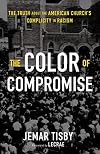
The Color of Compromise is a historical survey focusing on the ways American Christianity has been complicit in enslavement and racism throughout the history of the United States, from colonization to the present. I found it to be a heavy read, but a necessary one.
One of the most compelling arguments Tisby presents throughout the book centers around the notion that white American Christianity has consistently focused on individual conversion at the expense of systemic change. He does an show more excellent job of tracing this theme from the First and Second Great Awakenings through to today. He scrutinizes oft revered American religious figures such as Jonathan Edwards and George Whitefield, and exposes the ways in which they enabled slavery- Tisby pulls no punches in discussing Jim Crow era racial terror, and furthermore, considers the insidious ways racism still permeates society today.
The book was well-researched, well-presented, and I greatly appreciated Tisby's final chapter containing concrete suggestions about how Christians can work to combat racism today.
This is a sobering read, but one I highly recommend. Those of us who are part of the many, many Christian denominations and communities that have played a role in oppressing Black Americans- overtly and through silence in the face of injustice- need to read this book. show less
One of the most compelling arguments Tisby presents throughout the book centers around the notion that white American Christianity has consistently focused on individual conversion at the expense of systemic change. He does an show more excellent job of tracing this theme from the First and Second Great Awakenings through to today. He scrutinizes oft revered American religious figures such as Jonathan Edwards and George Whitefield, and exposes the ways in which they enabled slavery- Tisby pulls no punches in discussing Jim Crow era racial terror, and furthermore, considers the insidious ways racism still permeates society today.
The book was well-researched, well-presented, and I greatly appreciated Tisby's final chapter containing concrete suggestions about how Christians can work to combat racism today.
This is a sobering read, but one I highly recommend. Those of us who are part of the many, many Christian denominations and communities that have played a role in oppressing Black Americans- overtly and through silence in the face of injustice- need to read this book. show less
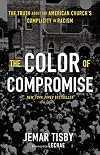
A rehearsal of American history focusing primarily on the willingness of professing Christians to compromise Biblical standards and allow for the perpetuation of horrific treatment of black people in the name of compromise to various forces and powers.
The author recognizes that many works have been written on American history and the treatment of black people in slavery, under Jim Crow, and to the modern day. He will provide the basic outline of events and explains how it happened that black show more people were brought over as slaves to the US, how the slave system was justified, the Civil War and Reconstruction and the rise of Jim Crow in the South, the racism of the North, the move toward civil rights, and the rise of the Religious Right. At each moment, however, he pauses to consider how America could have taken different routes, and how Christians could have made conscientious stands in conviction based on Biblical principles, but instead elected to capitulate to economic concerns, accepting and perpetuating claims of racial supremacy, and generally proving unwilling to stand up against the culture of dehumanization, terrorism, and violence which black people have suffered for generations. He also does well at showing how racism remains in America in various ways, and the associations between the rise of the Religious Right and the attempt to uphold the last vestiges of segregation.
It's uncomfortable reading for white Christians to see so many aspects of their spiritual heritage discussed as ways in which the system of slavery and dehumanization of black people was justified, particularly the declaration that the church has its realm and thus nothing to say in terms of social issues of the day.
Highly recommended for all Christians to consider. show less
The author recognizes that many works have been written on American history and the treatment of black people in slavery, under Jim Crow, and to the modern day. He will provide the basic outline of events and explains how it happened that black show more people were brought over as slaves to the US, how the slave system was justified, the Civil War and Reconstruction and the rise of Jim Crow in the South, the racism of the North, the move toward civil rights, and the rise of the Religious Right. At each moment, however, he pauses to consider how America could have taken different routes, and how Christians could have made conscientious stands in conviction based on Biblical principles, but instead elected to capitulate to economic concerns, accepting and perpetuating claims of racial supremacy, and generally proving unwilling to stand up against the culture of dehumanization, terrorism, and violence which black people have suffered for generations. He also does well at showing how racism remains in America in various ways, and the associations between the rise of the Religious Right and the attempt to uphold the last vestiges of segregation.
It's uncomfortable reading for white Christians to see so many aspects of their spiritual heritage discussed as ways in which the system of slavery and dehumanization of black people was justified, particularly the declaration that the church has its realm and thus nothing to say in terms of social issues of the day.
Highly recommended for all Christians to consider. show less
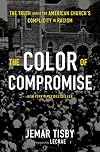
For context, this book stands in the stream of a personal listening campaign. Particularly as a white man, I take it as a serious responsibility to listen to the many cries of injustice coming from the American black community. I also take it as a serious responsibility to listen critically, because the truth matters. Many times, a tension develops in those of us who hear the charges of racism being spoken by those we care about, because we do not readily understand the charges themselves. show more It’s a serious thing to assign the label of racism, so many people like myself have a great desire to extinguish it, but we are hesitant to rush into the fight until we can grasp the nature of the charges and assess their validity.
In the context of this listening campaign, I can not say that The Color of Compromise answers every question, but it has certainly moved me in the right direction. As a historical overview of Christian complicity with racism, the book proceeds as one would expect from the 1600’s up through the mid-twentieth century. America has had a serious and well-documented problem with racism for a long time, and it comes as no surprise that many Christians have been a part of the problem. Even the Bible has been used to justify slavery and segregation.
The problem always comes as we move into the latter part of the twentieth century. The prevailing white sentiment is, “Yes, we acknowledge the horrible history of racism. And, we acknowledge the diminishing group of racists that still exists. But, aren’t we moving in the right direction now? Haven’t we at least fixed the system now?” The growing response today is, “No – above all, it’s the system itself that’s the problem!” Tisby acknowledges this as he writes, “Nowadays, all the American church needs to do in terms of compromise is cooperate with already established and racially unequal social systems [to maintain complicity with racism].” He also notes, “Racialization functions differently from straightforward racism… discrimination in a racialized society is increasingly covert, embedded in the normal operations of institutions, and it avoids direct racial terminology, making it invisible to most white people.” In other words, if you’re struggling to understand racial tension in today’s America, join the club!
Thankfully, Tisby specifically lists many examples of racial discrimination from the 1970’s through the 2010’s that are very helpful for pursuing the conversation further. As one would expect, they’re full of grey areas, and the reader may not agree with his assessment on all of them. However, they open the door to hear and understand from another perspective.
The book closes with a chapter of practical suggestions – where do we go from here? Again, Tisby’s suggestions are a mixed bag, but I do believe everybody can find something in the chapter to practice as we commit together to racial reconciliation. Overall, the book was a thought-provoking addition to the ongoing conversation on race in the American church. show less
In the context of this listening campaign, I can not say that The Color of Compromise answers every question, but it has certainly moved me in the right direction. As a historical overview of Christian complicity with racism, the book proceeds as one would expect from the 1600’s up through the mid-twentieth century. America has had a serious and well-documented problem with racism for a long time, and it comes as no surprise that many Christians have been a part of the problem. Even the Bible has been used to justify slavery and segregation.
The problem always comes as we move into the latter part of the twentieth century. The prevailing white sentiment is, “Yes, we acknowledge the horrible history of racism. And, we acknowledge the diminishing group of racists that still exists. But, aren’t we moving in the right direction now? Haven’t we at least fixed the system now?” The growing response today is, “No – above all, it’s the system itself that’s the problem!” Tisby acknowledges this as he writes, “Nowadays, all the American church needs to do in terms of compromise is cooperate with already established and racially unequal social systems [to maintain complicity with racism].” He also notes, “Racialization functions differently from straightforward racism… discrimination in a racialized society is increasingly covert, embedded in the normal operations of institutions, and it avoids direct racial terminology, making it invisible to most white people.” In other words, if you’re struggling to understand racial tension in today’s America, join the club!
Thankfully, Tisby specifically lists many examples of racial discrimination from the 1970’s through the 2010’s that are very helpful for pursuing the conversation further. As one would expect, they’re full of grey areas, and the reader may not agree with his assessment on all of them. However, they open the door to hear and understand from another perspective.
The book closes with a chapter of practical suggestions – where do we go from here? Again, Tisby’s suggestions are a mixed bag, but I do believe everybody can find something in the chapter to practice as we commit together to racial reconciliation. Overall, the book was a thought-provoking addition to the ongoing conversation on race in the American church. show less
Disclosure: I got an advanced copy
Sometimes truth causes an 'Amen' and sometimes an ''Ouch'. This was the later. Painful at times.
But it was a needed testimony in my life. A testimony to what the Church has done wrong or missed. All in the hopes of a change much needed. So much history unfolded that challenged my limited previous understanding.
I understand that the much of the church has a "want to" problem not a "how too" problem regarding racism. This book not only unfolds history to help show more stir up a "want to
but also has quite a few suggestions on what to do about racism.
It covers a timeline from Colonial times to the present and from Southern area to Northern.
Racism extends from the Colonial to the present...from the South to the North.
From Chapter 1:
"This book says, "Don't look away." Don't look away from Christians using the Bible to justify the inferiority of African people.
Don't look away from the political cowardice Christians displayed when-they could have changed the laws of the land.
Don't look away from the nation's bloodiest war, which was fought over the issue of human bondage, and the many Christians who risked their lives to preserve it.
Don't look away from members in good standing in Christian congregations donning the white hoods of the Ku Klux Klan and terrorizing black citizens.
Don't look away from the horror of the American church when it Comes to race."
This book is a call. Understand the past. And walk forward to the courageous Christianity that the author sets forth and leave behind the compromised Christianity of the past.
Amen show less
Sometimes truth causes an 'Amen' and sometimes an ''Ouch'. This was the later. Painful at times.
But it was a needed testimony in my life. A testimony to what the Church has done wrong or missed. All in the hopes of a change much needed. So much history unfolded that challenged my limited previous understanding.
I understand that the much of the church has a "want to" problem not a "how too" problem regarding racism. This book not only unfolds history to help show more stir up a "want to
but also has quite a few suggestions on what to do about racism.
It covers a timeline from Colonial times to the present and from Southern area to Northern.
Racism extends from the Colonial to the present...from the South to the North.
From Chapter 1:
"This book says, "Don't look away." Don't look away from Christians using the Bible to justify the inferiority of African people.
Don't look away from the political cowardice Christians displayed when-they could have changed the laws of the land.
Don't look away from the nation's bloodiest war, which was fought over the issue of human bondage, and the many Christians who risked their lives to preserve it.
Don't look away from members in good standing in Christian congregations donning the white hoods of the Ku Klux Klan and terrorizing black citizens.
Don't look away from the horror of the American church when it Comes to race."
This book is a call. Understand the past. And walk forward to the courageous Christianity that the author sets forth and leave behind the compromised Christianity of the past.
Amen show less
Lists
Awards


You May Also Like


Associated Authors
Statistics
- Works
- 13
- Also by
- 2
- Members
- 1,356
- Popularity
- #18,965
- Rating
- 4.2
- Reviews
- 18
- ISBNs
- 36