
Elizabeth Wilson (5) (1936–)
Author of Adorned in Dreams: Fashion and Modernity
For other authors named Elizabeth Wilson, see the disambiguation page.
About the Author
Elizabeth Wilson is a professor of cultural studies at the University of North London. She has published several books, including The Sphinx in the City and Hallucinations: Life in the Post-Modern City. (Bowker Author Biography)
Image credit: from author's website
Works by Elizabeth Wilson
Love Game: A History of Tennis, from Victorian Pastime to Global Phenomenon (2014) 47 copies, 2 reviews
Hidden Agendas: Theory, Politics and Experience in the Women's Movement (Social science paperbacks) (1986) 9 copies
The Contradictions of Culture: Cities, Culture, Women (Published in association with Theory, Culture & Society) (2001) 9 copies
Associated Works
Tagged
Common Knowledge
- Birthdate
- 1936
- Gender
- female
- Occupations
- Cultural Studies professor, University of North London
social worker
Member, editorial board, New Left Review
Cultural Studies professor, London Metropolitan University - Organizations
- Communist Party
Feminists Against Censorship - Places of residence
- London, England, UK
- Associated Place (for map)
- England, UK
Members
Reviews

I wish I’d had access to this book when I was writing my undergraduate dissertation, seven years ago. It has very interesting things to say about utopianism within planning and the model industrial town movement, which was my dissertation topic. Better late than never, though. ‘Sphinx in the City’ is a wide-ranging and accessibly written study of women’s place in the city over time and in different countries. Of particular note, it conveys an intersectional feminism. Women are not show more considered to be an undifferentiated mass, rather the differing experiences between, for example, rich, middle class, and poverty-stricken women are compared. Moreover, a chapter is devoted to the cities of the developing world, the legacy that colonialism has left them, and how their urbanisation differs from that of the Western world.
I enjoyed the fact that this study drew from diverse, interdisciplinary sources. I would tend to situate it within the discipline of planning, but planning itself has ever been a battleground or site of co-operation between architecture, economics, history, geography, ecology, politics, and anthropology. It certainly borrows theory and practise from all those disciplines and others. The tone of the book is perhaps most akin to cultural history, however. Novels, poetry, and reportage are all quoted. I particularly liked the pair of chapters that compared London and Paris in the 19th century. The description of Paris fitted well with other accounts I’ve come across, such as [b:Paris Babylon: The Story of the Paris Commune|52173|Paris Babylon The Story of the Paris Commune|Rupert Christiansen|https://images.gr-assets.com/books/1349073644s/52173.jpg|50900].
Although this book was written in 1991, I think the critique in the final chapter is still very relevant. As Wilson predicted, the redevelopments of King’s Cross and the Docklands in London have displaced poorer people and, in my view, created a bland, corporate, heavily controlled and surveyed built environment. Although Wilson doesn’t claim to know the answers to the current structural challenges to the liveability of cities, she does provide a thoughtful and incisive analysis. Which is a lot more useful than a lot of planning literature that descends into a the tedious and oversimplistic markets vs public intervention debate. Wilson acknowledges that the two ‘sides’ are in fact interdependent and can both be autocratic. For the city to become a friendlier place for all women (and indeed men), inequalities that go beyond the remit of planning need to be addressed. show less
I enjoyed the fact that this study drew from diverse, interdisciplinary sources. I would tend to situate it within the discipline of planning, but planning itself has ever been a battleground or site of co-operation between architecture, economics, history, geography, ecology, politics, and anthropology. It certainly borrows theory and practise from all those disciplines and others. The tone of the book is perhaps most akin to cultural history, however. Novels, poetry, and reportage are all quoted. I particularly liked the pair of chapters that compared London and Paris in the 19th century. The description of Paris fitted well with other accounts I’ve come across, such as [b:Paris Babylon: The Story of the Paris Commune|52173|Paris Babylon The Story of the Paris Commune|Rupert Christiansen|https://images.gr-assets.com/books/1349073644s/52173.jpg|50900].
Although this book was written in 1991, I think the critique in the final chapter is still very relevant. As Wilson predicted, the redevelopments of King’s Cross and the Docklands in London have displaced poorer people and, in my view, created a bland, corporate, heavily controlled and surveyed built environment. Although Wilson doesn’t claim to know the answers to the current structural challenges to the liveability of cities, she does provide a thoughtful and incisive analysis. Which is a lot more useful than a lot of planning literature that descends into a the tedious and oversimplistic markets vs public intervention debate. Wilson acknowledges that the two ‘sides’ are in fact interdependent and can both be autocratic. For the city to become a friendlier place for all women (and indeed men), inequalities that go beyond the remit of planning need to be addressed. show less
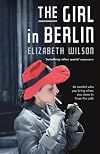
This is a gem of an espionage novel, reminiscent of early le Carre.
The principal protagonist is Jack McGovern, a Detective Inspector in Special Branch. While he enjoys the work he has is conscious of the rift it causes between him and his father, a Communist and former leader of industrial action in Glasgow's docks.
The novel is set in 1951 and opens with the news that Guy Burgess and Donald Maclean have disappeared, and are believed to have fled to the Soviet Union to escape being unmasked show more as spies. One of the characters works in the Courtauld Institute and we are given an excellent vignette of the Institute's director, Dr Anthony Blunt, as he is hounded by reporters eager to know if he had been involved. [This was intriguing given that Blunt wasn't formally unveiled as one of the Cambridge spies until the late 1970s, though apparently there had always been some suspicions about him.]
Colin Harris, a British socialist who had emigrated to East Germany pays a visit to London and meets up with former friends who are surprised to learn that he is engaged (Harris had previously been known as a committed homosexual). McGovern is asked to investigate Harris to see what he is really after. It transpires that Harris had been prosecuted for and, indeed, convicted of murder, subsequently being acquitted after an appeal. Meanwhile Konrad Eberhardt, an eminent German scientist who had fled to Britain in 1938, is murdered, having been seen with Harris at the funeral of an eminent socialist activist. McGovern has to determine whether this was merely coincidence, especially since rumours begin to circulate that Eberhardt was about to publish his memoirs. Other rumours suggest that, far from fleeing the Nazi regime, he had been a closer sympathiser of Hitler.
The ploy has labyrinthine twists, though these never seem superfluous. The characters are vivid and believable, and I look forward to reading more by Elizabeth Wilson. show less
The principal protagonist is Jack McGovern, a Detective Inspector in Special Branch. While he enjoys the work he has is conscious of the rift it causes between him and his father, a Communist and former leader of industrial action in Glasgow's docks.
The novel is set in 1951 and opens with the news that Guy Burgess and Donald Maclean have disappeared, and are believed to have fled to the Soviet Union to escape being unmasked show more as spies. One of the characters works in the Courtauld Institute and we are given an excellent vignette of the Institute's director, Dr Anthony Blunt, as he is hounded by reporters eager to know if he had been involved. [This was intriguing given that Blunt wasn't formally unveiled as one of the Cambridge spies until the late 1970s, though apparently there had always been some suspicions about him.]
Colin Harris, a British socialist who had emigrated to East Germany pays a visit to London and meets up with former friends who are surprised to learn that he is engaged (Harris had previously been known as a committed homosexual). McGovern is asked to investigate Harris to see what he is really after. It transpires that Harris had been prosecuted for and, indeed, convicted of murder, subsequently being acquitted after an appeal. Meanwhile Konrad Eberhardt, an eminent German scientist who had fled to Britain in 1938, is murdered, having been seen with Harris at the funeral of an eminent socialist activist. McGovern has to determine whether this was merely coincidence, especially since rumours begin to circulate that Eberhardt was about to publish his memoirs. Other rumours suggest that, far from fleeing the Nazi regime, he had been a closer sympathiser of Hitler.
The ploy has labyrinthine twists, though these never seem superfluous. The characters are vivid and believable, and I look forward to reading more by Elizabeth Wilson. show less

This was an interesting, colourful and occasionally annoying history of lawn tennis, from its origins in the 1870s to the present day. The author spends a fair bit of time setting tennis in the context of the development of sport, culture and society in general. While this is perfectly legitimate, I felt that her analysis was sometimes overlong and rather simplistic, particularly in the latter stages where she rails against the corporate domination of the sport, painting it as being a show more stagnating or declining sport, with boring players, an image that just doesn't seem to square with the tennis I love to watch. Of course, there is always room for improvement and some players are always going to be more exciting to watch than others, but that's life. I didn't buy into her doom-laden narrative. On the good side, though, there were some interesting sketches of the great players of the early decades such as Tilden and Cramm. show less
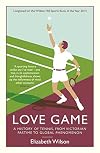
"The term 'love' is also mysterious, although possibly it had something to do with the universal practice in earlier times of betting on matches ('for love or money'). That one word has caused more controversy than any other aspect of the game, but these linguistic mysteries only add to the romance of tennis."
Every year in June, a friend of mine despairs over many comments of mine - both on social media and when meeting up in person - because I will be in the throws of the ongoing thrill show more that is the tennis season and my friend absolutely detests the sport - and especially the scoring system. Or, rather, I should say the the 'idiotic' scoring system.
Over the years, this has developed into a bit of a joke between us and by now we have made it a tradition that she will comment on the matches as well - which usually is hilarious.
What has all this to do with the Love Game? Nothing, except that when reading this book I was reminded of my friend and how much she would despise the book. Not so because Love Game is about tennis, but because there seem to be very few answers in the book to questions that the non-tennis enthusiast might have. What I am getting at is that, while reading this book, I was not sure who it was written for. Was it written for people who are already familiar with the sport or for people who were looking for an overview of the sport and its history?
Most of the book read like a piece of academic work, although less like a research paper and more like a literature review, touching on subjects and stories, but never fully investigating them.
Also, having followed the sport since the late 1980s and actually having read some of the books that are referenced in Love Game, much of the information was tangible, if not even familiar. Even to a degree where it was possible to notice where stories were summarised to the extent that they may have lost some of their poignancy.
As a result, I liked the book as a compendium of tennis history but only as a quick introduction, as an appetizer, if you will. I would doubt tho that the fairy impersonal, dare I say passion-less, style of the book would enthuse anyone to find out more about the personalities and issues that have shaped the sport since its inception. show less
Every year in June, a friend of mine despairs over many comments of mine - both on social media and when meeting up in person - because I will be in the throws of the ongoing thrill show more that is the tennis season and my friend absolutely detests the sport - and especially the scoring system. Or, rather, I should say the the 'idiotic' scoring system.
Over the years, this has developed into a bit of a joke between us and by now we have made it a tradition that she will comment on the matches as well - which usually is hilarious.
What has all this to do with the Love Game? Nothing, except that when reading this book I was reminded of my friend and how much she would despise the book. Not so because Love Game is about tennis, but because there seem to be very few answers in the book to questions that the non-tennis enthusiast might have. What I am getting at is that, while reading this book, I was not sure who it was written for. Was it written for people who are already familiar with the sport or for people who were looking for an overview of the sport and its history?
Most of the book read like a piece of academic work, although less like a research paper and more like a literature review, touching on subjects and stories, but never fully investigating them.
Also, having followed the sport since the late 1980s and actually having read some of the books that are referenced in Love Game, much of the information was tangible, if not even familiar. Even to a degree where it was possible to notice where stories were summarised to the extent that they may have lost some of their poignancy.
As a result, I liked the book as a compendium of tennis history but only as a quick introduction, as an appetizer, if you will. I would doubt tho that the fairy impersonal, dare I say passion-less, style of the book would enthuse anyone to find out more about the personalities and issues that have shaped the sport since its inception. show less
Lists
Shaking a Leg (1)
Awards

You May Also Like


Associated Authors
Statistics
- Works
- 21
- Also by
- 1
- Members
- 552
- Popularity
- #45,211
- Rating
- 3.2
- Reviews
- 6
- ISBNs
- 128
- Languages
- 4