
Valerie Steele
Author of The Corset: A Cultural History
About the Author
Valerie Steele is chief curator and acting director, The Museum at the Fashion Institute of Technology, State University of New York. She is founder and editor of Fashion Theory: The Journal of Dress, Body and Culture. (Bowker Author Biography)
Image credit: Valerie Steele
Series
Works by Valerie Steele
Fashion and Eroticism: Ideals of Feminine Beauty from the Victorian Era Through the Jazz Age (1985) 35 copies
Fashion Theory: Volume 3, Issue 1: The Journal of Dress, Body and Culture (v. 3, Issue 1) (1999) 4 copies
Fashion Theory: Volume 2, Issue 4: The Journal of Dress, Body and Culture: Special Issue on Methodology (1998) 4 copies
Fashion Theory: Volume 1, Issue 1 : The Journal of Dress, Body and Culture (Fashion Theory) (1997) 4 copies
Fashion Theory: Volume 1, Issue 4 : The Journal of Dress, Body and Culture: Special Issue on Hair (Fashion Theory) (1997) 3 copies
Perry Ellis 3 copies
Fashion Theory: Volume 9, Issue 4: The Journal of Dress, Body and Culture (Fashion Theory) (2005) 2 copies
Fashion Theory: Volume 1, Issue 2 : The Journal of Dress, Body and Culture (Fashion Theory) (1997) 2 copies
Fashion Theory: Cyberpl@y: The Journal of Dress, Body and Culture: Cyberpl@y v. 5, Issue 3 (2001) 2 copies
Fashion Theory : The Journal of Dress, Body, Culture : Volume 3 Issue 4 December of 1999 (1999) 2 copies
Fashion Theory Volume 10 Issue 4: The Journal of Dress, Body and Culture (Fashion Theory) (2006) 2 copies
Fashion Theory: The Journal of Dress, Body & Culture: Femme Fatale (Volume 8 Issue 3) (2004) 2 copies
Fashion Theory Volume 13 Issue 3: The Journal of Dress, Body and Culture: v. 13, issue 3 (2009) 1 copy
Fashion Theory: The Journal of Dress, Body & Culture: v.12 (Fashion Theory: The Journal of Dress, Body and Culture) (2008) 1 copy
Fashion Theory: Volume 2, Issue 2: The Journal of Dress, Body and Culture (Fashion Theory) (1998) 1 copy
Associated Works
Tagged
Common Knowledge
- Canonical name
- Steele, Valerie
- Legal name
- Steele, Valerie Fahnestock
- Birthdate
- 1955-06-29
- Gender
- female
- Education
- Yale University (Ph.D.)
- Occupations
- museum director (Museum at the Fashion Institute of Technology)
fashion historian - Organizations
- Museum at the Fashion Institute of Technology
- Relationships
- Major, John S. (husband)
- Nationality
- USA
- Associated Place (for map)
- USA
Members
Reviews

Kinky boots, corsets, underwear as outerwear, second-skin garments of rubber and leather, uniforms, body piercing.... Today everything from a fetishist's dream appears on the fashion runways. Although some people regard fetish fashion as exploitative and misogynistic, others interpret it as a positive Amazonian statement--couture Catwoman. But the connection between fashion and fetishism goes far beyond a few couture collections. For the past thirty years, the iconography of sexual fetishism show more has been increasingly assimilated into popular culture. Before Michelle Pfeiffer's Catwoman, there was Mrs. Peel, heroine of the 1960s television show "The Avengers," who wore a black leather catsuit modeled on a real fetish costume. Street styles like punk and the gay "leatherman" look also testify to the influence of fetishism.The concept of fetishism has recently assumed a growing importance in critical thinking about the cultural construction of sexuality. Yet until now no scholar with an in-depth knowledge of fashion history has studied the actual clothing fetishes themselves. Nor has there been a serious exploration of the historical relationship between fashion and fetishism, although erotic styles have changed significantly and "sexual chic" has become increasingly conspicuous.Cultural historian Valerie Steele has devoted much of her career to the study of the relationship between clothing and sexuality, and is uniquely qualified to write this book. Marshalling a dazzling array of evidence from pornography, psychology, and history, as well as interviews with individuals involved in sexual fetishism, sadomasochism, and cross-dressing, Steele illuminates the complex relationship between appearance and identity. Based on years of research, her book Fetish: Fashion, Sex & Power explains how a paradigm shift in attitudes toward sex and gender has given rise to the phenomenon of fetish fashion."Steele is to fetish dressing what Anne Rice is to vampires," writes Christa Worthington of Elle magazine, "the intellectual interpreter of...wishes beyond our ken." According to Steele, fetishism shows how human sexuality is never just a matter of doing what comes naturally; fantasy always plays an important role. Steele provides provocative answers to such questions as: Why is black regarded as the sexiest color? Is fetishizing the norm for males? Does fetish fashion reflect a fear of AIDS? And why do so many people love shoes? show less

A fascinating book about the history of the color pink and its ever-changing connotations. Unfortunately, one of its contributing writers apparently ascribes to the "pink is an evil, anti-feminist color" trope. Otherwise, I would have given it five stars.

An unexpected and finely written book that briefly covers the changing meaning of clothing associated with the color black. The black dress worn by females is the focal point for describing how the use of black is almost never left out by modern dress designers. Bibliography is excellent. Color and B&W plates.
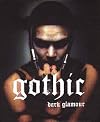
I enjoyed the photographs and the descriptions of those photographs in the Steele part of the book. They made sense and flowed well. Unfortunately, the bulk of the text seriously confused me at times, despite (because of?) the fact that I am somewhat familiar with this subculture. (Like the difference between Western goths and Japanese Gothic Lolitas is because GothLolis listen to visual-kei and have more established shopping options? I'm pretty sure there's something I'm missing in this show more comparison.) I think this would be fabulous as an exhibit and I'm sorry I missed seeing it when it was an exhibit, but in book form I had a really hard time following the thesis; it seemed to change at will. I needed more explanatory section breaks and better flow from the words and concepts than what I got from this. That said, the photographs and overall concept were really engaging and I did learn some things.
The second part of the book, specifically about goth music and written by Jennifer Park, had much tighter writing. I enjoyed learning about how influential bands like The Velvet Underground were on glam and punk rock, which lead to the development of the goth genre (as much as bands described as goth might not like the term). I was disturbed to learn about the ties between goth culture and neo-nazism -- it was mentioned only briefly, so I'm not sure if it was just the anti-establishment use of swastikas and borrowing of other imagery that created those perceived ties or if there were actual ideological ties between the groups, but... not cool, people.
Anyway, it was an overall enjoyable exploration of the goth movement, particularly in terms of fashion and music. I have no particular desire to re-read it, so hurray for libraries, but I'm glad I had the opportunity to look through it. show less
The second part of the book, specifically about goth music and written by Jennifer Park, had much tighter writing. I enjoyed learning about how influential bands like The Velvet Underground were on glam and punk rock, which lead to the development of the goth genre (as much as bands described as goth might not like the term). I was disturbed to learn about the ties between goth culture and neo-nazism -- it was mentioned only briefly, so I'm not sure if it was just the anti-establishment use of swastikas and borrowing of other imagery that created those perceived ties or if there were actual ideological ties between the groups, but... not cool, people.
Anyway, it was an overall enjoyable exploration of the goth movement, particularly in terms of fashion and music. I have no particular desire to re-read it, so hurray for libraries, but I'm glad I had the opportunity to look through it. show less
Lists
Awards


You May Also Like


Associated Authors
Statistics
- Works
- 78
- Also by
- 2
- Members
- 1,715
- Popularity
- #14,976
- Rating
- 3.8
- Reviews
- 16
- ISBNs
- 120
- Languages
- 6
- Favorited
- 1