
James Laver (1899–1975)
Author of Costume and Fashion: A Concise History
About the Author
Image credit: James Laver (1899–1975)
Series
Works by James Laver
Costumes of the Western World: Fashions of the Renaissance in England, Frances, Spain and Holland (1951) 9 copies
XIXth Century French Posters 8 copies
Royal Progress. A pageant of regal travel. Painted by John Leigh Pemberton and described by J. Laver (1953) 6 copies
Style in costume 5 copies
Memorable balls 2 copies
Nineteenth Century Costume 2 copies
Somebody Calls 1 copy
Holkham Hall 1 copy
Fragonard (1732-1806) 1 copy
The Age of Optimism 1 copy
Macrocosmos : a poem 1 copy
Panic Among Puritans 1 copy
Stampe popolari inglesi 1 copy
Associated Works
The Circle of Chalk: A Play in Five Acts Adapted from the Chinese (0014) — Translator, some editions — 33 copies, 2 reviews
Tagged
Common Knowledge
- Canonical name
- Laver, James
- Birthdate
- 1899-03-14
- Date of death
- 1975-06-03
- Gender
- male
- Education
- University of Oxford (New College|BA|1921)
University of Oxford (New College|B.Litt|Theology|1922) - Occupations
- art historian
museum curator
critic
fashion historian
poet
novelist - Organizations
- Victoria and Albert Museum
British Army (WWI) - Awards and honors
- Order of the British Empire (Commander)
Royal Society of Arts (Fellow)
Newdigate Prize for poetry (1921)
Neiman Marcus Fashion Award (1962) - Relationships
- Turleigh, Veronica (spouse)
- Cause of death
- fire
- Nationality
- UK
- Birthplace
- Liverpool, England, UK
- Places of residence
- Liverpool, Merseyside, England, UK
London, England, UK
Piccadilly, London, England, UK
Chelsea, London, England, UK - Place of death
- London, England, UK
- Associated Place (for map)
- London, England, UK
Members
Reviews
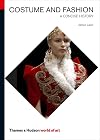
I've definitely read this book in a previous edition, many years ago. My Mum must have had a copy. This later edition was a present from a friend and proved a lovely reminder of Western European fashion history, a subject I find fascinating. There were some great tidbits that I’d forgotten, for example the original rise of handbags when women’s dresses briefly became so flimsy in the first decade of the 19th century that they could no longer support pockets. The illustrations are show more excellent - I remembered encountering the book before thanks to the pictures rather than the narrative. The account of evolving styles of clothing is clear and involving. Tonal shifts are obvious in the final chapters, as the 1969 first edition has seen additions in 1982, 1995, 2002, and 2012 by two other authors. The whole nonetheless coheres nicely, providing an enjoyable synthesis.
Two things occurred to me while reading. Firstly, that using newspaper accounts that mock outrageous new trends as evidence of what women wore daily seems dangerously like deducing today’s fashion from the Daily Mail’s relentless critique of female celebrities. There must inevitably be a somewhat skewed focus based on such sources. I wonder what the equivalent of today’s ‘shapeless viscose t-shirt and skinny jeans’ default outfit was two hundred years ago? Linen blouse, shawl, and ill-fitting wool skirt perhaps? Secondly, it was chastening to realise from the final chapters that I’m now old enough to have experienced ‘fashion history’ first hand. The rise of combat trousers and branded sportswear in the late 1990s coincided with my teenage years; they looked terrible on me and basically everyone. (I soon moved onto wearing much more flattering vintage styles.) This was followed by the so-called boho trend of long tiered skirts, embroidered blouse-ish things, and those low-slung woven belts. That look outstayed its welcome too. The 1990s really were a particularly dark time for clothing. Attempts to bring 90s styles back are deeply alarming.
‘Costume and Fashion: A Concise History’ concludes with a reference to fast fashion’s inherent wastefulness, which I appreciated. Even though it’s definitely not a theme of the book, the social and environmental impact of fashion has rightly become a defining issue for the sector. That’s something I intend to read around further. show less
Two things occurred to me while reading. Firstly, that using newspaper accounts that mock outrageous new trends as evidence of what women wore daily seems dangerously like deducing today’s fashion from the Daily Mail’s relentless critique of female celebrities. There must inevitably be a somewhat skewed focus based on such sources. I wonder what the equivalent of today’s ‘shapeless viscose t-shirt and skinny jeans’ default outfit was two hundred years ago? Linen blouse, shawl, and ill-fitting wool skirt perhaps? Secondly, it was chastening to realise from the final chapters that I’m now old enough to have experienced ‘fashion history’ first hand. The rise of combat trousers and branded sportswear in the late 1990s coincided with my teenage years; they looked terrible on me and basically everyone. (I soon moved onto wearing much more flattering vintage styles.) This was followed by the so-called boho trend of long tiered skirts, embroidered blouse-ish things, and those low-slung woven belts. That look outstayed its welcome too. The 1990s really were a particularly dark time for clothing. Attempts to bring 90s styles back are deeply alarming.
‘Costume and Fashion: A Concise History’ concludes with a reference to fast fashion’s inherent wastefulness, which I appreciated. Even though it’s definitely not a theme of the book, the social and environmental impact of fashion has rightly become a defining issue for the sector. That’s something I intend to read around further. show less

This may have been acceptable in 1969 when it was first published, but assuming that pictures of a king accurately portray the clothing even that the king wore, never mind everyone else shows a lack of serious research. I didn't bother reading further than page 60.

Good historical fashion overview. The author has a pretty funny, dry style. Much of the book covers the time before photography and they use period sculpture and painting to illustrate the clothing and concepts (as that is the source of nearly all of the information). I could have used a few simple drawings to illustrate specific styles and pieces of clothing though, sometimes I had a hard time knowing exactly what was being referred to.
This older edition I read covers from the earliest show more times to just before WWII, with only a chapter by another author at the end covering from the 40’s to the early 80’s. It may be quite different from the later editions.
I love these World of Art books, the paper, pictures and quality of the printing is great. show less
This older edition I read covers from the earliest show more times to just before WWII, with only a chapter by another author at the end covering from the 40’s to the early 80’s. It may be quite different from the later editions.
I love these World of Art books, the paper, pictures and quality of the printing is great. show less

For a trade paperback of 288 pages to cover human costume from paleolithic times to the mini-skirt would be something of a miracle. Alas, Mr Laver does it by leaving out the 13th century (except for a picture of Uta, who covers herself up with her cloak). Still, the book is an enjoyable read. The wonderful illustrations provide proof that our own time is not the silliest in history.
You May Also Like


Associated Authors
Statistics
- Works
- 83
- Also by
- 12
- Members
- 1,503
- Popularity
- #17,096
- Rating
- 4.1
- Reviews
- 16
- ISBNs
- 62
- Languages
- 5