
C. Willett Cunnington (1878–1961)
Author of The History of Under-Clothes
About the Author
Image credit: C.Willett Cunnington, in 1935 (1878–1961)
Series
Works by C. Willett Cunnington
Women 2 copies
Tagged
Common Knowledge
- Canonical name
- Cunnington, C. Willett
- Legal name
- Cunnington, Cecil Willett
- Birthdate
- 1878
- Date of death
- 1961-01-21
- Gender
- male
- Education
- University of Cambridge
- Occupations
- physician
costume historian - Organizations
- Royal Army Medical Corps (Captain / WWI)
- Relationships
- Cunnington, Phillis (wife)
- Short biography
- In addition to their published books, the Cunningtons made a major contribution to the study of fashion history through amassing their dress collection. Put together at a time when almost no one was collecting old garments, let alone late nineteenth- and early twentieth-century middle-class clothing, the Cunningtons’ collection has since become one of the most renowned in Britain. They sold it to Manchester City Council in 1947 to form the basis of the Museum of Costume at Platt Hall.
- Nationality
- UK (birth)
- Birthplace
- Devizes, Wiltshire, England, UK
- Places of residence
- North London, England, UK
- Place of death
- West Mersea, Essex, England, UK
- Associated Place (for map)
- England, UK
Members
Reviews
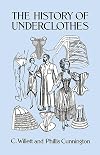
A meticulously researched, well-illustrated and...very boring book. I think this would be good for people who enjoy costume histories, but it wasn't my cup of tea. Note: this book covers only British underwear.
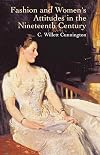
The author's smug and superior style irritated me no end, and his analysis of fashion is uninformed and dated. (Remember that this work is over 70 years old.) For example:
"We can recognise, now, that the Fashions of the 19th century were far from being mere accidents, but were, each in their way, singularly appropriate to the attitude of mind expected of a woman by the man of her world. By her appearance, manner and mode of life, she expressed his ideal: romantic or doll-like or dignified, show more as the case may be. . . . In our own post-war years, for example, when owing to economic difficulties, the young man of that day, shrinking from the idea of marriage and a family, preferred the un-maternal type of girl, immediately there was produced a supply amounting to a glut; hair was cropped schoolboy fashion, breasts were obliterated by compressors, slimming practised to remove the last traces of feminine curves--a process demanding extraordinary self-denial--and masculine clothing and habits borrowed in the effort to obliterate the 'Eternal Feminine'."
Actually, the era of the flapper was one of prosperity, and I never read anything about a drop in the marriage rate after WWI.
Illustrations are few; only eight in a book of 350 pages, so it's of little value as fashion history. The value here is from the quotes from the publications of the day, especially the women's magazines, and other stray bits, such as the state of governesses around the time Jane Eyre was published. Alas, there is no index. show less
"We can recognise, now, that the Fashions of the 19th century were far from being mere accidents, but were, each in their way, singularly appropriate to the attitude of mind expected of a woman by the man of her world. By her appearance, manner and mode of life, she expressed his ideal: romantic or doll-like or dignified, show more as the case may be. . . . In our own post-war years, for example, when owing to economic difficulties, the young man of that day, shrinking from the idea of marriage and a family, preferred the un-maternal type of girl, immediately there was produced a supply amounting to a glut; hair was cropped schoolboy fashion, breasts were obliterated by compressors, slimming practised to remove the last traces of feminine curves--a process demanding extraordinary self-denial--and masculine clothing and habits borrowed in the effort to obliterate the 'Eternal Feminine'."
Actually, the era of the flapper was one of prosperity, and I never read anything about a drop in the marriage rate after WWI.
Illustrations are few; only eight in a book of 350 pages, so it's of little value as fashion history. The value here is from the quotes from the publications of the day, especially the women's magazines, and other stray bits, such as the state of governesses around the time Jane Eyre was published. Alas, there is no index. show less
Where did the "unmentionables" come from and why? And who invented bras, corsets and petticoats anyway? Learn about these and many more ranging from Medieval to early 1900's. Easy book to read a bit at a time. Now available in the non-fiction VBB.
Some good information. I only read the medieval section, since that's where my interests lie.
You May Also Like


Associated Authors
Statistics
- Works
- 19
- Members
- 959
- Popularity
- #26,864
- Rating
- 3.9
- Reviews
- 6
- ISBNs
- 22
- Favorited
- 2