
Harold Koda
Author of Alexander McQueen: Savage Beauty
About the Author
Harold Koda is Curator of The Costume Institute at The Metropolitan Museum of Art. (Bowker Author Biography)
Image credit: Beth Levine Shoes
Works by Harold Koda
Dangerous Liaisons: Fashion and Furniture in the Eighteenth Century (Metropolitan Museum of Art) (2006) 187 copies, 1 review
Extreme Beauty: The Body Transformed (Metropolitan Museum of Art Series) (2004) 132 copies, 1 review
Giorgio Armani : [cat. exp., Solomon R. Guggenheim Museum, New York, Oct 20. 2000-Jan 17. 2001; Guggenheim Museum, Bilbao, March 12-Aug 26. 2001] (2000) 61 copies
Iris 1 copy
Associated Works
Tagged
Common Knowledge
- Canonical name
- Koda, Harold
- Birthdate
- 20th Century
- Gender
- male
- Education
- University of Hawaii (BA, BFA)
Harvard University - Occupations
- fashion designer
- Organizations
- Council of Fashion Designers of America
Metropolitan Museum of Art
Members
Reviews

Alexander McQueen is my favourite fashion designer, with competition from Gareth Pugh, Vivienne Westwood, and Thierry Mugler. I was lucky enough to see the Savage Beauty exhibition when it was at the V&A in London back in 2015. It's one of the best exhibitions I've ever been to and I found it absolutely beguiling. Goodreads reminded me of it by recommending the exhibition catalogue, perhaps the third good quality recommendation the algorithm has given me in nearly ten years. I was delighted show more to find that the library had a borrowable copy of this sumptuous hardback volume, with its eerie cover hologram. It must make a very spooky coffee table book, as the eyes follow you and manifest in the stylised skull before the rest of McQueen's face.
In addition to being a very striking object, the book records the Savage Beauty exhibition beautifully. A good preface briefly recounts Alexander McQueen's biography. At the end there is an interview with Sarah Burton, who took over the fashion house after McQueen's tragic death. I found both of these fascinating and informative. Together with images of the garments exhibited in Savage Beauty, I was powerfully reminded of why I love Alexander McQueen designs. He was an incredible tailor and his garments always have an exquisite and distinctive silhouette, usually with the waist emphasised. His influences mixed the gothic, romantic, historical, and environmental. Some of his quotes express the severe and unapproachable vibes that I want from clothing:
It's hard to find garments like that amid the high street's shapeless viscose and denim. McQueen's collections were art. As Burton says:
The Savage Beauty exhibition and catalogue are a wonderful tribute to McQueen. I also recommend [b:Alexander McQueen: Genius of a Generation|7981812|Alexander McQueen Genius of a Generation|Kristin Knox|https://i.gr-assets.com/images/S/compressed.photo.goodreads.com/books/1347413042l/7981812._SX50_.jpg|12419887] to fans of his work. show less
In addition to being a very striking object, the book records the Savage Beauty exhibition beautifully. A good preface briefly recounts Alexander McQueen's biography. At the end there is an interview with Sarah Burton, who took over the fashion house after McQueen's tragic death. I found both of these fascinating and informative. Together with images of the garments exhibited in Savage Beauty, I was powerfully reminded of why I love Alexander McQueen designs. He was an incredible tailor and his garments always have an exquisite and distinctive silhouette, usually with the waist emphasised. His influences mixed the gothic, romantic, historical, and environmental. Some of his quotes express the severe and unapproachable vibes that I want from clothing:
"When you see a woman wearing McQueen, there's a certain hardness to the clothes that makes her look powerful. It kind of fends people off."
"It's almost like putting armour on a woman. It's a very psychological way of dressing."
It's hard to find garments like that amid the high street's shapeless viscose and denim. McQueen's collections were art. As Burton says:
...he always called himself a designer, not an artist. He was a showman more than anything. Still, when you think about how he designed, it did feel more about art. It was never, "Oh, is this comfortable?" It was all about the vision and the head-to-toe look of it. When you saw the models lining up, it was so clear and so direct. Lee was a designer who was making a world and telling a story. Sometimes it was on such a level that maybe the fashion audience wasn't the right audience to tell it to, but what audience was right? That's the problem I think he had. The stigma: is it fashion? Is it art? But if it's not making money, you can't do these amazing shows. Lee did care about the commercial side of the industry, but what most people remember are the shows.
The Savage Beauty exhibition and catalogue are a wonderful tribute to McQueen. I also recommend [b:Alexander McQueen: Genius of a Generation|7981812|Alexander McQueen Genius of a Generation|Kristin Knox|https://i.gr-assets.com/images/S/compressed.photo.goodreads.com/books/1347413042l/7981812._SX50_.jpg|12419887] to fans of his work. show less
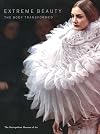
This stunning book shows that an undeniable if uncanny beauty abides in the bundled cylindricity of a geisha tottering on raised geta or clogs; the tea-tray supporting bustle of an 1880s French visiting dress; the double-door expanse of eighteenth-century panniered court gowns; the bound feet and caged nails of aristocratic Manchu women; the neck-extending chokers of the Masai, of Edwardian beauties, and of John Galliano's designs for Dior; or the waist suppression of the sixteenth-century show more iron corsets and the cinches of early-nineteenth-century dandies. The photographs of fashion are augmented by paintings, prints, and drawings, including caricatures by Gilray, Cruikshank, Daumier, and Vernet. show less
I give the book 5 stars. It's as close to the exhibition as one can get without actually being at the Met. I agree that McQueen must have been a very private person; the book focuses on his art and what inspired him to create these amazing works. In my opinion, as an artist, it's worth every penny. McQueen's quotes alone are priceless, for they allow a glimpse into his brilliant mind.
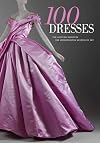
Oh how I love this book. I found it at Barnes and Noble and studied some of the images, and knew I simply had to purchase it. As the foreward by Koda states, these were 100 dresses chosen by the staff who picked their favorites from the vast collection at the Metropolitan Art Museum Costume Institute.
This was a visual feast and banquet of exquisite materials, patterns and styles.
This was a visual feast and banquet of exquisite materials, patterns and styles.
Awards


You May Also Like


Associated Authors
Statistics
- Works
- 23
- Also by
- 1
- Members
- 1,812
- Popularity
- #14,190
- Rating
- 4.4
- Reviews
- 17
- ISBNs
- 54
- Languages
- 2