
Ken Ilgunas
Author of Walden on Wheels: On The Open Road from Debt to Freedom
About the Author
Image credit: Ken Ilgunas
Works by Ken Ilgunas
Trespassing Across America: One Man's Epic, Never-Done-Before (and Sort of Illegal) Hike Across the Heartland (2016) 136 copies, 6 reviews
This Land Is Our Land: How We Lost the Right to Roam and How to Take It Back (2018) 55 copies, 1 review
Tagged
Common Knowledge
Members
Reviews
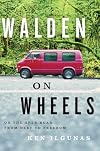
Not without its flaws but...
I started this book lying on an air mattress of a friends apartment and finished it later that day on a cross-country bus journey (taken to avoid the expense of flying). I suspect this book and the lifestyle it espouses are like Marmite: as their famous advertisement goes, you'll either love it or you'll hate it.
The strength of this book is that it is a narrative not a polemic. It is an argument for the simple life but it is not argumentative. We can empathize show more with the author as he is driven, terrified by debt, to flee to the furthest part of the country, but he also shines a brutally honest light on the unsightly warts of living frugally in a consumerist society.
What drives one person to live without running water or electricity, while another is repelled? At times our narrator seems incredibly naive, at others self-deluding. Sometimes he is a little patronizing about the other actors in the tale. Sometimes his writing becomes a tad grandiose (but one could make the same criticism of this review).
All I know is that after finishing this book I am thinking of buying a van. I'm not sure there is much higher praise than that. show less
I started this book lying on an air mattress of a friends apartment and finished it later that day on a cross-country bus journey (taken to avoid the expense of flying). I suspect this book and the lifestyle it espouses are like Marmite: as their famous advertisement goes, you'll either love it or you'll hate it.
The strength of this book is that it is a narrative not a polemic. It is an argument for the simple life but it is not argumentative. We can empathize show more with the author as he is driven, terrified by debt, to flee to the furthest part of the country, but he also shines a brutally honest light on the unsightly warts of living frugally in a consumerist society.
What drives one person to live without running water or electricity, while another is repelled? At times our narrator seems incredibly naive, at others self-deluding. Sometimes he is a little patronizing about the other actors in the tale. Sometimes his writing becomes a tad grandiose (but one could make the same criticism of this review).
All I know is that after finishing this book I am thinking of buying a van. I'm not sure there is much higher praise than that. show less
Trespassing Across America: One Man's Epic, Never-Done-Before (and Sort of Illegal) Hike Across the Heartland by Ken Ilgunas

Following the Keystone XL
He went for a walk and ended up 1900 miles from where he began a stronger, more hopeful person for the experience. It’s quite an astounding adventure, especially when you consider what a chore it is to get off the sofa for a snack.
If Ken Ilgunas had done nothing more than recount the rigors of his trek, he would have a tale to tell worthy of a reader’s time. But Ilgunas hiked with a purpose in mind: seeing that portion of North America before the Keystone XL show more wrought whatever damage and change it might. So, in addition to everything entailed in taking a half-year’s hike, Ilgunas educates readers on a variety of subjects, among the geological history of the region, the complexities of satisfying America’s energy needs, the environmental damage caused by tar sands excavation, the difficulty of sustained farming on the Plains (an issue that may be new to many), and a variety of other subjects.
Some of these will make you pause and think, none more than Ilgunas’ discussion of private property rights. Property rights are something we take for granted here without a thought to how they restrict our passage and bar people from experiencing the full wonder of nature in America. Yes, we have national parks, particularly in the East and West. But none in the Plains states. Everything there is held privately; thus Ilgunas’ need to trespass daily to traverse the Plains north to south. Not much of a loss, you might think, if you have never lived on or visited the Great Plains for any extended time. If you have, though, you know, as Ilgunas learned, they are anything but flat and featureless, but they are open, wide, wide open in a way Easterners and Westerners might find either boring or uncomfortable, or both.
As to the Keystone XL, the word most often heard by Ilgunas and by just about anybody with even a nodding acquaintance with the pipeline, is jobs. Jobs, jobs, jobs. This in the face of a reality that Keystone will produce only around thirty-five permanent jobs once completed. True, a few thousand people will be put to work for a short time building it, but after that, nada. Of course, states derive property tax and other revenue from the pipelines and landowners receive payments, as well. The question, however, is at what price to the environment and the potential for contamination of the great Ogallala Aquifer (already endangered by depletion), a very real concern given the proliferation of pipeline breaks and spills.
So, thanks, Ken Ilgunas, for a combination stirring adventure and an eye opener to the people of and the threat to the Great Plains. show less
He went for a walk and ended up 1900 miles from where he began a stronger, more hopeful person for the experience. It’s quite an astounding adventure, especially when you consider what a chore it is to get off the sofa for a snack.
If Ken Ilgunas had done nothing more than recount the rigors of his trek, he would have a tale to tell worthy of a reader’s time. But Ilgunas hiked with a purpose in mind: seeing that portion of North America before the Keystone XL show more wrought whatever damage and change it might. So, in addition to everything entailed in taking a half-year’s hike, Ilgunas educates readers on a variety of subjects, among the geological history of the region, the complexities of satisfying America’s energy needs, the environmental damage caused by tar sands excavation, the difficulty of sustained farming on the Plains (an issue that may be new to many), and a variety of other subjects.
Some of these will make you pause and think, none more than Ilgunas’ discussion of private property rights. Property rights are something we take for granted here without a thought to how they restrict our passage and bar people from experiencing the full wonder of nature in America. Yes, we have national parks, particularly in the East and West. But none in the Plains states. Everything there is held privately; thus Ilgunas’ need to trespass daily to traverse the Plains north to south. Not much of a loss, you might think, if you have never lived on or visited the Great Plains for any extended time. If you have, though, you know, as Ilgunas learned, they are anything but flat and featureless, but they are open, wide, wide open in a way Easterners and Westerners might find either boring or uncomfortable, or both.
As to the Keystone XL, the word most often heard by Ilgunas and by just about anybody with even a nodding acquaintance with the pipeline, is jobs. Jobs, jobs, jobs. This in the face of a reality that Keystone will produce only around thirty-five permanent jobs once completed. True, a few thousand people will be put to work for a short time building it, but after that, nada. Of course, states derive property tax and other revenue from the pipelines and landowners receive payments, as well. The question, however, is at what price to the environment and the potential for contamination of the great Ogallala Aquifer (already endangered by depletion), a very real concern given the proliferation of pipeline breaks and spills.
So, thanks, Ken Ilgunas, for a combination stirring adventure and an eye opener to the people of and the threat to the Great Plains. show less
Trespassing Across America: One Man's Epic, Never-Done-Before (and Sort of Illegal) Hike Across the Heartland by Ken Ilgunas
Following the Keystone XL
He went for a walk and ended up 1900 miles from where he began a stronger, more hopeful person for the experience. It’s quite an astounding adventure, especially when you consider what a chore it is to get off the sofa for a snack.
If Ken Ilgunas had done nothing more than recount the rigors of his trek, he would have a tale to tell worthy of a reader’s time. But Ilgunas hiked with a purpose in mind: seeing that portion of North America before the Keystone XL show more wrought whatever damage and change it might. So, in addition to everything entailed in taking a half-year’s hike, Ilgunas educates readers on a variety of subjects, among the geological history of the region, the complexities of satisfying America’s energy needs, the environmental damage caused by tar sands excavation, the difficulty of sustained farming on the Plains (an issue that may be new to many), and a variety of other subjects.
Some of these will make you pause and think, none more than Ilgunas’ discussion of private property rights. Property rights are something we take for granted here without a thought to how they restrict our passage and bar people from experiencing the full wonder of nature in America. Yes, we have national parks, particularly in the East and West. But none in the Plains states. Everything there is held privately; thus Ilgunas’ need to trespass daily to traverse the Plains north to south. Not much of a loss, you might think, if you have never lived on or visited the Great Plains for any extended time. If you have, though, you know, as Ilgunas learned, they are anything but flat and featureless, but they are open, wide, wide open in a way Easterners and Westerners might find either boring or uncomfortable, or both.
As to the Keystone XL, the word most often heard by Ilgunas and by just about anybody with even a nodding acquaintance with the pipeline, is jobs. Jobs, jobs, jobs. This in the face of a reality that Keystone will produce only around thirty-five permanent jobs once completed. True, a few thousand people will be put to work for a short time building it, but after that, nada. Of course, states derive property tax and other revenue from the pipelines and landowners receive payments, as well. The question, however, is at what price to the environment and the potential for contamination of the great Ogallala Aquifer (already endangered by depletion), a very real concern given the proliferation of pipeline breaks and spills.
So, thanks, Ken Ilgunas, for a combination stirring adventure and an eye opener to the people of and the threat to the Great Plains. show less
He went for a walk and ended up 1900 miles from where he began a stronger, more hopeful person for the experience. It’s quite an astounding adventure, especially when you consider what a chore it is to get off the sofa for a snack.
If Ken Ilgunas had done nothing more than recount the rigors of his trek, he would have a tale to tell worthy of a reader’s time. But Ilgunas hiked with a purpose in mind: seeing that portion of North America before the Keystone XL show more wrought whatever damage and change it might. So, in addition to everything entailed in taking a half-year’s hike, Ilgunas educates readers on a variety of subjects, among the geological history of the region, the complexities of satisfying America’s energy needs, the environmental damage caused by tar sands excavation, the difficulty of sustained farming on the Plains (an issue that may be new to many), and a variety of other subjects.
Some of these will make you pause and think, none more than Ilgunas’ discussion of private property rights. Property rights are something we take for granted here without a thought to how they restrict our passage and bar people from experiencing the full wonder of nature in America. Yes, we have national parks, particularly in the East and West. But none in the Plains states. Everything there is held privately; thus Ilgunas’ need to trespass daily to traverse the Plains north to south. Not much of a loss, you might think, if you have never lived on or visited the Great Plains for any extended time. If you have, though, you know, as Ilgunas learned, they are anything but flat and featureless, but they are open, wide, wide open in a way Easterners and Westerners might find either boring or uncomfortable, or both.
As to the Keystone XL, the word most often heard by Ilgunas and by just about anybody with even a nodding acquaintance with the pipeline, is jobs. Jobs, jobs, jobs. This in the face of a reality that Keystone will produce only around thirty-five permanent jobs once completed. True, a few thousand people will be put to work for a short time building it, but after that, nada. Of course, states derive property tax and other revenue from the pipelines and landowners receive payments, as well. The question, however, is at what price to the environment and the potential for contamination of the great Ogallala Aquifer (already endangered by depletion), a very real concern given the proliferation of pipeline breaks and spills.
So, thanks, Ken Ilgunas, for a combination stirring adventure and an eye opener to the people of and the threat to the Great Plains. show less

This is a well-written memoir about a young man's journey from unemployed college graduate with more than $30,000 in student loans, to an older, wiser person living debt-free after daring to find adventure while keeping living costs to a bare minimum.
But while Ilgunas' frugality provides the motivation for the story, it's the combination of unusual adventures and vivid inner life that make the story constantly engaging. He's a bit of an extremist, but he has a fierce integrity and show more intellectual curiousity that keep him clear-eyed about the choices he makes.
The book provides some insights into what it's like to live in a van, but it's not a how-to. Likewise, Ilgunas shares some of his budgets, but this is not a book on frugal living. That said, this book will probably inspire most people to take a second look at the costs they take for granted, and reflect on what they might gain by letting go of the excesses of modern life.
I hope Ilgunas writes more books. show less
But while Ilgunas' frugality provides the motivation for the story, it's the combination of unusual adventures and vivid inner life that make the story constantly engaging. He's a bit of an extremist, but he has a fierce integrity and show more intellectual curiousity that keep him clear-eyed about the choices he makes.
The book provides some insights into what it's like to live in a van, but it's not a how-to. Likewise, Ilgunas shares some of his budgets, but this is not a book on frugal living. That said, this book will probably inspire most people to take a second look at the costs they take for granted, and reflect on what they might gain by letting go of the excesses of modern life.
I hope Ilgunas writes more books. show less
Lists
Awards

You May Also Like


Statistics
- Works
- 5
- Members
- 508
- Popularity
- #48,805
- Rating
- 3.9
- Reviews
- 21
- ISBNs
- 25
- Languages
- 1