
Claude Rawson
Author of The Essential Writings of Jonathan Swift [Norton Critical Edition]
About the Author
Claude Rawson is Maynard Mack Professor of English, Yale University.
Works by Claude Rawson
The Essential Writings of Jonathan Swift [Norton Critical Edition] (2009) — Editor; Contributor — 99 copies
Henry Fielding and the Augustan Ideal Under Stress: "Nature's Dance of Death" and Other Studies (1972) 8 copies
Order from Confusion Sprung: Studies in Eighteenth-Century Literature from Swift to Cowper (1985) 6 copies
Politics and Literature in the Age of Swift: English and Irish Perspectives (Cambridge Studies in American) (2010) 5 copies
Routledge Revivals: Gulliver and the Gentle Reader (1991): Studies in Swift and Our Time (2017) 1 copy
Gulliver's Travels 1 copy
Henry Fielding (1707-1754) : novelist, playwright, journalist, magistrate : a double anniversary tribute (2008) 1 copy
Introduction to "Tom Jones" 1 copy
Routledge Revivals: Henry Fielding and the Augustan Ideal Under Stress (1972): 'Nature's Dance of Death' and Other Studies (2018) 1 copy
Character of Swift's satire : a revised Focus: Chapter 11: The Ironic tradition in Augustan Prose from Swift to Johnson (1983) 1 copy
English Satire 1 copy
Focus: Swift 1 copy
Associated Works
The History of Tom Jones, a Foundling (1749) — Introduction, some editions — 9,006 copies, 103 reviews
The Life of Samuel Johnson LL.D., with marginal comments and markings . . . by Hester Lynch Thrale Piozzi (1791) — Introduction, some editions — 4,317 copies, 45 reviews
Tagged
Common Knowledge
- Legal name
- Rawson, Claude Julien
- Birthdate
- 1935
- Gender
- male
Members
Reviews
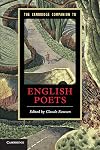
This new addition to the series of Cambridge Companions is certainly an interesting collection of essays. It focuses on the most well-known English poets; whether these are always the best English poets is obviously debatable. And when it comes to ‘English’ poets, the selection process seems to have been a bit ambiguous. ‘English’ in this case seems to mean poets from England, but the compilers of this volume seem to have made room for a few exceptions. For instance, Yeats and T.S. show more Eliot are included in the volume, neither of whom was actually born in England. Yes, they spent a lot of time in England, with Eliot becoming a citizen, but the compilers of the volume could at least have pointed this out to those who come to the book uninformed.
I enjoyed reading most of the entries in this book, and agreed with most of the inclusions of the book. Sometimes, however, I enjoyed the entry while thinking that the poet did not really belong in the volume. An example would be Emily Brontë: she is one of my favourite writers, and a very good poet in her own right, but as she had such a small output, I do not think she should have an entry of the same length as, say, Milton. Nothing misogynistic in that – I am glad that she is being shown some consideration, and I am also glad that Christina Rossetti found a place in the volume. All that I am saying is that some of the entries seemed a bit padded. Which raises the question, if Brontë can be included, why not Swinburne, Cowper, any of the war poets, etc.? I am not saying that they should be included, just that the inclusion (and exclusion) of some poets has the whiff of PC to it.
I did not agree with all of the entries, of course, especially the one that assigns a normative Christianity to Milton. It propounded the old chestnut (well, I view it as an old chestnut) that Milton employs Satan in Paradise Lost as an epic hero in order to teach the reader, by some sort of tortuous reverse-psychology, that Satan + pride = bad, and God + pious smugness = good. I just do not accept that reading of Paradise Lost, and therefore could not agree with the Milton essayist’s conclusions on Milton.
I also disagreed with the inclusion of Jonathan Swift. Swift is, for me, the greatest satirist in the English language, but he is a much better prose-stylist than a poet. The whole essay on Swift seems to be an apologia for the inclusion of him in the volume (at the expense of his friend, Pope, who is in the collection), and I just felt that it is a case of protesting too much on the behalf of the writer.
What I really enjoyed were the essays on writers that I only have a general idea about. This was especially true of Robert Browning, of whom I have only read shorter pieces. His best work, however, seems to have been his longer pieces, like The Ring and the Book. The essay on him has convinced me that I need to look into his work. I also liked the essays on the Romantics (no, Clare is not there), particularly the one on Shelley: his quest to become a true Renaissance man (yes, I realise that is an anachronism) by reading about and writing on as many topics as possible is truly inspiring.
So, a very stimulating collection, but not without its problems. I guess it is difficult to please everyone in a collection spanning the history of English literature from Chaucer to Philip Larkin. At least the collection motivated me to read more poetry over the coming months. show less
I enjoyed reading most of the entries in this book, and agreed with most of the inclusions of the book. Sometimes, however, I enjoyed the entry while thinking that the poet did not really belong in the volume. An example would be Emily Brontë: she is one of my favourite writers, and a very good poet in her own right, but as she had such a small output, I do not think she should have an entry of the same length as, say, Milton. Nothing misogynistic in that – I am glad that she is being shown some consideration, and I am also glad that Christina Rossetti found a place in the volume. All that I am saying is that some of the entries seemed a bit padded. Which raises the question, if Brontë can be included, why not Swinburne, Cowper, any of the war poets, etc.? I am not saying that they should be included, just that the inclusion (and exclusion) of some poets has the whiff of PC to it.
I did not agree with all of the entries, of course, especially the one that assigns a normative Christianity to Milton. It propounded the old chestnut (well, I view it as an old chestnut) that Milton employs Satan in Paradise Lost as an epic hero in order to teach the reader, by some sort of tortuous reverse-psychology, that Satan + pride = bad, and God + pious smugness = good. I just do not accept that reading of Paradise Lost, and therefore could not agree with the Milton essayist’s conclusions on Milton.
I also disagreed with the inclusion of Jonathan Swift. Swift is, for me, the greatest satirist in the English language, but he is a much better prose-stylist than a poet. The whole essay on Swift seems to be an apologia for the inclusion of him in the volume (at the expense of his friend, Pope, who is in the collection), and I just felt that it is a case of protesting too much on the behalf of the writer.
What I really enjoyed were the essays on writers that I only have a general idea about. This was especially true of Robert Browning, of whom I have only read shorter pieces. His best work, however, seems to have been his longer pieces, like The Ring and the Book. The essay on him has convinced me that I need to look into his work. I also liked the essays on the Romantics (no, Clare is not there), particularly the one on Shelley: his quest to become a true Renaissance man (yes, I realise that is an anachronism) by reading about and writing on as many topics as possible is truly inspiring.
So, a very stimulating collection, but not without its problems. I guess it is difficult to please everyone in a collection spanning the history of English literature from Chaucer to Philip Larkin. At least the collection motivated me to read more poetry over the coming months. show less
You May Also Like


Associated Authors
Statistics
- Works
- 29
- Also by
- 8
- Members
- 250
- Popularity
- #91,400
- Rating
- 4.1
- Reviews
- 1
- ISBNs
- 60