

Reggie McNeal
Author of The Present Future: Six Tough Questions for the Church
About the Author
Reggie McNeal enjoys helping leaders pursue more kingdom-focused lives. He currently serves as a senior fellow for Leadership Network and city coach for GoodCities. In his consulting and speaking, Reggie draws on his experience as a pastor, denominational leader, seminary teacher, and leadership show more development coach for thousands of church leaders across North America and the world. His books include The Present Future, Missional Renaissance, A Work of Heart, and Kingdom Come. show less
Image credit: via Amazon.com
Works by Reggie McNeal
Revolution in Leadership: Training Apostles for Tomorrow's Church (Ministry for the Third Millennium Series) (1998) 100 copies
Kingdom Come: Why We Must Give Up Our Obsession with Fixing the Church--and What We Should Do Instead (2015) 40 copies
Kingdom Collaborators: Eight Signature Practices of Leaders Who Turn the World Upside Down (2018) 16 copies, 2 reviews
Participant's Guide to the DVD Collection for The Present Future: Six Tough Questions for the Church (2006) 4 copies
The Alexander Syndrome 1 copy
Associated Works
Tagged
Common Knowledge
- Birthdate
- 1955-05-26
- Gender
- male
- Education
- University of South Carolina (B.A.)
Southwestern Baptist Theological Seminary (M.Div.)
Southwestern Baptist Theological Seminary (Ph.D.) - Places of residence
- Columbia, South Carolina, USA
- Associated Place (for map)
- South Carolina, USA
Members
Reviews

Once again I'm forced to write a review of a Christian leadership book and once again, I'm of two minds.
If the idea of delving into scripture to mine leadership qualities doesn't bother you, then this book is one of the best that I've read.
McNeal begins by examining the lives of Moses, David, Paul, and Jesus to see how leadership qualities are evident in their lives. McNeal rightly emphasizes the importance heart-formation through remaining close to God and allowing him to change you.
In the show more second half of the book, McNeal examines six areas where the leader's qualities are worked out:
1) Culture
2) Call
3) Community
4) Communion
5) Conflict
6) Commonplace
I was privileged to read this book through with a Bible College student in a mentoring relationship. There was always plenty of material and insights to discuss.
Here are a few of my problems with leadership books in general. The Bible doesn't speak about leadership—shepherding and servanthood are the key metaphors.
Furthermore, the idea that there is a separate class of people who operate on a special "leadership" level seems foreign to the thrust of the New Testament. Jesus' disciples didn't look like people with high-level leadership qualities. They became effective once they were empowered by the Spirit.
We should examine what we mean by "leadership qualities," too. Don't we mean the sort of personal characteristics that make people successful in the business world today? What right do we have to dive anachronistically through scripture in an attempt to uncover these 21st century values?
On a hermentutical level, why do we assume that the personal qualities of people like Moses and David are qualities we should emulate? Scripture is the story of how God used these people—not how they were skilled enough to be used.
There you have it. If you enjoy the "christian leadership" genre, this is one of the best on the topic. If you share my reservations, leave this book on the shelf. show less
If the idea of delving into scripture to mine leadership qualities doesn't bother you, then this book is one of the best that I've read.
McNeal begins by examining the lives of Moses, David, Paul, and Jesus to see how leadership qualities are evident in their lives. McNeal rightly emphasizes the importance heart-formation through remaining close to God and allowing him to change you.
In the show more second half of the book, McNeal examines six areas where the leader's qualities are worked out:
1) Culture
2) Call
3) Community
4) Communion
5) Conflict
6) Commonplace
I was privileged to read this book through with a Bible College student in a mentoring relationship. There was always plenty of material and insights to discuss.
Here are a few of my problems with leadership books in general. The Bible doesn't speak about leadership—shepherding and servanthood are the key metaphors.
Furthermore, the idea that there is a separate class of people who operate on a special "leadership" level seems foreign to the thrust of the New Testament. Jesus' disciples didn't look like people with high-level leadership qualities. They became effective once they were empowered by the Spirit.
We should examine what we mean by "leadership qualities," too. Don't we mean the sort of personal characteristics that make people successful in the business world today? What right do we have to dive anachronistically through scripture in an attempt to uncover these 21st century values?
On a hermentutical level, why do we assume that the personal qualities of people like Moses and David are qualities we should emulate? Scripture is the story of how God used these people—not how they were skilled enough to be used.
There you have it. If you enjoy the "christian leadership" genre, this is one of the best on the topic. If you share my reservations, leave this book on the shelf. show less
Kingdom Collaborators: Eight Signature Practices of Leaders Who Turn the World Upside Down by Reggie McNeal
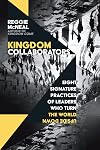
Summary: An affirmation of kingdom-centered rather than church-centered leadership and a description of eight signature practices that characterize such leaders.
Reggie McNeal coaches Christian leaders. One of his greatest concerns is that many have a vision that is church-centric rather than kingdom-centric. He describes the latter as "kingdom collaborators," because they are engaged in what God wants to do so that his kingdom would come in the world beyond the church walls, in every sector show more of society. He argues that church-centric vision comes from a vision of church as institution that is siloed off from other institutions--business, government, arts and media, the social sector, education, and health care. He argues instead for a vision of "church as movement" that encourages people to collaborate with God as kingdom agents in all of these domains, and outside the church building walls.
The book then argues for eight key practices that he sees kingdom collaborators demonstrating in their work:
1. They practice a robust prayer life that helps them listen to and look for God.
2. They foment dissatisfaction with the status quo.
3. They combine social and spiritual entrepreneurship.
4. They marry vision with action.
5. They shape a people development culture.
6. They curry curiosity.
7. They call the party in their city for collaborative initiatives.
8. They maintain an optimism amid the awareness that the kingdom has not yet fully come.
McNeal devotes a chapter to each of these practices, giving practical, step by step pointers in implementing these practices mixed with stories that exemplify each practice. I find his ideas incredibly helpful. He roots kingdom collaboration in a prayerful life. He talks about agitating to foment dissatisfaction in constructive ways rather destructive ways that lead to dismissal. He describes a combination of social and spiritual entrepreneurship that sees opportunities, that is willing to risk and fail and practices abundance thinking. His chapter on marrying vision and action has powerful insights into work with volunteers. One could expand his chapter on people development into a book. He talks about the essential character of leaders as people with a lifelong sense of curiosity, and observes how many of them are avid readers. He argues for how effective kingdom collaborators convene and collaborate with others.
His eighth practice of maintaining pain-tinged optimism speaks to the challenge of sustaining leadership over the long haul. If prayer is the foundation of the life of a kingdom collaborator, then the practices he commends to address burnout and compassion fatigue are the capstone.
He concludes with some tips for accelerating impact, whether as church leaders wanting to have kingdom impact, or those working in other domains. For church leaders, he argues that three things are necessary:
Change the storyline.
Change the scorecard.
Change the stewardship of your organization leaders.
For those serving in other domains, he suggests that while you might be tempted to address other pressing needs, leading where you are is the starting place, then networking with other kingdom leaders. Especially, he urges people to "become better at being you."
I can think of many "marketplace Christians" I've known over the years that I would have loved to give this book. Many were excited about the opportunities for kingdom impact in their sphere of influence, but felt guilty that this meant they could not do more in the church. Most found little encouragement for a "kingdom-centric" lifestyle. At worst, they often felt their work was denigrated, except for the money they could donate to the church. This book comes as a breath of fresh air for such folks, speaking a language and affirming practices many have already intuited.
It is also a critical book for church leaders who tend to measure impact in terms of what is happening within the church walls, or through the church's direct efforts. As important as these are (and the author does not dismiss them), McNeal casts a vision for what people might be engaged in for the sake of Christ and his kingdom in all the hours they devote in other domains. And the eight practices in this book suggest areas where the church might serve to equip young kingdom collaborators for maximum impact (this is where his chapter on a people development culture is so important, I think). Wouldn't it be a great vision to think about equipping people to be viral kingdom agents in the 40-50 hours many spend in their work, rather than for just a few hours a week in church functions? Reggie McNeal thinks so.
____________________________
Disclosure of Material Connection: I received a complimentary review copy of this book from the publisher in exchange for an honest review. The opinions I have expressed are my own. show less
Reggie McNeal coaches Christian leaders. One of his greatest concerns is that many have a vision that is church-centric rather than kingdom-centric. He describes the latter as "kingdom collaborators," because they are engaged in what God wants to do so that his kingdom would come in the world beyond the church walls, in every sector show more of society. He argues that church-centric vision comes from a vision of church as institution that is siloed off from other institutions--business, government, arts and media, the social sector, education, and health care. He argues instead for a vision of "church as movement" that encourages people to collaborate with God as kingdom agents in all of these domains, and outside the church building walls.
The book then argues for eight key practices that he sees kingdom collaborators demonstrating in their work:
1. They practice a robust prayer life that helps them listen to and look for God.
2. They foment dissatisfaction with the status quo.
3. They combine social and spiritual entrepreneurship.
4. They marry vision with action.
5. They shape a people development culture.
6. They curry curiosity.
7. They call the party in their city for collaborative initiatives.
8. They maintain an optimism amid the awareness that the kingdom has not yet fully come.
McNeal devotes a chapter to each of these practices, giving practical, step by step pointers in implementing these practices mixed with stories that exemplify each practice. I find his ideas incredibly helpful. He roots kingdom collaboration in a prayerful life. He talks about agitating to foment dissatisfaction in constructive ways rather destructive ways that lead to dismissal. He describes a combination of social and spiritual entrepreneurship that sees opportunities, that is willing to risk and fail and practices abundance thinking. His chapter on marrying vision and action has powerful insights into work with volunteers. One could expand his chapter on people development into a book. He talks about the essential character of leaders as people with a lifelong sense of curiosity, and observes how many of them are avid readers. He argues for how effective kingdom collaborators convene and collaborate with others.
His eighth practice of maintaining pain-tinged optimism speaks to the challenge of sustaining leadership over the long haul. If prayer is the foundation of the life of a kingdom collaborator, then the practices he commends to address burnout and compassion fatigue are the capstone.
He concludes with some tips for accelerating impact, whether as church leaders wanting to have kingdom impact, or those working in other domains. For church leaders, he argues that three things are necessary:
Change the storyline.
Change the scorecard.
Change the stewardship of your organization leaders.
For those serving in other domains, he suggests that while you might be tempted to address other pressing needs, leading where you are is the starting place, then networking with other kingdom leaders. Especially, he urges people to "become better at being you."
I can think of many "marketplace Christians" I've known over the years that I would have loved to give this book. Many were excited about the opportunities for kingdom impact in their sphere of influence, but felt guilty that this meant they could not do more in the church. Most found little encouragement for a "kingdom-centric" lifestyle. At worst, they often felt their work was denigrated, except for the money they could donate to the church. This book comes as a breath of fresh air for such folks, speaking a language and affirming practices many have already intuited.
It is also a critical book for church leaders who tend to measure impact in terms of what is happening within the church walls, or through the church's direct efforts. As important as these are (and the author does not dismiss them), McNeal casts a vision for what people might be engaged in for the sake of Christ and his kingdom in all the hours they devote in other domains. And the eight practices in this book suggest areas where the church might serve to equip young kingdom collaborators for maximum impact (this is where his chapter on a people development culture is so important, I think). Wouldn't it be a great vision to think about equipping people to be viral kingdom agents in the 40-50 hours many spend in their work, rather than for just a few hours a week in church functions? Reggie McNeal thinks so.
____________________________
Disclosure of Material Connection: I received a complimentary review copy of this book from the publisher in exchange for an honest review. The opinions I have expressed are my own. show less
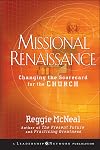
The book has some great ideas on how to be missional; however, the motivation for being missional is off. McNeal seems to put forth that the church is called to be blessing as opposed to make disciples. His scorecard contains tracking community service hours and number of kids tutored but not once does he mention people actually coming to salvation in Jesus. He simply says that when we bless others they will be curious as to why. He never seems to put that forth as a goal or something to show more track. He also feels the need to tear down the traditional church throughout the entire book. He will drop a sentence here and there to try and show his support for the church but the rest of book states other wise. Yes the traditional church needs to go through some major changes but the book could have lead with his positive thoughts without constantly contrasting with the shortcomings of the church. - By the end of the book I could not tell the difference between McnNeal's ideas of being missional and the local Lion's Club show less

This book is an excellent resource for those called to Christian leadership, as it offers a thorough biblical orientation in the first section's review of how God shaped the hearts of Moses, David, Paul & Jesus for leadership. McNeal then makes those insights personal through detailed observations of how those principles apply to the lives of men & women called to leadership today. This is a very dense book, not quick or easy reading.
You May Also Like


Associated Authors
Statistics
- Works
- 17
- Also by
- 2
- Members
- 2,277
- Popularity
- #11,269
- Rating
- 3.8
- Reviews
- 11
- ISBNs
- 36
- Languages
- 1