
Harold L. Senkbeil
Author of The Care of Souls: Cultivating a Pastor's Heart
About the Author
Harold L. Senkbeil is Associate Professor of Pastoral Ministry and Missions at Concordia Theological Seminary, Ft. Wayne, Ind. Previously he had served for more than 30 years in parish ministry. The author of several books and articles, Pastor Senkbeil is much in demand as a speaker and conference show more leader. show less
Works by Harold L. Senkbeil
Sanctification, Christ in Action: Evangelical Challenge and Lutheran Response (1989) 180 copies, 1 review
The culture of God's word : faithful ministry in a post-Christian society (2026) 12 copies, 1 review
Recharting the Waters: The Middle Years, Part 2 (Study Guide) (Life cycle: Journey in Faith) (1990) 3 copies
Tätä elämää janosin 1 copy
Tagged
Common Knowledge
- Canonical name
- Senkbeil, Harold L.
- Birthdate
- 1945-03-06
- Gender
- male
- Nationality
- USA
- Birthplace
- Ortonville, Minnesota, USA
- Places of residence
- Wisconsin, USA
- Associated Place (for map)
- USA
Members
Reviews
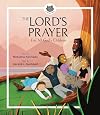
Summary: A lavishly illustrated book designed for parents to use with children in teaching them the meaning of the Lord’s prayer and praying together in family worship.
One of the things I love about this book out of the gate is that is designed for parents to use in introducing their children to the Lord’s Prayer, walking phrase by phrase through the prayer. I suspect that as parents do so with their children–perhaps no more than a phrase a day because the reflections are rich–the show more parents will learn as well. How many of us have reflected on the meaning of the Lord’s Prayer?
Here’s part of the reflection on “Thy Kingdom Come”:
"Lord teach us to pray.
Your kingdom come.
Can we make God's kingdom come? No!
His kingdom comes all by itself.
Where is God's kingdom?
Wherever Jesus is, there he rules as King.
He brings us life and forgiveness, peace and salvation.
That's why we pray for God's kingdom to come."
The book is lavishly illustrated in a rich palette of color showing Jesus in a variety of settings, each connected in some way with the phrase of the Lord’s Prayer being read about. One of the features I noticed is that Jesus is dark-skinned, not the fair-haired blonde Jesus many of us grew up with. Also, there are people with a variety of skin colors and features, fitting with the title of this prayer being for all God’s children.
You may also notice FatCat, who appears on every page. Children will love looking for FatCat, who visually represents an important idea in this book–the “fatness” of the catechism–that it is full of meaning. This book, and others in the FatCat series are intended to teach in an approachable manner about central texts of the faith–the Apostles Creed, the Ten Commandments, and the Lord’s Prayer.
The book builds on this idea in a discussion titled “Families are little churches” that follows the Lord’s Prayer. These book reflect the conviction that the family is where instruction (“catechesis”) has happened throughout church history and that this can be as praying what we believe together a families. A simple family prayer service that may be read responsively follows in the text.
The author concludes by sharing scripture texts that informed and bounded both text and illustrations for each phrase. It was clear in reading this book that great care was given to say both what this prayer does and does not mean and what we may learn both of Jesus who teaches the prayer and the Father to whom it is addressed.
This book is a gift to parents who want to actively take part in teaching their children about the faith. The combination of the beautiful illustrations, FatCat who roams the pages, the biblically grounded reflections, and helps in translating teaching into family worship make this a rich resource packed into just 32 pages.
Tomorrow I will be reviewing another book in this series, The King of Christmas.
____________________
Disclosure of Material Connection: I received a complimentary review copy of this book from the publisher. show less
One of the things I love about this book out of the gate is that is designed for parents to use in introducing their children to the Lord’s Prayer, walking phrase by phrase through the prayer. I suspect that as parents do so with their children–perhaps no more than a phrase a day because the reflections are rich–the show more parents will learn as well. How many of us have reflected on the meaning of the Lord’s Prayer?
Here’s part of the reflection on “Thy Kingdom Come”:
"Lord teach us to pray.
Your kingdom come.
Can we make God's kingdom come? No!
His kingdom comes all by itself.
Where is God's kingdom?
Wherever Jesus is, there he rules as King.
He brings us life and forgiveness, peace and salvation.
That's why we pray for God's kingdom to come."
The book is lavishly illustrated in a rich palette of color showing Jesus in a variety of settings, each connected in some way with the phrase of the Lord’s Prayer being read about. One of the features I noticed is that Jesus is dark-skinned, not the fair-haired blonde Jesus many of us grew up with. Also, there are people with a variety of skin colors and features, fitting with the title of this prayer being for all God’s children.
You may also notice FatCat, who appears on every page. Children will love looking for FatCat, who visually represents an important idea in this book–the “fatness” of the catechism–that it is full of meaning. This book, and others in the FatCat series are intended to teach in an approachable manner about central texts of the faith–the Apostles Creed, the Ten Commandments, and the Lord’s Prayer.
The book builds on this idea in a discussion titled “Families are little churches” that follows the Lord’s Prayer. These book reflect the conviction that the family is where instruction (“catechesis”) has happened throughout church history and that this can be as praying what we believe together a families. A simple family prayer service that may be read responsively follows in the text.
The author concludes by sharing scripture texts that informed and bounded both text and illustrations for each phrase. It was clear in reading this book that great care was given to say both what this prayer does and does not mean and what we may learn both of Jesus who teaches the prayer and the Father to whom it is addressed.
This book is a gift to parents who want to actively take part in teaching their children about the faith. The combination of the beautiful illustrations, FatCat who roams the pages, the biblically grounded reflections, and helps in translating teaching into family worship make this a rich resource packed into just 32 pages.
Tomorrow I will be reviewing another book in this series, The King of Christmas.
____________________
Disclosure of Material Connection: I received a complimentary review copy of this book from the publisher. show less
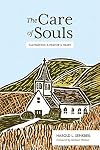
This is a charming and thoughtful handling of the classical model of the care and cure of souls. It feels like a book from a former age, which says much about the current one. In many ways it seem like it could have been written by John Ames (Gilead). The Lutheran take on sacraments, confession etc won't appeal to all but don't let it put you off - there's much here to give (or renew) substantial foundations for ministry.
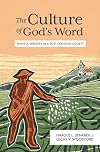
This originally appeared at The Irresponsible Reader. If you like this post, you might like others on that site. Consider checking it out!
---
What do we mean by "culture of the word"? The culture of the word encompasses this kind of compassionate understanding, while acculturating individuals from distinctively different identities and customs into one overarching transcendent culture of the church universal and eternal. Paul's compassionate and considerate approach to gospel proclamation show more shows how to best foster the culture of the word. But there's no need to compromise Christian ethos or teaching to gain a hearing within a given subculture and grow the culture of the word.
WHAT'S THE CULTURE OF GOD'S WORD ABOUT?
The authors describe their starting point pretty clearly right from the start:
The book of Acts is a practical guide to mission in every generation. It shows how the first Christians were driven not by their cultural context but by the word of Christ to change the hearts and lives of people living very much in the world, yet not of it. They weren't seeking to convert cultures but people who lived in various cultures.
Faithful mission in a chaotic world builds on this New Testament template; people in every context—every nation, tribe, and language—should be acculturated by the word of Christ. For two millennia Christians have held that the church cultivates its own transcendent culture in a rapidly shifting social context—the culture of the word.
In a culture that is safely described as post-Christendom*, their argument is simple: go back to the way that the book of Acts describes evangelism and church life. Don't try to ape the world, adapt the Christian message to passing cultural trends, embrace the world's values, etc. Just do what the Church and her leaders did in an equally non-Christian culture.
They spend about five chapters making the case for the reasoning behind that and what it should look like, and then wrap it up with a chapter on applying that.
* However you want to define that.
CHAPTERS 1-5
These chapters focus on developing the above quotation. Here's the list:
1 The Church Is Created by the Word of God
2 The Church Lives in One Transcendent Culture
3 The Church Proclaims Christ Jesus
4 The Church's Worship Transcends Cultural Context
5 The Church Lives in the World, Not of the World
That pretty much shows you how they go about building the case—again, focusing their examples and illustrations from Acts.
Not too surprisingly, chapter 4 was the highlight of these chapters for me—I'm a sucker for a good chapter on worship. I did have some quibbles with a few things in it—but I assume that's because I'm wrong about something they argued. Overall, it's probably worth half the price of the book.
THE CHURCH GROWS FORM THE CULTURE OF THE WORD
To faithfully grow the culture of the word there were four areas of good soil the New Testament church chose as places in which to sow the word: worship, catechesis, hospitality, and vocation. These areas remain vital to the church and must be engaged to ensure the seed is sown robustly.
That's from the first page of Chapter 6 (that shares a title with the section heading above), and it made me instantly think of Stephen O. Presley's Cultural Sanctification: Engaging the World like the Early Church —a book that makes the same argument (essentially) as this one, but it leans primarily on the first few centuries of the Church, rather than the inspired history of the first few decades after Pentecost.
Focusing on "worship, catechesis, hospitality, and vocation," the authors apply the previous chapters and call ministers to work in these areas. I thought it was a wonderful and needed conclusion to the book.
SO, WHAT DID I THINK ABOUT THE CULTURE OF GOD'S WORD?
The task of mission and evangelization in our neo-pagan world today is exactly as it was in the pagan world of the first apostles and evangelists: to rescue and to save people by the word of the gospel accompanied by deeds of love. The culture of this word brings renewal and hope because God's word always does what it says. The word of Christ Jesus crucified and risen heals holistically: it erases guilt, eradicates shame, and mends illnesses of both body and soul.
Now, I'm not a minister, and this book is written primarily for them—so take what I say with a larger grain of salt than you typically would. I do think that the laity can and should read books written for those who are (or are about to be) ordained to ministry—if only so we know what standards to hold them to. But still, this book wasn't written for someone like me.
I do think I'd have gotten more out of it if I were one. But that doesn't take away from all the things I appreciated about the book. I don't know if it's really all that revolutionary or unique in its outlook. This doesn't take away from the book either—it just means that these authors find themselves in good company. If you find yourself thinking about the Presley book, or The Core of the Christian Faith by Michael W. Goheen (or other books by Goheen), or other books along those lines—don't be surprised.
That said, it's a short, punchy read that accomplishes what other books do in fewer pages. It could be seen as a refresher on them, or a solid introduction to this kind of thinking for those new to it.
I found myself nodding a lot, appreciating the wisdom, and making notes to talk about certain ideas with others.
I heartily encourage others to pick it up—you won't regret it.
Disclaimer: I received this book as a participant in the Baker Publishing Group Nonfiction Reviewer Program. However, as always here, I read this book because it interested me and the opinions expressed are my own. show less
---
What do we mean by "culture of the word"? The culture of the word encompasses this kind of compassionate understanding, while acculturating individuals from distinctively different identities and customs into one overarching transcendent culture of the church universal and eternal. Paul's compassionate and considerate approach to gospel proclamation show more shows how to best foster the culture of the word. But there's no need to compromise Christian ethos or teaching to gain a hearing within a given subculture and grow the culture of the word.
WHAT'S THE CULTURE OF GOD'S WORD ABOUT?
The authors describe their starting point pretty clearly right from the start:
The book of Acts is a practical guide to mission in every generation. It shows how the first Christians were driven not by their cultural context but by the word of Christ to change the hearts and lives of people living very much in the world, yet not of it. They weren't seeking to convert cultures but people who lived in various cultures.
Faithful mission in a chaotic world builds on this New Testament template; people in every context—every nation, tribe, and language—should be acculturated by the word of Christ. For two millennia Christians have held that the church cultivates its own transcendent culture in a rapidly shifting social context—the culture of the word.
In a culture that is safely described as post-Christendom*, their argument is simple: go back to the way that the book of Acts describes evangelism and church life. Don't try to ape the world, adapt the Christian message to passing cultural trends, embrace the world's values, etc. Just do what the Church and her leaders did in an equally non-Christian culture.
They spend about five chapters making the case for the reasoning behind that and what it should look like, and then wrap it up with a chapter on applying that.
* However you want to define that.
CHAPTERS 1-5
These chapters focus on developing the above quotation. Here's the list:
1 The Church Is Created by the Word of God
2 The Church Lives in One Transcendent Culture
3 The Church Proclaims Christ Jesus
4 The Church's Worship Transcends Cultural Context
5 The Church Lives in the World, Not of the World
That pretty much shows you how they go about building the case—again, focusing their examples and illustrations from Acts.
Not too surprisingly, chapter 4 was the highlight of these chapters for me—I'm a sucker for a good chapter on worship. I did have some quibbles with a few things in it—but I assume that's because I'm wrong about something they argued. Overall, it's probably worth half the price of the book.
THE CHURCH GROWS FORM THE CULTURE OF THE WORD
To faithfully grow the culture of the word there were four areas of good soil the New Testament church chose as places in which to sow the word: worship, catechesis, hospitality, and vocation. These areas remain vital to the church and must be engaged to ensure the seed is sown robustly.
That's from the first page of Chapter 6 (that shares a title with the section heading above), and it made me instantly think of Stephen O. Presley's Cultural Sanctification: Engaging the World like the Early Church —a book that makes the same argument (essentially) as this one, but it leans primarily on the first few centuries of the Church, rather than the inspired history of the first few decades after Pentecost.
Focusing on "worship, catechesis, hospitality, and vocation," the authors apply the previous chapters and call ministers to work in these areas. I thought it was a wonderful and needed conclusion to the book.
SO, WHAT DID I THINK ABOUT THE CULTURE OF GOD'S WORD?
The task of mission and evangelization in our neo-pagan world today is exactly as it was in the pagan world of the first apostles and evangelists: to rescue and to save people by the word of the gospel accompanied by deeds of love. The culture of this word brings renewal and hope because God's word always does what it says. The word of Christ Jesus crucified and risen heals holistically: it erases guilt, eradicates shame, and mends illnesses of both body and soul.
Now, I'm not a minister, and this book is written primarily for them—so take what I say with a larger grain of salt than you typically would. I do think that the laity can and should read books written for those who are (or are about to be) ordained to ministry—if only so we know what standards to hold them to. But still, this book wasn't written for someone like me.
I do think I'd have gotten more out of it if I were one. But that doesn't take away from all the things I appreciated about the book. I don't know if it's really all that revolutionary or unique in its outlook. This doesn't take away from the book either—it just means that these authors find themselves in good company. If you find yourself thinking about the Presley book, or The Core of the Christian Faith by Michael W. Goheen (or other books by Goheen), or other books along those lines—don't be surprised.
That said, it's a short, punchy read that accomplishes what other books do in fewer pages. It could be seen as a refresher on them, or a solid introduction to this kind of thinking for those new to it.
I found myself nodding a lot, appreciating the wisdom, and making notes to talk about certain ideas with others.
I heartily encourage others to pick it up—you won't regret it.
Disclaimer: I received this book as a participant in the Baker Publishing Group Nonfiction Reviewer Program. However, as always here, I read this book because it interested me and the opinions expressed are my own. show less
A wonderfully pastorally minded book. I really enjoyed it. Written by a Lutheran pastor and, as the foreword acknowledges, there are some bits that may surprise non-Lutherans. The absolving of sin by the pastor certainly surprised me. However I loved the book and found it hugely helpful and challenging. We donƒ??t have souls, he said, we are souls. Our God is best, he said, when things are at their worst.
Awards


You May Also Like


Statistics
- Works
- 16
- Members
- 1,535
- Popularity
- #16,762
- Rating
- 4.2
- Reviews
- 14
- ISBNs
- 23
- Languages
- 1