
L. J. K. Setright (1931–2005)
Author of Drive On!: A Social History of the Motor Car
About the Author
L. J. K. Setright has written more than two dozen books and innumerable magazine features, many of them for Car magazine
Works by L. J. K. Setright
Tagged
Common Knowledge
- Canonical name
- Setright, L. J. K.
- Legal name
- Setright, Leonard John Kensel
- Birthdate
- 1931-08-10
- Date of death
- 2005-09-07
- Gender
- male
- Education
- Palmers Green Grammar school
University of London - Occupations
- journalist
author - Organizations
- Royal Air Force
- Nationality
- UK
- Birthplace
- London, England, UK
- Places of residence
- London, England, UK
Texas, USA - Place of death
- London, England, UK
- Associated Place (for map)
- London, England, UK
Members
Reviews
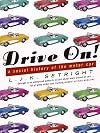
I simply cannot bear to read any more of this book, so am giving up on page 162. I really tried, but having entered a chapter on taxation of cars, the likelihood of my throwing the book against the wall rose to dangerous levels. It’s a library book, so such behaviour would be totally unacceptable. This is going to be perhaps the most vindictive book review I’ve ever written.
I started ‘Drive On!’ with the best of intentions, believing that a social history of the car would supplement show more my research on car use and policies to discourage it. Alas, I forgot a very important fact: people who write books about cars tend to have strong opinions about them. In the case of L.J.K Setright, these opinions are diametrically opposed to my own. That I managed to get 162 pages in is thus something of a miracle; I read most of that with gritted teeth and frequent angry exclamations.
What makes this all the more galling is that the information within the book that was new to me wasn’t very interesting! I don’t much care about the mechanics of car technology, whilst the author clearly does very much indeed. Given that it was titled a ‘social’ history, I was expecting a thoughtful discussion of the ways in which modern society has been shaped by the car. NOPE. Indeed, on page 155 I found the bald statement, ‘That is why we need to examine not what the car has done to society, but what society has done to the car - an altogether sorrier tale’. The thesis of the first half of this book is that meddling governments have held back the wonderful progress of the car with the arbitrary and pointless imposition of speed limits and taxation. I was struck speechless by such blithe comments as, ‘Speed limits govern most of the roads in the Emperor [Napoleon]’s wake - speed limits that have been imposed for what prove on examination to be political purposes’. Political purposes, you say? Could it be that the massive toll of death and injury caused by fast-moving mechanical vehicles was unpalatable to some? Why ever might that have been?!
I will try to calm down, but this book seems expressly written to raise my blood pressure. The style is rambling and unstructured, constantly makes unsubstantiated generalisations, fragments the text with pointless footnotes, and includes bafflingly incongruous analogies. None of this would attract good marks in a student essay. The tone is pompous and self-righteous, seemingly determined to demonstrate that the transformation of travel during the 19th century was solely due to the car. Trains, buses, trams, and bicycles might just as well never have been invented. Moreover, I cannot understand how someone can possibly write what claims to be a social history of the car without giving some time to its drawbacks. To the air pollution, noise pollution, carbon emissions, accident risk, effect on obesity, degradation of the built environment, cost of roads, entrenchment of social inequality, and so forth. There is even a moment when the author essentially denies that climate change exists, which is like red rag to a bull for me.
Funnily enough, many paragraphs are devoted to griping about the early law that cars in the UK had to be preceded by someone with a red flag. Despite their current dominance of the transport system and entrenchment in current first world lifestyles, according to this book cars and their owners are still a persecuted minority subject to such unfairly arbitrary regulation. What nonsense. Considering the amount they cost the public sector and the damage they impose on society as a whole, cars are remarkably unregulated, especially in America. If you want a country where car ownership and use is carefully regulated and its effects controlled, look to the (in my opinion fascinating) transport policies of Singapore.
Rather than continuing in this vein, as I could do for some time, I will conclude with two remarks. Firstly, if you would like to read a book about the social impact of cars (albeit from an entirely America-centric perspective) I recommend [b:Carjacked: The Culture of the Automobile and Its Effect on Our Lives|7370844|Carjacked The Culture of the Automobile and Its Effect on Our Lives|Catherine Lutz|https://images.gr-assets.com/books/1316132270s/7370844.jpg|9186307]. Secondly, you should not attempt to read ‘Drive On!’ because it is worse than the oeuvre of Jeremy Clarkson. I’ve read one of Clarkson’s many collections of opinion pieces and, whilst it promulgated just the same persecution mentality as this book, it at least had the merit of being intermittently funny. 'Drive On!' doesn’t even manage that. However, both spur me to continue my research into policies that would actively horrify their authors, as well as improving the UK transport system as a whole. show less
I started ‘Drive On!’ with the best of intentions, believing that a social history of the car would supplement show more my research on car use and policies to discourage it. Alas, I forgot a very important fact: people who write books about cars tend to have strong opinions about them. In the case of L.J.K Setright, these opinions are diametrically opposed to my own. That I managed to get 162 pages in is thus something of a miracle; I read most of that with gritted teeth and frequent angry exclamations.
What makes this all the more galling is that the information within the book that was new to me wasn’t very interesting! I don’t much care about the mechanics of car technology, whilst the author clearly does very much indeed. Given that it was titled a ‘social’ history, I was expecting a thoughtful discussion of the ways in which modern society has been shaped by the car. NOPE. Indeed, on page 155 I found the bald statement, ‘That is why we need to examine not what the car has done to society, but what society has done to the car - an altogether sorrier tale’. The thesis of the first half of this book is that meddling governments have held back the wonderful progress of the car with the arbitrary and pointless imposition of speed limits and taxation. I was struck speechless by such blithe comments as, ‘Speed limits govern most of the roads in the Emperor [Napoleon]’s wake - speed limits that have been imposed for what prove on examination to be political purposes’. Political purposes, you say? Could it be that the massive toll of death and injury caused by fast-moving mechanical vehicles was unpalatable to some? Why ever might that have been?!
I will try to calm down, but this book seems expressly written to raise my blood pressure. The style is rambling and unstructured, constantly makes unsubstantiated generalisations, fragments the text with pointless footnotes, and includes bafflingly incongruous analogies. None of this would attract good marks in a student essay. The tone is pompous and self-righteous, seemingly determined to demonstrate that the transformation of travel during the 19th century was solely due to the car. Trains, buses, trams, and bicycles might just as well never have been invented. Moreover, I cannot understand how someone can possibly write what claims to be a social history of the car without giving some time to its drawbacks. To the air pollution, noise pollution, carbon emissions, accident risk, effect on obesity, degradation of the built environment, cost of roads, entrenchment of social inequality, and so forth. There is even a moment when the author essentially denies that climate change exists, which is like red rag to a bull for me.
Funnily enough, many paragraphs are devoted to griping about the early law that cars in the UK had to be preceded by someone with a red flag. Despite their current dominance of the transport system and entrenchment in current first world lifestyles, according to this book cars and their owners are still a persecuted minority subject to such unfairly arbitrary regulation. What nonsense. Considering the amount they cost the public sector and the damage they impose on society as a whole, cars are remarkably unregulated, especially in America. If you want a country where car ownership and use is carefully regulated and its effects controlled, look to the (in my opinion fascinating) transport policies of Singapore.
Rather than continuing in this vein, as I could do for some time, I will conclude with two remarks. Firstly, if you would like to read a book about the social impact of cars (albeit from an entirely America-centric perspective) I recommend [b:Carjacked: The Culture of the Automobile and Its Effect on Our Lives|7370844|Carjacked The Culture of the Automobile and Its Effect on Our Lives|Catherine Lutz|https://images.gr-assets.com/books/1316132270s/7370844.jpg|9186307]. Secondly, you should not attempt to read ‘Drive On!’ because it is worse than the oeuvre of Jeremy Clarkson. I’ve read one of Clarkson’s many collections of opinion pieces and, whilst it promulgated just the same persecution mentality as this book, it at least had the merit of being intermittently funny. 'Drive On!' doesn’t even manage that. However, both spur me to continue my research into policies that would actively horrify their authors, as well as improving the UK transport system as a whole. show less

What might be a rather boring automotive history is brightened by Setright's marvelous writing style.

Dated now, but this is a very good grounding on the basic mechanics of traditional cars. As always for Setright, the writing style is exemplary.

You May Also Like


Associated Authors
Statistics
- Works
- 31
- Members
- 347
- Popularity
- #68,852
- Rating
- 4.0
- Reviews
- 14
- ISBNs
- 35
- Favorited
- 2