
Denzil Meyrick (1965–2025)
Author of Murder at Holly House
About the Author
Series
Works by Denzil Meyrick
Death of Remembrence 1 copy
Tagged
Common Knowledge
- Other names
- Meyrick, D. A.
- Birthdate
- 1965
- Date of death
- 2025-02-14
- Gender
- male
- Education
- Campbeltown Grammar School, Argyll
- Occupations
- police officer
business manager
business owner
crime writer - Agent
- Jo Bell
- Nationality
- Scotland
- Birthplace
- Glasgow, Scotland, UK
- Place of death
- Loch Lomondside, Scotland, UK
- Associated Place (for map)
- Scotland, UK
Members
Reviews
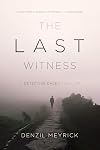
The book begins with a couple of vignettes guaranteed to get your attention.
In the first, legendary Glasgow gangster James Machie is being transported back to prison from hospital when the ambulance is….erm….intercepted. Suffice to say he won’t have to worry about serving out those 5 life sentences.
The second takes place 5 years later in Melbourne. Gerald used to run with the Machie clan. After giving evidence at Machie’s trial, he & his wife got new identities & were whisked away show more to Australia. You’d think that would be far enough. You’d be wrong. The attack itself is brutal but when the killer’s face is caught on CCTV, jaws drop in police stations right across Scotland.
For Kinloch DCI Jim Daley, it qualifies as a full-on WTF moment. Five years ago he & colleague DS Brian Scott were largely responsible for the case that finally put away much of the notorious Machie clan. It was a stressful & dangerous time. Many of the cops received death threats & Brian was shot.
When Jim was transferred to Kinloch by Superintendent John Donald (a total git, BTW, but I digress….) he saw it as a chance to slow down, relax & spend more time with his wife. It’s good to have a dream, Jim. But the reality is the killing didn’t end in Melbourne. Family members of Machie’s old goon squad begin to drop like flies. It seems someone is getting revenge on those who helped put Machie away.
Jim & Brian are grateful to be far from Glasgow until Supt. Donald comes clean. One of the biggest rats was Frank MacDougall & he & his family disappeared into witness protection after the trial. In fact they’ve been stashed on a farm outside Kinloch for the last 5 years.
This is the first I’ve read from this author & I really enjoyed it. There are several sub-plots running along side the main story line which revolves around “just how dead is he” James Machie. Office politics, a bent insider, old mobsters who would sell their mother & Jim’s personal life all contribute to a thorny, fast paced story. Characters range from the enigmatic to the colourful. Brian in particular was a bit of a challenge. Dialogue is written to reflect the vernacular of where he grew up & his accent could mince haggis.
Much is cleared up by the end but there are a few loose threads that will have major repercussions for several characters in the future. This is actually book #2 in the series after “Whiskey in Small Glasses” & I look forward to getting my hands on the next one to see how it plays out. show less
In the first, legendary Glasgow gangster James Machie is being transported back to prison from hospital when the ambulance is….erm….intercepted. Suffice to say he won’t have to worry about serving out those 5 life sentences.
The second takes place 5 years later in Melbourne. Gerald used to run with the Machie clan. After giving evidence at Machie’s trial, he & his wife got new identities & were whisked away show more to Australia. You’d think that would be far enough. You’d be wrong. The attack itself is brutal but when the killer’s face is caught on CCTV, jaws drop in police stations right across Scotland.
For Kinloch DCI Jim Daley, it qualifies as a full-on WTF moment. Five years ago he & colleague DS Brian Scott were largely responsible for the case that finally put away much of the notorious Machie clan. It was a stressful & dangerous time. Many of the cops received death threats & Brian was shot.
When Jim was transferred to Kinloch by Superintendent John Donald (a total git, BTW, but I digress….) he saw it as a chance to slow down, relax & spend more time with his wife. It’s good to have a dream, Jim. But the reality is the killing didn’t end in Melbourne. Family members of Machie’s old goon squad begin to drop like flies. It seems someone is getting revenge on those who helped put Machie away.
Jim & Brian are grateful to be far from Glasgow until Supt. Donald comes clean. One of the biggest rats was Frank MacDougall & he & his family disappeared into witness protection after the trial. In fact they’ve been stashed on a farm outside Kinloch for the last 5 years.
This is the first I’ve read from this author & I really enjoyed it. There are several sub-plots running along side the main story line which revolves around “just how dead is he” James Machie. Office politics, a bent insider, old mobsters who would sell their mother & Jim’s personal life all contribute to a thorny, fast paced story. Characters range from the enigmatic to the colourful. Brian in particular was a bit of a challenge. Dialogue is written to reflect the vernacular of where he grew up & his accent could mince haggis.
Much is cleared up by the end but there are a few loose threads that will have major repercussions for several characters in the future. This is actually book #2 in the series after “Whiskey in Small Glasses” & I look forward to getting my hands on the next one to see how it plays out. show less
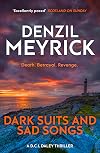
It's a story filled with thrills, danger, emotion and tension, in other words it is everything fans of the series or these genera could want. The author is quite ingenious when it comes to "taking out" the victims and some of it borders on gross...so be prepared. As well as having very disturbing murders, there is a great deal of double crossing and animosity...especially between Daley and Superintendent John Donald. Daley doesn’t have the usual expected amount of support that usually show more surrounds him, neither personally nor professionally. It has an authentic feel and doesn't detract from the story, but long-time readers of this author will be surprised and a bit mystified. Daley and Scott are back and the friendship between them still makes them an irresistible team. Neither of them is perfect, but they make up for it in determination and, in Daley’s case especially, an unerring sense of right and wrong, even if it may cost him everything. My grandfather was fresh off the boat from Scotland, and I grew up loving to hear him talk, so the author's use of the very, very Scottish vernacular was music to my ears, and it adds character and an atmosphere of authenticity to the story. This is a story of drug dealing, corruption, abduction and murder.... but above all it's a story that will have you fully engaged and entertained from start to finish. While the books don't necessarily need to be read in order, you will find that the characters speak of past cases and events that have appeared in the book before...but each one is individual enough to easily be read as standalone. show less
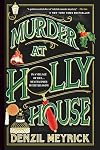
This is the first in the Frank Grasby Mysteries. It takes place in Elderby, a small, out-of-the-way Yorkshire village in December 1952. Lots of snow and winter weather, as well as secrets, mystery, and death. Frank Grasby is sent to solve the murder of a dead man lodged up the chimney of a manor house.
Frank has questions, and the many Elderby residents are of no help as he tries to investigate. What he does discover is that more and more things don’t add up. Very little is as it seems in show more Elderby.
What makes this book so entertaining are Frank’s sardonic observations and witty turns of phrase, as the book is allegedly written from a compilation of Frank’s early journals recollecting his career as a police inspector and supposedly published in 1975.
Sadly, despite the publisher’s blurb and the book cover art, Christmas is not mentioned. After the first couple of murders, bodies begin turning up (or disappearing) with regularity. Who are the good guys, who are the bad guys? Eventually Frank (and the reader) realizes that no one is to be trusted as he continually finds himself in grave danger. This is more of a spy caper/thriller than a cozy mystery, and it’s easier to just go with the convoluted plot than trying to keep everything straight. All will be revealed at the end, after an edge-of-your-seat climax. show less
Frank has questions, and the many Elderby residents are of no help as he tries to investigate. What he does discover is that more and more things don’t add up. Very little is as it seems in show more Elderby.
What makes this book so entertaining are Frank’s sardonic observations and witty turns of phrase, as the book is allegedly written from a compilation of Frank’s early journals recollecting his career as a police inspector and supposedly published in 1975.
Sadly, despite the publisher’s blurb and the book cover art, Christmas is not mentioned. After the first couple of murders, bodies begin turning up (or disappearing) with regularity. Who are the good guys, who are the bad guys? Eventually Frank (and the reader) realizes that no one is to be trusted as he continually finds himself in grave danger. This is more of a spy caper/thriller than a cozy mystery, and it’s easier to just go with the convoluted plot than trying to keep everything straight. All will be revealed at the end, after an edge-of-your-seat climax. show less

DCI Daley is returning to work after the incident with the dentist who hurt Liz and he's walking into quite the case. Alison Doig has returned from America where she's become wealthy and successful to see the family she ran away from thirty years ago, a bunch of ne'er do well loners and wreckers.
All the usual characters show up which is always fun. I love Brian, Hamish, and the rest of the crew though I still have my doubts about Liz. Mr. Meyrick does such a great job in detailing the show more Kintyre peninsula and the Scottish landscape. I also love the dialect, though once it a while it gives me pause while I figure out what the person is saying.
The story is a tightly woven mystery and I honestly had no idea who the villain was until the very end. Jeremiah's Bell an excellent addition to the series, full of bootleggers, wreckers, Mafia, and other various assorted criminals. show less
All the usual characters show up which is always fun. I love Brian, Hamish, and the rest of the crew though I still have my doubts about Liz. Mr. Meyrick does such a great job in detailing the show more Kintyre peninsula and the Scottish landscape. I also love the dialect, though once it a while it gives me pause while I figure out what the person is saying.
The story is a tightly woven mystery and I honestly had no idea who the villain was until the very end. Jeremiah's Bell an excellent addition to the series, full of bootleggers, wreckers, Mafia, and other various assorted criminals. show less
Lists
True Crime (1)
Awards

You May Also Like


Associated Authors
Statistics
- Works
- 28
- Members
- 1,601
- Popularity
- #16,101
- Rating
- 3.8
- Reviews
- 55
- ISBNs
- 152
- Languages
- 1