
About the Author
Cynthia Radding is Professor of History and Director of the Latin American and Iberian Institute at the University of New Mexico.
Works by Cynthia Radding
Wandering Peoples: Colonialism, Ethnic Spaces, and Ecological Frontiers in Northwestern Mexico, 1700-1850 (1997) 31 copies, 1 review
Landscapes of Power and Identity: Comparative Histories in the Sonoran Desert and the Forests of Amazonia from Colony to Republic (2006) 14 copies
Tagged
Common Knowledge
- Gender
- female
Members
Reviews
Wandering Peoples: Colonialism, Ethnic Spaces, and Ecological Frontiers in Northwestern Mexico, 1700-1850 by Cynthia Radding
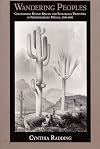
I love all things prehistoric. The shadow of vanished earths fires my imagination like nothing else. That's why it stuck with me when I read that one of the oldest known sites of the Clovis people, complete with remains of butchered prehistoric critters, is in the northwestern Mexican state of Sonora. And it has the coolest possible name for a dig site: El Fin del Mundo, the End of the Earth.
I've never visited Sonora, but I know a little more about it thanks to Cynthia Radding of the show more University of North Carolina at Chapel Hill. Building on techniques used by Gibson and Farriss in their landmark studies of Aztecs and Mayans under colonial rule, she examines indigenous Sonoran responses to the Spanish imperium and the early Mexican Republic.
Radding’s book is not a general history of Sonora, but a narrow study of the ways in which highland tribes accommodated and resisted the encroaching Iberian empire. Peoples such as the Opata and Pima receive the greatest attention, since they held the agricultural uplands which the Spanish most coveted. By contrast, since the Spanish had little economic interest in the desert, nomads such as the O'odham appear only in passing, usually when engaging in hit and run raids.
As an academic monograph, this is not casual bedtime reading. Radding digs deep into the archives with all their census numbers, legal definitions, case histories, and welter of places and names. To the determined reader, though, a clear picture emerges of regional ethnogenesis: a process of cultural evolution by which ethnic communities conserve their identities even as they recreate themselves over and again in the face of what she terms “social ecology,” the shifting cultural environment that conditions the formation of ethnicity and class.
Radding’s granular and technical approach makes for slow reading, but she must have done something right because I came away with a good beginner’s grasp of the topic. What most struck me was how dislocative the colonial experience was for indigenous Sonorans. The Jesuits, shock troops of the empire, started the ball rolling in the 1600s with the “reduccione,” uprooting natives and collecting them into missions the better to instruct them in Christianity, exercise harsh discipline, and use their labor.
This at least had the dubious virtue of rhyming with the communal economy of a tribal village. If the monks got too demanding, mission Indians always had the option of walking away into the hinterland. What changed everything was the influx of soldiers, ranchers, miners, and merchants. These brought with them the values of a global market economy entirely foreign to the subsistence lifeways of the tribes. Increasingly rigorous usurpations of land and labor impoverished the natives, triggering everything from legal challenges (sometimes successful) to outright armed rebellion.
Sonora by the close of the colonial era has the feeling of a border province never fully pacified. The expulsion of the Jesuits in 1769 amidst aggressive Bourbon reforms was especially destabilizing since the monks had most closely structured native life for over a century. Opata and Pima auxiliaries joined Spanish troops in trying to stem raids from western desert nomads as well as to fend off Apaches in the east, who themselves were being pushed into Sonora by the terrifying Comanche war machine.
Through it all, indigenous Sonorans did their best to conserve their identities as they found themselves yanked straight from prehistory into the gunpowder age, from family farm to global market, from chiefdoms to the Crown of Castile and the Mexican Republic. The story of Sonora is the age-old story of the human determination to adapt and persist in the face of unimaginable and unstoppable change. show less
I've never visited Sonora, but I know a little more about it thanks to Cynthia Radding of the show more University of North Carolina at Chapel Hill. Building on techniques used by Gibson and Farriss in their landmark studies of Aztecs and Mayans under colonial rule, she examines indigenous Sonoran responses to the Spanish imperium and the early Mexican Republic.
Radding’s book is not a general history of Sonora, but a narrow study of the ways in which highland tribes accommodated and resisted the encroaching Iberian empire. Peoples such as the Opata and Pima receive the greatest attention, since they held the agricultural uplands which the Spanish most coveted. By contrast, since the Spanish had little economic interest in the desert, nomads such as the O'odham appear only in passing, usually when engaging in hit and run raids.
As an academic monograph, this is not casual bedtime reading. Radding digs deep into the archives with all their census numbers, legal definitions, case histories, and welter of places and names. To the determined reader, though, a clear picture emerges of regional ethnogenesis: a process of cultural evolution by which ethnic communities conserve their identities even as they recreate themselves over and again in the face of what she terms “social ecology,” the shifting cultural environment that conditions the formation of ethnicity and class.
Radding’s granular and technical approach makes for slow reading, but she must have done something right because I came away with a good beginner’s grasp of the topic. What most struck me was how dislocative the colonial experience was for indigenous Sonorans. The Jesuits, shock troops of the empire, started the ball rolling in the 1600s with the “reduccione,” uprooting natives and collecting them into missions the better to instruct them in Christianity, exercise harsh discipline, and use their labor.
This at least had the dubious virtue of rhyming with the communal economy of a tribal village. If the monks got too demanding, mission Indians always had the option of walking away into the hinterland. What changed everything was the influx of soldiers, ranchers, miners, and merchants. These brought with them the values of a global market economy entirely foreign to the subsistence lifeways of the tribes. Increasingly rigorous usurpations of land and labor impoverished the natives, triggering everything from legal challenges (sometimes successful) to outright armed rebellion.
Sonora by the close of the colonial era has the feeling of a border province never fully pacified. The expulsion of the Jesuits in 1769 amidst aggressive Bourbon reforms was especially destabilizing since the monks had most closely structured native life for over a century. Opata and Pima auxiliaries joined Spanish troops in trying to stem raids from western desert nomads as well as to fend off Apaches in the east, who themselves were being pushed into Sonora by the terrifying Comanche war machine.
Through it all, indigenous Sonorans did their best to conserve their identities as they found themselves yanked straight from prehistory into the gunpowder age, from family farm to global market, from chiefdoms to the Crown of Castile and the Mexican Republic. The story of Sonora is the age-old story of the human determination to adapt and persist in the face of unimaginable and unstoppable change. show less
Awards

Statistics
- Works
- 8
- Members
- 53
- Popularity
- #303,172
- Rating
- 3.0
- Reviews
- 1
- ISBNs
- 10
- Languages
- 1