
Marc Schuster
Author of The Singular Exploits of Wonder Mom and Party Girl
About the Author
Marc Schuster teaches writing, Literature and Film, American Literature, and Creative Nonfiction at Montgomery County Community College in Blue Bell, Pennsylvania.
Works by Marc Schuster
Tagged
Common Knowledge
- Birthdate
- 1973
- Gender
- male
- Education
- Villanova University (MA, English)
Temple University (PhD, English) - Occupations
- instructor
- Organizations
- Montgomery County Community College (Blue Bell, Pennsylvania, USA)
- Places of residence
- Havertown, Pennsylvania, USA
- Associated Place (for map)
- Pennsylvania, USA
Members
Reviews
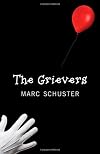
Charley Schwartz is theoretically supposed to be a mature adult, but the best approximation he can manage is a job standing outside a bank wearing a giant dollar sign costume, a doctoral dissertation he never actually works on, and some dysfunctional friendships with people he met in prep school. When he learns that one of those fellow alumni has committed suicide, he takes it rather badly despite, or perhaps because of the fact that he never really knew the guy very well. Determined to do show more at least one decent thing with his life, he decides to set up a memorial fund to donate to the school in the dead man's name, but the whole thing ends up getting away from him and turning into something of a circus.
Despite the subject matter, this is actually humorous as much as it is anything else, and I was a bit impressed by its ability to combine some mildly goofy elements -- the dollar sign costume, the fact that Charley's alma mater's mascot is the Raging Donkeys, the ridiculous eccentricities of some of his friends -- with some very real-feeling characterization and emotional responses. True, the "no-longer-quite-young man has trouble learning to deal with adulthood" theme is almost a little over-familiar, plus some of the main character's emotional revelations aren't terribly subtle, and, at 175 pages, it's all maybe a bit slight. But on the whole, it worked for me. I laughed in most of the right places, I felt sympathy and understanding for the protagonist, and I felt at the end like it had said a few things worth saying. show less
Despite the subject matter, this is actually humorous as much as it is anything else, and I was a bit impressed by its ability to combine some mildly goofy elements -- the dollar sign costume, the fact that Charley's alma mater's mascot is the Raging Donkeys, the ridiculous eccentricities of some of his friends -- with some very real-feeling characterization and emotional responses. True, the "no-longer-quite-young man has trouble learning to deal with adulthood" theme is almost a little over-familiar, plus some of the main character's emotional revelations aren't terribly subtle, and, at 175 pages, it's all maybe a bit slight. But on the whole, it worked for me. I laughed in most of the right places, I felt sympathy and understanding for the protagonist, and I felt at the end like it had said a few things worth saying. show less
 This review was written for LibraryThing Early Reviewers.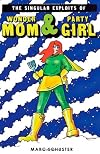
Marc Schuster's story of suburban motherhood gone wrong had me chuckling with the first chapter and left my heart breaking with the last -- and the content in between was similarly schizophrenic as only a story that accurately portrays real life can be.
Audrey Corcoran is the typical working mother of two girls who is stunned to find herself divorced after years of marriage. She struggles to redefine herself after the divorce, and her insecurities take her down a path that is hellish and show more humorous all at once. Cocaine ends up being Audrey's cure for everything. It makes her more witty, more fun, more effective, and more "on." It emboldens her and allows her to act in ways she never would have considered before, and makes her capable of things she never thought she could do. In her mind, it makes her someone a husband would never leave.
Audrey justifies line after line and decision after decision as only an addict can -- selling cocaine is the answer to money trouble, going on a double date with the ex is the way to show him what he's missing, leading the anti-drug arm of the girls' schools' parent association will make everyone think she's a drug-free supermom.
Schuster's ability to get inside the mind of a suburban working woman in crisis is incredible. His portrait of addiction is spot-on, and his ending is absolutely perfect for this story. I loved Audrey and alternately wanted to hang out with her, smack her, hug her, and help her. I hope that other readers of this wonderful book feel the same. show less
Audrey Corcoran is the typical working mother of two girls who is stunned to find herself divorced after years of marriage. She struggles to redefine herself after the divorce, and her insecurities take her down a path that is hellish and show more humorous all at once. Cocaine ends up being Audrey's cure for everything. It makes her more witty, more fun, more effective, and more "on." It emboldens her and allows her to act in ways she never would have considered before, and makes her capable of things she never thought she could do. In her mind, it makes her someone a husband would never leave.
Audrey justifies line after line and decision after decision as only an addict can -- selling cocaine is the answer to money trouble, going on a double date with the ex is the way to show him what he's missing, leading the anti-drug arm of the girls' schools' parent association will make everyone think she's a drug-free supermom.
Schuster's ability to get inside the mind of a suburban working woman in crisis is incredible. His portrait of addiction is spot-on, and his ending is absolutely perfect for this story. I loved Audrey and alternately wanted to hang out with her, smack her, hug her, and help her. I hope that other readers of this wonderful book feel the same. show less
This review was written for LibraryThing Early Reviewers.Awkward, poignant, and darkly humorous, The Grievers is a short novel that will resonate particularly with certain readers in their late 20s and 30s. At age 28, protagonist Charley Schwartz is ostensibly an adult--he has a wife, a house, and a languishing dissertation--but in a lot of ways, he hasn't come very far from his high school days, which he spent at an elite prep school nicknamed "The Bastard Factory." When one of Charley's high school friends commits suicide, he struggles to find a show more way to appropriately memorialize him--and, in doing so, realizes just how much growing up he still has to do, and how much people have--or haven't--changed since they were kids.
Charley essentially has a good heart, and I mostly found him sympathetic, but a lot of his behavior is cringe-worthy. As I said, his story may resonate with you--but you might be kind of mortified that it does. The summary on the front flap describes the book as a "coming of age novel for a generation that's still struggling to come of age," and I think that's a very apt way of putting it. If you're a technical grown-up who still doesn't have his/her sh*t together, you will (like me) relate to Charley.(Although that's still better than seeing yourself in some of his friends, who seem to be coping with adulthood even less well than Charley.)
As a content note, there are some extended descriptions of a high school biology class in which they dissect a cat. There is ultimately a point to mentioning it, but it still didn't sit well with me, and I would have enjoyed the book more without it. show less
Charley essentially has a good heart, and I mostly found him sympathetic, but a lot of his behavior is cringe-worthy. As I said, his story may resonate with you--but you might be kind of mortified that it does. The summary on the front flap describes the book as a "coming of age novel for a generation that's still struggling to come of age," and I think that's a very apt way of putting it. If you're a technical grown-up who still doesn't have his/her sh*t together, you will (like me) relate to Charley.(Although that's still better than seeing yourself in some of his friends, who seem to be coping with adulthood even less well than Charley.)
As a content note, there are some extended descriptions of a high school biology class in which they dissect a cat. There is ultimately a point to mentioning it, but it still didn't sit well with me, and I would have enjoyed the book more without it. show less
This review was written for LibraryThing Early Reviewers.Audrey Corcoran is unhappy, affected by the vague nameless malaise that creeps into those with thwarted ambitions and unrealized desires. Audrey works at Eating Out, a “shopper magazine” one usually sees in grocery stores and restaurants. In this case, the “magazine” – really a glorified press release and advertising delivery device – caters to the businesses on the Golden Mile, a strip of middlebrow chains and franchises. The Singular Exploits of Wonder Mom & Party Girl show more chronicles Audrey’s alienation and annoyance at the petty power games and trivialities in her comfortable middle class existence.
Living with her two children, the studious Catherine and the wild Lily, she survives as a divorcee in a Philadelphia suburb. Her work life is one of false bonhomie and hollow comparisons to “a family”, made by Vic, her sleazy adulterous boss. The office environment has all the earmarks of a workplace sitcom: the sexy faded Eastern European named Svetlana, the Indian guy named Raj, and the haggard mom named Melinda. During one of these “family get togethers” at a local restaurant, Svetlana and Melinda goad Audrey into trying cocaine. Audrey refuses. This triggers an internal war inside her. She wants to have fun, but she also has to be the perfect mom for her two children.
Eventually Audrey gives in to her temptations and tries it. Her gateway is Owen Little, jazz aficionado and owner of Nick’s American Grill. The occasional thrill becomes more habitual until it becomes an all-encompassing burden, an insatiable beast that has to be fed the stuff or else it will trigger a crash.
Written in the first person, Schuster captures the comical and tragic inherent in the American middle class lifestyle. Amidst the constant justifications and rationalizations Audrey gives herself to take cocaine just one more time, he balances humor with personal failure. As a divorcee, it is easy for Audrey to feel like a failure and not the proper role model for her children. Thus she joins the local school board and then gets appointed on the anti-drug task force. She meets a comically over-the-top anti-drug motivational speaker/superhero/exercise equipment salesman. In that meeting, she buys an expensive piece of exercise equipment, recruits said superhero, and realizes she needs to sniff another line of coke along with figure out how to pay for the equipment. Thus Audrey crosses the line from drug consumer to drug distributor, aided by Melinda.
Schuster gives Audrey an uncanny degree of psychological realism. Not only is her drug consumption and paranoia handled well, but the coke paranoia exacerbates her middle class attitudes. The middle class exists less as a concrete socioeconomic cohort than an ingrained perspective akin to the French term bourgeois. (While many are economically bourgeois, they’d never deign call themselves that term, despite the bourgeois ideology being omnipresent in society.) One key facet of the middle class attitude is resentment. In the case of Audrey, it shows up in how she reacts to people outside her tax bracket. She detests her husband’s new fiancée Chloe, driving her gigantic Escalade and her wealthy parents. As a drug pusher, she threatens to call the police on a couple of “scummy looking” addicts. In a fateful encounter on the Silver Mile (a rundown, decrepit section of the suburb yet to be properly gentrified), Audrey and Melinda get some coke in a very sketchy neighborhood. Alas, poor people are frightening.
One of the beauties of Wonder Mom is Schuster’s non-judgmental attitude towards Audrey. It is too easy to turn addiction stories into cod-Temperance morality tales. Audrey is hardly “the weaker sex,” especially since she has to work as a single parent and juggle her work and school duties. Audrey doesn’t necessarily triumph, but she perseveres. Cocaine was one way she dealt with her busy life. America’s schizophrenic attitude towards pleasure and its misguided failed War on Drugs only compounded Audrey’s bad decision.
(Marlise Tkaczuk’s “Wonder Mom” cover is delightful. It shows Audrey in a makeshift costume holding a spatula, her red hair offset by the vibrant greens and yellows. A quirky comic book-style cover betrays the comical and tragic tale inside.)
http://driftlessareareview.com/2011/11/14/the-singular-exploits-of-wonder-mom-pa... show less
Living with her two children, the studious Catherine and the wild Lily, she survives as a divorcee in a Philadelphia suburb. Her work life is one of false bonhomie and hollow comparisons to “a family”, made by Vic, her sleazy adulterous boss. The office environment has all the earmarks of a workplace sitcom: the sexy faded Eastern European named Svetlana, the Indian guy named Raj, and the haggard mom named Melinda. During one of these “family get togethers” at a local restaurant, Svetlana and Melinda goad Audrey into trying cocaine. Audrey refuses. This triggers an internal war inside her. She wants to have fun, but she also has to be the perfect mom for her two children.
Eventually Audrey gives in to her temptations and tries it. Her gateway is Owen Little, jazz aficionado and owner of Nick’s American Grill. The occasional thrill becomes more habitual until it becomes an all-encompassing burden, an insatiable beast that has to be fed the stuff or else it will trigger a crash.
Written in the first person, Schuster captures the comical and tragic inherent in the American middle class lifestyle. Amidst the constant justifications and rationalizations Audrey gives herself to take cocaine just one more time, he balances humor with personal failure. As a divorcee, it is easy for Audrey to feel like a failure and not the proper role model for her children. Thus she joins the local school board and then gets appointed on the anti-drug task force. She meets a comically over-the-top anti-drug motivational speaker/superhero/exercise equipment salesman. In that meeting, she buys an expensive piece of exercise equipment, recruits said superhero, and realizes she needs to sniff another line of coke along with figure out how to pay for the equipment. Thus Audrey crosses the line from drug consumer to drug distributor, aided by Melinda.
Schuster gives Audrey an uncanny degree of psychological realism. Not only is her drug consumption and paranoia handled well, but the coke paranoia exacerbates her middle class attitudes. The middle class exists less as a concrete socioeconomic cohort than an ingrained perspective akin to the French term bourgeois. (While many are economically bourgeois, they’d never deign call themselves that term, despite the bourgeois ideology being omnipresent in society.) One key facet of the middle class attitude is resentment. In the case of Audrey, it shows up in how she reacts to people outside her tax bracket. She detests her husband’s new fiancée Chloe, driving her gigantic Escalade and her wealthy parents. As a drug pusher, she threatens to call the police on a couple of “scummy looking” addicts. In a fateful encounter on the Silver Mile (a rundown, decrepit section of the suburb yet to be properly gentrified), Audrey and Melinda get some coke in a very sketchy neighborhood. Alas, poor people are frightening.
One of the beauties of Wonder Mom is Schuster’s non-judgmental attitude towards Audrey. It is too easy to turn addiction stories into cod-Temperance morality tales. Audrey is hardly “the weaker sex,” especially since she has to work as a single parent and juggle her work and school duties. Audrey doesn’t necessarily triumph, but she perseveres. Cocaine was one way she dealt with her busy life. America’s schizophrenic attitude towards pleasure and its misguided failed War on Drugs only compounded Audrey’s bad decision.
(Marlise Tkaczuk’s “Wonder Mom” cover is delightful. It shows Audrey in a makeshift costume holding a spatula, her red hair offset by the vibrant greens and yellows. A quirky comic book-style cover betrays the comical and tragic tale inside.)
http://driftlessareareview.com/2011/11/14/the-singular-exploits-of-wonder-mom-pa... show less
You May Also Like
Associated Authors
Statistics
- Works
- 6
- Members
- 83
- Popularity
- #218,810
- Rating
- 3.1
- Reviews
- 34
- ISBNs
- 11
- Languages
- 1


