

Martina Cole
Author of Two Women
About the Author
Martina Cole was born Eilidh Martina Cole, in March 1959 in Essex. She is a British crime writer and businesswoman. As of 2009 she has released seventeen novels about crime some of which examine London's gangster underworld. Most of her novels feature a female protagonist or antihero, and some take show more place within the Irish community in and around London. In 2010 the novel Two Women was adapted for the stage. This is the first time one of Martina Cole's novels has been adapted for the theatre. Cole's novel, The Faithless, was released in 2011 and it has already appeared on the Sunday Times Bestseller list. Four of her novels, Dangerous Lady, The Jump, The Take and The Runaway have been adapted into high-rating television dramas. She has achieved sales of over ten million in the UK alone, and her tenth novel, The Know, spent seven weeks on The Sunday Times's hardback bestsellers list. (Bowker Author Biography) show less
Series
Works by Martina Cole
Associated Works
Tagged
Common Knowledge
- Legal name
- Cole, Eilidh Martina
- Birthdate
- 1959-03-30
- Gender
- female
- Education
- convent school
- Occupations
- crime writer
businesswoman
television presenter - Nationality
- England
UK - Birthplace
- Essex, England, UK
- Places of residence
- Aveley, Essex, England, UK
- Associated Place (for map)
- Essex, England, UK
Members
Reviews
Two Women: An unforgettable crime thriller of murder, violence and unbreakable bonds by Martina Cole
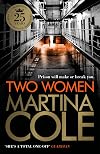
Appalling. I'll always read 100 pages to establish my views on a book and did so with this. I understand life in the East End would have been tough but this characterization of people must be way OTT. What does these 100 pages depict :- Continuous foul language - sexist and racist language - wife beating to such an extent that the injuries are considerable and hospitalization required - rape - violence and humiliation towards a teenage daughter which includes incest - the wife/mother who show more pretends to ignore her daughters suffering and makes excuses for the husband who has eroded any self respect she may have had - the foul mouthed mother in law who herself gets beaten up by her granddaughter - and thats prior to the storyline of the East End underworld. I was brought up in a similar community at the same period - growing up in a working class family in a Welsh mining valley was not easy but any guy who acted towards women in this way would have had no respect and quickly ostracised in the community. This author is well established so I understand people must be interested to read this but enjoy - how on earh cany you enjoy reading this. show less
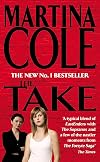
I am embarrased by my liking of Martina Cole books for two reasons. One - they really are badly written. Two - they are morally offensive. She really falls for the myth of the "diamond geezer", the good old Cockney villain, who might be an armed robber but has his standards where women and children are concerned, and indeed is ready to dish out some community punishment to the likes of child molesters.
But enjoy these books I do. She is a story teller, and I somehow get interested in spite of show more myself. I do want to know how it is going to come out.
"The Take" is probably the one I have liked the best. It does seem, for once, on the edge of making a moral point. The central character is a Kray type villain name of Freddy Jackson, who initially comes across as something of a glamorous go-getter - though a man with flaws - but gradually reveals himself as living in a nihilist cul-de-sac, destructive of every one around him, and self-destructive to boot.
In the end she cops out, and the point is blunted - it would give too much away to say just how.
The weirdest part of this book just has to be quoted. Towards the end a minor drug dealer crops up that sends Cole into what I can only describe as a Jeremy Kyle rant.
"He was an addict, and that meant that every agency the Labour government funded was there expressly to help people like him. He had never had it so good, life had simply got better and better.
"His addiction had helped keep him out of prison, had helped him to get rehoused time and time again when the going had got a little too tough, and it had made sure he got his drugs whenever he needed them because he was, after all, big roll of drums, addicted.
"Roll on Tony and his wonderful nanny state."
Fortunately Freddy Jackson turns up to give him his community puishment.
Quite what this character has done that is so worse than any other character in the book is beyond me. Freddy is a drug dealer from higher up the food chain.
Moral consistency is not her strong point. show less
But enjoy these books I do. She is a story teller, and I somehow get interested in spite of show more myself. I do want to know how it is going to come out.
"The Take" is probably the one I have liked the best. It does seem, for once, on the edge of making a moral point. The central character is a Kray type villain name of Freddy Jackson, who initially comes across as something of a glamorous go-getter - though a man with flaws - but gradually reveals himself as living in a nihilist cul-de-sac, destructive of every one around him, and self-destructive to boot.
In the end she cops out, and the point is blunted - it would give too much away to say just how.
The weirdest part of this book just has to be quoted. Towards the end a minor drug dealer crops up that sends Cole into what I can only describe as a Jeremy Kyle rant.
"He was an addict, and that meant that every agency the Labour government funded was there expressly to help people like him. He had never had it so good, life had simply got better and better.
"His addiction had helped keep him out of prison, had helped him to get rehoused time and time again when the going had got a little too tough, and it had made sure he got his drugs whenever he needed them because he was, after all, big roll of drums, addicted.
"Roll on Tony and his wonderful nanny state."
Fortunately Freddy Jackson turns up to give him his community puishment.
Quite what this character has done that is so worse than any other character in the book is beyond me. Freddy is a drug dealer from higher up the food chain.
Moral consistency is not her strong point. show less
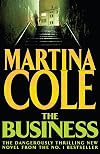
Some books contain a hint of kitchen sink but The Business is an all-out assault on the senses, heady with steam, eau de sunlight Liquid and a chorus of clattering crockery and clashing cutlery.
The Kitchen Sink drama is not my preferred genre but no doubt some examples are well-written, genuinely moving and deeply perceptive: unfortunately The Business is not one of the above.
Although this is the 15th novel by critically-acclaimed and award-winning best seller Martina Cole, it is my first show more exposure to her and – I sincerely hope – my last.
Repetitive, badly-written, clichéd and boring it is one of the worst books I have read in a long time and yet, I have no doubt, it too will boast a position on some best seller list and almost certainly prove a firm favourite with women who read you magazine and follow The Bold and the Beautiful.
Set amongst the Irish Catholic criminal class in the east end of London this tedious tale follows the misfortunes of the Dooley family from the late 1970s to the present, concentrating on the lives of three generations of women.
Matriarch Mary Dooley appears to be one of those unfortunate Obsessive Compulsives with an over-active thyroid, always busy, always cleaning, polishing, washing, scrubbing and cooking for her gangster husband Gerald and their three children.
Her youngest child and only daughter Imelda is the image of her mum: slender, beautiful and elegant with high cheekbones, dark blue eyes and long, thick blonde hair. But while Mary has only two vices – she is addicted to cigarettes and strong tea which ‘gave her foetid breath and a furry tongue’ – the saintly-looking Imelda embraces sex, drugs and drink from an early age.
Inevitably Imelda falls pregnant but tells her adoring and deluded father she had been raped: dear old dad is incensed and goes on the rampage, killing the father of the child, but dying himself in the process. Mary alone sees Imelda for the sociopath she is, and knows her daughter is a dangerous liar, not an innocent victim.
Despite copious amounts of alcohol and cigarettes, Imelda gives birth to Jordanna, a lovely baby girl who becomes the apple of her grandmother’s eye. But Imelda – now a prostitute – loathes her baby and abuses her constantly, clinging onto the child only because she knows that by so doing she can force Mary into giving her money for drugs.
The trials and tribulations of Imelda are spelled out at length and in graphic detail as the frail little mite begs for her mother’s love only to be rejected, starved and beaten. When the child is two, her mother shoots a pimp dead but blames the murder on the toddler and so escapes retribution: at the time she is pregnant [fathered allegedly by the dead pimp] but after giving birth returns to prostitution.
Three-year-old Jordanna is left to take care of Kenny Boy, her baby brother, trying too looking after and protecting him although by now she is regularly hired out to paedophiles by her mother and sexually abused to such an extent she is rendered infertile.
And things just go downhill from there as Jordanna grows up to be unhappily promiscuous and a drug addict, while brother Kenny embraces crime and becomes a ‘Face’ to be feared and respected well before he reaches 20.
The fact the story is miserable is not what makes it bad; the problem is it is poorly written. When Imelda finds herself pregnant, the young gangster who fathered the baby thinks of it merely as ‘a bellyful of arms and legs’ – a powerful metaphor, but only the first time round. Unfortunately the phrase is repeated again and again.
Underachievers are referred to as being ‘as useful as a chocolate teapot’ – another wonderfully expressive image which however began to loose its potency on its third or fourth airing.
Cole also overuses the word ‘abortion’ as a descriptive metaphor: business dealings, relationships and lives are constantly referred to as an abortion when they begin to go wrong – although the term is never once used to describe the artificial termination of a pregnancy.
Most irritating of all is the enthusiastic misuse of the word ‘decimate’ as a synonym for destroy or ruin: it doesn’t take rocket science to work out that the word means one in ten but in The Business, lives, looks, plans and psyches are constantly decimated.
“Martina Cole is a phenomenon’ the publishers blurb informs us, ‘the only author who dares to tell it like it really is’. If that is truly the case I am decimated because this ‘dangerously thrilling’ kitchen sink drama is ‘a complete and utter abortion’. show less
The Kitchen Sink drama is not my preferred genre but no doubt some examples are well-written, genuinely moving and deeply perceptive: unfortunately The Business is not one of the above.
Although this is the 15th novel by critically-acclaimed and award-winning best seller Martina Cole, it is my first show more exposure to her and – I sincerely hope – my last.
Repetitive, badly-written, clichéd and boring it is one of the worst books I have read in a long time and yet, I have no doubt, it too will boast a position on some best seller list and almost certainly prove a firm favourite with women who read you magazine and follow The Bold and the Beautiful.
Set amongst the Irish Catholic criminal class in the east end of London this tedious tale follows the misfortunes of the Dooley family from the late 1970s to the present, concentrating on the lives of three generations of women.
Matriarch Mary Dooley appears to be one of those unfortunate Obsessive Compulsives with an over-active thyroid, always busy, always cleaning, polishing, washing, scrubbing and cooking for her gangster husband Gerald and their three children.
Her youngest child and only daughter Imelda is the image of her mum: slender, beautiful and elegant with high cheekbones, dark blue eyes and long, thick blonde hair. But while Mary has only two vices – she is addicted to cigarettes and strong tea which ‘gave her foetid breath and a furry tongue’ – the saintly-looking Imelda embraces sex, drugs and drink from an early age.
Inevitably Imelda falls pregnant but tells her adoring and deluded father she had been raped: dear old dad is incensed and goes on the rampage, killing the father of the child, but dying himself in the process. Mary alone sees Imelda for the sociopath she is, and knows her daughter is a dangerous liar, not an innocent victim.
Despite copious amounts of alcohol and cigarettes, Imelda gives birth to Jordanna, a lovely baby girl who becomes the apple of her grandmother’s eye. But Imelda – now a prostitute – loathes her baby and abuses her constantly, clinging onto the child only because she knows that by so doing she can force Mary into giving her money for drugs.
The trials and tribulations of Imelda are spelled out at length and in graphic detail as the frail little mite begs for her mother’s love only to be rejected, starved and beaten. When the child is two, her mother shoots a pimp dead but blames the murder on the toddler and so escapes retribution: at the time she is pregnant [fathered allegedly by the dead pimp] but after giving birth returns to prostitution.
Three-year-old Jordanna is left to take care of Kenny Boy, her baby brother, trying too looking after and protecting him although by now she is regularly hired out to paedophiles by her mother and sexually abused to such an extent she is rendered infertile.
And things just go downhill from there as Jordanna grows up to be unhappily promiscuous and a drug addict, while brother Kenny embraces crime and becomes a ‘Face’ to be feared and respected well before he reaches 20.
The fact the story is miserable is not what makes it bad; the problem is it is poorly written. When Imelda finds herself pregnant, the young gangster who fathered the baby thinks of it merely as ‘a bellyful of arms and legs’ – a powerful metaphor, but only the first time round. Unfortunately the phrase is repeated again and again.
Underachievers are referred to as being ‘as useful as a chocolate teapot’ – another wonderfully expressive image which however began to loose its potency on its third or fourth airing.
Cole also overuses the word ‘abortion’ as a descriptive metaphor: business dealings, relationships and lives are constantly referred to as an abortion when they begin to go wrong – although the term is never once used to describe the artificial termination of a pregnancy.
Most irritating of all is the enthusiastic misuse of the word ‘decimate’ as a synonym for destroy or ruin: it doesn’t take rocket science to work out that the word means one in ten but in The Business, lives, looks, plans and psyches are constantly decimated.
“Martina Cole is a phenomenon’ the publishers blurb informs us, ‘the only author who dares to tell it like it really is’. If that is truly the case I am decimated because this ‘dangerously thrilling’ kitchen sink drama is ‘a complete and utter abortion’. show less
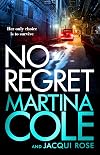
No Regret is the latest thriller from the new writing partnership of Martina Cole and Jacqui Rose, published in October 2025. This is an addictive read of a strong woman in the face of abusive men and the attitudes of the 1960s.
Maggie Riley has no future she is 16 and works a long side her mother in a laundry while running to give money to her father so he can go drinking. Her father uses Maggie and her mother as a punch bag and regularly abuses both.
The only person she has ever been close show more too is Thomas who happens to be black, which in the 1960s would be hard enough, but to have a white, Irish, girlfriend would have meant his death. Thomas gets beaten up in front of Maggie for being black, and this will bring him into the orbit of Rory Sheehan.
The local villain, Rory Sheehan, has decided no matter what, he is going to make Maggie Riley his wife and his property. He does not really care what anyone, including, Maggie thinks or say. Maggie tries to resist at first but then finds out she is pregnant. An old sage tells her that Rory might be her best bet for her pregnant child.
When Rose is born, Maggie realises that she is going to have to do a runner because when Rory sees her, he will kill her. Maggie goes out on the lamb, but Rory hunts her down and batters her black and blue. Maggie swears revenge and she knows what she must do, but does she have the strength to do it. Especially when Rory is using Rose to taunt Maggie.
This is an addictive read from the Queen of Crime, and a reminder of that where women are concerned, we have not really moved forward since the 60s or 70s. show less
Maggie Riley has no future she is 16 and works a long side her mother in a laundry while running to give money to her father so he can go drinking. Her father uses Maggie and her mother as a punch bag and regularly abuses both.
The only person she has ever been close show more too is Thomas who happens to be black, which in the 1960s would be hard enough, but to have a white, Irish, girlfriend would have meant his death. Thomas gets beaten up in front of Maggie for being black, and this will bring him into the orbit of Rory Sheehan.
The local villain, Rory Sheehan, has decided no matter what, he is going to make Maggie Riley his wife and his property. He does not really care what anyone, including, Maggie thinks or say. Maggie tries to resist at first but then finds out she is pregnant. An old sage tells her that Rory might be her best bet for her pregnant child.
When Rose is born, Maggie realises that she is going to have to do a runner because when Rory sees her, he will kill her. Maggie goes out on the lamb, but Rory hunts her down and batters her black and blue. Maggie swears revenge and she knows what she must do, but does she have the strength to do it. Especially when Rory is using Rose to taunt Maggie.
This is an addictive read from the Queen of Crime, and a reminder of that where women are concerned, we have not really moved forward since the 60s or 70s. show less
Awards


You May Also Like


Associated Authors
Statistics
- Works
- 44
- Also by
- 3
- Members
- 4,780
- Popularity
- #5,256
- Rating
- 3.6
- Reviews
- 91
- ISBNs
- 423
- Languages
- 14
- Favorited
- 12