
Thomas Healy (3)
Author of The Great Dissent: How Oliver Wendell Holmes Changed His Mind and Changed the History of Free Speech in America
For other authors named Thomas Healy, see the disambiguation page.
Works by Thomas Healy
The Great Dissent: How Oliver Wendell Holmes Changed His Mind and Changed the History of Free Speech in America (2013) 180 copies, 18 reviews
Tagged
Common Knowledge
- Gender
- male
- Education
- University of North Carolina, Chapel Hill (B.A.)
Columbia Law School (J.D.) - Occupations
- lawyer
law school professor - Nationality
- USA
- Associated Place (for map)
- USA
Members
Reviews
The Great Dissent: How Oliver Wendell Holmes Changed His Mind--and Changed the History of Free Speech in America by Thomas Healy
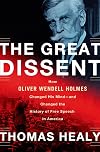
This is a very thought-provoking account of how Supreme Court Justice Oliver Wendell Holmes altered his position on freedom of speech to pave the way for the more liberal interpretation of the First Amendment we now regard as canonical. In the short period between his decisions in Schenck v. United States, Frohwerk v. United States, and Debs v. United States, and his decision in Abrams v. United States, Holmes changed his mind and changed the law.
It’s an interesting and important story show more for several reasons. One is the view it provides of the rather astounding effect that one Supreme Court Justice can have on the law of the entire country. Holmes’s famous dissents arguing for an expanded view of First Amendment freedoms were not as well written as those of Brandeis, to name but one other advocate who wrote more clearly, but it was Holmes, with his far-reaching influence and “force of personality” that affected the public consciousness, and, as Healy writes, “gave the movement its legitimacy and inspiration.” A second reason this story fascinates is the documentation of just how and why Holmes was influenced by his friends - a group of young intellectuals who came under government suspicion because of their backgrounds and liberal tendencies rather than because of any danger - either from intent or from effect - of their speech. And finally, there are the compelling philosophical issues about the First Amendment itself over which Holmes struggled: where should the line be drawn for freedom of speech? If the country is at war, must “all rights of the individual... become subordinated to the national rights in the struggle for national life” as one critic argued? Should war make a difference? If so, why? What if the war itself is unjust? And what about the difference between the intent of speech and its effect? Is it fair to ignore one or the other?
So what exactly happened between Schenck, decided March 3, 1919, and Abrams, decided November 10, 1919? This entertaining book by Healy answers that question.
Holmes was not initially in favor of toleration of other opinions. He didn’t believe in “natural rights.” (He had just recently written, “...there can be no legal right as against the authority that makes the law on which the right depends.” Kawananokoa v. Polyblank.) Also in 1907, his opinion for Patterson v. Colorado enshrined into law a "Blackstonian" view of free speech, which insisted that the purpose of the First Amendment “was to prevent all such ‘previous restraints’ upon publications as had been practiced by other governments, but not to prevent the subsequent punishment of such as may be deemed contrary to the public welfare.” (After publication, however, as the author commented, “all bets were off.”)
But Holmes had a number of very close friends - young, mostly Jewish intellectuals, a couple of whom he considered to be like his sons. Included among them were Harold Laski, Felix Frankfurter, Zechariah Chafee, and Louis Brandeis. These men had much more liberal ideas than Holmes on a wide array of subjects, including free speech, and they plied him with books to show him how their thinking had evolved. He happily read them, and engaged in debate with his friends, but resisted change.
However, after World War I, the mood in the country took a turn for the worse. A “Red Scare” following the Russian Revolution swept America. Congress passed the Espionage Act in June 1917 and the Sedition Act in the spring of 1918. U.S. officials, led by the Attorney General and young J. Edgar Hoover, who in 1919 was put in charge of the “Radical Division” at the F.B.I., eagerly stoked the flames, embarking on witch hunts for anyone deemed "suspicious". The Washington Post, reflecting the mood of the nation, wrote, “Too long the government pursued the policy of waiting until some overt act was committed before talking steps against the anarchists...” And as the author pointed out:
“Many of these [suspect] people, it was said, were teaching at universities, where they could corrupt the minds of the young. Many others were immigrants, particularly of Jewish ancestry. And for those unfortunate individuals who were both university professors and Jewish immigrants, well, the presumption of guilt was nearly automatic.”
Laski, Frankfurter, and Chafee were professors at Harvard, and Brandeis was on the Supreme Court. Brandeis enjoyed relative immunity compared to the others, who soon found their careers in jeopardy. This was probably the best thing that happened to free speech. As Healy observes after Laski came under fire:
“For now what had been merely an abstract question for Holmes over the past year was, suddenly, concrete and personal. The face of free speech was no longer Eugene Debs, the dangerous socialist agitator. It was his good friend Harold Laski, and Holmes’s views shifted accordingly - and dramatically.”
It wasn’t just a case of Holmes liking these men and therefore feeling disposed to advocate on their behalf. He knew they posed no threat to the country, and that their ideas were not threatening but stimulating, and grounded in centuries of philosophical and legal debate. He argued in Abrams not only that one needn't worry because “bad” opinions would suffer accordingly in a free marketplace of ideas. He went farther, disavowing the idea that free speech is inapplicable during times of war, reemphasizing the “clear and present danger” criterion he had first articulated in Schenck. He had come to see the raft of cases brought under the Sedition and Espionage Acts as part of the government’s effort to impose uniformity of belief, and he opposed that effort. In yet another dissent, he wrote:
“...if there is any principle of the Constitution that more imperatively calls for attachment than any other it is the principle of free thought - not free thought for those who agree with us but freedom for the thought that we hate.”
He still felt that “persecution for the expression of opinions seems...perfectly logical.” But now he added - as John Stuart Mill had maintained in On Liberty, a book recommended to him by Laski - that opening up beliefs to refutation will only strengthen them if in fact they cannot be proven to be unfounded.
Evaluation: This is a highly interesting story and well-told, except, that is, for the prologue and first chapter. I thought the book would have been enhanced by omitting those two segments. Also, the author somewhat bizarrely and irrelevantly, as far as I could tell, decided to add information about Holmes’ love life. I saw no possible reason for it to be included. show less
It’s an interesting and important story show more for several reasons. One is the view it provides of the rather astounding effect that one Supreme Court Justice can have on the law of the entire country. Holmes’s famous dissents arguing for an expanded view of First Amendment freedoms were not as well written as those of Brandeis, to name but one other advocate who wrote more clearly, but it was Holmes, with his far-reaching influence and “force of personality” that affected the public consciousness, and, as Healy writes, “gave the movement its legitimacy and inspiration.” A second reason this story fascinates is the documentation of just how and why Holmes was influenced by his friends - a group of young intellectuals who came under government suspicion because of their backgrounds and liberal tendencies rather than because of any danger - either from intent or from effect - of their speech. And finally, there are the compelling philosophical issues about the First Amendment itself over which Holmes struggled: where should the line be drawn for freedom of speech? If the country is at war, must “all rights of the individual... become subordinated to the national rights in the struggle for national life” as one critic argued? Should war make a difference? If so, why? What if the war itself is unjust? And what about the difference between the intent of speech and its effect? Is it fair to ignore one or the other?
So what exactly happened between Schenck, decided March 3, 1919, and Abrams, decided November 10, 1919? This entertaining book by Healy answers that question.
Holmes was not initially in favor of toleration of other opinions. He didn’t believe in “natural rights.” (He had just recently written, “...there can be no legal right as against the authority that makes the law on which the right depends.” Kawananokoa v. Polyblank.) Also in 1907, his opinion for Patterson v. Colorado enshrined into law a "Blackstonian" view of free speech, which insisted that the purpose of the First Amendment “was to prevent all such ‘previous restraints’ upon publications as had been practiced by other governments, but not to prevent the subsequent punishment of such as may be deemed contrary to the public welfare.” (After publication, however, as the author commented, “all bets were off.”)
But Holmes had a number of very close friends - young, mostly Jewish intellectuals, a couple of whom he considered to be like his sons. Included among them were Harold Laski, Felix Frankfurter, Zechariah Chafee, and Louis Brandeis. These men had much more liberal ideas than Holmes on a wide array of subjects, including free speech, and they plied him with books to show him how their thinking had evolved. He happily read them, and engaged in debate with his friends, but resisted change.
However, after World War I, the mood in the country took a turn for the worse. A “Red Scare” following the Russian Revolution swept America. Congress passed the Espionage Act in June 1917 and the Sedition Act in the spring of 1918. U.S. officials, led by the Attorney General and young J. Edgar Hoover, who in 1919 was put in charge of the “Radical Division” at the F.B.I., eagerly stoked the flames, embarking on witch hunts for anyone deemed "suspicious". The Washington Post, reflecting the mood of the nation, wrote, “Too long the government pursued the policy of waiting until some overt act was committed before talking steps against the anarchists...” And as the author pointed out:
“Many of these [suspect] people, it was said, were teaching at universities, where they could corrupt the minds of the young. Many others were immigrants, particularly of Jewish ancestry. And for those unfortunate individuals who were both university professors and Jewish immigrants, well, the presumption of guilt was nearly automatic.”
Laski, Frankfurter, and Chafee were professors at Harvard, and Brandeis was on the Supreme Court. Brandeis enjoyed relative immunity compared to the others, who soon found their careers in jeopardy. This was probably the best thing that happened to free speech. As Healy observes after Laski came under fire:
“For now what had been merely an abstract question for Holmes over the past year was, suddenly, concrete and personal. The face of free speech was no longer Eugene Debs, the dangerous socialist agitator. It was his good friend Harold Laski, and Holmes’s views shifted accordingly - and dramatically.”
It wasn’t just a case of Holmes liking these men and therefore feeling disposed to advocate on their behalf. He knew they posed no threat to the country, and that their ideas were not threatening but stimulating, and grounded in centuries of philosophical and legal debate. He argued in Abrams not only that one needn't worry because “bad” opinions would suffer accordingly in a free marketplace of ideas. He went farther, disavowing the idea that free speech is inapplicable during times of war, reemphasizing the “clear and present danger” criterion he had first articulated in Schenck. He had come to see the raft of cases brought under the Sedition and Espionage Acts as part of the government’s effort to impose uniformity of belief, and he opposed that effort. In yet another dissent, he wrote:
“...if there is any principle of the Constitution that more imperatively calls for attachment than any other it is the principle of free thought - not free thought for those who agree with us but freedom for the thought that we hate.”
He still felt that “persecution for the expression of opinions seems...perfectly logical.” But now he added - as John Stuart Mill had maintained in On Liberty, a book recommended to him by Laski - that opening up beliefs to refutation will only strengthen them if in fact they cannot be proven to be unfounded.
Evaluation: This is a highly interesting story and well-told, except, that is, for the prologue and first chapter. I thought the book would have been enhanced by omitting those two segments. Also, the author somewhat bizarrely and irrelevantly, as far as I could tell, decided to add information about Holmes’ love life. I saw no possible reason for it to be included. show less
 This review was written for LibraryThing Early Reviewers.
The Great Dissent: How Oliver Wendell Holmes Changed His Mind--and Changed the History of Free Speech in America by Thomas Healy
I opened this book, read the first few pages, closed it and then went to get a pencil. This, I knew, was going to be one of those books where I wanted to do a lot of underlining and note-taking.
The Great Dissent follows the path that Oliver Wendell Holmes took from 1918 to 1919 as he wrestled with the issue of the kinds of speech the government protects and the kinds that it can prosecute. Author Thomas Healy does a masterful job of taking someone with a novice understanding of the points of show more view involved (like me!) and explaining the nuances of the differences. Through careful analysis of legal opinions and letters to and from colleagues, Healy exposes the arguments that Holmes considered as his beliefs transformed from the Constitution being society's protector to the individual's protector.
The story weaves its way through the many free speech cases that reached the Supreme Court as a result of the Espionage and Sedition Acts enacted during the course of the First World War, and as much a part of the story as Holmes' journey is the story of his friends and colleagues who revered their old friend, but who had different opinions on free speech and wanted to sway Holmes to their way of thinking as he worked his way through the docket.
One often believes that the way things are is the way things have always been and I always find it fascinating when I run up against evidence where that's not the case. So it was with this book as Healy chronicled the interpretation of the First Amendment over the years and the cases that determined the generally understood meaning of the Amendment at that time. Good history all around!
I also enjoyed the serious, yet congenial back and forth that Holmes and his friends employed as they presented their arguments to each other. They all seemed to genuinely like each other while often having diametrically opposed opinions. It made me once again bemoan the present state of disagreement where two sides tend not to engage each other at all, but engage with their like-minded compatriots in calling the other side names. And Holmes' willingness to listen to opposing opinions and alter his on point of view when he felt it needed to be altered was also admirable.
The Great Dissent is a fine, engaging book on a dense subject that still is accessible to the layman. Highly recommended! show less
The Great Dissent follows the path that Oliver Wendell Holmes took from 1918 to 1919 as he wrestled with the issue of the kinds of speech the government protects and the kinds that it can prosecute. Author Thomas Healy does a masterful job of taking someone with a novice understanding of the points of show more view involved (like me!) and explaining the nuances of the differences. Through careful analysis of legal opinions and letters to and from colleagues, Healy exposes the arguments that Holmes considered as his beliefs transformed from the Constitution being society's protector to the individual's protector.
The story weaves its way through the many free speech cases that reached the Supreme Court as a result of the Espionage and Sedition Acts enacted during the course of the First World War, and as much a part of the story as Holmes' journey is the story of his friends and colleagues who revered their old friend, but who had different opinions on free speech and wanted to sway Holmes to their way of thinking as he worked his way through the docket.
One often believes that the way things are is the way things have always been and I always find it fascinating when I run up against evidence where that's not the case. So it was with this book as Healy chronicled the interpretation of the First Amendment over the years and the cases that determined the generally understood meaning of the Amendment at that time. Good history all around!
I also enjoyed the serious, yet congenial back and forth that Holmes and his friends employed as they presented their arguments to each other. They all seemed to genuinely like each other while often having diametrically opposed opinions. It made me once again bemoan the present state of disagreement where two sides tend not to engage each other at all, but engage with their like-minded compatriots in calling the other side names. And Holmes' willingness to listen to opposing opinions and alter his on point of view when he felt it needed to be altered was also admirable.
The Great Dissent is a fine, engaging book on a dense subject that still is accessible to the layman. Highly recommended! show less
This review was written for LibraryThing Early Reviewers.The Great Dissent: How Oliver Wendell Holmes Changed His Mind--and Changed the History of Free Speech in America by Thomas Healy
Legislative history--the process of determining what a law was intended to mean--is generally very dull stuff: reading memos, committee reports, and testimony transcripts is only fun for the first few hours. Healy, though, teaches law (at Seton Hall University), so he both knows how to do that sort of research, and how to make the work engaging.
Which is fortunate, because his subject is one of our most important laws: the first amendment to the United States Constitution, which guarantees show more our rights of expression, religion, and peaceable assembly. While this law has been on the books since 1791, it was only in 1919 that we began to understand it as actually limiting the government's ability to prosecute people for what they say. That we can now disagree openly about government policy or protest against its actions is directly due to a change in the way Oliver Wendell Holmes, Jr, interpreted the words.
This book, unfortunately, comes too late. By recounting one judge's evolution, occurring during the high communist paranoia after World War I, Healy shows the importance of this debate--and the importance of standing against governmental tyranny, something sorely lacking in the immediate aftermath of 9/11, when fear of terrorism and the resulting Patriot Act chilled discourse; something we still struggle with as the NSA vacuums us every scrap of electronic data; something we traded for a false feeling of security. Holmes' courage--to change his mind, to stand against the majority, and to support freedom over fear--should stand as an inspiration for us all, and Healy presents it as a readable political thriller. This should be required reading in high school civics classes. show less
Which is fortunate, because his subject is one of our most important laws: the first amendment to the United States Constitution, which guarantees show more our rights of expression, religion, and peaceable assembly. While this law has been on the books since 1791, it was only in 1919 that we began to understand it as actually limiting the government's ability to prosecute people for what they say. That we can now disagree openly about government policy or protest against its actions is directly due to a change in the way Oliver Wendell Holmes, Jr, interpreted the words.
This book, unfortunately, comes too late. By recounting one judge's evolution, occurring during the high communist paranoia after World War I, Healy shows the importance of this debate--and the importance of standing against governmental tyranny, something sorely lacking in the immediate aftermath of 9/11, when fear of terrorism and the resulting Patriot Act chilled discourse; something we still struggle with as the NSA vacuums us every scrap of electronic data; something we traded for a false feeling of security. Holmes' courage--to change his mind, to stand against the majority, and to support freedom over fear--should stand as an inspiration for us all, and Healy presents it as a readable political thriller. This should be required reading in high school civics classes. show less
This review was written for LibraryThing Early Reviewers.The Great Dissent: How Oliver Wendell Holmes Changed His Mind-and Changed the History of Free Speech in America by Thomas Healy
Going into this book, I did not know much about the topics which were covered. O.W. Holmes was a mystery to me. I knew who he was, but not 'who' he was and what he stood for. I did not know much of the background on our right to free speech. I mean, how entertaining can learning about free speech be, right? Well as it turns out, it can be quite entertaining.
Thomas Healy has done a great job with this subject. He has fleshed out who Oliver Wendell Holmes was, which is important in relation show more to the story and to his fateful decisions he makes. The cast of characters is not overwhelming and the tangents and opinions I believe were kept to a minimum. His history of free speech I thought was well thought out and gave me a good understanding of what the legal community thought of it at the time. His sources he used seem to have been chosen with care. His writing is clear and concise which is all one can ask for.
Is this the greatest work of non-fiction you will read all year? Probably not, after all it still is not on the most exciting topic regarding not one of the most exciting figures history has produced. But it isn't all bad either and that is quite the credit to Mr. Healy. He took a potential lame duck and turned it into a prized fowl. show less
Thomas Healy has done a great job with this subject. He has fleshed out who Oliver Wendell Holmes was, which is important in relation show more to the story and to his fateful decisions he makes. The cast of characters is not overwhelming and the tangents and opinions I believe were kept to a minimum. His history of free speech I thought was well thought out and gave me a good understanding of what the legal community thought of it at the time. His sources he used seem to have been chosen with care. His writing is clear and concise which is all one can ask for.
Is this the greatest work of non-fiction you will read all year? Probably not, after all it still is not on the most exciting topic regarding not one of the most exciting figures history has produced. But it isn't all bad either and that is quite the credit to Mr. Healy. He took a potential lame duck and turned it into a prized fowl. show less
This review was written for LibraryThing Early Reviewers.Awards


Statistics
- Works
- 1
- Members
- 180
- Popularity
- #119,864
- Rating
- 4.0
- Reviews
- 18
- ISBNs
- 35
- Languages
- 1
