
Works by Mark Tappan
Tagged
Common Knowledge
There is no Common Knowledge data for this author yet. You can help.
Members
Reviews
A Dog Named Mattis: 12 Lessons for Living Courageously, Serving Selflessly, and Building Bridges from a Heroic K9 Officer (The Perfect Gift for Dog Lovers and People in Law Enforcement) by Mark Tappan
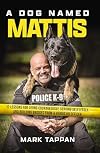
Books on Police dogs make me laugh. Something about a dog whose games involve biting people is just funny. This book has a lot of good information on tests they do to select a dog to be used for K9 work as well as some on training. As a bonus, the dog was also one of the dogs that was in the television show America’s Top Dog and that experience is covered in a chapter.
I liked how he was told what qualities to look for when selecting a dog from a lead trainer:
‘Jeff’s first lesson for show more me was in how to select a good police dog. He had myriad tests he would put dogs through to determine whether they had the right focus and effort to be a good police dog. He explained that the three most important characteristics were that the dog be happy, social, and confident. I found it odd that Jeff started with a happy dog.‘
I like learning about the tests they do to choose a dog. In the story, he is out to get a Malinois but a big German Shepherd is also in the mix to be tested. From previous books I have read of the differences between the two breeds, including someone who said a Malinois will just do what is commanded, where a German Shepherd will think about what needs to be done. I seem to remember that being said as if it was not a good thing for the dog to think and maybe hesitate to obey. The way the big German Shepherd blows through the tests are funny. With his notes reflecting how high the dog is rated for each test but ‘too big,’ ‘but he’s a German Shepherd’ to ‘maybe.’ Here are the tests:
Test #1: Prey Drive
For prey drive the test is simple. You take the dog’s toy and throw it as far as you can. You are looking to see how intensely it runs after the toy. This test displays the value the dog places on the toy and how much it likes the game of chasing prey. It translates to police work in a few ways. The obvious is chasing a suspect, but it also shows whether the dog will respond to toy-driven training methods in which you use the toy as a reward.
Test #2: Hunt Drive
Next up was to test the dogs’ hunt drive: how hard they will look for something that they can smell but not see. For this test you throw the ball while holding on to the dog until the ball hits the ground. Spin the dog around a couple of times so it loses its visual cues and bearing and then let it go hunt for the ball. It translates to police work in that you need a dog to rely on its sense of smell to find a reward, and to track someone it must find satisfaction in the hunt itself. This test weeds out a lot of dogs because many will lose interest or be distracted during the search. It’s not about how fast they find the object but more about how hard they look.
Test #3: Perseverance
The last of the ball tests was perseverance. The way we do this is to tease the dog with the ball and place it in location the dog can see and smell but can’t get to. In our case we had a fifty-pound wooden pallet we placed the ball under. This is important to police work because you want to see if the dog, when presented with an obstacle to the goal, will still try hard to get to it.
For this last test, no other dog went over and flipped over the fifty-pound wooden pallet with the officer on top of it to get the ball other than the dog that would be later named Mattis.
Here is a bit on how they train dogs to track people:
‘Have your helper tease your dog with a toy and run away to a place the dog can’t see. Start the dog on an item the helper dropped, like a sweaty hat, then have the dog find him. As you progress, you want the dog to start using his nose, not his eyes, to identify the person who has his toy. So you remove the part where the dog sees the helper run away and just start him on the sweaty hat that was dropped. You make the tracks longer and longer with different types of ground and obstacles, and eventually you have an amazing tracking dog. The key to this one is, again, to flip out with excitement when the dog finds the helper and make it the most amazing time in the world.’
Another funny bit described training in a closed department store. The decoy is positioned between rows of shelving unites in the middle of a pitch-black warehouse. For the rest of the dogs it takes a couple of minutes before you hear the decoy scream in pain from the bite, which hurts, even in a bite suit. For Mattis, they heard the scream in fifteen seconds.
‘I asked the decoy what happened. He told me he heard Mattis go down a row in the distance and then jump up onto a shelf. He said he then jumped from shelf to shelf (ip the dark) straight toward him at about head level. The decoy said, “I know I was supposed to be still, but he was coming at me head level, so I threw my arm up to intercept him.”
The other handlers, the decoy, and I were all astounded. This was not what I had planned. This was not the lesson | wanted to teach Mattis. I laughed because he’d solved it in a manner I hadn’t considered, and in a more efficient way. This type of Mattis solution became commonplace at every training session. Throw a complex problem at him and just watch him with wonder as he comes up with a solution. We never knew what it was going to be, but we knew it was going to be grounded in determination, athleticism, and efficiency.’
Another thing I liked about this book was in the way a few parts attempted to describe what the dog must be thinking. I am not a fan of when a dog narrates a book but mostly because it is often done in an unrealistic way, but I liked the way they do it in this book as in this example (sorry, I don’t know how to make it italicized):
‘Quick stop, I need to get my balance. Best Friend’s door Opens; I hope mine is next.
It is! What game are we going to play?
Short leash hooked up to my flat collar, could be the find-the-smell game. Best Friend usually doesn’t smell as stressed as he is now for that game, and his heart doesn’t usually beat as
fast as it is now. We are running! This is probably the protection game!
There are lots of people everywhere. I wonder which is the target?
We are slowing so we must be getting close. Maybe it’s these two in front of me; they smell stressed.’
One other point to mention in the book. Each chapter title page includes a verse from the Bible. And in a couple of places, he interjects God into the lesson or that is part of his thought process. As a Christian, I think this should be normal stuff when it is a normal and important part of your life. The author’s life is remarkable, faith plays a part in his success. I don’t think it comes close to any line in a way anyone would find it obnoxiously distracting from the story. Here is an example of one reference to God when he had his previous Policy dog Niko:
‘Fun fact: most people are not good liars. I believe that we are all image bearers of God, and he has written his law on our hearts. We know what’s right, we just don’t always do it! Which is why I got the following answer from the driver: "There shouldn’t be.” Think about it: He wasn’t saying “No, there isn’t.” The claim was really that he either didn’t know or he was agreeing with my question, that yes, there was something in the car, but it shouldn’t be there according to the law. Either way, it was Niko time.’
Another good Police dog book. It however is not one of my favorites of the books on Police Dogs I have read and for that reason only giving it 4 stars, but still a book I would recommend. show less
I liked how he was told what qualities to look for when selecting a dog from a lead trainer:
‘Jeff’s first lesson for show more me was in how to select a good police dog. He had myriad tests he would put dogs through to determine whether they had the right focus and effort to be a good police dog. He explained that the three most important characteristics were that the dog be happy, social, and confident. I found it odd that Jeff started with a happy dog.‘
I like learning about the tests they do to choose a dog. In the story, he is out to get a Malinois but a big German Shepherd is also in the mix to be tested. From previous books I have read of the differences between the two breeds, including someone who said a Malinois will just do what is commanded, where a German Shepherd will think about what needs to be done. I seem to remember that being said as if it was not a good thing for the dog to think and maybe hesitate to obey. The way the big German Shepherd blows through the tests are funny. With his notes reflecting how high the dog is rated for each test but ‘too big,’ ‘but he’s a German Shepherd’ to ‘maybe.’ Here are the tests:
Test #1: Prey Drive
For prey drive the test is simple. You take the dog’s toy and throw it as far as you can. You are looking to see how intensely it runs after the toy. This test displays the value the dog places on the toy and how much it likes the game of chasing prey. It translates to police work in a few ways. The obvious is chasing a suspect, but it also shows whether the dog will respond to toy-driven training methods in which you use the toy as a reward.
Test #2: Hunt Drive
Next up was to test the dogs’ hunt drive: how hard they will look for something that they can smell but not see. For this test you throw the ball while holding on to the dog until the ball hits the ground. Spin the dog around a couple of times so it loses its visual cues and bearing and then let it go hunt for the ball. It translates to police work in that you need a dog to rely on its sense of smell to find a reward, and to track someone it must find satisfaction in the hunt itself. This test weeds out a lot of dogs because many will lose interest or be distracted during the search. It’s not about how fast they find the object but more about how hard they look.
Test #3: Perseverance
The last of the ball tests was perseverance. The way we do this is to tease the dog with the ball and place it in location the dog can see and smell but can’t get to. In our case we had a fifty-pound wooden pallet we placed the ball under. This is important to police work because you want to see if the dog, when presented with an obstacle to the goal, will still try hard to get to it.
For this last test, no other dog went over and flipped over the fifty-pound wooden pallet with the officer on top of it to get the ball other than the dog that would be later named Mattis.
Here is a bit on how they train dogs to track people:
‘Have your helper tease your dog with a toy and run away to a place the dog can’t see. Start the dog on an item the helper dropped, like a sweaty hat, then have the dog find him. As you progress, you want the dog to start using his nose, not his eyes, to identify the person who has his toy. So you remove the part where the dog sees the helper run away and just start him on the sweaty hat that was dropped. You make the tracks longer and longer with different types of ground and obstacles, and eventually you have an amazing tracking dog. The key to this one is, again, to flip out with excitement when the dog finds the helper and make it the most amazing time in the world.’
Another funny bit described training in a closed department store. The decoy is positioned between rows of shelving unites in the middle of a pitch-black warehouse. For the rest of the dogs it takes a couple of minutes before you hear the decoy scream in pain from the bite, which hurts, even in a bite suit. For Mattis, they heard the scream in fifteen seconds.
‘I asked the decoy what happened. He told me he heard Mattis go down a row in the distance and then jump up onto a shelf. He said he then jumped from shelf to shelf (ip the dark) straight toward him at about head level. The decoy said, “I know I was supposed to be still, but he was coming at me head level, so I threw my arm up to intercept him.”
The other handlers, the decoy, and I were all astounded. This was not what I had planned. This was not the lesson | wanted to teach Mattis. I laughed because he’d solved it in a manner I hadn’t considered, and in a more efficient way. This type of Mattis solution became commonplace at every training session. Throw a complex problem at him and just watch him with wonder as he comes up with a solution. We never knew what it was going to be, but we knew it was going to be grounded in determination, athleticism, and efficiency.’
Another thing I liked about this book was in the way a few parts attempted to describe what the dog must be thinking. I am not a fan of when a dog narrates a book but mostly because it is often done in an unrealistic way, but I liked the way they do it in this book as in this example (sorry, I don’t know how to make it italicized):
‘Quick stop, I need to get my balance. Best Friend’s door Opens; I hope mine is next.
It is! What game are we going to play?
Short leash hooked up to my flat collar, could be the find-the-smell game. Best Friend usually doesn’t smell as stressed as he is now for that game, and his heart doesn’t usually beat as
fast as it is now. We are running! This is probably the protection game!
There are lots of people everywhere. I wonder which is the target?
We are slowing so we must be getting close. Maybe it’s these two in front of me; they smell stressed.’
One other point to mention in the book. Each chapter title page includes a verse from the Bible. And in a couple of places, he interjects God into the lesson or that is part of his thought process. As a Christian, I think this should be normal stuff when it is a normal and important part of your life. The author’s life is remarkable, faith plays a part in his success. I don’t think it comes close to any line in a way anyone would find it obnoxiously distracting from the story. Here is an example of one reference to God when he had his previous Policy dog Niko:
‘Fun fact: most people are not good liars. I believe that we are all image bearers of God, and he has written his law on our hearts. We know what’s right, we just don’t always do it! Which is why I got the following answer from the driver: "There shouldn’t be.” Think about it: He wasn’t saying “No, there isn’t.” The claim was really that he either didn’t know or he was agreeing with my question, that yes, there was something in the car, but it shouldn’t be there according to the law. Either way, it was Niko time.’
Another good Police dog book. It however is not one of my favorites of the books on Police Dogs I have read and for that reason only giving it 4 stars, but still a book I would recommend. show less
A Dog Named Mattis: 12 Lessons for Living Courageously, Serving Selflessly, and Building Bridges from a Heroic K9 Officer (The Perfect Gift for Dog Lovers and People in Law Enforcement) by Mark Tappan
Books on Police dogs make me laugh. Something about a dog whose games involve biting people is just funny. This book has a lot of good information on tests they do to select a dog to be used for K9 work as well as some on training. As a bonus, the dog was also one of the dogs that was in the television show America’s Top Dog and that experience is covered in a chapter.
I liked how he was told what qualities to look for when selecting a dog from a lead trainer:
‘Jeff’s first lesson for show more me was in how to select a good police dog. He had myriad tests he would put dogs through to determine whether they had the right focus and effort to be a good police dog. He explained that the three most important characteristics were that the dog be happy, social, and confident. I found it odd that Jeff started with a happy dog.‘
I like learning about the tests they do to choose a dog. In the story, he is out to get a Malinois but a big German Shepherd is also in the mix to be tested. From previous books I have read of the differences between the two breeds, including someone who said a Malinois will just do what is commanded, where a German Shepherd will think about what needs to be done. I seem to remember that being said as if it was not a good thing for the dog to think and maybe hesitate to obey. The way the big German Shepherd blows through the tests are funny. With his notes reflecting how high the dog is rated for each test but ‘too big,’ ‘but he’s a German Shepherd’ to ‘maybe.’ Here are the tests:
Test #1: Prey Drive
For prey drive the test is simple. You take the dog’s toy and throw it as far as you can. You are looking to see how intensely it runs after the toy. This test displays the value the dog places on the toy and how much it likes the game of chasing prey. It translates to police work in a few ways. The obvious is chasing a suspect, but it also shows whether the dog will respond to toy-driven training methods in which you use the toy as a reward.
Test #2: Hunt Drive
Next up was to test the dogs’ hunt drive: how hard they will look for something that they can smell but not see. For this test you throw the ball while holding on to the dog until the ball hits the ground. Spin the dog around a couple of times so it loses its visual cues and bearing and then let it go hunt for the ball. It translates to police work in that you need a dog to rely on its sense of smell to find a reward, and to track someone it must find satisfaction in the hunt itself. This test weeds out a lot of dogs because many will lose interest or be distracted during the search. It’s not about how fast they find the object but more about how hard they look.
Test #3: Perseverance
The last of the ball tests was perseverance. The way we do this is to tease the dog with the ball and place it in location the dog can see and smell but can’t get to. In our case we had a fifty-pound wooden pallet we placed the ball under. This is important to police work because you want to see if the dog, when presented with an obstacle to the goal, will still try hard to get to it.
For this last test, no other dog went over and flipped over the fifty-pound wooden pallet with the officer on top of it to get the ball other than the dog that would be later named Mattis.
Here is a bit on how they train dogs to track people:
‘Have your helper tease your dog with a toy and run away to a place the dog can’t see. Start the dog on an item the helper dropped, like a sweaty hat, then have the dog find him. As you progress, you want the dog to start using his nose, not his eyes, to identify the person who has his toy. So you remove the part where the dog sees the helper run away and just start him on the sweaty hat that was dropped. You make the tracks longer and longer with different types of ground and obstacles, and eventually you have an amazing tracking dog. The key to this one is, again, to flip out with excitement when the dog finds the helper and make it the most amazing time in the world.’
Another funny bit described training in a closed department store. The decoy is positioned between rows of shelving unites in the middle of a pitch-black warehouse. For the rest of the dogs it takes a couple of minutes before you hear the decoy scream in pain from the bite, which hurts, even in a bite suit. For Mattis, they heard the scream in fifteen seconds.
‘I asked the decoy what happened. He told me he heard Mattis go down a row in the distance and then jump up onto a shelf. He said he then jumped from shelf to shelf (ip the dark) straight toward him at about head level. The decoy said, “I know I was supposed to be still, but he was coming at me head level, so I threw my arm up to intercept him.”
The other handlers, the decoy, and I were all astounded. This was not what I had planned. This was not the lesson | wanted to teach Mattis. I laughed because he’d solved it in a manner I hadn’t considered, and in a more efficient way. This type of Mattis solution became commonplace at every training session. Throw a complex problem at him and just watch him with wonder as he comes up with a solution. We never knew what it was going to be, but we knew it was going to be grounded in determination, athleticism, and efficiency.’
Another thing I liked about this book was in the way a few parts attempted to describe what the dog must be thinking. I am not a fan of when a dog narrates a book but mostly because it is often done in an unrealistic way, but I liked the way they do it in this book as in this example (sorry, I don’t know how to make it italicized):
‘Quick stop, I need to get my balance. Best Friend’s door Opens; I hope mine is next.
It is! What game are we going to play?
Short leash hooked up to my flat collar, could be the find-the-smell game. Best Friend usually doesn’t smell as stressed as he is now for that game, and his heart doesn’t usually beat as
fast as it is now. We are running! This is probably the protection game!
There are lots of people everywhere. I wonder which is the target?
We are slowing so we must be getting close. Maybe it’s these two in front of me; they smell stressed.’
One other point to mention in the book. Each chapter title page includes a verse from the Bible. And in a couple of places, he interjects God into the lesson or that is part of his thought process. As a Christian, I think this should be normal stuff when it is a normal and important part of your life. The author’s life is remarkable, faith plays a part in his success. I don’t think it comes close to any line in a way anyone would find it obnoxiously distracting from the story. Here is an example of one reference to God when he had his previous Policy dog Niko:
‘Fun fact: most people are not good liars. I believe that we are all image bearers of God, and he has written his law on our hearts. We know what’s right, we just don’t always do it! Which is why I got the following answer from the driver: "There shouldn’t be.” Think about it: He wasn’t saying “No, there isn’t.” The claim was really that he either didn’t know or he was agreeing with my question, that yes, there was something in the car, but it shouldn’t be there according to the law. Either way, it was Niko time.’
Another good Police dog book. It however is not one of my favorites of the books on Police Dogs I have read and for that reason only giving it 4 stars, but still a book I would recommend. show less
I liked how he was told what qualities to look for when selecting a dog from a lead trainer:
‘Jeff’s first lesson for show more me was in how to select a good police dog. He had myriad tests he would put dogs through to determine whether they had the right focus and effort to be a good police dog. He explained that the three most important characteristics were that the dog be happy, social, and confident. I found it odd that Jeff started with a happy dog.‘
I like learning about the tests they do to choose a dog. In the story, he is out to get a Malinois but a big German Shepherd is also in the mix to be tested. From previous books I have read of the differences between the two breeds, including someone who said a Malinois will just do what is commanded, where a German Shepherd will think about what needs to be done. I seem to remember that being said as if it was not a good thing for the dog to think and maybe hesitate to obey. The way the big German Shepherd blows through the tests are funny. With his notes reflecting how high the dog is rated for each test but ‘too big,’ ‘but he’s a German Shepherd’ to ‘maybe.’ Here are the tests:
Test #1: Prey Drive
For prey drive the test is simple. You take the dog’s toy and throw it as far as you can. You are looking to see how intensely it runs after the toy. This test displays the value the dog places on the toy and how much it likes the game of chasing prey. It translates to police work in a few ways. The obvious is chasing a suspect, but it also shows whether the dog will respond to toy-driven training methods in which you use the toy as a reward.
Test #2: Hunt Drive
Next up was to test the dogs’ hunt drive: how hard they will look for something that they can smell but not see. For this test you throw the ball while holding on to the dog until the ball hits the ground. Spin the dog around a couple of times so it loses its visual cues and bearing and then let it go hunt for the ball. It translates to police work in that you need a dog to rely on its sense of smell to find a reward, and to track someone it must find satisfaction in the hunt itself. This test weeds out a lot of dogs because many will lose interest or be distracted during the search. It’s not about how fast they find the object but more about how hard they look.
Test #3: Perseverance
The last of the ball tests was perseverance. The way we do this is to tease the dog with the ball and place it in location the dog can see and smell but can’t get to. In our case we had a fifty-pound wooden pallet we placed the ball under. This is important to police work because you want to see if the dog, when presented with an obstacle to the goal, will still try hard to get to it.
For this last test, no other dog went over and flipped over the fifty-pound wooden pallet with the officer on top of it to get the ball other than the dog that would be later named Mattis.
Here is a bit on how they train dogs to track people:
‘Have your helper tease your dog with a toy and run away to a place the dog can’t see. Start the dog on an item the helper dropped, like a sweaty hat, then have the dog find him. As you progress, you want the dog to start using his nose, not his eyes, to identify the person who has his toy. So you remove the part where the dog sees the helper run away and just start him on the sweaty hat that was dropped. You make the tracks longer and longer with different types of ground and obstacles, and eventually you have an amazing tracking dog. The key to this one is, again, to flip out with excitement when the dog finds the helper and make it the most amazing time in the world.’
Another funny bit described training in a closed department store. The decoy is positioned between rows of shelving unites in the middle of a pitch-black warehouse. For the rest of the dogs it takes a couple of minutes before you hear the decoy scream in pain from the bite, which hurts, even in a bite suit. For Mattis, they heard the scream in fifteen seconds.
‘I asked the decoy what happened. He told me he heard Mattis go down a row in the distance and then jump up onto a shelf. He said he then jumped from shelf to shelf (ip the dark) straight toward him at about head level. The decoy said, “I know I was supposed to be still, but he was coming at me head level, so I threw my arm up to intercept him.”
The other handlers, the decoy, and I were all astounded. This was not what I had planned. This was not the lesson | wanted to teach Mattis. I laughed because he’d solved it in a manner I hadn’t considered, and in a more efficient way. This type of Mattis solution became commonplace at every training session. Throw a complex problem at him and just watch him with wonder as he comes up with a solution. We never knew what it was going to be, but we knew it was going to be grounded in determination, athleticism, and efficiency.’
Another thing I liked about this book was in the way a few parts attempted to describe what the dog must be thinking. I am not a fan of when a dog narrates a book but mostly because it is often done in an unrealistic way, but I liked the way they do it in this book as in this example (sorry, I don’t know how to make it italicized):
‘Quick stop, I need to get my balance. Best Friend’s door Opens; I hope mine is next.
It is! What game are we going to play?
Short leash hooked up to my flat collar, could be the find-the-smell game. Best Friend usually doesn’t smell as stressed as he is now for that game, and his heart doesn’t usually beat as
fast as it is now. We are running! This is probably the protection game!
There are lots of people everywhere. I wonder which is the target?
We are slowing so we must be getting close. Maybe it’s these two in front of me; they smell stressed.’
One other point to mention in the book. Each chapter title page includes a verse from the Bible. And in a couple of places, he interjects God into the lesson or that is part of his thought process. As a Christian, I think this should be normal stuff when it is a normal and important part of your life. The author’s life is remarkable, faith plays a part in his success. I don’t think it comes close to any line in a way anyone would find it obnoxiously distracting from the story. Here is an example of one reference to God when he had his previous Policy dog Niko:
‘Fun fact: most people are not good liars. I believe that we are all image bearers of God, and he has written his law on our hearts. We know what’s right, we just don’t always do it! Which is why I got the following answer from the driver: "There shouldn’t be.” Think about it: He wasn’t saying “No, there isn’t.” The claim was really that he either didn’t know or he was agreeing with my question, that yes, there was something in the car, but it shouldn’t be there according to the law. Either way, it was Niko time.’
Another good Police dog book. It however is not one of my favorites of the books on Police Dogs I have read and for that reason only giving it 4 stars, but still a book I would recommend. show less
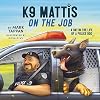
We join Sgt Mark and his best friend K-9 Mattis for a day's fun work and learn enough about K-9 police and the things that protect them so that we are not scared of them. I'm already a fan, so this is preaching to the choir for me!
The illustrations by Donald Wu are delightful, imaginative, detailed, and colorful.
Well suited for reading WITH someone of any age including ESL, and great for gifting to anyone, but especially to a school or public library!
I requested and received a free temporary show more e-book on Adobe Digital Editions from Thomas Nelson: CHILDREN'S, Tommy Nelson via NetGalley. Thank you! show less
The illustrations by Donald Wu are delightful, imaginative, detailed, and colorful.
Well suited for reading WITH someone of any age including ESL, and great for gifting to anyone, but especially to a school or public library!
I requested and received a free temporary show more e-book on Adobe Digital Editions from Thomas Nelson: CHILDREN'S, Tommy Nelson via NetGalley. Thank you! show less
Statistics
- Works
- 4
- Members
- 31
- Popularity
- #440,252
- Rating
- 4.3
- Reviews
- 3
- ISBNs
- 7