
Phil Masters
Author of GURPS Discworld
Series
Works by Phil Masters
GURPS Who's Who 1: 52 Of History's Most Intriguing Characters (GURPS: Generic Universal Role Playing System) (1999) 55 copies, 1 review
Associated Works
GURPS Grimoire: Tech Magic, Gate Magic, and Hundreds of Spells for All Colleges (1998) — Contributor — 113 copies
Tagged
Common Knowledge
- Birthdate
- 20th Century
- Gender
- male
- Nationality
- UK
- Associated Place (for map)
- UK
Members
Reviews

It sounds like a great idea to have nine of your best authors fill an anthology with whatever they want to write about. Unfortunately, maybe there's a reason there's more editorial control over what gets published then was used in this anthology. On the other hand, some of my complaint was material that felt like rote GURPS filler.
Ghost-Breaking felt like a mundane chapter from GURPS Undead or something, not at all what I was hoping for from Hite. Alchemical Baroque, by Phil Masters, is an show more interesting little fantasy campaign setting that combines a number of traditional details with original material that's clearly not Middle Earth or Greyhawk or any other fantasy world. (I didn't fall passionately in love with the setting, but it deserves a full 4E book a lot more then Yrth did.) Mythic Babysitting is fun, but it's worse then Elizabeth McCoy's other setting, GURPS IOU, in that it marries a setting that doesn't bear nitpicking points and stressing over fine details, with, well, GURPS. (It's the only thing in this book I might run.) Meridian is a science fiction setting from David Pulver. I wouldn't classify it as space opera; it has tightly contained points of impossible (but necessary) tech in it, with the rest reasonable (for fiction) extrapolation. It wasn't something that excited me, but it was interesting. The Last Spartan, by Gene Seabolt, was a mini-historical handbook centered around the time period of the end of the Spartans, and what the last few might have done in that world. Underground was a bit of rote GURPS material about the underground, complete with scientific information and templates. Airships is a piece of real world description about airships. Precursors is back to sci-fi, covering the Ancients. The large section of advantages and disadvantages and how they might show up in precursors drags this down; a lot of it feels like obvious hackwork. I haven't read Chariots yet, but it's a historical book, the Near East in 1348 BC.
What did I want this book to look like? GURPS Horror: The Madness Dossier. Not once did this make me feel like "I could never run this, but this is incredible." Maybe that's somewhat specific to Hite, but large parts of it seemed like rote material, the same stuff you'd get if you assigned a chapter in a normal GURPS sourcebook to an author: We need a chapter about airships, or ghost-breaking, for example. The historical stuff may not have been my cup of tea, but were closer to what I would expect--though I'd point out that both the Spartans and the Chariots were set in the Mediterranean in times familiar to Westerners, and I can imagine GURPS books consistent with what they did put out that could contain those works as chapters. GURPS Ancient World wouldn't have seemed that unlikely at the time. They were hardly on 16th century Tibet or China of the 1930s. The three new campaign settings were my favorite; Phil Masters' fantasy setting really is unique. I might actually play Mythic Babysitters, but definitely not in GURPS. show less
Ghost-Breaking felt like a mundane chapter from GURPS Undead or something, not at all what I was hoping for from Hite. Alchemical Baroque, by Phil Masters, is an show more interesting little fantasy campaign setting that combines a number of traditional details with original material that's clearly not Middle Earth or Greyhawk or any other fantasy world. (I didn't fall passionately in love with the setting, but it deserves a full 4E book a lot more then Yrth did.) Mythic Babysitting is fun, but it's worse then Elizabeth McCoy's other setting, GURPS IOU, in that it marries a setting that doesn't bear nitpicking points and stressing over fine details, with, well, GURPS. (It's the only thing in this book I might run.) Meridian is a science fiction setting from David Pulver. I wouldn't classify it as space opera; it has tightly contained points of impossible (but necessary) tech in it, with the rest reasonable (for fiction) extrapolation. It wasn't something that excited me, but it was interesting. The Last Spartan, by Gene Seabolt, was a mini-historical handbook centered around the time period of the end of the Spartans, and what the last few might have done in that world. Underground was a bit of rote GURPS material about the underground, complete with scientific information and templates. Airships is a piece of real world description about airships. Precursors is back to sci-fi, covering the Ancients. The large section of advantages and disadvantages and how they might show up in precursors drags this down; a lot of it feels like obvious hackwork. I haven't read Chariots yet, but it's a historical book, the Near East in 1348 BC.
What did I want this book to look like? GURPS Horror: The Madness Dossier. Not once did this make me feel like "I could never run this, but this is incredible." Maybe that's somewhat specific to Hite, but large parts of it seemed like rote material, the same stuff you'd get if you assigned a chapter in a normal GURPS sourcebook to an author: We need a chapter about airships, or ghost-breaking, for example. The historical stuff may not have been my cup of tea, but were closer to what I would expect--though I'd point out that both the Spartans and the Chariots were set in the Mediterranean in times familiar to Westerners, and I can imagine GURPS books consistent with what they did put out that could contain those works as chapters. GURPS Ancient World wouldn't have seemed that unlikely at the time. They were hardly on 16th century Tibet or China of the 1930s. The three new campaign settings were my favorite; Phil Masters' fantasy setting really is unique. I might actually play Mythic Babysitters, but definitely not in GURPS. show less

This was Steve Jackson Games’ effort to produce a role-playing game (RPG) based on the Hellboy setting and characters. The book is handsomely bound the same size as all the Hellboy trade paperback collected editions and produced in full color using lots of great Mignola art. Keep in mind that this book was published in 2002 and only includes information on the characters and setting of Hellboy through the fifth Hellboy trade paperback collection. At the time of its publication, it was show more probably the single best source of setting information on the Hellboy universe. None of that information has since become invalidated, of course, but it’s woefully incomplete now.
It includes a fun introductory short story by Christopher Golden; a five-page comic of a very minor Hellboy adventure in India; the aforementioned setting information; a slightly retooled and stripped-down version of GURPS role-playing game mechanics for gaming in the Hellboy universe; game write-ups for Hellboy, his BPRD pals, all the major villains from the first five Hellboy collections, and some generic write-ups of various other supernatural critters; and an adventure that I didn’t find to be all that interesting (spoiler: old Nazi occultist hiding out in Timbuktu with an enslaved djinn servant).
Value for gamers: Well, if you want to do some gaming in the Hellboy universe using a “lite” version of GURPS Third Edition, then you’re all set. This book really does include all you need to get started, though you’ll want to pick up several additional GURPS books if you plan to continue gaming in the setting, since these books will significantly increase the amount of magic and weirdness you can introduce. If you’re a Hellboy fan and want to do some Hellboy universe gaming using another set of game mechanics (something a little lighter or more free-form than GURPS, for example), you should be able to do so using the write-ups provided here. There is a fair amount of GURPS jargon (necessarily and understandably) in the character, creature, and magic write-ups, but it’s all pretty self-explanatory. But for that, obviously, you’re going to have to do all the heavy lifting yourself. Mechanically, I think that GURPS works adequately for Hellboy, but it’s a bit clunky and showing its age. Character creation requires a good bit of familiarity with the game system because GURPS is one of those older games that attempts to provide minutely-detailed rules for simulating every skill and action that a character might try. Personally, I used to really like that, but now I’m much more favorably inclined to “rules-lite” games.
Value for non-gamers: Sadly, if you’re a Hellboy fan but either have an allergy to role-playing games or aren’t interested in them at all, there are few good reasons to pick up this book unless you’re a true completist. You would be better off picking up The Hellboy Companion, which is much more up-to-date than this “sourcebook” and doesn’t waste any space on game mechanics.
I give this book 3.5 stars out of 5 for an entertaining presentation and valiant effort at producing a Hellboy role-playing game. No one else has picked up the license after Steve Jackson Games’ license expired, so this is all we’ve got for now.
Review copyright 2010 J. Andrew Byers show less
It includes a fun introductory short story by Christopher Golden; a five-page comic of a very minor Hellboy adventure in India; the aforementioned setting information; a slightly retooled and stripped-down version of GURPS role-playing game mechanics for gaming in the Hellboy universe; game write-ups for Hellboy, his BPRD pals, all the major villains from the first five Hellboy collections, and some generic write-ups of various other supernatural critters; and an adventure that I didn’t find to be all that interesting (spoiler: old Nazi occultist hiding out in Timbuktu with an enslaved djinn servant).
Value for gamers: Well, if you want to do some gaming in the Hellboy universe using a “lite” version of GURPS Third Edition, then you’re all set. This book really does include all you need to get started, though you’ll want to pick up several additional GURPS books if you plan to continue gaming in the setting, since these books will significantly increase the amount of magic and weirdness you can introduce. If you’re a Hellboy fan and want to do some Hellboy universe gaming using another set of game mechanics (something a little lighter or more free-form than GURPS, for example), you should be able to do so using the write-ups provided here. There is a fair amount of GURPS jargon (necessarily and understandably) in the character, creature, and magic write-ups, but it’s all pretty self-explanatory. But for that, obviously, you’re going to have to do all the heavy lifting yourself. Mechanically, I think that GURPS works adequately for Hellboy, but it’s a bit clunky and showing its age. Character creation requires a good bit of familiarity with the game system because GURPS is one of those older games that attempts to provide minutely-detailed rules for simulating every skill and action that a character might try. Personally, I used to really like that, but now I’m much more favorably inclined to “rules-lite” games.
Value for non-gamers: Sadly, if you’re a Hellboy fan but either have an allergy to role-playing games or aren’t interested in them at all, there are few good reasons to pick up this book unless you’re a true completist. You would be better off picking up The Hellboy Companion, which is much more up-to-date than this “sourcebook” and doesn’t waste any space on game mechanics.
I give this book 3.5 stars out of 5 for an entertaining presentation and valiant effort at producing a Hellboy role-playing game. No one else has picked up the license after Steve Jackson Games’ license expired, so this is all we’ve got for now.
Review copyright 2010 J. Andrew Byers show less
GURPS Who's Who 1: 52 Of History's Most Intriguing Characters (GURPS: Generic Universal Role Playing System) by Phil Masters
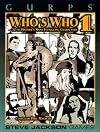
I enjoyed this roleplaying book, it was easy to read with good potted biographies of some famous and not so famous people. Many could be included in a campaign but I'm not sure about all of them. I'm going to give some a try, good for historically minded Gamemasters.
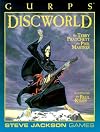
A good deal of the charm arises from the Discworld itself. There are a number of bits from this world book that I have used as a DM. I'm glad Mr. Pratchett has also found a way to cash in on his excellent creation.
Lists
You May Also Like


Associated Authors
Statistics
- Works
- 29
- Also by
- 7
- Members
- 1,266
- Popularity
- #20,270
- Rating
- 3.6
- Reviews
- 4
- ISBNs
- 42
- Languages
- 2
- Favorited
- 1