
Monte Cook
Author of Player's Handbook: Core Rulebook I (3.5)
About the Author
Disambiguation Notice:
(yid) VIAF:60135151
Series
Works by Monte Cook
Book of Vile Darkness (Dungeons & Dragons d20 3.0 Fantasy Roleplaying Supplement) (2002) — Author — 401 copies, 1 review
The Skeptic's Guide to Conspiracies: From the Knights Templar to the JFK Assassination: Uncovering the [Real] Truth Behind the World's Most Controversial Conspiracy… (2009) 57 copies, 3 reviews
The Dragons Return: Tales From The Land Of The Diamond Throne (Monte Cook's Arcana Evovled) (2005) 17 copies, 1 review
Numenera: Vortex 9 copies
Kicking It: Successful Crowdfunding 8 copies
Cypher Collection 1 5 copies
Numenera: Injecting the Weird 5 copies
Artifacts & Oddities Collection 1 5 copies
Into the Deep 4 copies
The Hideous Game 4 copies
Into the Violet Vale 4 copies
The Nightcraft 4 copies
The Octopi of the Ninth World 4 copies
Maps of the Ninth World 4 copies
Arcana Unearthed Counter Collection IV: World of the Diamond Throne (Fiery Dragon d20 System) 4 copies
Tales from the Ninth World 4 copies
The Glimmering Valley Players Guide 3 copies
The Path (Invisible Sun) 3 copies
Numenera GM Screen 2 copies
Caves of Shadow 2 copies
Arcana Unearthed: Way of the Staff 2 copies
The Gate (Invisible Sun) 2 copies
Worlds Numberless and Strange 2 copies
The Nightmare Switch 2 copies
Dungeons & Dragons: V.3.5 Core Rulebook Collection: Core Rulebooks (Dungeons & Dragons(r) Gift Set) 2 copies
The Star's Refuge 2 copies
More Tales from the Ninth World 2 copies
Maps Beyond the Ninth World 2 copies
Beyond the Ninth World 2 copies
The Paradox Room 2 copies
Caves of Shadow 1 copy
Ptolus Pre-Release Bundle 1 copy
Ptolus 3 - Organizations 1 copy
A Heros Tale 1 copy
Arcana Unearthed: Grimoire 1 copy
Make Your Statement 1 copy
Ptolus Adventures (Part 8) 1 copy
Truth in Names 1 copy
The Art of Invisible Sun 2 1 copy
Cypher System: regolamento 1 copy
Numenera: Into the Night 1 copy
Maps of the Ninth World 2 1 copy
The Essence of Invisible Sun 1 copy
The Key 1 copy
Tales Beyond the Ninth World 1 copy
Auge um Auge 1 copy
Numenera Character Sheets 1 copy
Small Matters 1 copy
Numenera: The Trilling Shard 1 copy
Associated Works
Monster Manual: Core Rulebook III (3.5) (2003) — Author, some editions; Author, some editions — 1,030 copies, 3 reviews
Dungeons & Dragons Core Rulebook Set (Dungeons & Dragons d20 3.5 Fantasy Roleplaying, Three Book Slipcased Set) (2003) — some editions — 83 copies
HELP FUND MY ROBOT ARMY!!! and Other Improbable Crowdfunding Projects (2014) — Contributor — 82 copies, 4 reviews
Relics & Rituals II: Lost Lore (2002) — Preface, some editions; Contributor, some editions — 55 copies
Player's Guide - Rulebook IV (Dungeons & Dragons: Kingdoms of Kalamar) (2002) — Contributor — 46 copies, 1 review
Weird Wastelands - Worlds of Web DM (Deluxe Wayne Reynolds alternate cover) — Foreword — 1 copy
Tagged
Common Knowledge
- Birthdate
- 1968-01-29
- Gender
- male
- Education
- Clarion West (1999)
- Occupations
- editor
game designer
game developer - Awards and honors
- Nigel D. Findley Award (Outstanding Roleplaying Product of the Year, 2001)
Origins Award (RPG, 2000)
EN World Award (Writer, 2001)
EN World Award (Official Website, 2001)
Origins Award Nominated (Game-related Novel, 2001)
Origins Award Nominated (Roleplaying Adventure, 2001) (show all 25)
EN World Award Nominated (Official Website, 2002)
EN World Award (d20 Game, 2002)
Pen & Paper Fan Award (Adventure, 2002)
Pen & Paper Fan Awards (Fan Favorite Author/Designer, 2002)
EN World Award (Adventure, 2003)
EN World Award (Publisher, 2003)
EN World Award (Official Website, 2003)
Pen & Paper Fan Award (Fan Favorite Publisher, 2003)
Pen & Paper Fan Award (Fan Favorite Author/Designer, 2003)
Pen & Paper Fan Award (RPG, 2003)
Pen & Paper Fan Award (Hall of Fame entry, 2003)
Diana Jones Award Finalist (2003)
Gen Con EN World Gold Award (Revision/Update/Compliation, 2004)
Gen Con EN World Gold Award (d20 Game, 2004)
Gen Con EN World Silver Award (Supplement, 2005)
Gen Con EN World Gold Award (d20 Game, 2005)
Gen Con EN World Silver Award (Supplement, 2006)
Gen Con EN World Gold Award (Product of the Year, 2007)
Gen Con EN World Gold Award (Setting, 2007) - Relationships
- Cook, Sue Weinlein (ex-wife)
- Nationality
- USA
- Birthplace
- Watertown, South Dakota, USA
- Places of residence
- Watertown, South Dakota, USA
Seattle, Washington, USA - Map Location
- South Dakota, USA
- Disambiguation notice
- VIAF:60135151
Members
Reviews
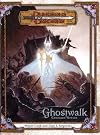
There's something really satisfying to me about a campaign setting that explains why people might be so cavalier about their lives in a world with a reasonably high standard of living (as most D&D settings are). It is also nice to give players the option to keep playing after death rather than rolling a new character, and to be resurrected without that becoming a major adventure all on its own. The feel of a city where ghosts and living people cohabitate openly is really fresh, especially show more since it avoids the baggage of necromancers and necrocracy.
I have just begun DM'ing a campaign in D&D Fifth Edition, using this sourcebook for the setting. Even after so many changes and intervening editions, about 80% of the material in the book is still applicable and works very well. I ran the level one adventure about a malfunctioning magic lantern almost verbatim, and my players really enjoyed it. show less
I have just begun DM'ing a campaign in D&D Fifth Edition, using this sourcebook for the setting. Even after so many changes and intervening editions, about 80% of the material in the book is still applicable and works very well. I ran the level one adventure about a malfunctioning magic lantern almost verbatim, and my players really enjoyed it. show less

This is what 4th edition SHOULD have looked like. If you are already heavily invested in 3.0/3.5 D&D and just want a little more refinement of the systems... If you think that 4th edition throws out the baby with the bathwater... then The Book of Experimental Might is for you! Some have called this book 'D&D 3.75', and it really is. Many of the issues with 3rd edition that 4th edition purports to fix were already being handled by 3rd ed. game designer Monte Cook in his home campaign. show more Consequently, you'll find many things here that look like 4th edition while still being compatible with 3.5 prestige classes, monsters, feats, skills, and magic items.
The core of the changes comes in three parts. First, everyone gets a feat slot at every level. This threefold increase may sound like a huge power boost, but with the number of feats available from all the WotC and non-WotC supplements--including this one--it really just lets your character play with more of the fun options that are available, without really unbalancing anything.
The second and most fundamental change is that the spell system has been rejiggered to cover twenty spell-levels, rather than the traditional nine. The reason for this should be fairly obvious: no more need to check a chart or mathematically reverse-engineer the progression to see which spells your character can cast. The maximum level of spells you can learn is the same as your caster level. This also allows for finer gradations in the power of spells--after all, in the core rules, were all 3rd-level spells really equal? Not hardly.
The other major group of changes is to the core base classes. The class updates are partly to adjust for the changes to feat-gaining and spell-levels and partly to fix or fine-tune issues with familiars, magical healing, wild shape, turning undead, and other classic-but-sometimes-awkward class features. For example, clerics remain the source of magical healing, but it is no longer incumbent upon them to use their actions on behalf of their comrades in order to do so. Familiars, which have always been easy to forget, of somewhat limited use, and occasionally even a vulnerable target, now appear and disappear as needed, with more tangible benefits when they are present. They can do this because they are a now considered a manifestation of the spellcaster's spirit rather than a psychically-linked but otherwise normal animal. Those are just my two favorite examples, but there are many good ideas here. I'll admit that not all of the changes are perfect, but with a little work, you can probably pick and choose from what you like.
This book is not for you if you don't like to do a little work and consider the consequences of changes to your game. However, if you think that D&D 3.5 still has some years in it, but you'd still like to try something new, I highly recommend it.
Available in hardcover or pdf download from paizo.com. (The hardcover collects two pdf files into a single, coherent book.) show less
The core of the changes comes in three parts. First, everyone gets a feat slot at every level. This threefold increase may sound like a huge power boost, but with the number of feats available from all the WotC and non-WotC supplements--including this one--it really just lets your character play with more of the fun options that are available, without really unbalancing anything.
The second and most fundamental change is that the spell system has been rejiggered to cover twenty spell-levels, rather than the traditional nine. The reason for this should be fairly obvious: no more need to check a chart or mathematically reverse-engineer the progression to see which spells your character can cast. The maximum level of spells you can learn is the same as your caster level. This also allows for finer gradations in the power of spells--after all, in the core rules, were all 3rd-level spells really equal? Not hardly.
The other major group of changes is to the core base classes. The class updates are partly to adjust for the changes to feat-gaining and spell-levels and partly to fix or fine-tune issues with familiars, magical healing, wild shape, turning undead, and other classic-but-sometimes-awkward class features. For example, clerics remain the source of magical healing, but it is no longer incumbent upon them to use their actions on behalf of their comrades in order to do so. Familiars, which have always been easy to forget, of somewhat limited use, and occasionally even a vulnerable target, now appear and disappear as needed, with more tangible benefits when they are present. They can do this because they are a now considered a manifestation of the spellcaster's spirit rather than a psychically-linked but otherwise normal animal. Those are just my two favorite examples, but there are many good ideas here. I'll admit that not all of the changes are perfect, but with a little work, you can probably pick and choose from what you like.
This book is not for you if you don't like to do a little work and consider the consequences of changes to your game. However, if you think that D&D 3.5 still has some years in it, but you'd still like to try something new, I highly recommend it.
Available in hardcover or pdf download from paizo.com. (The hardcover collects two pdf files into a single, coherent book.) show less
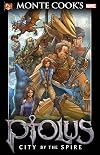
I never read Ptolus the RPG setting, mostly because it sounded kind of like an "Undermountain" thing where there's a city on top of a never-ending dungeon, and I always thought that was a dumb/unrealistic idea. But saw this cheap somewhere so picked it up.
Monte Cook is a genius, probably one of the greatest game designers alive or dead, but this wasn't all that interesting. Everything seemed kind of standard. I liked the ghost companion, but then he was gone and everything just seemed "too show more D&D". Which seems like it would be a good thing considering I've been playing D&D for 42+ years, but it just wasn't deep enough and some of the art just looked silly to me. show less
Monte Cook is a genius, probably one of the greatest game designers alive or dead, but this wasn't all that interesting. Everything seemed kind of standard. I liked the ghost companion, but then he was gone and everything just seemed "too show more D&D". Which seems like it would be a good thing considering I've been playing D&D for 42+ years, but it just wasn't deep enough and some of the art just looked silly to me. show less
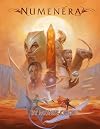
First off, this is a great rulebook in several ways. It's very pretty for one, and it's also got some of the best organisation I can remember seeing. Cross-references about, text is marked in colour to highlight key terms, and the margins are full of, essentially, Cook's scribbled notes giving throwaway ideas or little details that aren't crucial to the main passage. It's easy to navigate through and to read, and the illustrations are good too.
Numenera is a strange fish, and my opinion of it show more as a game is rather split. On the one hand, I'm intrigued by this game and its world, both from reading it and from my other exposure to it. On the other hand, I really don't feel I could confidently run a game in this setting, because I don't have a holistic grasp of the world. The main reason for the book's size is that Cook has included a sprawling gazetteer of the world, covering in detail dozens of cities, towns, mountains, ruins, forests and their inhabitants. Although reading through the details got rather dry (in fairness, it's not a novel, it's a roleplaying tool), most of it was creative and full of attractive strangeness. The problem is that the very strangeness and disjointedness that Cook emphasises makes it nigh-impossible for me to think how I'd fill in the blanks between, let alone come up with my own content. I now realise that including all that detail wasn't just the urge to get his creation down on paper, but a bit of a necessity.
I think it's a real problem of this kind of setting, but being made of the scraps of previous civilisations creates a lot of incoherence. Neighbouring settlements may be completely different, the rules of physics can change, the technology level of places and objects varies wildly. Ecology is affected too, just a random assortment of entities. The problem is that, for me, the lack of obvious connections makes it hard to extrapolate.
I'd like to play more of this game, but I can't see myself running it. show less
Numenera is a strange fish, and my opinion of it show more as a game is rather split. On the one hand, I'm intrigued by this game and its world, both from reading it and from my other exposure to it. On the other hand, I really don't feel I could confidently run a game in this setting, because I don't have a holistic grasp of the world. The main reason for the book's size is that Cook has included a sprawling gazetteer of the world, covering in detail dozens of cities, towns, mountains, ruins, forests and their inhabitants. Although reading through the details got rather dry (in fairness, it's not a novel, it's a roleplaying tool), most of it was creative and full of attractive strangeness. The problem is that the very strangeness and disjointedness that Cook emphasises makes it nigh-impossible for me to think how I'd fill in the blanks between, let alone come up with my own content. I now realise that including all that detail wasn't just the urge to get his creation down on paper, but a bit of a necessity.
I think it's a real problem of this kind of setting, but being made of the scraps of previous civilisations creates a lot of incoherence. Neighbouring settlements may be completely different, the rules of physics can change, the technology level of places and objects varies wildly. Ecology is affected too, just a random assortment of entities. The problem is that, for me, the lack of obvious connections makes it hard to extrapolate.
I'd like to play more of this game, but I can't see myself running it. show less
Lists
Awards


You May Also Like


Associated Authors
Statistics
- Works
- 182
- Also by
- 27
- Members
- 9,865
- Popularity
- #2,413
- Rating
- 3.9
- Reviews
- 42
- ISBNs
- 149
- Languages
- 9
- Favorited
- 6