
Mike Mearls
Author of Player's Handbook
About the Author
Image credit: Mike Mearls at the 2012 ENnies. By Carlos A, Smith from Jamaica, USA - Ennie Awards (Gen Con) 2012, CC BY-SA 2.0, https://commons.wikimedia.org/w/index.php?curid=23357808
Works by Mike Mearls
Dungeons & Dragons Monster Manual: Roleplaying Game Core Rules, 4th Edition (2008) 522 copies, 3 reviews
Heroes of the Fallen Lands: An Essential Dungeons & Dragons Supplement (4th Edition D&D) (2010) 87 copies
Monty Cook Presents: The Iron Heroes Bestiary (Dungeons & Dragons d20 3.5 Fantasy Roleplaying, Iron Heroes Setting) (2006) 17 copies
To Stand on Hallowed Ground: The Ghost Machine / Swords Against Deception (d20 3.0 Fantasy Roleplaying Double "Flip" Adventure) (2001) 10 copies
Betrayal at Baldur's Gate 2 copies
Godlike Open Source Rules 1 copy
Iron Heroes Revised 1 copy
Looking Glass Deep 1 copy
Associated Works
Tagged
Common Knowledge
- Canonical name
- Mearls, Mike
- Legal name
- Mearls, Michael D.
- Birthdate
- 1975
- Gender
- male
- Education
- Dartmouth College (BA)
- Occupations
- game designer
writer - Organizations
- Sigma Nu
Wizards of the Coast - Nationality
- USA
- Birthplace
- USA
- Places of residence
- Renton, Washington, USA
Kent, Washington, USA - Associated Place (for map)
- Washington, USA
Members
Reviews
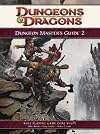
The Great Edition Wars have begun, and because of that, I've been going back and looking at some 4e classics. The first DMG was a really solid book, covering playing psychology and the elements of adventure design. In fact, I thought that it was praiseworthy because it was the first DMG that I'd seen where somebody who had never played an RPG before could pick it up, read it, follow the steps, and run a semi-competent adventure.
DMG2 continues the trend, but focuses on designing more complex show more Paragon Tier adventures. The strongest parts of the book concern how the build an adventure out of encounters, how to make interesting combats and skill challenges, fixing one of the major problems in the original 4e rules (the example diplomacy skill challenge is brilliant). DMG2 has great advice on how to build organizations, how to reskin and modify game rules, and how to solicit player input to improve your game.
The most interesting parts of the book where the parts devoted to explaining the 4e philosophy. More than anything else, 4e is actually inspired by television. Action occurs in encounters/scenes, 4 or 5 encounters make an adventure/episode, and about 10 adventures makes for a tier/season. The book advises that a scene that doesn't move the adventure forward in some way is essentially wasted, and also proposes using flashbacks, guest characters, dream sequences, and other TV tricks to spice up the adventure. Really, all those people say that 4e is like and MMO haven't read the books, let alone played the game. On the other hand, episodic TV is a very different narrative than the old Gygaxian dungeon crawl. Maybe that's why people don't like 4e.
What I didn't like was the space devoted to traps (I hate traps. 4e had an interesting idea with making them a combination of monster and terrain that can be used by friend or foe), not significantly improving the 4e treasure system, which I still don't understand how to make fun, and finally the lengthy chapter devoted to Sigil. If you like Sigil, you probably already know all about it. If you don't care for Sigil, this section is useless. I'd rather have seen a blurb for the Manual of the Planes, and more ideas for alternate planar hubs or tools to build cities, in the same way that they gave tools to build NPCs, artifacts, and organizations. show less
DMG2 continues the trend, but focuses on designing more complex show more Paragon Tier adventures. The strongest parts of the book concern how the build an adventure out of encounters, how to make interesting combats and skill challenges, fixing one of the major problems in the original 4e rules (the example diplomacy skill challenge is brilliant). DMG2 has great advice on how to build organizations, how to reskin and modify game rules, and how to solicit player input to improve your game.
The most interesting parts of the book where the parts devoted to explaining the 4e philosophy. More than anything else, 4e is actually inspired by television. Action occurs in encounters/scenes, 4 or 5 encounters make an adventure/episode, and about 10 adventures makes for a tier/season. The book advises that a scene that doesn't move the adventure forward in some way is essentially wasted, and also proposes using flashbacks, guest characters, dream sequences, and other TV tricks to spice up the adventure. Really, all those people say that 4e is like and MMO haven't read the books, let alone played the game. On the other hand, episodic TV is a very different narrative than the old Gygaxian dungeon crawl. Maybe that's why people don't like 4e.
What I didn't like was the space devoted to traps (I hate traps. 4e had an interesting idea with making them a combination of monster and terrain that can be used by friend or foe), not significantly improving the 4e treasure system, which I still don't understand how to make fun, and finally the lengthy chapter devoted to Sigil. If you like Sigil, you probably already know all about it. If you don't care for Sigil, this section is useless. I'd rather have seen a blurb for the Manual of the Planes, and more ideas for alternate planar hubs or tools to build cities, in the same way that they gave tools to build NPCs, artifacts, and organizations. show less
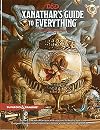
I read this cover to cover over the course of a week. Xanathar's asides occasionally made me literally laugh out loud (as did the Disclaimer on the inside copyright page). Some of this content, such as the College of Glamour for Bards, made it into the 2024 Player's Handbook. I particularly liked some of the spells: I made note of Skywrite, Snilloc's Snowball Swarm, and Tiny Servant, which basically allows the player to enchant objects sort of like the ones in Beauty and the Beast. Cool stuff!

This was a bit of a long read for me, but overall worth the time. I enjoyed the asides between Volo and Elminster, especially where Elminster does a 12-footnote takedown of Volo’s introduction and raises an eyebrow at some of Volo's sillier comments. Elminster himself does not have the total high ground, though: at one point Volo wondered what mind flayer brains would taste like, and Elminster essentially says “you fool, why would you want to eat those? They’re extremely nasty. ....... show more Don’t ask me how I know this”.
Of the monsters in this book, I was quite horrified by a lot of them, but especially the illustrations for the mind flayers, which I felt should have been done in the style of a lift-the-flap book. I had to use a library receipt to cover the illustrations while I read the rest of the page. Much cuter were the firenewts and the grungs, both of which prompted an out-loud reaction of "Awwww they're just little guys!" Especially the firenewts, awww. (The firenewts are actually Medium creatures, not Small, but they have cute little faces! And there’s one that wears armour, which is TOO adorable.)
In terms of content, my other half, who also read this book, says that the second half of this book is basically monsters that appear in Mordenkainen's Monsters of the Multiverse, so if you have the Mordenkainen, you might not need this book. But I think it's worth at least skimming through to see the dialogue between Volo and Elminster. show less
Of the monsters in this book, I was quite horrified by a lot of them, but especially the illustrations for the mind flayers, which I felt should have been done in the style of a lift-the-flap book. I had to use a library receipt to cover the illustrations while I read the rest of the page. Much cuter were the firenewts and the grungs, both of which prompted an out-loud reaction of "Awwww they're just little guys!" Especially the firenewts, awww. (The firenewts are actually Medium creatures, not Small, but they have cute little faces! And there’s one that wears armour, which is TOO adorable.)
In terms of content, my other half, who also read this book, says that the second half of this book is basically monsters that appear in Mordenkainen's Monsters of the Multiverse, so if you have the Mordenkainen, you might not need this book. But I think it's worth at least skimming through to see the dialogue between Volo and Elminster. show less

This book discusses a variety of species in the worlds of D&D, including ones that I wouldn't necessarily consider "foes" (at least from an adventurer perspective): elves, gnomes, dwarves and the like. I liked this book better than Monsters of the Multiverse, particularly for the information about the various pantheons for each species. My Elf Cleric will benefit from this information as I choose an appropriate god for them to follow.
Lists
Awards

You May Also Like


Associated Authors
Statistics
- Works
- 80
- Also by
- 9
- Members
- 13,009
- Popularity
- #1,793
- Rating
- 4.0
- Reviews
- 48
- ISBNs
- 83
- Languages
- 7