
Bill Slavicsek
Author of A Guide to the Star Wars Universe
About the Author
Image credit: Bill Slavicsek in 80's.
Series
Works by Bill Slavicsek
Alternity Player's Handbook (Alternity Sci-Fi Roleplaying, Core Book, 2800) (1998) 136 copies, 1 review
Dungeons & Dragons Core Rulebook Set (Dungeons & Dragons d20 3.5 Fantasy Roleplaying, Three Book Slipcased Set) (2003) 83 copies
Tales of the Outer Planes: Module Op1 (Advanced Dungeons & Dragons Adventure Anthology) (1988) — Author — 52 copies
Advanced Dungeons & Dragons: The Complete Book of Humanoids by Bill Slavicsek (May 18,1993) (1657) 5 copies
Council of Wyrms: Adventure 4 copies
The Wanderer's Chronicle 1 copy
Dark Sun - The Age of Heroes: Rules for Conquering the Savage Land (Dungeons & Dragons) (1995) 1 copy
Diablo II 1 copy
Associated Works
Tagged
Common Knowledge
- Canonical name
- Slavicsek, Bill
- Other names
- Slavicsek, William
- Birthdate
- 1971-10-06
- Gender
- male
- Education
- St John's University
- Occupations
- game designer
- Nationality
- USA
- Birthplace
- New York, New York, USA
- Associated Place (for map)
- New York, USA
Members
Reviews

A great look at the development of much of what current fans consider to be "the Star Wars universe". The WEG Star Wars RPG came out just when I getting into the industry, so much of this was a reminder for me of those days. The book mentions TORG, which was the first game I wrote for professionally (and Bill was the person who gave the opportunity to write for WEG), and I later wrote a sourcebook for the Star Wars RPG (though after Bill had left WEG) called WANTED BY CRACKEN.
Beyond it's show more focus on Star War, this book is also an interesting look "behind the scenes" of the RPG writing/design/publishing business, including the different writer/developer/editor roles, how the design team works with other departments, how companies need to deal with licensees, and more. show less
Beyond it's show more focus on Star War, this book is also an interesting look "behind the scenes" of the RPG writing/design/publishing business, including the different writer/developer/editor roles, how the design team works with other departments, how companies need to deal with licensees, and more. show less
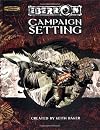
As the most recent campaign setting for Dungeons & Dragons adventures, Eberron has the advantage of having been written entirely under and for a single edition of the rules (in this case, d20 3.5). That fact alone would make it an attractive purchase for most players, as it makes the setting highly compatible with other popular supplements.
Eberron's real strength lies in providing enough information to hook players, but leaving enough blanks that adventure becomes necessary. With the show more conclusion of the Last War, the golem-like warforged race built to fight in it have been emancipated-- but to what fate? The fractured remnants of the Empire of Galifar have achieved a delicate peace-- but who or what caused the terrible Day of Mourning that shocked them into a ceasefire? Trade routes to the continent of Xen'drik have reopened-- but what secrets hide in its jungles and deserts? Every group of players will have the motivation and the license to answer such questions on their own.
In addition to the setting's new races (the warforged, the bestial shifters, the dream-touched kalashtar, and the master-of-disguise changelings), several old favorites from the Player's Handbook get a makeover. Implicit in the radical changes (halflings are dino-riding barbarians, while orcs are religious recluses) is the idea that nationality matters more than genetics. An elven mage raised in the nation of Breland will have more in common with a human compatriot than with the equestrian warriors of the Valenar elves, or the ancestor-worshipping necromancers of the Aerenal elves. The character classes (including the crafty new artificer) are assumed to be relatively rare in Eberron, practically assuring that the player characters' actions have real impact once they start rising in level and power.
The organization of the book is excellent-- players at the table will be able refer to it quickly for maps, rules, and information. The artwork is attractive and evocative, the tone of the text eager and intriguing. Eberron is worthy of a spot on the shelf with other favorites like Forgotten Realms and Planescape. show less
Eberron's real strength lies in providing enough information to hook players, but leaving enough blanks that adventure becomes necessary. With the show more conclusion of the Last War, the golem-like warforged race built to fight in it have been emancipated-- but to what fate? The fractured remnants of the Empire of Galifar have achieved a delicate peace-- but who or what caused the terrible Day of Mourning that shocked them into a ceasefire? Trade routes to the continent of Xen'drik have reopened-- but what secrets hide in its jungles and deserts? Every group of players will have the motivation and the license to answer such questions on their own.
In addition to the setting's new races (the warforged, the bestial shifters, the dream-touched kalashtar, and the master-of-disguise changelings), several old favorites from the Player's Handbook get a makeover. Implicit in the radical changes (halflings are dino-riding barbarians, while orcs are religious recluses) is the idea that nationality matters more than genetics. An elven mage raised in the nation of Breland will have more in common with a human compatriot than with the equestrian warriors of the Valenar elves, or the ancestor-worshipping necromancers of the Aerenal elves. The character classes (including the crafty new artificer) are assumed to be relatively rare in Eberron, practically assuring that the player characters' actions have real impact once they start rising in level and power.
The organization of the book is excellent-- players at the table will be able refer to it quickly for maps, rules, and information. The artwork is attractive and evocative, the tone of the text eager and intriguing. Eberron is worthy of a spot on the shelf with other favorites like Forgotten Realms and Planescape. show less
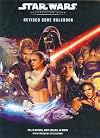
This book puts everything you need to tell a Star Wars story into one volume: a good basic selection of all the possible character combinations, examples that relate to the films, rules for everything from space combat to droids, and a really good gamemastering section that even works in some basic economic ideas to use in worldbuilding. The class/feat/skill system is a bit of a jumble, but there's only so much you can do with the underlying d20 mechanics (I'm no fan of class/level systems); show more the writers have managed to do a good job despite it. show less

An update to Troy Denning's seminal Dark Sun settting -- one of the best sword & high fantasy worlds ever created. Along with Planescape, in addition to being one of the coolest fantasy settings in general, this is the best setting created for D&D. If you want good fantasy without the standard medieval / foresty / goody toeshoe elves / evil orcs running around / copied off tolkien, then this is the world for you. Athas is a dying world, tainted by ecologically damaging Defiling magic, show more scorched by a damaged sun, void of the divine influence of egomaniac deities, ruled by Sorcerer Kings who think they can become deities, where tyranny and slavery are the norms, evil behavior ain't as bad as it is elsewhere, and adventurers adventure to survive not to save some dunce who ain't very good at surviving. Check out the original box and the updated box. show less
Lists
Awards


You May Also Like


Associated Authors
Statistics
- Works
- 73
- Also by
- 11
- Members
- 4,439
- Popularity
- #5,640
- Rating
- 3.9
- Reviews
- 14
- ISBNs
- 82
- Languages
- 6
- Favorited
- 2