
David "Zeb" Cook
Author of Player's Handbook (2nd Edition)
About the Author
Series
Works by David "Zeb" Cook
Book of Artifacts (Advanced Dungeons & Dragons/Rulebook) (1993) — Supervision and development — 167 copies
Against the Slave Lords: "A" Series Classic Adventure Compilation: (A0 - A4) (D&D Adventure) (2013) 33 copies
Night of Seven Swords (Advanced Dungeons and Dragons/Oriental Adventures Module OA2) (1986) 32 copies
Priest's Screen/Screen and Reference Material (Advanced Dungeons & Dragons, 2nd Edition) (1994) 16 copies
Fighter's Screen/Screens and Reference Material (Advanced Dungeons & Dragons, 2nd Edition) (1994) 10 copies
Horselords (Empires #1) 2 copies
Advanced Dungeons and Dragons : Dungeon Master's Guide & Player's Handbook ( Set of 2 Books ) 2 copies
The Horde (Boxed Set) 1 copy
King Pinch (The Nobles #1) 1 copy
Associated Works
Tagged
Common Knowledge
- Legal name
- Cook, David
- Birthdate
- 1940
- Gender
- male
- Occupations
- game designer
teacher - Nationality
- USA
- Birthplace
- East Lansing, Michigan, USA
- Places of residence
- Milligan, Nebraska, USA
- Associated Place (for map)
- USA
Members
Reviews

The story is based on the beginnings of Genghis Khan's Mongol empire, with the added wrinkle that it is set in the TSR version of medieval Earth: Forgotten Realms. Although I have a degree of skepticism with regards to fantasy, especially of the "epic" sort, Horselords managed to win me over. Of its various strengths, the first I wish to highlight is the author's attention to detail. The depth of the author's research and his ability to portray the Tuigan (the AD&D stand in for the Mongols) show more way of life give the novel a sense of plausibility without sacrificing its epic proportions.
The main character in the novel is Koja, a monk belonging to a vaguely Buddhist sect, who is sent as an emissary to the Tuigan. Throughout the course of the novel, he rises to a place of prominence within the Tuigan society. Koja is actually something of a ridiculous character, a pacifist among hardened warriors, and his advancement within the Tuigan society seems to be the result of luck more than anything. It would have made for a somewhat interesting character if his actions had been motivated by some degree of ambition. Admittedly Koja's weakness as a character is due in part to his role as surrogate for the reader, and his integration into Tuigan society meant to reflect the reader's submersion into the story.
Also, Koja's passivity serves to contrast with the other major character, Yamun Khahan (the stand-in for Genghis Khan). Yamun will probably not go down as one of the great characters in fiction, but he is probably one of the better drawn characters to appear in an AD&D novel. Certainly this sort of amoral, charismatic anti-hero seems more appropriate for a Robert E. Howard story than a novel set in Forgotten Realms. Yamun's mixture of savagery and honor certainly owes a great deal to Conan, though it also makes for a plausible portrayal of what the real Genghis Khan might have been like. This makes it a little more believable that Koja comes to serve this man who is very much his opposite.
The plot of the novel concerns the first conquests of the Tuigan army and Yamun's decision to invade Shou Lung (China). Also key is treachery within the Tuigan ranks. The treachery subplot is a bit of a diversion, as the conspirators are not successfully portrayed; they seem more bumbling than dangerous. show less
The main character in the novel is Koja, a monk belonging to a vaguely Buddhist sect, who is sent as an emissary to the Tuigan. Throughout the course of the novel, he rises to a place of prominence within the Tuigan society. Koja is actually something of a ridiculous character, a pacifist among hardened warriors, and his advancement within the Tuigan society seems to be the result of luck more than anything. It would have made for a somewhat interesting character if his actions had been motivated by some degree of ambition. Admittedly Koja's weakness as a character is due in part to his role as surrogate for the reader, and his integration into Tuigan society meant to reflect the reader's submersion into the story.
Also, Koja's passivity serves to contrast with the other major character, Yamun Khahan (the stand-in for Genghis Khan). Yamun will probably not go down as one of the great characters in fiction, but he is probably one of the better drawn characters to appear in an AD&D novel. Certainly this sort of amoral, charismatic anti-hero seems more appropriate for a Robert E. Howard story than a novel set in Forgotten Realms. Yamun's mixture of savagery and honor certainly owes a great deal to Conan, though it also makes for a plausible portrayal of what the real Genghis Khan might have been like. This makes it a little more believable that Koja comes to serve this man who is very much his opposite.
The plot of the novel concerns the first conquests of the Tuigan army and Yamun's decision to invade Shou Lung (China). Also key is treachery within the Tuigan ranks. The treachery subplot is a bit of a diversion, as the conspirators are not successfully portrayed; they seem more bumbling than dangerous. show less
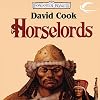
Horselords was a slow starter for me. It begins in an area where magic is banished, and the horselords are left to use their minds and shear brawn to maneuver. The main character, Koja, was a fun character to follow as he goes from enemy, to scribe, to trusted ally, to brother, or anda, of the great Yamun. His trials and tribulations are few, but what he experiences is beyond his understanding. He is pushed into a world he knows nothing about, and is forced to participate in things that he show more finds reprehensible. However, by the end, he has become one of the Tuigan, and is happy to be so. show less

I was always drawn to this module, mostly because of the city map. I finally got a chance to use it in a 3.5 Jungle-based campaign and it rocked. Of course I completely changed some things around but kept some of the really cool parts. One of the reviewers mentioned the rope bridge. I kept it in and killed one of the characters with it. The friendly/greedy singing xorn was fun too. Then of course there was the naked gnome... oh wait that wasn't part of the original adventure (long story).
This is one of the few oriental fantasy novels that I have encountered and it is surprisingly well written. Author David Cook did a good job in researching the culture and lifestyle of Mongolian empire during the reign of Genghis Khan. He also succeeded in portraying a compelling and vivid story about an exiled priest and the warlord emperor of the khans.
Horselord is the first book in the Empires Trilogy, set in the magical world of Faerun (the Forgotten Realms). The trilogy chronicles the show more military conquest of Khahan Yamun (Faerun's equivalent of Genghis Khan) across the Realms. Each of book in the trilogy is written by a different author, narrating the Khan's conquest of various kingdoms.
Horselord tells the story of Koja, a priest and diplomat, sent by his lord to act as a diplomat and spy to Khahan Yamun. The Khan keeps Koja a prisoner and lets him witness the size and power of his army. David Cook did an amazing job in describing life in the steppe, as well as the society of the Horselords. I loved the way the author presented the culture and the way people lived in the Hordelands. I felt like I was watching a Discovery channel documentary on the lives of ancient Mongolian raiders. David Cook also created a compelling court of Khahan Yamun, from the treacherous generals to the conniving wizard empress.
Despite the political intrigues, Khahan Yamun manages to muster his army and invade Shou Lung (Faerun's equivalent of Ancient China). I loved the battle scenes and how the Khahan manages to outsmart his enemies in mass combat. Through the help of the Priest Koja, Yamun succeeds in breaking through Shou Lung's enchanted Dragonwall and capture the traitors conspiring in the Khahan's court.
I would have given this book a five star rating, unfortunately I wasn't satisfied with the main character of the book, Koja. The priest was sent by his Prince to act as diplomat and peace negotiator to the Khan. During the course of the novel, Koja switched his allegiance and loyalty from his homeland to the Khan.
Koja's decision to switch sides wasn't convincing for me. I think he had little to gain by siding with the Khahan, yet he decided to side with the Horselord anyway. I wished David Cook would have pushed the priest more to the edge, so his decision to side with the Khan would have been more realistic. Despite this minor flaw, I would still recommend this novel and I would love to read succeeding books. show less
Horselord is the first book in the Empires Trilogy, set in the magical world of Faerun (the Forgotten Realms). The trilogy chronicles the show more military conquest of Khahan Yamun (Faerun's equivalent of Genghis Khan) across the Realms. Each of book in the trilogy is written by a different author, narrating the Khan's conquest of various kingdoms.
Horselord tells the story of Koja, a priest and diplomat, sent by his lord to act as a diplomat and spy to Khahan Yamun. The Khan keeps Koja a prisoner and lets him witness the size and power of his army. David Cook did an amazing job in describing life in the steppe, as well as the society of the Horselords. I loved the way the author presented the culture and the way people lived in the Hordelands. I felt like I was watching a Discovery channel documentary on the lives of ancient Mongolian raiders. David Cook also created a compelling court of Khahan Yamun, from the treacherous generals to the conniving wizard empress.
Despite the political intrigues, Khahan Yamun manages to muster his army and invade Shou Lung (Faerun's equivalent of Ancient China). I loved the battle scenes and how the Khahan manages to outsmart his enemies in mass combat. Through the help of the Priest Koja, Yamun succeeds in breaking through Shou Lung's enchanted Dragonwall and capture the traitors conspiring in the Khahan's court.
I would have given this book a five star rating, unfortunately I wasn't satisfied with the main character of the book, Koja. The priest was sent by his Prince to act as diplomat and peace negotiator to the Khan. During the course of the novel, Koja switched his allegiance and loyalty from his homeland to the Khan.
Koja's decision to switch sides wasn't convincing for me. I think he had little to gain by siding with the Khahan, yet he decided to side with the Horselord anyway. I wished David Cook would have pushed the priest more to the edge, so his decision to side with the Khan would have been more realistic. Despite this minor flaw, I would still recommend this novel and I would love to read succeeding books. show less
Lists
Awards
You May Also Like


Associated Authors
Statistics
- Works
- 74
- Also by
- 14
- Members
- 7,260
- Popularity
- #3,368
- Rating
- 3.7
- Reviews
- 22
- ISBNs
- 93
- Languages
- 5
- Favorited
- 2
