
Murasaki Yamada (1948–2009)
Author of Talk to My Back
About the Author
Series
Works by Murasaki Yamada
Tagged
Common Knowledge
- Canonical name
- Yamada, Murasaki
- Legal name
- やまだ 紫
- Other names
- Murasaki, Yamada
Shiratori, Mitsuko (married name)
Yamada, Mitsuko (birth name)
Neko, Murasaki (early pen name) - Birthdate
- 1948
- Date of death
- 2009-05-09
- Gender
- female
- Relationships
- Shiratori, Chikao (husband, divorced)
Yamada, Yu (daughter) - Nationality
- Japan
- Birthplace
- Japan
- Associated Place (for map)
- Japan
Members
Reviews
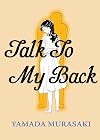
Real Housewives of Tokyo - 1980s edition.
A lonely mother in her thirties copes with the slice of life drama of raising her two daughters and wrangling her distant husband, a salaryman with long work hours and a wandering eye. Adrift on a sea of minor day-to-day events, Chiharu Yamakawa's angst and philosophizing lead to the realization that she is capable of raising her own sails and changing tack.
It's a slow burn, but her evolution is engaging.
A lonely mother in her thirties copes with the slice of life drama of raising her two daughters and wrangling her distant husband, a salaryman with long work hours and a wandering eye. Adrift on a sea of minor day-to-day events, Chiharu Yamakawa's angst and philosophizing lead to the realization that she is capable of raising her own sails and changing tack.
It's a slow burn, but her evolution is engaging.

Reading right to left on the iPad takes awhile to get used to - I do not seem to have so much issues on paper but this was my first ebook like this one and it took some getting used to.
Ryan Holmberg provides a very long essay (printed at the start of the book (Western style - so you hit its last page when you come out from the last page of the graphic novel) which puts the story and the author in her proper context and inside of the history of manga. It is mostly spoiler free and I think it show more actually works better as an introduction than as a follow-up material.
A series of vignettes which make one unified whole. A young married woman in the early 1980s (or thereabouts) Japan who starts to look outside of the house for work and for finding fulfillment when her children go to school. That may sound almost bland but it is the era and the place which make this story really shine - women at that time are not expected to work outside of the home once they get married and even when they do, they are supposed to be part time and not to seek a career. We get treated to a lot of the inner thoughts of the main character - but we also get to see her husband and his insecurities (unlike the real life of the author, this husband is not violent and if anything, he is more afraid of being displaced than actually hostile to his wife's ambitions).
The stories that comprise the whole of the manga were serialized in the early 1980s at a time when Japan was rapidly changing (see, that essay is helpful). The story feels almost too conservative even for these times but at the same time it is honest and shows the reality of a life I cannot even imagine.
I doubt that I will read much more manga about housewives but I found this one to be illuminating and useful. It also managed to surprise me - not only with its style (a lot more realistic than I expect from manga of that period) but also with the story itself and the lack of violence and real drama - it is all about the family, even when it is all suffocating. show less
Ryan Holmberg provides a very long essay (printed at the start of the book (Western style - so you hit its last page when you come out from the last page of the graphic novel) which puts the story and the author in her proper context and inside of the history of manga. It is mostly spoiler free and I think it show more actually works better as an introduction than as a follow-up material.
A series of vignettes which make one unified whole. A young married woman in the early 1980s (or thereabouts) Japan who starts to look outside of the house for work and for finding fulfillment when her children go to school. That may sound almost bland but it is the era and the place which make this story really shine - women at that time are not expected to work outside of the home once they get married and even when they do, they are supposed to be part time and not to seek a career. We get treated to a lot of the inner thoughts of the main character - but we also get to see her husband and his insecurities (unlike the real life of the author, this husband is not violent and if anything, he is more afraid of being displaced than actually hostile to his wife's ambitions).
The stories that comprise the whole of the manga were serialized in the early 1980s at a time when Japan was rapidly changing (see, that essay is helpful). The story feels almost too conservative even for these times but at the same time it is honest and shows the reality of a life I cannot even imagine.
I doubt that I will read much more manga about housewives but I found this one to be illuminating and useful. It also managed to surprise me - not only with its style (a lot more realistic than I expect from manga of that period) but also with the story itself and the lack of violence and real drama - it is all about the family, even when it is all suffocating. show less
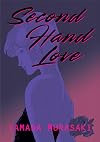
In two short stories, twentysomething women have affairs with slightly older married men. The stories are a little too slow, a little too whiny, and a little too similar, but somehow they still work, drawing me in with their character studies and leaving me invested in following the winding trails to their eventual destinations.
FOR REFERENCE:
Contents:
• A Blue Flame (a/k/a "A Shimmering Pale Color," "ゆらりうす色," or "Yurari Usuiro." Originally serialized in Comic Morning between show more June 1983 and May 1984.)
• Second Hand Love (Originally serialized in Comic Baku between Spring 1986 and Spring 1987)
• A Loving Family (Illustrations for the 1997 novel, A Loving Family / 恋する家族, by author Mita Masahiro.)
• A Fondness for Corners: An Interview with Yamada Murasaki (Originally published in Advertising Review / Kōkoku hihyō in March 1985.) show less
FOR REFERENCE:
Contents:
• A Blue Flame (a/k/a "A Shimmering Pale Color," "ゆらりうす色," or "Yurari Usuiro." Originally serialized in Comic Morning between show more June 1983 and May 1984.)
• Second Hand Love (Originally serialized in Comic Baku between Spring 1986 and Spring 1987)
• A Loving Family (Illustrations for the 1997 novel, A Loving Family / 恋する家族, by author Mita Masahiro.)
• A Fondness for Corners: An Interview with Yamada Murasaki (Originally published in Advertising Review / Kōkoku hihyō in March 1985.) show less
It is a brilliantly realised and insightful study of character. A beautiful graphic and amusing novel
Awards


You May Also Like
Associated Authors
Statistics
- Works
- 12
- Members
- 121
- Popularity
- #164,306
- Rating
- 4.1
- Reviews
- 6
- ISBNs
- 15
- Languages
- 4