
Artis Henderson
Author of Unremarried Widow: A Memoir
Works by Artis Henderson
Associated Works
Tagged
Common Knowledge
There is no Common Knowledge data for this author yet. You can help.
Members
Reviews
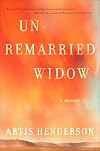
Outstanding memoir…Henderson tells the (unfortunately) short and sweet love story of her marriage to Army helicoptor pilot Miles Henderson. The story Henderson weaves is so much more than a love story. This book pays tribute to those military families who have lost loved ones fighting for our country, but it also explores the relationships with family members who have (or are fighting) the same type of loss. Most importantly, it reminds us that healing from grief is a never-ending process show more which hopefully moves from surviving, to making it through the day, to the dilemma of "what now?" Artis' eloquent writing shows us how rather than "drowning slowly... [she chooses to] step out and away." And this is what makes her memoir truly inspiring. show less
With UNREMARRIED WIDOW, Artis Henderson has written yet another brief page in the ever-growing annals of sad stories to come out of the current wars in Iraq and Afghanistan. Married just weeks before his deployment to Iraq, Henderson's pilot husband, Miles, was killed in a helicopter crash near Balad in 2006. He was twenty-four years old, Artis twenty-five.
In this slim volume documenting their meeting, courtship and all-too-brief marriage (four months), Henderson also reflects on the show more similarities of her marriage and her mother's. Her father, also a pilot, was killed in a small-plane crash (which five year-old Artis survived). Her mother never remarried, but there are intimations that Artis probably will, because her story goes well beyond the tragedy of Miles's death, describing the various stages of grief, desperate visits to psychics and mediums, support groups and counseling, and, finally, her tentative attempts at dating and rebuilding her life, culminating in a move to New York to attend journalism school to reinvent herself as a writer.
Although there obviously would have been problems between the two - Artis resented the control the army tried to exert over military spouses and chafed under the myriad regulations; and Miles and Artis were opposites in many ways (he was a devout, fundamentalist Christian, while she was skeptical of organized religion), the marriage was simply too brief for such differences to surface. And there is no doubt as to the depth of her grief. Upon learning of Miles's death she is physically devastated -
"A wail worked its way up from my belly and pushed past my lips, sweeping back in waves across my chest and down my legs ... I was all hurt."
That palpable sense of 'hurt' stayed with her, for months - years even - as Artis struggled to cope with her loss and the awful sense of wasted promise, remembering Miles's plans to enter the "Troops to Teachers" program after his service and become a teacher and coach.
The grief was mixed with anger too -
"I was suddenly furious at everyone. The soldiers in Miles's unit, the ones who had survived; the government, whose political decision makers ordered men overseas but would never send their own sons to die; the American public whose SUPPORT OUR TROOPS bumper stickers faded and peeled while everyone turned their faces from the war and forgot ... I was angry at all of them."
But the hardest to read of all the passages here is probably the "death letter" - that letter that all combat troops are ordered to write and store, to be opened and read only in the event of their deaths. Artis finds this among Miles's personal effects, along with a cheerful video of Miles stored on his laptop that he had made and intended to send her, but never did. The juxtaposition of these two messages, discovered months after his death, is nearly heartbreaking.
My only problem with Henderson's book - and it's a small one, a subjective thing - was a frequent proclivity for 'purple prose' like this -
"The sun sent up angry red fingers that turned the sky a mottled pink like a bruise. Blue filtered in as we drove southward, and by mid-afternoon the light had hardened, all sharp edges that made me wince as I stared through the windshield ... day had given way to pale twilight. A violet light split the air, smoky and flint-tipped like Indian arrowheads."
These sometimes awkward and often unnecessary metaphors and similes 'made me wince.' Sometimes less is more.
The bottom line regarding UNREMARRIED WIDOW, however, is that Artis Henderson's story is simply one of thousands like it. A young wife, left alone, bereft and hurting. She may get on with her life, and I hope she does, but that hurt will never completely go away. And whenever I read a story like this, I cannot help but consider once again the inequity of our current all-volunteer military - that over-worked one percent of our population that bears the burden of multiple deployments, defending our country and waging often ill-conceived and poorly planned wars. And the military spouses and children that endure long separations which are so hard on everyone, often resulting in divorce and broken families. (These conditions have been eloquently depicted in recent works of fiction like the anthology, FIRE AND FORGET, Siobhan Fallon's YOU KNOW WHEN THE MEN ARE GONE or Phil Klay's REDEPLOYMENT.)
To Artis Henderson, and to others like her, I want to say how deeply, deeply sorry I am for your grievous loss. This is a book well worth reading. show less
In this slim volume documenting their meeting, courtship and all-too-brief marriage (four months), Henderson also reflects on the show more similarities of her marriage and her mother's. Her father, also a pilot, was killed in a small-plane crash (which five year-old Artis survived). Her mother never remarried, but there are intimations that Artis probably will, because her story goes well beyond the tragedy of Miles's death, describing the various stages of grief, desperate visits to psychics and mediums, support groups and counseling, and, finally, her tentative attempts at dating and rebuilding her life, culminating in a move to New York to attend journalism school to reinvent herself as a writer.
Although there obviously would have been problems between the two - Artis resented the control the army tried to exert over military spouses and chafed under the myriad regulations; and Miles and Artis were opposites in many ways (he was a devout, fundamentalist Christian, while she was skeptical of organized religion), the marriage was simply too brief for such differences to surface. And there is no doubt as to the depth of her grief. Upon learning of Miles's death she is physically devastated -
"A wail worked its way up from my belly and pushed past my lips, sweeping back in waves across my chest and down my legs ... I was all hurt."
That palpable sense of 'hurt' stayed with her, for months - years even - as Artis struggled to cope with her loss and the awful sense of wasted promise, remembering Miles's plans to enter the "Troops to Teachers" program after his service and become a teacher and coach.
The grief was mixed with anger too -
"I was suddenly furious at everyone. The soldiers in Miles's unit, the ones who had survived; the government, whose political decision makers ordered men overseas but would never send their own sons to die; the American public whose SUPPORT OUR TROOPS bumper stickers faded and peeled while everyone turned their faces from the war and forgot ... I was angry at all of them."
But the hardest to read of all the passages here is probably the "death letter" - that letter that all combat troops are ordered to write and store, to be opened and read only in the event of their deaths. Artis finds this among Miles's personal effects, along with a cheerful video of Miles stored on his laptop that he had made and intended to send her, but never did. The juxtaposition of these two messages, discovered months after his death, is nearly heartbreaking.
My only problem with Henderson's book - and it's a small one, a subjective thing - was a frequent proclivity for 'purple prose' like this -
"The sun sent up angry red fingers that turned the sky a mottled pink like a bruise. Blue filtered in as we drove southward, and by mid-afternoon the light had hardened, all sharp edges that made me wince as I stared through the windshield ... day had given way to pale twilight. A violet light split the air, smoky and flint-tipped like Indian arrowheads."
These sometimes awkward and often unnecessary metaphors and similes 'made me wince.' Sometimes less is more.
The bottom line regarding UNREMARRIED WIDOW, however, is that Artis Henderson's story is simply one of thousands like it. A young wife, left alone, bereft and hurting. She may get on with her life, and I hope she does, but that hurt will never completely go away. And whenever I read a story like this, I cannot help but consider once again the inequity of our current all-volunteer military - that over-worked one percent of our population that bears the burden of multiple deployments, defending our country and waging often ill-conceived and poorly planned wars. And the military spouses and children that endure long separations which are so hard on everyone, often resulting in divorce and broken families. (These conditions have been eloquently depicted in recent works of fiction like the anthology, FIRE AND FORGET, Siobhan Fallon's YOU KNOW WHEN THE MEN ARE GONE or Phil Klay's REDEPLOYMENT.)
To Artis Henderson, and to others like her, I want to say how deeply, deeply sorry I am for your grievous loss. This is a book well worth reading. show less
The basics: After surviving the plane crash that killed her father when she was 5, Artis Henderson recounts losing her husband during a helicopter crash in the Iraq War.
My thoughts: I'm a huge fan of The New York Times Modern Love column. When I heard Artis Henderson, whose Modern Love column I cried throughout, published a memoir expanding on the topic of losing her husband, I knew I wanted to read it, even if war widow memoirs aren't typically a genre at the top of my list. And I'm so glad show more I did. It's a good thing the reader knows about the joint tragedies in Artis's life from the book's beginnings, becuase Henderson still packs an emotinoal punch. As I read, I was crying hard enough I had to leave my bed, where my husband peacefully slept, to go downstairs where I could read and sob in peace.
I'm not necessarily drawn to stories of tragedy, but I immediately connected with Artis as I read. She and I are almost exactly the same age, and I easily imagined my life in the early 2000's. Our dreams at that were so clearly aligned: "As long as I could remember, I had wanted to be a writer. I had this Hemingway-inspired fantasy of living overseas and writing, and I had imagined a life filled with art and literature and well-traveled friends." She writes about her younger self with such honesty and insight. There's the duality of remembering the naivete of her early twenties but not being dimissive of it. Henderson seamlessly fuses the past and present in this memoir into a unified voice.
The first half of this memoir tells the story of how Artis and Miles fell in love. Even knowing how the story ends, it was a love story that swept me away. It isn't an idealized fairy tale, and Artis recounts it with love and authenticity. She doesn't shy away from their hardships and doubts. I credit her bravery for being able to write with the appropriate honesty and distance. The memoir's second half had me constantly crying. I moved between soft tears running down my face and full-on ugly cries. I am so very glad I read it in the privacy of my own home where I could fully embrace the feelings reading this book gave me.
Favorite passage: "I needed them to acknowledge not just that he had died but that he had lived. That he had lived and loved me and for a space of time we were whole. But I am lying. Even now I struggle to tell the truth of what I needed."
The verdict: Artis Henderson writes with both a critical distance and an emotional honesty. It's as much a modern love story as it is the story of a young woman's life. Unremarried Widow is a brave, harrowing, emotional, gripping memoir I won't soon forget. show less
My thoughts: I'm a huge fan of The New York Times Modern Love column. When I heard Artis Henderson, whose Modern Love column I cried throughout, published a memoir expanding on the topic of losing her husband, I knew I wanted to read it, even if war widow memoirs aren't typically a genre at the top of my list. And I'm so glad show more I did. It's a good thing the reader knows about the joint tragedies in Artis's life from the book's beginnings, becuase Henderson still packs an emotinoal punch. As I read, I was crying hard enough I had to leave my bed, where my husband peacefully slept, to go downstairs where I could read and sob in peace.
I'm not necessarily drawn to stories of tragedy, but I immediately connected with Artis as I read. She and I are almost exactly the same age, and I easily imagined my life in the early 2000's. Our dreams at that were so clearly aligned: "As long as I could remember, I had wanted to be a writer. I had this Hemingway-inspired fantasy of living overseas and writing, and I had imagined a life filled with art and literature and well-traveled friends." She writes about her younger self with such honesty and insight. There's the duality of remembering the naivete of her early twenties but not being dimissive of it. Henderson seamlessly fuses the past and present in this memoir into a unified voice.
The first half of this memoir tells the story of how Artis and Miles fell in love. Even knowing how the story ends, it was a love story that swept me away. It isn't an idealized fairy tale, and Artis recounts it with love and authenticity. She doesn't shy away from their hardships and doubts. I credit her bravery for being able to write with the appropriate honesty and distance. The memoir's second half had me constantly crying. I moved between soft tears running down my face and full-on ugly cries. I am so very glad I read it in the privacy of my own home where I could fully embrace the feelings reading this book gave me.
Favorite passage: "I needed them to acknowledge not just that he had died but that he had lived. That he had lived and loved me and for a space of time we were whole. But I am lying. Even now I struggle to tell the truth of what I needed."
The verdict: Artis Henderson writes with both a critical distance and an emotional honesty. It's as much a modern love story as it is the story of a young woman's life. Unremarried Widow is a brave, harrowing, emotional, gripping memoir I won't soon forget. show less
I chose this book because the nephew of a friend was the last man injured (very severely) in Afghanistan before the US troops were removed, and I wanted to see what the "other side" would have been for his family had he died (as he so easily could have but for the instant intervention of a medic). Of course, no experience is going to be the same, but the military machinery involved would have been very comparable and since both the soldier and his wife were well known in the military show more community, the reactions of the family services would have been alike. This book gave me a good idea of what his wife and family would have suffered. This book is well written and a compulsive read. The reader quickly bonds with Artis and Miles. I felt great sympathy for them and the other family involved. Such a tragedy. I thought it was very interesting that Artis sought the counsel of mediums and psychics both before and after she met and married Miles. That certainly added another layer to her personality. show less
Awards


You May Also Like
Associated Authors
Statistics
- Works
- 2
- Also by
- 1
- Members
- 138
- Popularity
- #148,170
- Rating
- 4.0
- Reviews
- 9
- ISBNs
- 8