
Greg Laurie
Author of The Great Compromise
About the Author
Greg Laurie is the senior pastor of Harvest Christian Fellowship in Riverside and Irvine, California, and the founder of the public evangelistic events called Harvest Crusades. He has been married to Cathe for more than forty years, and they have two sons an five grandchildren.
Image credit: Used by permission of Baker Publishing Group, copyright © 2008. All rights to this material are reserved. Materials are not to be distributed to other web locations for retrieval, published(see © info.)
Series
Works by Greg Laurie
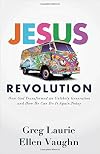
Jesus Revolution: How God Transformed an Unlikely Generation and How He Can Do It Again Today (2018) 139 copies, 6 reviews
Losers and Winners, Saints and Sinners: How to Finish Strong in the Spiritual Race (2005) 69 copies, 1 review
Start!: The Bible for New Believers, New King James Version (New Testament) (2010) 46 copies, 2 reviews
Lennon, Dylan, Alice, and Jesus: The Spiritual Biography of Rock and Roll (2022) 35 copies, 1 review
Signs of the Times: What the Bible Says About the Rapture, Anti-Christ, Armageddon, Heaven and Hell (2010) 19 copies, 2 reviews
The Invisible World: A Look Behind the Scenes of the Supernatural World and its Effects on Our Lives (1991) 13 copies
Upside Down Living: A Template for Changing Ourselves and the World from the Book of Acts (2009) 11 copies
Holy Bible: New King James Version, Start! the Bible for New Believers, New Testament (2011) 11 copies
As I See It: Thoughts on Current Issues and Things That Matter From a Biblical Perspective (2010) 10 copies
Signs of the Times: What the Bible Says About the Rapture, Antichrist, Armageddon, Heaven, Hell, and Other Issues of Our Day (2011) 10 copies
Follow, How to Follow Jesus 2 copies
Harvest CD's (15) singles 1 copy
A IGREJA QUE ABALA O MUNDO 1 copy
Aan Die Brand Vir God 1 copy
Jesus Revolution - Bible Study Book with Video Access: How Can God Transform a Generation (2023) 1 copy
Gospel of John 1 copy
Mission Possible 1 copy
Becoming One 1 copy
La iglesia trastornada 1 copy
Signs of The Times: Mark 13 1 copy
Living Beyond our Fears 1 copy
Heaven on Earth 1 copy
Greg Laurie Sermon Archive 1 copy
Face to Face with the Father 1 copy
Uusien alkujen Jumala 1 copy
Lost Boy, The Next Chapter 1 copy
The Jesus Revolution 1 copy
Married. Happily. 1 copy
Lost Boy 1 copy
How to find God 1 copy
Tagged
Common Knowledge
- Birthdate
- 1952-12-10
- Gender
- male
- Occupations
- Senior Pastor (Harvest Christian Fellowship)
- Nationality
- USA
- Places of residence
- Newport Beach, California, USA
- Associated Place (for map)
- California, USA
Members
Reviews
First sentence: The hippies who plunged into the Pacific Ocean during that summer sunset in 1970 didn't know they were in a revival. They didn't even know what a revival was. They were not acquainted with Christian vocabulary words like revival or salvation or sanctification. But thanks to the Beatles, Jim Morrison, and other countercultural icons of the day, the hippies did know about words like revolution.
How to describe this one? Part biography of Greg Laurie (including his conversion, show more his ministry, the ups and downs of his personal life). Part history of the Jesus Movement (not thorough nor complete, but an introduction for sure). Part info-dump of the times (feeling very Wikipedia info-dump on the 1950s, 1960s, 1970s, Vietnam War, American politics, etc.).
I would describe this one as more vignettes, lingering impressions of the Jesus Movement (aka Jesus Revolution). There are personal stories from Greg Laurie and his wife, Cathe, about growing up in California in the late 1960s and early 1970s. There are stories of their courtship. There are stories of Laurie's early ministry work--the people who mentored him, encouraged him. A few stories--in general--of Chuck Smith's ministry before, during, and to a very small extent after. There are a few stories about Lonnie Frisbee, but, not as much as you might expect if you've seen the movie trailer or listened to reviews of the movie. Laurie points out that Frisbee working hand in hand with Chuck Smith was better than anything Lonnie Frisbee did on his own--in terms of theological soundness, biblical accuracy, etc. The book is not a gossipy book. Laurie neither condemns (completely) nor praises Lonnie Frisbee.
I don't know if Greg Laurie wrote any of this himself. It is written ENTIRELY in the third person. So if Greg Laurie was involved in the actual writing of the manuscript, it's a very odd choice. More likely, perhaps, Laurie giving interviews etc.
Do I have thoughts???? Yes. I wish this one wasn't trying to do everything all at once. I'd rather have a book that was solely a memoir of Greg Laurie OR a book that was solely focused on the Jesus Movement (aka Jesus Revolution) perhaps capturing multiple points of view, telling a chronological story of the movement, mini-biographies of those involved, impact statements, follow-up stories, etc. A book could definitely be written gathering together memories/stories of those who were saved during this movement, who were baptized and prayed the sinner's prayer, who attended these churches, who experienced first hand this revival. It would answer a lot of lingering questions that skeptics may have. Reading the vignettes, brief captured moments, doesn't really give me--as a reader--a big picture. It raises more questions than it answers.
I've mostly focused (so far) on the book. That's only fair. The book was written before the filming began, before the movie was edited and ready to be released.
The movie is released now. I have not seen it. I have seen dozens of reviews on YouTube. They tend to fall into three camps [or reactions]. Reaction 1) The movie is perfectly perfect; it is wonderful; best Christian movie ever; a great evangelical tool; everyone MUST see it; it will be the catalyst for revival; churches everywhere should be inspired and enlightened. Reaction 2) The movie is horrendously awful. It is dangerous. It's a slippery slope. It will lead people away from the Lord. It presents a different Jesus, a different gospel. It may lead to false revival, false conversions. It idealizes Lonnie Frisbee, a complex man with MANY issues (drug use, homosexuality, occult influences). It focuses too much on experiences and not enough on teachings, doctrines, theological soundness. Reaction 3) The movie may be a beautiful film, but, it has some issues, some problems. There are a few great things, a few good things, and some disturbing things. It's a mixed bag. Not the best. Not the worst. Be discerning.
Seeking out movie reviews, I've stumbled into a PIT of commentary videos about the Jesus Movement, about Lonnie Frisbee, about Calvary Chapel, etc. And again reactions tend to extremes. Everything from a) 100% of converts who prayed the sinner's prayer, who were baptized, who were a part of this revival remained in the Lord--not only remained but were strengthened, discipled, transformed. Not a one fell away. Not a one continued to live in sin--drugs, sexual immorality, etc. to b) 90% of converts who prayed the sinner's prayer, who were baptized, who were a part of this revival fell away, were never transformed, never sanctified, never discipled, never grew in the Lord, never obeyed the Lord, were ultimately 'false' converts. You've got people utterly convinced that this revival was the best thing ever AND people utterly convinced it was the work of Satan. It can be confusing to parse through the videos and find the truth. I'm going to go out on a limb and say that neither extreme can be right--at least not totally, rigidly. There has to be a happy-medium-ground where facts lead us. show less
How to describe this one? Part biography of Greg Laurie (including his conversion, show more his ministry, the ups and downs of his personal life). Part history of the Jesus Movement (not thorough nor complete, but an introduction for sure). Part info-dump of the times (feeling very Wikipedia info-dump on the 1950s, 1960s, 1970s, Vietnam War, American politics, etc.).
I would describe this one as more vignettes, lingering impressions of the Jesus Movement (aka Jesus Revolution). There are personal stories from Greg Laurie and his wife, Cathe, about growing up in California in the late 1960s and early 1970s. There are stories of their courtship. There are stories of Laurie's early ministry work--the people who mentored him, encouraged him. A few stories--in general--of Chuck Smith's ministry before, during, and to a very small extent after. There are a few stories about Lonnie Frisbee, but, not as much as you might expect if you've seen the movie trailer or listened to reviews of the movie. Laurie points out that Frisbee working hand in hand with Chuck Smith was better than anything Lonnie Frisbee did on his own--in terms of theological soundness, biblical accuracy, etc. The book is not a gossipy book. Laurie neither condemns (completely) nor praises Lonnie Frisbee.
I don't know if Greg Laurie wrote any of this himself. It is written ENTIRELY in the third person. So if Greg Laurie was involved in the actual writing of the manuscript, it's a very odd choice. More likely, perhaps, Laurie giving interviews etc.
Do I have thoughts???? Yes. I wish this one wasn't trying to do everything all at once. I'd rather have a book that was solely a memoir of Greg Laurie OR a book that was solely focused on the Jesus Movement (aka Jesus Revolution) perhaps capturing multiple points of view, telling a chronological story of the movement, mini-biographies of those involved, impact statements, follow-up stories, etc. A book could definitely be written gathering together memories/stories of those who were saved during this movement, who were baptized and prayed the sinner's prayer, who attended these churches, who experienced first hand this revival. It would answer a lot of lingering questions that skeptics may have. Reading the vignettes, brief captured moments, doesn't really give me--as a reader--a big picture. It raises more questions than it answers.
I've mostly focused (so far) on the book. That's only fair. The book was written before the filming began, before the movie was edited and ready to be released.
The movie is released now. I have not seen it. I have seen dozens of reviews on YouTube. They tend to fall into three camps [or reactions]. Reaction 1) The movie is perfectly perfect; it is wonderful; best Christian movie ever; a great evangelical tool; everyone MUST see it; it will be the catalyst for revival; churches everywhere should be inspired and enlightened. Reaction 2) The movie is horrendously awful. It is dangerous. It's a slippery slope. It will lead people away from the Lord. It presents a different Jesus, a different gospel. It may lead to false revival, false conversions. It idealizes Lonnie Frisbee, a complex man with MANY issues (drug use, homosexuality, occult influences). It focuses too much on experiences and not enough on teachings, doctrines, theological soundness. Reaction 3) The movie may be a beautiful film, but, it has some issues, some problems. There are a few great things, a few good things, and some disturbing things. It's a mixed bag. Not the best. Not the worst. Be discerning.
Seeking out movie reviews, I've stumbled into a PIT of commentary videos about the Jesus Movement, about Lonnie Frisbee, about Calvary Chapel, etc. And again reactions tend to extremes. Everything from a) 100% of converts who prayed the sinner's prayer, who were baptized, who were a part of this revival remained in the Lord--not only remained but were strengthened, discipled, transformed. Not a one fell away. Not a one continued to live in sin--drugs, sexual immorality, etc. to b) 90% of converts who prayed the sinner's prayer, who were baptized, who were a part of this revival fell away, were never transformed, never sanctified, never discipled, never grew in the Lord, never obeyed the Lord, were ultimately 'false' converts. You've got people utterly convinced that this revival was the best thing ever AND people utterly convinced it was the work of Satan. It can be confusing to parse through the videos and find the truth. I'm going to go out on a limb and say that neither extreme can be right--at least not totally, rigidly. There has to be a happy-medium-ground where facts lead us. show less

When three members of my family all read this book and recommended it, I knew I needed to read it at some stage. But since it takes a while for me to get to books sometimes, it was a good few months later when I finally managed to pick up the audiobook myself. Once I got into it, however, I couldn’t put the book down—and finished it the next day. What a story!
I really appreciate the down-to-earth, heartfelt way this story is written. For someone who is a couple of generations removed show more from the hippie movement in the 60s and 70s (my grandparents were hippies before Jesus found them), portions of this story were familiar to me, but much of it was also new. I appreciated that this book didn’t glorify hippies or what they stood for, and I also appreciated how it consistently brought out the hope we have in Jesus in its pages. The message of this book is timeless—and I love that.
Probably the biggest thing that stood out to me from this story was how Jesus can work in people’s hearts if we are willing and obedient in listening to His calling. I was challenged personally on many levels through this story—ranging from how I think about sharing the gospel to how I think about other believers who might be different from me. Most of all, though, I was awe-inspired as I was able to witness, through this book, one of the more recent major movements of God in history—and the sobering realization that I could easily not be where I am today if it weren’t for these believers who stepped out in faith some 60 years ago and shared Jesus with those they felt called to serve.
Written in a very readable, interesting manner, this would be a great book for any Christian to pick up. I came away blessed, inspired, challenged, and spurred on in my faith after reading this book. Highly recommended! show less
I really appreciate the down-to-earth, heartfelt way this story is written. For someone who is a couple of generations removed show more from the hippie movement in the 60s and 70s (my grandparents were hippies before Jesus found them), portions of this story were familiar to me, but much of it was also new. I appreciated that this book didn’t glorify hippies or what they stood for, and I also appreciated how it consistently brought out the hope we have in Jesus in its pages. The message of this book is timeless—and I love that.
Probably the biggest thing that stood out to me from this story was how Jesus can work in people’s hearts if we are willing and obedient in listening to His calling. I was challenged personally on many levels through this story—ranging from how I think about sharing the gospel to how I think about other believers who might be different from me. Most of all, though, I was awe-inspired as I was able to witness, through this book, one of the more recent major movements of God in history—and the sobering realization that I could easily not be where I am today if it weren’t for these believers who stepped out in faith some 60 years ago and shared Jesus with those they felt called to serve.
Written in a very readable, interesting manner, this would be a great book for any Christian to pick up. I came away blessed, inspired, challenged, and spurred on in my faith after reading this book. Highly recommended! show less

Christians are hypocrites. We espouse high ideals and end up compromising every one of them. Sometimes it's a tendency I fight against, but there are other times I find myself cutting moral corners quite comfortably. Anyway, it's because I'm such a hypocrite that I was intrigued by the title of this book. As it examined the way American Christians try to "serve two masters" and live a "Christian, but not too Christian" life, would it offer insights into some areas where I've been turning a show more blind eye? Well, yes and no. Mr. Laurie did indeed mention some of my sins, but it was hardly news to me. And unfortunately, even that he didn't do it very well. The whole book is basically a bad sermon--one of those that revolves around a central concept rather than the Word of God. It's one of those that tries to speak authoritatively by tacking a bunch of Bible passages onto its pre-selected subject rather than starting with the text and seeing what concepts spring from that. I also found Mr. Laurie's "preaching" lacking in a) that he read things into Scripture that aren't necessarily there and b) he focuses too much on how we Christians need to do better at not compromising our beliefs while not mentioning that Jesus died for these sins as well. Ah, well. Even if it didn't offer any new insights, I do need to be reminded of the old ones now and then.
--J. show less
--J. show less
Jesus Revolution: How God Transformed an Unlikely Generation and How He Can Do It Again Today by Greg Laurie
Summary: An account of the Jesus Movement centered around Calvary Chapel and Chuck Smith, who mentored Greg Laurie into ministry, and how such a revival might come once more.
Some might argue that the last major American Awakening took place in the late 1960's to mid- 1970's in what was known as the Jesus Movement. Young men and women were coming to faith out of the hippie, drug culture. It was happening all over the United States in locality after locality. There was no national campaign. I show more know. I was a part of it.
So was Greg Laurie, and in this book, he, along with Ellen Vaughn offers a personal narrative of the times, the Southern California movement that centered around Chuck Smith's Calvary Chapel, and Greg's conversion to Christ, growth as a young believer under Smith's mentoring, and the beginnings of his own ministry, resulting eventually in Harvest Christian Fellowship.
Laurie and Vaughn narrate the times: the transition from the staid 1950's to the tumultuous 1960's, the rise of the civil rights and anti-war movements, the proliferation of drug use, the rock festivals, and how the promise of Woodstock rapidly unraveled, leaving the children of the counter-culture desperate for something better.
Greg's own story involved growing up in a single parent family with his mother and a series of her boyfriends. He didn't know who his father was. Then he encountered Lonnie Frisbee, a charismatic minister who, at the time, was working with Chuck Smith, an older pastor who was open to this movement of God among young people and taught them the Bible, training converts to be disciples and witnesses.
Greg narrates coming to faith, and plunging into the life of Calvary Chapel, learning that drugs and discipleship could not go together. He began bearing witness to his faith, using art talents to create what became a popular pamphlet. Eventually he is invited to lead a Bible study over in Riverside that explodes, at which time Chuck Smith helps him plant a church that became Harvest Christian Fellowship.
The book goes on to interweave the subsequent life of Greg Laurie, and his wife Cathe, also converted through the ministry, and the subsequent narrative of the next forty years in the U.S. This includes some of the personal tragedies in his life including the death of his own son, and the falling out he had with Chuck Smith when he planted a church in Orange County, where he grew up and where Calvary Chapel was based. Fortunately, the two of them reconciled before Smith's death.
One of the most significant parts of the book for me were a couple pages where he cited Billy Graham's The Jesus Generation (a book I read during that period, so grateful for the affirmation of the evangelist for the work of God we were seeing all around us). Graham noted strengths of this movement that were evident in Greg's narrative and that I saw as well:
"It was spontaneous, without a human figurehead..."
It was "Bible based." All of us had dog-eared, marked up Bibles.
"The movement was about an experience with Jesus, not head knowledge."
There was an emphasis on the Holy Spirit.
"[L]ives were dramatically transformed" as people were liberated from "addictions, and ingrained patterns of sin."
"The movement's emphasis was on Christian discipleship." We talked about being "sold out" to Christ in every area of life.
"It was interracial and multicultural."
"The movement showed a great zeal for evangelism." I've often joked that if it moved, we tried to witness to it!
"The movement emphasized the second coming of Jesus." Given the turbulence of the times with assassinations, Middle East conflict, and so much discord in the country, we thought Christ could come in our lifetime (pp. 165-166).
An odd characteristic of the book is that references to Laurie are in the third person, perhaps due to it being a co-authored work. Nevertheless, the book offers an eyewitness account of the times and the Jesus Movement that is helpful for anyone who wants to know more about this revival. While the cultural history offers a broad summary, and the account is centered in Southern California, I found that it rang true to my own experience, and that of others I've talked to from other cities.
It has been debated whether the Jesus Movement was a revival. The authors argue that it was, as a movement orchestrated by God and not human agency, in which Jesus was powerfully transforming lives through the Holy Spirit. Their purpose is not nostalgia, but rather to challenge the church that it can happen again. They ask whether, like the youth, and some of the churches of the 1960's, we are desperate enough in our day:
"God grants revival. He grants it to those who are humble enough to know they need it, to those who have a certain desperate hunger for Him. Only out of self-despair--a helpless understanding of the reality of sin and one's absolute inability to cure it--does anyone ever turn wholeheartedly to God. That desperation is sometimes hard to come by in America, because it is the opposite of self-sufficiency. In the US, many of us live under the illusion that our needs are already met, that maybe God is an add-on to our already comfortable existence" (pp. 232-233).
___________________________
Disclosure of Material Connection: I received a complimentary review copy of this book from the publisher in exchange for an honest review. The opinions I have expressed are my own. show less
Some might argue that the last major American Awakening took place in the late 1960's to mid- 1970's in what was known as the Jesus Movement. Young men and women were coming to faith out of the hippie, drug culture. It was happening all over the United States in locality after locality. There was no national campaign. I show more know. I was a part of it.
So was Greg Laurie, and in this book, he, along with Ellen Vaughn offers a personal narrative of the times, the Southern California movement that centered around Chuck Smith's Calvary Chapel, and Greg's conversion to Christ, growth as a young believer under Smith's mentoring, and the beginnings of his own ministry, resulting eventually in Harvest Christian Fellowship.
Laurie and Vaughn narrate the times: the transition from the staid 1950's to the tumultuous 1960's, the rise of the civil rights and anti-war movements, the proliferation of drug use, the rock festivals, and how the promise of Woodstock rapidly unraveled, leaving the children of the counter-culture desperate for something better.
Greg's own story involved growing up in a single parent family with his mother and a series of her boyfriends. He didn't know who his father was. Then he encountered Lonnie Frisbee, a charismatic minister who, at the time, was working with Chuck Smith, an older pastor who was open to this movement of God among young people and taught them the Bible, training converts to be disciples and witnesses.
Greg narrates coming to faith, and plunging into the life of Calvary Chapel, learning that drugs and discipleship could not go together. He began bearing witness to his faith, using art talents to create what became a popular pamphlet. Eventually he is invited to lead a Bible study over in Riverside that explodes, at which time Chuck Smith helps him plant a church that became Harvest Christian Fellowship.
The book goes on to interweave the subsequent life of Greg Laurie, and his wife Cathe, also converted through the ministry, and the subsequent narrative of the next forty years in the U.S. This includes some of the personal tragedies in his life including the death of his own son, and the falling out he had with Chuck Smith when he planted a church in Orange County, where he grew up and where Calvary Chapel was based. Fortunately, the two of them reconciled before Smith's death.
One of the most significant parts of the book for me were a couple pages where he cited Billy Graham's The Jesus Generation (a book I read during that period, so grateful for the affirmation of the evangelist for the work of God we were seeing all around us). Graham noted strengths of this movement that were evident in Greg's narrative and that I saw as well:
"It was spontaneous, without a human figurehead..."
It was "Bible based." All of us had dog-eared, marked up Bibles.
"The movement was about an experience with Jesus, not head knowledge."
There was an emphasis on the Holy Spirit.
"[L]ives were dramatically transformed" as people were liberated from "addictions, and ingrained patterns of sin."
"The movement's emphasis was on Christian discipleship." We talked about being "sold out" to Christ in every area of life.
"It was interracial and multicultural."
"The movement showed a great zeal for evangelism." I've often joked that if it moved, we tried to witness to it!
"The movement emphasized the second coming of Jesus." Given the turbulence of the times with assassinations, Middle East conflict, and so much discord in the country, we thought Christ could come in our lifetime (pp. 165-166).
An odd characteristic of the book is that references to Laurie are in the third person, perhaps due to it being a co-authored work. Nevertheless, the book offers an eyewitness account of the times and the Jesus Movement that is helpful for anyone who wants to know more about this revival. While the cultural history offers a broad summary, and the account is centered in Southern California, I found that it rang true to my own experience, and that of others I've talked to from other cities.
It has been debated whether the Jesus Movement was a revival. The authors argue that it was, as a movement orchestrated by God and not human agency, in which Jesus was powerfully transforming lives through the Holy Spirit. Their purpose is not nostalgia, but rather to challenge the church that it can happen again. They ask whether, like the youth, and some of the churches of the 1960's, we are desperate enough in our day:
"God grants revival. He grants it to those who are humble enough to know they need it, to those who have a certain desperate hunger for Him. Only out of self-despair--a helpless understanding of the reality of sin and one's absolute inability to cure it--does anyone ever turn wholeheartedly to God. That desperation is sometimes hard to come by in America, because it is the opposite of self-sufficiency. In the US, many of us live under the illusion that our needs are already met, that maybe God is an add-on to our already comfortable existence" (pp. 232-233).
___________________________
Disclosure of Material Connection: I received a complimentary review copy of this book from the publisher in exchange for an honest review. The opinions I have expressed are my own. show less
You May Also Like


Associated Authors
Statistics
- Works
- 204
- Members
- 4,895
- Popularity
- #5,132
- Rating
- 3.9
- Reviews
- 47
- ISBNs
- 300
- Languages
- 4
- Favorited
- 1