
David W. Mack
Author of Kabuki Volume 1: Circle of Blood
About the Author
Works by David W. Mack
Kabuki: The Alchemy #6 6 copies
Kabuki: Images 6 copies
Kabuki: The Alchemy #8 5 copies
The New Avengers (Vol. 1) #39: Echo — Illustrator — 4 copies
Kabuki: The Alchemy #5 4 copies
Kabuki: Reflections #6 4 copies
Kabuki Agents: Scarab #7 4 copies
Kabuki: The Ghost Play 4 copies
Kabuki: Skin Deep #1 3 copies
Kabuki: Reflections #10 3 copies
Kabuki: Circle of Blood #3 3 copies
Kabuki [1997-2000] #3 3 copies
Kabuki: Masks of the Noh #1 3 copies
Kabuki Color Special 3 copies
Kabuki: The Alchemy #9 3 copies
Daredevil (1998) #9 2 copies
Kabuki: Dreams of the Dead 2 copies
Kabuki: Skin Deep #2 2 copies
Kabuki: Reflections #5 2 copies
Kabuki [1997-2000] #2 2 copies
Kabuki: Reflections #9 2 copies
Kabuki #s 1-5,7-9 1 copy
Visions #4 1 copy
Kabuki: Skin Deep, Acts 1-3 1 copy
Kabuki: Thr Ghost Play 1 copy
Kabuki Agents: Scarab #s 1-8 1 copy
Kabuki: Classics 1 copy
Kabuki: The Alcheny #s 1,4-8 1 copy
Kabuki: Reflections #s 1-6 1 copy
Kabuki Vol. 1, #8 1 copy
Kabuki Vol. 1 #7 1 copy
Kabuki #9 1 copy
Avengers (1998-2004) Finale 1 copy
Kabuki Vol. 7, #4 1 copy
Dream Logic #4 1 copy
Visions 1 copy
Kabuki: Reflections #7 1 copy
Otto book one 1 copy
Kabuki: Skin Deep #3 1 copy
Kabuki: Reflections #15 1 copy
Steak + Cake 1 copy
Daredevil (1998) #11 1 copy
Otto, Book Two 1 copy
Wolf City 1 copy
Associated Works
Moonshot: The Indigenous Comics Collection, Volume 1 (2015) — Contributor & Illustrator — 213 copies, 7 reviews
Norse Mythology Volume 1 (Graphic Novel) (2020) — Cover artist, some editions — 200 copies, 6 reviews
Daredevil by Brian Michael Bendis & Alex Maleev Ultimate Collection - Book 1 (2010) — Illustrator — 128 copies, 7 reviews
Do Androids Dream of Electric Sheep Omnibus (2015) — Contributor, some editions — 80 copies, 1 review
Wolverine & the X-Men Volume 1: Tomorrow Never Learns (Wolverine and the X-Men) (2014) — Illustrator, some editions — 43 copies, 1 review
Heroes: The World's Greatest Super Hero Creators Honor The World's Greatest Heroes 9-11-2001 (2001) — Illustrator — 25 copies, 1 review
Fight Club / The Goon / The Strain (Free Comic Book Day 2015) (2015) — Cover artist — 24 copies, 2 reviews
Alice Cooper Volume 1: Welcome To My Nightmare (2015) — Cover artist, some editions — 14 copies, 2 reviews
Swamp Thing vol. 3 # 13 — Cover artist — 2 copies
The Last of the Mohicans #4 (of 6) (Marvel Illustrated) — Cover artist — 2 copies
SLIP — Illustrator — 1 copy
Tagged
Common Knowledge
- Canonical name
- Mack, David W.
- Birthdate
- 1972-10-07
- Gender
- male
- Nationality
- USA
- Associated Place (for map)
- USA
Members
Reviews
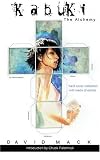
Kabuki is a series about transformation. Yes, it has beautiful art. Yes, it has great writing. And while the central theme of the narrative is transformation, what I found even more powerful is the way the art of the stories transforms from collection to collection, seeming to mirror the character’s evolution.
I have met David Mack a couple times at Comicon, and I’ve been meaning to ask him if he always intended from the beginning for the story to be about transformation and to move from show more standard comic style to collage. I like to think that it’s something he came up with as he went along, and the writing of the story transformed as he developed it. That the book evolved him as the story itself evolved.
On a plot level, the story begins in rather mainstream comic fashion. Kabuki is set slightly in the future, primarily in Japan. The main character, Kabuki, is one of a group of eight female assassins called The Noh who wear iconic masks and stylized costumes. They are a team managed by the government and sent out to instill fear and kill gangsters and various corporate criminals. However ... not all is as it appears. A multi-layered conspiracy ensues. Seven graphic novels complete the story.
[b:Kabuki Circle of Blood|89816|Kabuki, Vol. 1 Circle of Blood|David Mack|http://d.gr-assets.com/books/1349072657s/89816.jpg|1027]. Mack wrote and drew. Black & white. Has a grim, raw style. The art seems a bit underdeveloped to my eye. Has a bit of Sin City tone but more surreal. With more emphasis on emotions. The story is overall, fairly straightforward to this point.
[b:Kabuki Dreams|89813|Kabuki, Vol. 2 Dreams|David Mack|http://d.gr-assets.com/books/1347783408s/89813.jpg|86681]. Mack wrote and drew. Takes a huge leap forward in style and has more of the Mack signature look. Collage style begins, color is introduced. Blends pencil sketching, ink drawings, painting and even photography. This is a book of interior monologue and, as the title would lead you to believe, is trippy.
[b:Kabuki Masks of Noh|743521|Kabuki, Vol. 3 Masks of the Noh|David Mack|http://d.gr-assets.com/books/1347473675s/743521.jpg|729672]. Mack writes and draws some scenes, but this is primarily guest drawn. The style returns to black & white, but overall more refined, precise and graphic than Circle of Blood. Rick Mays draws a pretty phenomenal Scarab. The various artists seem to be chosen to help represent the style of each of the assassins. This sequence consists of short stories introducing us further to the other members of the Noh.
[b:Kabuki Skin Deep|89814|Kabuki, Vol. 4 Skin Deep|David Mack|http://d.gr-assets.com/books/1347219865s/89814.jpg|440299]. Mack returns to both draw and write. In Skin Deep his incredible artistic skills beginning to shine. He can morph like a chameleon from cartoonish renderings to realist representational paintings to pencil sketches.
[b:Kabuki Metamorphosis|89815|Kabuki, Vol. 5 Metamorphosis|David Mack|http://d.gr-assets.com/books/1347660123s/89815.jpg|18787]. Mack writes, draws, letters and designs. For the sheer brilliance on display, I think Metamorphosis is the most beautiful of the series and my favorite. The diversity of techniques is breathtaking.
[b:Kabuki Scarab Lost in Translation|98454|Kabuki, Vol. 6 Scarab, Lost in Translation|David Mack|http://d.gr-assets.com/books/1347752395s/98454.jpg|94908]. An action-packed side-step featuring everyone's favorite assassin, Scarab. Illustrated in graphic black & white by Rick Mays, the coolest artist from the Masks collection. Just as the art harkens to outstanding comic illustration style, it doesn't push the envelope in content or technique. A fun diversion.
[b:Kabuki The Alchemy|3155976|Kabuki, Vol. 7 The Alchemy|David Mack|http://d.gr-assets.com/books/1347738255s/3155976.jpg|3187674]. Mack takes his signature collage style even further, using cut up items and diverse materials including envelopes and letters sent to him from fans of the series to tell the existentialist, inspirational conclusion of Kabuki's epic story. Although visually, I prefer Metamorphosis, I truly admire The Alchemy for showing the potential of comics. Yes, many artists like R. Crumb and Chris Ware have achieved fame for non-superhero stories. But Mack essentially demonstrates the potential before our eyes to move beyond the dictates of the superhero form. A series that begins with ultra-violent superhumans fighting battles for stereotypical reasons ends with artistic explorations of our inner potential as creative beings. Kabuki moves beyond standard comic book “hero” tropes into a story of heroic action as self-transformation, moving beyond the dictatorship of the system, the fear of change and the psychological control of the past. The hero is one who evolves not one who kills everything. And Mack says we each have the potential, regardless of what has come before, to evolve. Perhaps best of all, the transformation that takes place goes much further than within the narrative; it is a transformation of the form of graphic storytelling. Now that is truly inspirational.
Highly recommended! show less
I have met David Mack a couple times at Comicon, and I’ve been meaning to ask him if he always intended from the beginning for the story to be about transformation and to move from show more standard comic style to collage. I like to think that it’s something he came up with as he went along, and the writing of the story transformed as he developed it. That the book evolved him as the story itself evolved.
On a plot level, the story begins in rather mainstream comic fashion. Kabuki is set slightly in the future, primarily in Japan. The main character, Kabuki, is one of a group of eight female assassins called The Noh who wear iconic masks and stylized costumes. They are a team managed by the government and sent out to instill fear and kill gangsters and various corporate criminals. However ... not all is as it appears. A multi-layered conspiracy ensues. Seven graphic novels complete the story.
[b:Kabuki Circle of Blood|89816|Kabuki, Vol. 1 Circle of Blood|David Mack|http://d.gr-assets.com/books/1349072657s/89816.jpg|1027]. Mack wrote and drew. Black & white. Has a grim, raw style. The art seems a bit underdeveloped to my eye. Has a bit of Sin City tone but more surreal. With more emphasis on emotions. The story is overall, fairly straightforward to this point.
[b:Kabuki Dreams|89813|Kabuki, Vol. 2 Dreams|David Mack|http://d.gr-assets.com/books/1347783408s/89813.jpg|86681]. Mack wrote and drew. Takes a huge leap forward in style and has more of the Mack signature look. Collage style begins, color is introduced. Blends pencil sketching, ink drawings, painting and even photography. This is a book of interior monologue and, as the title would lead you to believe, is trippy.
[b:Kabuki Masks of Noh|743521|Kabuki, Vol. 3 Masks of the Noh|David Mack|http://d.gr-assets.com/books/1347473675s/743521.jpg|729672]. Mack writes and draws some scenes, but this is primarily guest drawn. The style returns to black & white, but overall more refined, precise and graphic than Circle of Blood. Rick Mays draws a pretty phenomenal Scarab. The various artists seem to be chosen to help represent the style of each of the assassins. This sequence consists of short stories introducing us further to the other members of the Noh.
[b:Kabuki Skin Deep|89814|Kabuki, Vol. 4 Skin Deep|David Mack|http://d.gr-assets.com/books/1347219865s/89814.jpg|440299]. Mack returns to both draw and write. In Skin Deep his incredible artistic skills beginning to shine. He can morph like a chameleon from cartoonish renderings to realist representational paintings to pencil sketches.
[b:Kabuki Metamorphosis|89815|Kabuki, Vol. 5 Metamorphosis|David Mack|http://d.gr-assets.com/books/1347660123s/89815.jpg|18787]. Mack writes, draws, letters and designs. For the sheer brilliance on display, I think Metamorphosis is the most beautiful of the series and my favorite. The diversity of techniques is breathtaking.
[b:Kabuki Scarab Lost in Translation|98454|Kabuki, Vol. 6 Scarab, Lost in Translation|David Mack|http://d.gr-assets.com/books/1347752395s/98454.jpg|94908]. An action-packed side-step featuring everyone's favorite assassin, Scarab. Illustrated in graphic black & white by Rick Mays, the coolest artist from the Masks collection. Just as the art harkens to outstanding comic illustration style, it doesn't push the envelope in content or technique. A fun diversion.
[b:Kabuki The Alchemy|3155976|Kabuki, Vol. 7 The Alchemy|David Mack|http://d.gr-assets.com/books/1347738255s/3155976.jpg|3187674]. Mack takes his signature collage style even further, using cut up items and diverse materials including envelopes and letters sent to him from fans of the series to tell the existentialist, inspirational conclusion of Kabuki's epic story. Although visually, I prefer Metamorphosis, I truly admire The Alchemy for showing the potential of comics. Yes, many artists like R. Crumb and Chris Ware have achieved fame for non-superhero stories. But Mack essentially demonstrates the potential before our eyes to move beyond the dictates of the superhero form. A series that begins with ultra-violent superhumans fighting battles for stereotypical reasons ends with artistic explorations of our inner potential as creative beings. Kabuki moves beyond standard comic book “hero” tropes into a story of heroic action as self-transformation, moving beyond the dictatorship of the system, the fear of change and the psychological control of the past. The hero is one who evolves not one who kills everything. And Mack says we each have the potential, regardless of what has come before, to evolve. Perhaps best of all, the transformation that takes place goes much further than within the narrative; it is a transformation of the form of graphic storytelling. Now that is truly inspirational.
Highly recommended! show less
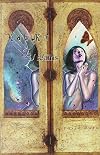
I'm not going to say that the pictures were by any means all perfect. There was lots of gorgeous artwork in this book, and it was a visual treat. However, some of the pictures felt rather slapped together or amateurish, and I do wish there could have been more to the story. Still, it does get better in the next book, so just consider this one as even more of a 'graphic' novel than usual.
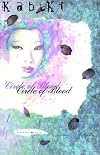
In this first book in the series we learn about the origins of the Noh operative known as Kabuki. Kabukis mother Tsukiko (Moon Child) was from an Ainu farming family. She was one of the thousands of women taken by the Japanese military to be " comfort women" for the soldiers during WW II. She found herself on an island base under the control of The General. The General commanded that the comfort women be used only to perform Kabuki plays. Tsukiko performed in a play about the ghost of a show more woman out for vengeance. There were no costumes so she wore the flag of the Imperial Navy as a gown. After the war the General plans to marry Tsukiko. His son, Ryuichi Kai, is enraged. The night before the wedding he attacks Tsukiko in the temple, leaving her for dead. She lingers in a coma and is later found to be pregnant. She dies in childbirth. The child is named Ukiko -Girl of the Rain - and raised by the General.When Kai becomes aware of Ukikos existence he attacks the girl, on her mothers grave, carving the kanji "Kabuki" onto her face. He believes she is dead. She actually dies for nine minutes and a death certificate is signed. The General takes advantage of the death certificate. He lets the world believe that she is dead. He grooms her as an operative in the Noh agency. The Noh is a secret government organization designed by the General to balance the scales of corruption between organized crime and the government. Ukiko is trained until her body is a living weapon. She receives a new face (mask) and the name Kabuki. In honor of her mother her costume uses the pattern of the flag of the Imperial Navy and her weapon is the farmers sickle. One night Kabuki disobeys orders and takes revenge - for herself and for her mother- against the directors of the Noh.
A great beginning to the series. The story and the art are amazing. The black and white graphics have multiple layers. I had to use a large magnifying glass to make sure I caught all the details. Macks repeated use of certain panels and their positioning with similar panels ( a technique he uses throughout the series) frames the story and adds depth. He uses numerous allusions to Alice in Wonderland and Through the Looking Glass throughout the story. "Alice" imagery is used -- decks of cards, cheshire cat smile. The story takes place during Japans rainy season so the majority of panels depict rain. Fitting, since Ukikos name means Girl of the Rain. The first line: The rainy season has begun.
Highly recommended 4.5/5 stars show less
A great beginning to the series. The story and the art are amazing. The black and white graphics have multiple layers. I had to use a large magnifying glass to make sure I caught all the details. Macks repeated use of certain panels and their positioning with similar panels ( a technique he uses throughout the series) frames the story and adds depth. He uses numerous allusions to Alice in Wonderland and Through the Looking Glass throughout the story. "Alice" imagery is used -- decks of cards, cheshire cat smile. The story takes place during Japans rainy season so the majority of panels depict rain. Fitting, since Ukikos name means Girl of the Rain. The first line: The rainy season has begun.
Highly recommended 4.5/5 stars show less

What if someone realised that artists travelling all over the world for comic book conventions, being a nobody in every other context and a huge celebrity to the devoted few, surely that would be the perfect cover for a spy? But would someone like that like to be recruited? And what would it do to them, to their life and their sense of identity, should they accept?
The premise is very good, and I don't really have any major beef with the execution, either -- except that the story barely feels show more like it has started when the comic ends. Without really paying off the premise much beyond some internal monologues of the protagonist. I'd be very interested in reading a volume 2 of this (they seem to imply they'd like to make one some day), to see where it could go from here.
That said, in its own, odd little character study kind of way, the book is satisfying enough. The protagonist is relatable and likable, the mystery woman is funny and just the tiniest bit scary, the dialogue (as one would expect from Bendis) is snarky and fun, yet often oddly and endearingly earnest. And while David Mack's style is much too artsy for my tastes (it's admittedly nice for covers, but too messy and confused for interior art), he seems reined in here compared to other books, rarely getting in the way of the storytelling and frequently actually aiding it considerably. Additionally, I thought the layouts were quite good.
All in all, a good reading experience, even if the premise warranted a somewhat grander story than I feel I got. show less
The premise is very good, and I don't really have any major beef with the execution, either -- except that the story barely feels show more like it has started when the comic ends. Without really paying off the premise much beyond some internal monologues of the protagonist. I'd be very interested in reading a volume 2 of this (they seem to imply they'd like to make one some day), to see where it could go from here.
That said, in its own, odd little character study kind of way, the book is satisfying enough. The protagonist is relatable and likable, the mystery woman is funny and just the tiniest bit scary, the dialogue (as one would expect from Bendis) is snarky and fun, yet often oddly and endearingly earnest. And while David Mack's style is much too artsy for my tastes (it's admittedly nice for covers, but too messy and confused for interior art), he seems reined in here compared to other books, rarely getting in the way of the storytelling and frequently actually aiding it considerably. Additionally, I thought the layouts were quite good.
All in all, a good reading experience, even if the premise warranted a somewhat grander story than I feel I got. show less
Lists
You May Also Like
Associated Authors
Statistics
- Works
- 155
- Also by
- 50
- Members
- 2,952
- Popularity
- #8,647
- Rating
- 3.9
- Reviews
- 62
- ISBNs
- 93
- Languages
- 4