
James M. Lang
Author of Small Teaching: Everyday Lessons from the Science of Learning
About the Author
James M. Lang is Associate Professor of English at Assumption College and former assistant director of the Searle Center for Teaching Excellence at Northwestern University. He is the author of Life on the Tenure Track: Lessons From the First Year.
Works by James M. Lang
On course : a week-by-week guide to your first semester of college teaching (2008) 182 copies, 4 reviews
Small Teaching Online: Applying Learning Science in Online Classes (2019) — Author — 131 copies, 4 reviews
Teaching the Literature Survey Course: New Strategies for College Faculty (Teaching and Learning in Higher Education) (2018) 15 copies
Write Like You Teach: Taking Your Classroom Skills to a Bigger Audience (Chicago Guides to Writing, Editing, and Publishing) (2025) 9 copies
Docencia pequeña: Lecciones cotidianas de las ciencias del aprendizaje (Spanish Edition) (2018) 2 copies
Learning Sickness 1 copy
A Parent's Guide to Street Drugs: Everything You Should Know Everything Your Child Already Knows (2001) 1 copy
Small Teaching 1 copy
Tagged
Common Knowledge
- Canonical name
- Lang, James M.
- Birthdate
- 1969
- Gender
- male
- Nationality
- USA
- Associated Place (for map)
- USA
Members
Reviews
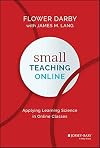
This is a useful book, packed full of good tips, but could have been a bit more concise in places. I found myself wishing for a bit more empirical evidence that these things work, but I understand not all of them are tried and true (yet). For skeptics, some of it may seem idealized, but one can push past the sunny language and see the point Darby makes. For example: "When they see the relevance of coursework, the thread that ties everything together, students are more wiling to complete show more activities and assessments in a way that promotes meaningful learning. (23)" Well, we know that's not always the case, but Darby pushes us to honor the highest potential. I very much appreciated the application of "small teaching" approaches and the advocacy that online teaching can be (and should be) meaningful and interactive. At this point, even those who had to "emergency pivot" to online teaching during the pandemic should have figured out that it requires pedagogical considerations and isn't just a 1:1 transition. From that perspective, I found some of the cheerleading excessive, but not to the detriment of the book's value as a whole. Darby offers specific ways to implement UDL (Universal Design for Learning) practices (i.e. "Provide multiple topics and questions in online discussion prompts" and "Let students sign up for groups based on a topic they want to delve into"). There's a lot of general wisdom as well, that isn't just applicable to online teaching: "Giving the students something to do while watching a mini-lecture video, for example, encourages active listening and attentive processing of new information." (187). That seems obvious, perhaps, but I think there are times in my own teaching when I've just dialed in the lecture or the listening assignment, without really connecting it to its own specific learning outcomes. To be sure, it can be tough to give that extra 10% sometimes, but the idea of "small teaching" is based upon making these small changes, one at a time, for greater cumulative effect down the road. Darby makes sure to reiterate this in the final pages when discussing how we approach challenges. And perhaps the most important question Darby asks is: "How will you keep yourself motivated? How do you plan to assess the impact of your efforts? (225)". THIS is the missing piece. Teachers can read books and attend conferences, filling their hearts and minds with myriad exciting ideas...but what happens when those experiments fail? Do we just assign "x idea" to the scrap heap, or do we sit down and assess what went wrong and what are the adjustments that need to be made? That's where the space/time is really needed, and perhaps institutions of higher ed would be wise to consider pedagogy-specific guided sabbaticals, increased PRODUCTIVE and CONSTRUCTIVE faculty reviews, and mandatory (and compensated) faculty peer groups. Darby's offerings are helpful for the already-motivated teacher, but should also be embraced by administrators. show less
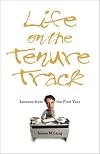
Lang’s book is a welcome guide/companion for any early career (especially first-year) professor, regardless of discipline (I am fortunate to share the author’s field, English), for a number of reasons.
Lang writes honestly about the fears and anxieties—as well as the accomplishments and rewards—of being a first-year college professor. With refreshing candor, he discusses the challenges he faced with his students (both in an out of the classroom), navigating his way within the show more departmental hierarchy, finding his niche in his new private and professional home, endeavoring to balance his campus life (teaching, advising, service, engagement) with his home life (wife, two young children, personal illness), and developing a career plan, including a path to earning tenure and/or strategic job shifting.
Thankfully, he acknowledges that, although readers might share many of his experiences, certain contextual factors—such as the size and nature of his institution, his career goals, his pedagogy, his family life—make his situation unique…as will be true for his audience as well. Consequently, he offers abundant practical advice that can be modified as needed along with a brief but valuable list of resources for innovative and effective teaching. Highly recommended—you’ll be glad you read this hybrid memoir/handbook. show less
Lang writes honestly about the fears and anxieties—as well as the accomplishments and rewards—of being a first-year college professor. With refreshing candor, he discusses the challenges he faced with his students (both in an out of the classroom), navigating his way within the show more departmental hierarchy, finding his niche in his new private and professional home, endeavoring to balance his campus life (teaching, advising, service, engagement) with his home life (wife, two young children, personal illness), and developing a career plan, including a path to earning tenure and/or strategic job shifting.
Thankfully, he acknowledges that, although readers might share many of his experiences, certain contextual factors—such as the size and nature of his institution, his career goals, his pedagogy, his family life—make his situation unique…as will be true for his audience as well. Consequently, he offers abundant practical advice that can be modified as needed along with a brief but valuable list of resources for innovative and effective teaching. Highly recommended—you’ll be glad you read this hybrid memoir/handbook. show less
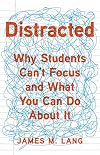
I started this because (1) I'm a huge fan of Small Teaching, and (2) of course, the topic is extremely relevant, especially in those days of remote instruction. I did not find it as insightful as Small Teaching, however. It may be because I have read a lot since I read Small Teaching, and therefore, I am more informed than I was then.
So, there were far fewer new things to learn in this one.
Also, it seemed to me that this book makes a few common assumptions, very frequently present in a lot show more of the literature on higher ed instruction: (1) be extrovert, and (2) most of your students are extroverts too and will really like all the active stuff, and (3) have low boundaries with your students. If you are not (1) and do not meet (3), then, you will find the strategies presented in the book not very workable for yourself. Also, I will cope to finding the chapter on mindfulness not interesting, especially, since the author himself acknowledges that the research on the benefits of mindfulness in the classroom is just not there.
Otherwise, this might be a useful book for newer instructors but I would advise them to read Small Teaching first.
However, I do strongly support the attitude that we should cultivate attention but not by hectoring our students to "just focus!", especially, when, at the same time, we demand that they engage in situational awareness (i.e. distraction) in case of active shooter. This is no joke, the whole situational awareness is part of most active shooter drill and training. I think the author is right that there was no golden age when people were able to focus for real and now we can't because of smart devices. That's BS and yet, we hear it all the time.
Instead of fighting distraction, the author encourages us to use teaching practices that cultivate attention, as a skill to be achieved. The actual strategies proposed, though, have the assumptions mentioned above buy helpful nonetheless.
And also, we should read this because distraction / lack of focus is not just a problem for our students. Let's face it, most of us can't get through meetings and convocation days without our devices. We need to stop pretending that this affects only our students.
Anyhoo, despite my reservations, this is very well and clearly written. And I'm saying this as an introvert with the attention span of a fruit fly. show less
So, there were far fewer new things to learn in this one.
Also, it seemed to me that this book makes a few common assumptions, very frequently present in a lot show more of the literature on higher ed instruction: (1) be extrovert, and (2) most of your students are extroverts too and will really like all the active stuff, and (3) have low boundaries with your students. If you are not (1) and do not meet (3), then, you will find the strategies presented in the book not very workable for yourself. Also, I will cope to finding the chapter on mindfulness not interesting, especially, since the author himself acknowledges that the research on the benefits of mindfulness in the classroom is just not there.
Otherwise, this might be a useful book for newer instructors but I would advise them to read Small Teaching first.
However, I do strongly support the attitude that we should cultivate attention but not by hectoring our students to "just focus!", especially, when, at the same time, we demand that they engage in situational awareness (i.e. distraction) in case of active shooter. This is no joke, the whole situational awareness is part of most active shooter drill and training. I think the author is right that there was no golden age when people were able to focus for real and now we can't because of smart devices. That's BS and yet, we hear it all the time.
Instead of fighting distraction, the author encourages us to use teaching practices that cultivate attention, as a skill to be achieved. The actual strategies proposed, though, have the assumptions mentioned above buy helpful nonetheless.
And also, we should read this because distraction / lack of focus is not just a problem for our students. Let's face it, most of us can't get through meetings and convocation days without our devices. We need to stop pretending that this affects only our students.
Anyhoo, despite my reservations, this is very well and clearly written. And I'm saying this as an introvert with the attention span of a fruit fly. show less
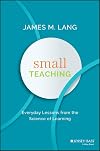
There's nothing new here in terms of approaches to teaching—James Lang is clear that he is providing a synthesis of many recent works on the science of learning as opposed to presenting any dramatically new insights. However, Lang's work is useful inasmuch as he takes various theoretical approaches and provides practical tips for their implementation in the college classroom. Small Teaching is broken up into many small units, making it easy to dip back into for inspiration over the course show more of the academic year. show less
Lists
You May Also Like


Associated Authors
Statistics
- Works
- 13
- Members
- 1,020
- Popularity
- #25,252
- Rating
- 4.0
- Reviews
- 19
- ISBNs
- 37
- Languages
- 2