
About the Author
Martin Jay is the Sidney Hellman Ehrman Professor of History at the University of California-Berkeley, and the author of Essays from the Edge (Virginia).
Works by Martin Jay
The Dialectical Imagination: A History of the Frankfurt School and the Institute of Social Research, 1923-1950 (1973) 534 copies, 3 reviews
Songs of Experience: Modern American and European Variations on a Universal Theme (2005) 108 copies, 1 review
Associated Works
Tagged
Common Knowledge
- Canonical name
- Jay, Martin
- Legal name
- Jay, Martin Evan
- Birthdate
- 1944-05-04
- Gender
- male
- Education
- Union College (BA|1965)
Harvard University (Ph.D|1971) - Occupations
- intellectual historian
professor - Organizations
- University of California, Berkeley
- Awards and honors
- American Academy of Arts & Sciences (1996)
American Philosophical Society (2019)
Academy of Literary Studies (1986)
American Historical Association Award for Scholarly Distinction (2018)
Herbert Baxter Adams Award (1973) - Relationships
- Gallagher, Catherine (spouse)
- Nationality
- USA
- Birthplace
- New York, New York, USA
- Places of residence
- Berkeley, California, USA
- Associated Place (for map)
- USA
Members
Reviews
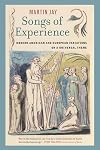
The last five hundred years of Western philosophy have been beguiled by the notion of "authentic experience," and especially how it has been cordoned off from the sensorium of the human mind. In a highly worthy addition to the history of ideas, Martin Jay aims to examine several "modes of experience" - the religious, aesthetic, historical, postmodern among them - so that we might better understand how this precarious category has been understood throughout the history of western thought.
Jay show more begins immediately by distinguishing between the two large, general types of experience called Erlebnis (which is immediate pre-reflective, and personal) and the Ehfahrung (based on sensual impressions and cognitive judgments). In one of the most interesting parts of the book, Jay details how Michel Montaigne reconfigures experience from a set of powers embodied in the human mind to a set of frailties and weaknesses which delimit those powers, hence his famous quip that "to philosophize is to learn how to die." Montaigne's subjective interiority of experience was radically changed during the Scientific Revolution in which the scientific method externalized and objectified sensory data, creating a public sphere of inquiry which had never been in place before the seventeenth century. The chapter progresses as a précis of Western philosophical traditions, with everything from Bacon's emphasis on observation to Kant's positing of a noumenal world that is the "raw material" for our transcendental faculties to feast upon.
Jay then turns to a chapter about the "Appeal of Religious Experience," an examination of Schleiermacher, James, Otto, and Buber. He reads Schleiermacher, as most historians have, as a substantive response to Kant, a sort of anti-Enlightenment personalism, which was continued by the likes of Buber and Otto. His readings of these figures, and his knowledge of the secondary material is extensive to such a degree that he can deftly portray the history of ideas not as something that comes down from "on high," but as a Great Conversation (how old-fashioned is that?)
"History and Experience" explores some of the more popular trends in nineteenth- and twentieth century historiography, including Dilthey's distinction between Naturwissenschaften and Geisteswissenschaften (arguably the distinction that launched modern historiographical discourse as we recognize it today), along with the ideas of Collingwood, Joan Wallach Scott, and Franklin Ankersmit. Collingwood's "The Idea of History" will inevitably be familiar to most, but the Scott and Ankersmit were new to this reader. Scott (coincidently the mother of New York Times film critic A. O. Scott) questions one of the most fundamental assumptions of all historians - the idea of the constituted subject who can entertain historical experience. Instead of taking for granted the idea of the knowing subject upon whom experience impinges itself (as had been done automatically by thinkers from Descartes to Kant), Scott argues the interpretative regimes of the historian are built, a la Foucault, not through a neutral intellective apparatus, but rather are shaped by, and in turn themselves shape, historical events. Franklin Ankersmit offers a subjective historiography of immediacy which blurs the lines between knower and known.
As the book proceeds into Bataille, Foucault, Adorno, and Benjamin, Jay detects a substantive disappearance of experience (at least experience as we have known it before) largely historically situated in the World War I and the years immediately thereafter. This renders the tone of the final chapters into something of a threnody for something lost. show less
Jay show more begins immediately by distinguishing between the two large, general types of experience called Erlebnis (which is immediate pre-reflective, and personal) and the Ehfahrung (based on sensual impressions and cognitive judgments). In one of the most interesting parts of the book, Jay details how Michel Montaigne reconfigures experience from a set of powers embodied in the human mind to a set of frailties and weaknesses which delimit those powers, hence his famous quip that "to philosophize is to learn how to die." Montaigne's subjective interiority of experience was radically changed during the Scientific Revolution in which the scientific method externalized and objectified sensory data, creating a public sphere of inquiry which had never been in place before the seventeenth century. The chapter progresses as a précis of Western philosophical traditions, with everything from Bacon's emphasis on observation to Kant's positing of a noumenal world that is the "raw material" for our transcendental faculties to feast upon.
Jay then turns to a chapter about the "Appeal of Religious Experience," an examination of Schleiermacher, James, Otto, and Buber. He reads Schleiermacher, as most historians have, as a substantive response to Kant, a sort of anti-Enlightenment personalism, which was continued by the likes of Buber and Otto. His readings of these figures, and his knowledge of the secondary material is extensive to such a degree that he can deftly portray the history of ideas not as something that comes down from "on high," but as a Great Conversation (how old-fashioned is that?)
"History and Experience" explores some of the more popular trends in nineteenth- and twentieth century historiography, including Dilthey's distinction between Naturwissenschaften and Geisteswissenschaften (arguably the distinction that launched modern historiographical discourse as we recognize it today), along with the ideas of Collingwood, Joan Wallach Scott, and Franklin Ankersmit. Collingwood's "The Idea of History" will inevitably be familiar to most, but the Scott and Ankersmit were new to this reader. Scott (coincidently the mother of New York Times film critic A. O. Scott) questions one of the most fundamental assumptions of all historians - the idea of the constituted subject who can entertain historical experience. Instead of taking for granted the idea of the knowing subject upon whom experience impinges itself (as had been done automatically by thinkers from Descartes to Kant), Scott argues the interpretative regimes of the historian are built, a la Foucault, not through a neutral intellective apparatus, but rather are shaped by, and in turn themselves shape, historical events. Franklin Ankersmit offers a subjective historiography of immediacy which blurs the lines between knower and known.
As the book proceeds into Bataille, Foucault, Adorno, and Benjamin, Jay detects a substantive disappearance of experience (at least experience as we have known it before) largely historically situated in the World War I and the years immediately thereafter. This renders the tone of the final chapters into something of a threnody for something lost. show less
The Dialectical Imagination: A History of the Frankfurt School and the Institute of Social Research, 1923-1950 (Weimar and Now: German Cultural Criticism) by Martin Jay
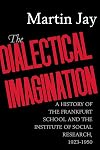
In the early 1920s, a formidable array of intellectual talent coalesced into a group that called themselves the Institut fur Sozialforschung (the Institute for Social Research). They would later come to be known more simply as the Frankfurt School. Consisting mostly of assimilated German Jews, they had a truly impressive body of interests, running from sociology, sinology, philosophy, Marxism, musicology, psychology, and psychoanalysis. Max Horkheimer and Theodor Adorno are probably most show more affiliated with the first generation of the school, but it also included Herbert Marcuse, Erich Fromm, Leo Lowenthal, Paul Lazarsfeld, and Franz Neumann, many of whom are still read today.
But when one does hear the words “Frankfurt School” today, their influence on Marxism is perhaps what most immediately comes to mind. The members thought that the German Social Democratic Party was spineless and ineffective, but equally thought that the Communist party was too hard-lined and ideological. Because of this, their academic work paved a middle course between the bourgeois politics of the Social Democrats and the sclerotic, obsolescent, vulgar Marxism that they perceived in Germany, and which was soon to all but disappear.
Martin Jay uses this book as an opportunity to write a multi-person biography of many of the figures above, interlarded with the objective, measured perspective that I’ve come to know Jay for. (I’ve also read his “Songs of Experience: Modern American and European Variations on a Universal Theme,” which is a philosophical history of experience over the last four hundred years or so, and which I have also reviewed for this site.) He discusses the major work which they produced, including their analysis of Nazism, aesthetic theory and Adorno’s devastating critique of mass culture, and the later more empirical work that came out after World War II. In the last chapter, some of the contributions of Walter Benjamin, a figure more peripherally related to the school but still extraordinarily important in his own right, are more fully fleshed out. In school, I read Benjamin’s “Art in the Age of Mechanical Reproduction” (which I’m sure that every student in a philosophy of art course is made to read), and found that it completely changed some of my assumptions about aesthetic experience. I have several other volumes of Benjamin’s work, including one of media criticism, and Jay’s book has made me much more curious to pick those up.
If there is one complaint that I could level against the book, it would be that Jay pays almost equal attention to everyone, even those figures that few people really read these days. For whatever reason, I thought “history of the Frankfurt School” might mean “a detailed discussion of Horkheimer and Adorno,” with maybe a little Marcuse or Benjamin tossed in for good measure. But he really tells the entire history of the Institute itself, including how it was funded and the minor figures that no one really except for perhaps academic specialists read anymore (like Neumann and Lazarsfeld). If you’re looking for a book that gives a more straightforward account on the major ideas of critical theory and its continuing interdisciplinary influences, this isn’t really the book that you’re looking for – which is what this book seemed to be – this isn’t really the book for you. If this is what you’re more interested in I’ve heard, though I can’t confirm since I haven’t read them, that the Very Short Introduction’s book on the group by Stephen E. Bronner or Thomas Wheatland’s “The Frankfurt School in Exile” might be more appropriate. show less
But when one does hear the words “Frankfurt School” today, their influence on Marxism is perhaps what most immediately comes to mind. The members thought that the German Social Democratic Party was spineless and ineffective, but equally thought that the Communist party was too hard-lined and ideological. Because of this, their academic work paved a middle course between the bourgeois politics of the Social Democrats and the sclerotic, obsolescent, vulgar Marxism that they perceived in Germany, and which was soon to all but disappear.
Martin Jay uses this book as an opportunity to write a multi-person biography of many of the figures above, interlarded with the objective, measured perspective that I’ve come to know Jay for. (I’ve also read his “Songs of Experience: Modern American and European Variations on a Universal Theme,” which is a philosophical history of experience over the last four hundred years or so, and which I have also reviewed for this site.) He discusses the major work which they produced, including their analysis of Nazism, aesthetic theory and Adorno’s devastating critique of mass culture, and the later more empirical work that came out after World War II. In the last chapter, some of the contributions of Walter Benjamin, a figure more peripherally related to the school but still extraordinarily important in his own right, are more fully fleshed out. In school, I read Benjamin’s “Art in the Age of Mechanical Reproduction” (which I’m sure that every student in a philosophy of art course is made to read), and found that it completely changed some of my assumptions about aesthetic experience. I have several other volumes of Benjamin’s work, including one of media criticism, and Jay’s book has made me much more curious to pick those up.
If there is one complaint that I could level against the book, it would be that Jay pays almost equal attention to everyone, even those figures that few people really read these days. For whatever reason, I thought “history of the Frankfurt School” might mean “a detailed discussion of Horkheimer and Adorno,” with maybe a little Marcuse or Benjamin tossed in for good measure. But he really tells the entire history of the Institute itself, including how it was funded and the minor figures that no one really except for perhaps academic specialists read anymore (like Neumann and Lazarsfeld). If you’re looking for a book that gives a more straightforward account on the major ideas of critical theory and its continuing interdisciplinary influences, this isn’t really the book that you’re looking for – which is what this book seemed to be – this isn’t really the book for you. If this is what you’re more interested in I’ve heard, though I can’t confirm since I haven’t read them, that the Very Short Introduction’s book on the group by Stephen E. Bronner or Thomas Wheatland’s “The Frankfurt School in Exile” might be more appropriate. show less
Adorno by Martin Jay
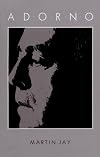
Probably the best general introduction I've read, but nobody is worse done by general introduction than Adorno. Particularly flummoxing is Jay's desire to eliminate Hegel from Adorno's work, and to separate him from Lukacs. He's good on Adorno's debts to Weber and Durkheim, pretty good on the musicology, but bad on the philosophical side of things, and makes some completely misleading claims (e.g., that the non-identical is an end in itself, when Adorno explicitly warns against believing show more that; that the 'exchange principle' is money, while for Adorno it is a/the Concept; that the Dialectic of Enlightenment is making trans-historical claims, when it is explicitly a theory of truth in time.) But it's well written at least. show less
L' immaginazione dialettica. Storia della Scuola di Francoforte e dell'Istituto per le ricerche sociali (1923-1950) by Martin Jay

Titolo: L' immaginazione dialettica. Storia della Scuola di Francoforte e dell'Istituto per le ricerche sociali (1923-1950)
Autore: Martin Jay
Traduttore: Paoli N.
Editore: Einaudi
Collana: Piccola biblioteca Einaudi
Data di Pubblicazione: 1979
ISBN: 8806178717
ISBN-13: 9788806178710
Pagine: XX-515
Reparto: Filosofia > Metafisica e ontologia
Autore: Martin Jay
Traduttore: Paoli N.
Editore: Einaudi
Collana: Piccola biblioteca Einaudi
Data di Pubblicazione: 1979
ISBN: 8806178717
ISBN-13: 9788806178710
Pagine: XX-515
Reparto: Filosofia > Metafisica e ontologia
Awards

You May Also Like


Associated Authors
Statistics
- Works
- 23
- Also by
- 6
- Members
- 1,430
- Popularity
- #17,986
- Rating
- 3.8
- Reviews
- 5
- ISBNs
- 85
- Languages
- 9