
Kathleen G. Nadeau
Author of ADD-Friendly Ways to Organize Your Life [1st ed.]
About the Author
Works by Kathleen G. Nadeau
Still Distracted After All These Years: Help and Support for Older Adults with ADHD (2022) 41 copies, 1 review
Tagged
Common Knowledge
- Gender
- female
Members
Reviews
Still Distracted After All These Years: Help and Support for Older Adults with ADHD by Kathleen Nadeau
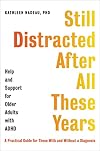
Still Distracted After All These Years, is potentially harmful in many ways.
You wouldn't tell someone with poor eyesight or hearing that they needed to get more exercise, eat better, sleep better, clean their room, watch their finances and just be on time; to help them see better.
It's irresponsible and wrong, to tell people with time blindness (common for those with ADHD) that being on time will help them. That's like telling someone who is always late because they can’t see the numbers on show more the clock that making more of an effort to be ontime will fix their vision. When what they really need is permission to wear glasses or have someone tell them the time.
For those of us with ADHD, achieving, better sleep, diet and exercise is only possible AFTER we have been given understanding of INCUP, executive functioning support, easiest items first, hyper focus, transition time, being allowed to be late (whenever possible... especially when its just a minute or two), sensory overload can be lessened with earplugs, visors, and sunglasses and more. These are our "glassss". And these topics aren't the focus of the book.
The book lists activities that help general physical and mental health... as fixes/help for ADHD.
The danger is that people with ADHD won't function better following the health recommendations... (beyond the general health benefits). But because the book says these things will help ADHD we will shame ourselves and be shamed by others for not getting "better".
Or shame ourselves because we do the activity for two weeks then stop.
The book does mention that people with ADHD are regularly shamed, are adults, and that community is helpful. Focusmate.com and other body doubling resources are listed. Also includes a review of medications. show less
You wouldn't tell someone with poor eyesight or hearing that they needed to get more exercise, eat better, sleep better, clean their room, watch their finances and just be on time; to help them see better.
It's irresponsible and wrong, to tell people with time blindness (common for those with ADHD) that being on time will help them. That's like telling someone who is always late because they can’t see the numbers on show more the clock that making more of an effort to be ontime will fix their vision. When what they really need is permission to wear glasses or have someone tell them the time.
For those of us with ADHD, achieving, better sleep, diet and exercise is only possible AFTER we have been given understanding of INCUP, executive functioning support, easiest items first, hyper focus, transition time, being allowed to be late (whenever possible... especially when its just a minute or two), sensory overload can be lessened with earplugs, visors, and sunglasses and more. These are our "glassss". And these topics aren't the focus of the book.
The book lists activities that help general physical and mental health... as fixes/help for ADHD.
The danger is that people with ADHD won't function better following the health recommendations... (beyond the general health benefits). But because the book says these things will help ADHD we will shame ourselves and be shamed by others for not getting "better".
Or shame ourselves because we do the activity for two weeks then stop.
The book does mention that people with ADHD are regularly shamed, are adults, and that community is helpful. Focusmate.com and other body doubling resources are listed. Also includes a review of medications. show less
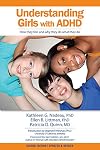
This review originally appeared on my blog at www.gimmethatbook.com.
Many thanks to the author for gifting this book to me. We were introduced by Gina Pera, eminent ADHD advocate and educator. I was sure this book would provide useful information, and I was not disappointed.
Nearly all the books I’ve read about ADHD skews heavily towards males. Everyone is familiar with the stereotype of the energetic little boy, jumping out of his seat in school, and throwing tantrums in the restaurant. show more However, girls can have ADHD too, and the signs may not be as obvious. This book aims to educate parents and teachers about girls with ADHD and what signs to look for.
Nadeau’s tone is just right. There is no endless scientific posturing, no glib New Agey solutions; just honest talk and positive thinking. She also discusses the different way girls are affected by ADHD. For example: the hormonal changes of puberty, famous for wreaking havoc on the most stable female’s world, may cause ADHD symptoms to be seen for the first time. This is important because “these girls do not meet the DSM-5 requirement that evidence of ADHD problems must exist prior to 12 years of age in order to receive and ADHD diagnosis”.
Using case studies and real life examples, Nadeau provides short vignettes of life with an ADHD girl. These serve well to illustrate the point being discussed and parents will be able to see that Carly is not just being a typical teenager, she may have undiagnosed ADHD and need help.
Each chapter builds upon the last one, starting from grammar school all the way up to college. The chapters are further broken down into easy to grasp sections, with titles like “What Teachers See” and “Gender Role Expectations”. A typical tomboy may be a girl struggling with hyperactivity or impulsivity, and the girl everyone knows as a sweet, quiet dreamer may have inattentive ADHD and need help with focusing on her schoolwork. Girls are also at risk for developing secondary issues such as anxiety, eating disorders, and substance abuse. Nadeau offers advice on managing co-morbid syndromes along with the ADHD, using a complete therapy approach–utilizing family and school together. She speaks to the parents, saying not to despair, but to provide an organized environment that will work for a girl’s psyche–don’t just adapt a treatment plan constructed for the male brain. One of her tenets is that ADHD treatment should address quality of life, not just aiming to reduce ADHD symptoms. The two don’t necessarily go hand in hand.
Societal pressure on girls to “have it all” affect them deeply. The quiet, dreamy girls may need help asserting themselves, while the outspoken ones with seemingly no filter will have to be taught how not to alienate their peers. Nadeau is wise to address the minefield that the school years bring to females, who generally have a harder time as they proceed through puberty. She truly is a champion for those that need it the most.
Women have either been getting shortchanged by being told that “girls don’t get ADHD” or forced to fit the description of the male ADHD pattern. Nadeau has done a great service by realizing that girls are different (Mars vs Venus, anyone?) and thus their ADHD will manifest differently as well. The more educated parents are about this quirk of neurobiology, the better off they, and their daughters, will be. show less
Many thanks to the author for gifting this book to me. We were introduced by Gina Pera, eminent ADHD advocate and educator. I was sure this book would provide useful information, and I was not disappointed.
Nearly all the books I’ve read about ADHD skews heavily towards males. Everyone is familiar with the stereotype of the energetic little boy, jumping out of his seat in school, and throwing tantrums in the restaurant. show more However, girls can have ADHD too, and the signs may not be as obvious. This book aims to educate parents and teachers about girls with ADHD and what signs to look for.
Nadeau’s tone is just right. There is no endless scientific posturing, no glib New Agey solutions; just honest talk and positive thinking. She also discusses the different way girls are affected by ADHD. For example: the hormonal changes of puberty, famous for wreaking havoc on the most stable female’s world, may cause ADHD symptoms to be seen for the first time. This is important because “these girls do not meet the DSM-5 requirement that evidence of ADHD problems must exist prior to 12 years of age in order to receive and ADHD diagnosis”.
Using case studies and real life examples, Nadeau provides short vignettes of life with an ADHD girl. These serve well to illustrate the point being discussed and parents will be able to see that Carly is not just being a typical teenager, she may have undiagnosed ADHD and need help.
Each chapter builds upon the last one, starting from grammar school all the way up to college. The chapters are further broken down into easy to grasp sections, with titles like “What Teachers See” and “Gender Role Expectations”. A typical tomboy may be a girl struggling with hyperactivity or impulsivity, and the girl everyone knows as a sweet, quiet dreamer may have inattentive ADHD and need help with focusing on her schoolwork. Girls are also at risk for developing secondary issues such as anxiety, eating disorders, and substance abuse. Nadeau offers advice on managing co-morbid syndromes along with the ADHD, using a complete therapy approach–utilizing family and school together. She speaks to the parents, saying not to despair, but to provide an organized environment that will work for a girl’s psyche–don’t just adapt a treatment plan constructed for the male brain. One of her tenets is that ADHD treatment should address quality of life, not just aiming to reduce ADHD symptoms. The two don’t necessarily go hand in hand.
Societal pressure on girls to “have it all” affect them deeply. The quiet, dreamy girls may need help asserting themselves, while the outspoken ones with seemingly no filter will have to be taught how not to alienate their peers. Nadeau is wise to address the minefield that the school years bring to females, who generally have a harder time as they proceed through puberty. She truly is a champion for those that need it the most.
Women have either been getting shortchanged by being told that “girls don’t get ADHD” or forced to fit the description of the male ADHD pattern. Nadeau has done a great service by realizing that girls are different (Mars vs Venus, anyone?) and thus their ADHD will manifest differently as well. The more educated parents are about this quirk of neurobiology, the better off they, and their daughters, will be. show less
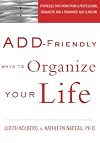
This book was being passed around my university's Disability Services among ADHD and non-ADHD counselors alike. My counselor showed me parts and photocopied a relevant passage. Between the praise and the section I was given, I had to have it and I was not disappointed with the purchase. I was impressed by the differing strategies - which explained why my friends and I always managed to get our teenage rooms cleaner if someone was hanging out with us while we cleaned (something my parents show more were suspicious of). I have passed it on to my professional organizer friends for a different perspective. Definitely worth a buy for the disorganized in your life (especially if it is yourself). show less
This book was being passed around my university's Disability Services among ADHD and non-ADHD counselors alike. My counselor showed me parts and photocopied a relevant passage. Between the praise and the section I was given, I had to have it and I was not disappointed with the purchase. I was impressed by the differing strategies - which explained why my friends and I always managed to get our teenage rooms cleaner if someone was hanging out with us while we cleaned (something my parents show more were suspicious of). I have passed it on to my professional organizer friends for a different perspective. Definitely worth a buy for the disorganized in your life (especially if it is yourself). show less
Lists
Adult ADHD (1)
Awards


You May Also Like


Associated Authors
Statistics
- Works
- 17
- Members
- 1,166
- Popularity
- #22,047
- Rating
- 4.0
- Reviews
- 11
- ISBNs
- 61
- Languages
- 3
- Favorited
- 1