
Max Pinckers
Author of Lotus
Works by Max Pinckers
Tagged
Common Knowledge
There is no Common Knowledge data for this author yet. You can help.
Members
Reviews

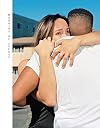
Will They Sing Like Raindrops or Leave Me Thirsty confronts popular notions of eccentric Bollywood-esque romance with the harsh realities of so called ‘love marriages’ in India. With arranged marriages based on caste and religion being the norm, some couples end up being murdered by their own family members. These so called honor killings stem from the belief that the victim has brought shame upon the family name, reputation or prestige if they choose to marry without their consent. Love show more Commandos (lovecommandos.org) is a voluntary organization dedicated to helping ‘lovebirds’ who want to marry for love. On the run and in fear of their lives, they are provided with shelter and protection, an official marriage ceremony, and assistance in setting up a new life. This series documents fugitive couples in the secret shelters of the Love Commandos, caste violence and romance’s relationship to the imagery of Indian cinema. Cinema’s hold on our imagination and the irrepressible yearnings unchained by the image’s capacity to enlist us in willful dreaming reveal the disjuncture between the freedom of images and the rigidity of political will.
Will They Sing Like Raindrops or Leave Me Thirsty was commissioned by EUROPALIA INTERNATIONAL ARTS FESTIVAL for the Indomania exhibition at Bozar - Centre of Fine Arts, Brussels, 2013/2014.
Research and Production by Victoria Gonzalez-Figueras
Reference texts & reviews:
Stanley Wolukau-Wanambwa, Aperture Blog, online, 2016
Francesca Orsi, Yet Magazine, online, 2015
Shilpa Vijayakrishnan, Tasveer Journal, India, 2014
Hans Theys, Will They Sing Like Raindrops or Leave Me Thirsty, Belgium, 2014
Paula Kupfer, Aperture Foundation NY, online, 2014
Kurt Snoekx, Wunderkammer, Agenda Magazine, Belgium, 2014
Colin Pantall, British Journal of Photography magazine, UK, 2013 show less
Will They Sing Like Raindrops or Leave Me Thirsty was commissioned by EUROPALIA INTERNATIONAL ARTS FESTIVAL for the Indomania exhibition at Bozar - Centre of Fine Arts, Brussels, 2013/2014.
Research and Production by Victoria Gonzalez-Figueras
Reference texts & reviews:
Stanley Wolukau-Wanambwa, Aperture Blog, online, 2016
Francesca Orsi, Yet Magazine, online, 2015
Shilpa Vijayakrishnan, Tasveer Journal, India, 2014
Hans Theys, Will They Sing Like Raindrops or Leave Me Thirsty, Belgium, 2014
Paula Kupfer, Aperture Foundation NY, online, 2014
Kurt Snoekx, Wunderkammer, Agenda Magazine, Belgium, 2014
Colin Pantall, British Journal of Photography magazine, UK, 2013 show less
In Margins of Excess the notion of how personal imagination conflicts with generally accepted beliefs is expressed through the narratives of six individuals. Every one of them momentarily received nationwide attention in the US press because of their attempts to realize a dream or passion, but were presented as frauds or deceivers by the mass media’s apparent incapacity to deal with idiosyncratic versions of reality.
Herman Rosenblat became well-known because of a self-invented love-story show more set in a concentration camp during WWII, the private detective Jay J. Armes appears to be a real-life superhero, Darius McCollum drew media attention by compulsively hijacking trains, Richard Heene would have staged an elaborate television hoax, Rachel Doležal would have pretended to be Black, and Ali Alqaisi would have tried to make people believe that he was the ‘hooded man’ in the iconic photo from Abu Ghraib prison. This book weaves together their stories through personal interviews, press articles, archival footage and staged photographs.
The current era of ‘post-truth’, in which truths, half-truths, lies, fiction or entertainment are easily interchanged, has produced a culture of ‘hyper-individual truths’, demanding a new approach to identify the underlying narratives that structure our perception of reality in a world where there is no longer a generally accepted frame of realism. Embedding the stories of the six main protagonists into a clustering tale of cloned military dogs, religious apparitions, suspect vehicles, fake terrorist plots, accidental bombings and fictional presidents, this book follows an associative logic akin to the indiscriminate way a paranoid mind connects unrelated events, or the hysteria of the 24-second news cycle.
In Margins of Excess reality and fiction are intertwined. Not to fool us, but to reveal a more intricate view of our world, which takes into account the subjective and fictitious nature of the categories we use to perceive and define it. And then again: not to celebrate superficiality and contingency, but to pierce through the noise, buzz, pulp, lies, dreams, paranoia, cynicism and laziness and to embrace ‘reality’ in all its complexity. show less
Herman Rosenblat became well-known because of a self-invented love-story show more set in a concentration camp during WWII, the private detective Jay J. Armes appears to be a real-life superhero, Darius McCollum drew media attention by compulsively hijacking trains, Richard Heene would have staged an elaborate television hoax, Rachel Doležal would have pretended to be Black, and Ali Alqaisi would have tried to make people believe that he was the ‘hooded man’ in the iconic photo from Abu Ghraib prison. This book weaves together their stories through personal interviews, press articles, archival footage and staged photographs.
The current era of ‘post-truth’, in which truths, half-truths, lies, fiction or entertainment are easily interchanged, has produced a culture of ‘hyper-individual truths’, demanding a new approach to identify the underlying narratives that structure our perception of reality in a world where there is no longer a generally accepted frame of realism. Embedding the stories of the six main protagonists into a clustering tale of cloned military dogs, religious apparitions, suspect vehicles, fake terrorist plots, accidental bombings and fictional presidents, this book follows an associative logic akin to the indiscriminate way a paranoid mind connects unrelated events, or the hysteria of the 24-second news cycle.
In Margins of Excess reality and fiction are intertwined. Not to fool us, but to reveal a more intricate view of our world, which takes into account the subjective and fictitious nature of the categories we use to perceive and define it. And then again: not to celebrate superficiality and contingency, but to pierce through the noise, buzz, pulp, lies, dreams, paranoia, cynicism and laziness and to embrace ‘reality’ in all its complexity. show less

The Fourth Wall attempts to reveal the influence of fiction on reality through the devotion to cinema in India. Passerby’s in the streets of Mumbai become actors by spontaneously choosing their own roles to perform for the camera. Conscious of the power of images, they give it their all, reflecting on their silver screen dreams by embracing their collective visual world and creating their own brief moments of suspension of disbelief. By weaving these performative photographs with show more still-lives made on actual movie sets, and newspaper articles that deal with some form of transgression between fantasy and reality, the distinction between fiction and fact become blurred and unimportant.
The work’s title refers to a different kind of rupture between reality and the celluloid world. A theatre stage consists of three walls; left, right and back. The fourth wall represents the imaginary screen through which the audience looks at the scenes unfold on stage. The actors, conscious of this barrier, tend to break through it now and then by hinting at their own fiction, acknowledging the camera and the act.
Design by Christof Nüssli
"The sleeper book of the year is Max Pinckers' The Fourth Wall by this emerging young Belgian photographer. It is a very nice production, and this self-published book, on a charmingly cheap newsprint examines the idea of the Indian film world and the escapism of this, alongside a very good set of contemporary images. These two ideas are woven together with great skill and the book just seems to work very well."
– Martin Parr, Photo-eye Book of the Week, July 2013
"Documenting a fiction factory sounds interesting from the beginning but if you do it playing the game yourself it becomes for me the best book of this year. Very simple, modest and extremely well edited, the sequence drives you in and out of reality with beautiful images and a very smart use of the potential I personally see in photography. Max Pinckers nailed it in India."
– Cristina De Middel, Photo-eye's best books of 2013, December 2013
"What a strange and unexpected book. Everything about it seems perfect."
– John Gossage, Photo-eye's best books of 2013, December 2013
"What strikes me most in Max’s work is that he developed a new approach, something I haven’t seen before. He works within a documentary context yet leans towards staged photography, always expressing a form of theatricality. This grey area in between is where Max’s images find themselves."
– Dirk Braeckman, A Stamp of Approval, The Word Magazine, June 2012 show less
The work’s title refers to a different kind of rupture between reality and the celluloid world. A theatre stage consists of three walls; left, right and back. The fourth wall represents the imaginary screen through which the audience looks at the scenes unfold on stage. The actors, conscious of this barrier, tend to break through it now and then by hinting at their own fiction, acknowledging the camera and the act.
Design by Christof Nüssli
"The sleeper book of the year is Max Pinckers' The Fourth Wall by this emerging young Belgian photographer. It is a very nice production, and this self-published book, on a charmingly cheap newsprint examines the idea of the Indian film world and the escapism of this, alongside a very good set of contemporary images. These two ideas are woven together with great skill and the book just seems to work very well."
– Martin Parr, Photo-eye Book of the Week, July 2013
"Documenting a fiction factory sounds interesting from the beginning but if you do it playing the game yourself it becomes for me the best book of this year. Very simple, modest and extremely well edited, the sequence drives you in and out of reality with beautiful images and a very smart use of the potential I personally see in photography. Max Pinckers nailed it in India."
– Cristina De Middel, Photo-eye's best books of 2013, December 2013
"What a strange and unexpected book. Everything about it seems perfect."
– John Gossage, Photo-eye's best books of 2013, December 2013
"What strikes me most in Max’s work is that he developed a new approach, something I haven’t seen before. He works within a documentary context yet leans towards staged photography, always expressing a form of theatricality. This grey area in between is where Max’s images find themselves."
– Dirk Braeckman, A Stamp of Approval, The Word Magazine, June 2012 show less

Controversy addresses the polemic of photojournalism's ethical credibility by engaging in the discussion surrounding Robert Capa’s Falling Soldier and confronting it with a scientific approach. Capa took his iconic photograph during the Spanish Civil War in 1936, capturing the very moment a soldier is shot in the head, making it one of the first images of war in action. The authenticity of this image has been questioned since its creation, although the story that accompanies it is simply show more too compelling to not be believed.
A recent study by professor José Manuel Susperregui, based on orographic analysis, indicates that this photograph was made elsewhere than Capa had originally claimed. This would place Capa far from the front lines, making it unlikely that the soldiers he was accompanying met any resistance, thus arguing that the photograph was staged.
Controversy is a registration of this newly defined location. A photomontage produced with scanning technology that is normally applied to the reproduction of paintings and rendered in unusually high resolution with no interpolation. This approach paraphrases the empirical methodology of drawing conclusions from a vast amount of collected data. show less
A recent study by professor José Manuel Susperregui, based on orographic analysis, indicates that this photograph was made elsewhere than Capa had originally claimed. This would place Capa far from the front lines, making it unlikely that the soldiers he was accompanying met any resistance, thus arguing that the photograph was staged.
Controversy is a registration of this newly defined location. A photomontage produced with scanning technology that is normally applied to the reproduction of paintings and rendered in unusually high resolution with no interpolation. This approach paraphrases the empirical methodology of drawing conclusions from a vast amount of collected data. show less
You May Also Like
Associated Authors
Statistics
- Works
- 9
- Members
- 42
- Popularity
- #357,756
- Rating
- 4.0
- Reviews
- 9
- ISBNs
- 10
- Languages
- 2