
J. Crump (1)
Author of Chinese Theater in the Days of Kublai Khan
For other authors named J. Crump, see the disambiguation page.
J. Crump (1) has been aliased into James Irving Crump jr..
Works by J. Crump
Works have been aliased into James Irving Crump jr..
Tagged
Common Knowledge
There is no Common Knowledge data for this author yet. You can help.
Members
Reviews
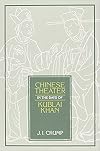
The subject is enchanting, and he's a jovial writer. I did feel the lack of social context: most of this is about the Play Itself. There's a brief explanation of why actors and playwrights not only survived but thrived in the chaos of Mongol conquest; and a quick look at Jin, or Jurchen China, another northern people known for musicality, whose narrative songs part-explain the sudden effusion of music drama with the Mongols who succeeded them. I'd have liked more about why these distinct show more societies encouraged theatre. But I'll keep in mind this is from 1980; I think more investigation has been done.
On the plays, or operas if you like since they are strung together on arias. Pantomime, acrobatics; a self-consciousness of art, with direct address to the audience or offstage interjections as if from the audience, jokes with the stage conventions – as he points out, you have to size these up alongside the Elizabethan age, say, and not our 'illusion-of-reality' theatre. They sound a bunch of fun. We have 182 extant and he translates three (he's also lavish with scenes in the text). A few of the comic sketches remain seriously funny, but you have to use your imagination, for music and performance were at the forefront. He does everything he can to resurrect the theatricality, deducing and speculating from clues how the plays worked or were experienced.
Often he calls them variety shows. This is a popular entertainment that “draws upon an elegantly polished literary tradition for its verse and utilizes the most pungent gutter idiom in dialogue or verse when it wishes contrast. It regularly includes song, declaimed verse, entrance and exit couplets and quatrains, slang, ordinary speech, rhythmic but unrhymed passages, and the whole gamut of theatrical accompaniments, including acrobatics, dance, lavish costuming, and stylized miming. Its tone ranges from farce through extravaganza to something akin to tragedy, and often these are combined in a single work.”
Have to say I love that inclusiveness, or is that expansion of art? At the start of one chapter he quotes a book on The Genius of Early English Theatre: “Prose theatre... usually lacks, as earlier drama does not, the element of play, of fun... The awareness that a drama is a play and an actor a player... [earlier drama] asks that the audience participate in the world on the stage and recognize that it is a sort of playful adult make-believe.” Amen. Give me old theatre. show less
On the plays, or operas if you like since they are strung together on arias. Pantomime, acrobatics; a self-consciousness of art, with direct address to the audience or offstage interjections as if from the audience, jokes with the stage conventions – as he points out, you have to size these up alongside the Elizabethan age, say, and not our 'illusion-of-reality' theatre. They sound a bunch of fun. We have 182 extant and he translates three (he's also lavish with scenes in the text). A few of the comic sketches remain seriously funny, but you have to use your imagination, for music and performance were at the forefront. He does everything he can to resurrect the theatricality, deducing and speculating from clues how the plays worked or were experienced.
Often he calls them variety shows. This is a popular entertainment that “draws upon an elegantly polished literary tradition for its verse and utilizes the most pungent gutter idiom in dialogue or verse when it wishes contrast. It regularly includes song, declaimed verse, entrance and exit couplets and quatrains, slang, ordinary speech, rhythmic but unrhymed passages, and the whole gamut of theatrical accompaniments, including acrobatics, dance, lavish costuming, and stylized miming. Its tone ranges from farce through extravaganza to something akin to tragedy, and often these are combined in a single work.”
Have to say I love that inclusiveness, or is that expansion of art? At the start of one chapter he quotes a book on The Genius of Early English Theatre: “Prose theatre... usually lacks, as earlier drama does not, the element of play, of fun... The awareness that a drama is a play and an actor a player... [earlier drama] asks that the audience participate in the world on the stage and recognize that it is a sort of playful adult make-believe.” Amen. Give me old theatre. show less
Songs from Xanadu: Studies in Mongol Dynasty Song-Poetry (San-ch'u) (Michigan Monographs in Chinese Studies) by J. Crump

The reasoned, and to mind completely right attack on modern translators who excuse themselves for not rhyming either because chinese has too much rhyme for english to match or because they are modernists who think rhyme dates poetry, is itself worth the price of the book. How wonderful to have a playful professor with the guts to rhyme. I borrowed a ribald poem with the word "meat-stick" in it, to drum out the last chapter of my Orientalism & Occidentalism -- Is the Mistranslation of Culture show more Inevitable?" His smaller "Song-poems from Xanadu" are also delightful. I wish he were still here with us. show less
James Crump is an expert in the study of Yuan Dynasty theatre, and this volume provides the most complete introductory study of the rich dramatic tradition that the Yuan Dynasty produced. Crump recreates the whole world of the Yuan theatre from its staging and costumes to its music and social milieu that gave rise to this genre.
This volume also includes Li K'uei Carries Thorns, Rain on the Hsiao-hsiang, and The Mo-ho-lo Doll in a lively and readable translation that truly captures the show more spirit of Mongol drama.
Crump writes in an amicable and conversational tone, yet does not hide his scholarship, so this volume rightfully is the apex of research into Yuan drama and will benefit both scholar and layperson alike. show less
This volume also includes Li K'uei Carries Thorns, Rain on the Hsiao-hsiang, and The Mo-ho-lo Doll in a lively and readable translation that truly captures the show more spirit of Mongol drama.
Crump writes in an amicable and conversational tone, yet does not hide his scholarship, so this volume rightfully is the apex of research into Yuan drama and will benefit both scholar and layperson alike. show less
Legends of the Warring States: Persuasions, Romances, and Stories from Chan-kuo Ts'e (Michigan Monographs in Chinese Stu by J. Crump
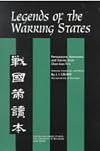
Very lively early anecdotes of Chinese politics before the Qin unification
Statistics
- Works
- 3
- Members
- 32
- Popularity
- #430,837
- Rating
- 4.0
- Reviews
- 4
- ISBNs
- 8