
Jean-Pierre Pécau
Author of The Secret History Volume 1 (The Secret History Omnibus)
About the Author
Series
Works by Jean-Pierre Pécau
Jour J, Tome 5 : Qui a tué le président ? : 22 Novembre 1973 : l'Amérique sous le choc après l'assassinat de Dallas (2011) 26 copies, 1 review
Histoire secrètes T15 La chambre d'Ambre (DELC.NEOPOLIS) (French Edition) (2009) 14 copies, 1 review
Genesis 3 copies
Sherlock Holmes et les mystères de Londres 2. Le retour de Spring-Heeled Jack (2024) — Author — 3 copies
Ghost war T01 - L'Aube rouge 1 copy
Ghost war T02: Faucon blanc 1 copy
La Grande Quête (Keltos, #2) 1 copy
Empire, 04: De Mutator 1 copy
Tagged
Common Knowledge
- Birthdate
- 1955-07-27
- Gender
- male
- Occupations
- Scénariste (Bandes dessinées)
- Nationality
- France
- Birthplace
- Paris, Île-de-France, France
- Map Location
- France
Members
Reviews
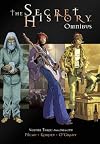
Back in prehistory, twin sisters Reka and Aker, and their brothers Dyo and Erlin, are each given a rune by the tribe’s shaman to safeguard the runes from an attack by a tribe of… Neanderthals? The Secret History follows the four, who are now immortal, through human history, their various struggles, between themselves and against others, and their attempts to direct human history toward their own ends. During the fourteenth century, William of Lecce is born, and proves to have similar show more powers… and becomes their enemy (although Dyo occasionally fights on his side). Later, the mythical city of Kor, located either in the Empty Quarter or another dimension, begins to influence human affairs. Pécau has done an extremely clever job of tying his story of secret magical combat by immortals into real history, but unfortunately the story skips about so much it’s often hard to figure out the actual narrative. This is not helped by Archaia’s decision to only translate and publish The Secret History and not the two pendant bandes dessinées, Arcanes majeur and Arcanes. They’re also some way behind – Volume 3, published last year, covers albums 15 to 20, but the series is actually currently up to 32. (Volume 3 was a recent purchase, incidentally, but I had to reread 1 and 2 before tackling it.) I suppose if I’m going to keep on reading bandes dessinées there’s little point in doing so in English – I should get the original French editions instead. Anyway, for all its faults I like The Secret History and plan to keep on reading it. show less

Not as strong as previous volumes, but still quite entertaining. Nice, oblique touch on the Armenian genocide, just short of on-the-nose. Overall, a strong addition to the series, with many new questions posed.

I feel a little bad for not liking this book more. It started out with a very intriguing premise--a group of immortal adventurers travel through the millennia, carrying a set of ancient relics that grant them vast powers to influence humanity and history from behind the scenes of the history books. But an intriguing premise is about all it had.
The art was good, and I'm sure to a certain extent the shortcomings I found with the rest could be blamed on the fact that the volume I read was not show more in its original French, but I've read enough originally French comics to know that only so much is really lost in translation before you can pinpoint poor writing as the culprit. Very little is explained about the protagonists. We see their village being destroyed, and their shaman entrusting them with the runestones, but nothing is ever said about where the runestones come from, how they work, or why the shaman wears and uses all of them at the same time even though on the same page he cautions the four protagonists to never use or wear more than one at a time--and a few short pages later they do use them all simultaneously to disastrous results. Likewise, hardly anything is said or shown of the protagonists' personalities or relationships with each other when they are first introduced, so when we jump several thousand years to their sabbatical in ancient Egypt, their interactions with one another seem stilted and exaggerated.
The name of the book itself seems like a terrible misnomer to me. There is nothing historical about either the plot or the setting. While it is ostensibly set in ancient Egypt, it is actually biblical Egypt, which bears very little resemblance to the real thing, and most of the events set in motion or influenced by the four protagonists are biblical events of mythic fantasy rather than actual historical events--which ends up feeling pretty contrived by the end of the 10 plagues and the parting of the Red Sea, rather than particularly clever or original. I also have trouble buying that the "secret" part of the title has anything to do with the contents of the book either. Four petulant siblings with the power to kill dozens at the drop of a hat or raise an army of demon anthropomorphic jackals from the sand, sitting at the right hand of Pharaoh or reigning as local gods with temples and all associated trappings, and we're supposed to believe that somehow they were just left out of the historical record? Secret history, my Aunt Fanny!
All that said, if only it were better written and/or translated, and if only it didn't have so many plot holes and continuity errors, it's just close enough to interesting that I would actually pick up the next volume and give it another chance. As it stands, however, I think I'd prefer to leave Pécau be for now, and see if I can find someone else who has given the premise a better treatment. show less
The art was good, and I'm sure to a certain extent the shortcomings I found with the rest could be blamed on the fact that the volume I read was not show more in its original French, but I've read enough originally French comics to know that only so much is really lost in translation before you can pinpoint poor writing as the culprit. Very little is explained about the protagonists. We see their village being destroyed, and their shaman entrusting them with the runestones, but nothing is ever said about where the runestones come from, how they work, or why the shaman wears and uses all of them at the same time even though on the same page he cautions the four protagonists to never use or wear more than one at a time--and a few short pages later they do use them all simultaneously to disastrous results. Likewise, hardly anything is said or shown of the protagonists' personalities or relationships with each other when they are first introduced, so when we jump several thousand years to their sabbatical in ancient Egypt, their interactions with one another seem stilted and exaggerated.
The name of the book itself seems like a terrible misnomer to me. There is nothing historical about either the plot or the setting. While it is ostensibly set in ancient Egypt, it is actually biblical Egypt, which bears very little resemblance to the real thing, and most of the events set in motion or influenced by the four protagonists are biblical events of mythic fantasy rather than actual historical events--which ends up feeling pretty contrived by the end of the 10 plagues and the parting of the Red Sea, rather than particularly clever or original. I also have trouble buying that the "secret" part of the title has anything to do with the contents of the book either. Four petulant siblings with the power to kill dozens at the drop of a hat or raise an army of demon anthropomorphic jackals from the sand, sitting at the right hand of Pharaoh or reigning as local gods with temples and all associated trappings, and we're supposed to believe that somehow they were just left out of the historical record? Secret history, my Aunt Fanny!
All that said, if only it were better written and/or translated, and if only it didn't have so many plot holes and continuity errors, it's just close enough to interesting that I would actually pick up the next volume and give it another chance. As it stands, however, I think I'd prefer to leave Pécau be for now, and see if I can find someone else who has given the premise a better treatment. show less
You May Also Like


Associated Authors
Statistics
- Works
- 212
- Members
- 1,472
- Popularity
- #17,453
- Rating
- 3.3
- Reviews
- 17
- ISBNs
- 330
- Languages
- 9