
John Michael Greer
Author of The Element Encyclopedia of Secret Societies
About the Author
John Michael Greer has been a student of occult traditions and nature spirituality for more than twenty-five years. He began following the Druid path in 1993 with initiation in the Order of Bards, Ovates, and Druids (OBOD). Greer is the author of numerous books. He lives with his wife, Sara, in show more Providence, Rhode Island. show less
Series
Works by John Michael Greer
The Occult Book: A Chronological Journey from Alchemy to Wicca (Sterling Chronologies) (2017) 281 copies, 1 review
Learning Ritual Magic: Fundamental Theory and Practice for the Solitary Apprentice (2004) 130 copies
Paths of Wisdom: Principles and Practice of the Magical Cabala in the Western Tradition (1996) 106 copies, 1 review
The Art and Practice of Geomancy: Divination, Magic, and Earth Wisdom of the Renaissance (2009) 105 copies
The Celtic Golden Dawn: An Original & Complete Curriculum of Druidical Study (2013) 90 copies, 1 review
Green Wizardry: Conservation, Solar Power, Organic Gardening, and Other Hands-On Skills From the Appropriate Tech Toolkit (2013) 87 copies
The Conspiracy Book: A Chronological Journey through Secret Societies and Hidden Histories (Union Square & Co. Chronologies) (2018) 84 copies, 2 reviews
Dark Age America: Climate Change, Cultural Collapse, and the Hard Future Ahead (2016) 77 copies, 2 reviews
Decline and Fall: The End of Empire and the Future of Democracy in 21st Century America (2014) 63 copies, 1 review
The Druid Path: A Modern Tradition of Nature Spirituality (Volume 11) (The Modern-Day Witch) (2022) 59 copies
Secrets of the Lost Symbol: The Unauthorized Guide to Secret Societies, Hidden Symbols & Mysticism (2009) 42 copies, 1 review
Apocalypse Not: Everything You Know About 2012, Nostradamus and the Rapture Is Wrong (2011) 30 copies, 1 review
The Druid Grove Handbook: A Guide to Ritual in the Ancient Order of Druids in America (2011) 30 copies
The Secret of the Temple: Earth Energies, Sacred Geometry, and the Lost Keys of Freemasonry (2016) 29 copies, 2 reviews
Not the Future We Ordered: Peak Oil, Psychology, and the Myth of Progress (2013) 24 copies, 1 review
THE DOLMEN ARCH A Study Course in the Druid Mysteries volume 1 The Lesser Mysteries (2022) 14 copies
The Ceremony of the Grail: Ancient Mysteries, Gnostic Heresies, and the Lost Rituals of Freemasonry (2022) 11 copies, 1 review
The Secret of the Five Rites: In Search of a Lost Western Tradition of Inner Alchemy (2023) 11 copies
The Litany of the Tree of Life: In the Tradition of The Druidical Order of the Golden Dawn (2022) 9 copies
A Commentary on 'The Cosmic Doctrine': Understanding Dion Fortune’s Masterpiece of Spiritual Creation and Evolution (2023) 8 copies, 1 review
The UFO Chronicles: How Science Fiction, Shamanic Experiences, and Secret Air Force Projects Created the UFO Myth (2020) 8 copies
Modern Cabala: A Radical New Way to See and Use the Tree of Life for Magic, Pathworking, and Meditation (2025) 6 copies
The DOLMEN ARCH a Study Course in the Druid Mysteries Volume 2 the Greater Mysteries (2023) 5 copies
The Witch of Criswell: An Ariel Moravec Occult Mystery (The Ariel Moravec Occult Detective Series, 1) (2023) 5 copies, 1 review
The Dolmen Arch Volume 2 The Greater Mysteries (Limited Edition of 550 Copies) (Signed Copy) 5 copies
The Book of Haatan: An Ariel Moravec Occult Mystery (The Ariel Moravec Occult Detective Series, 2) (2024) 4 copies, 1 review
Coelbren: Traditions, Divination Lore, and Magic of the Welsh Bardic Alphabet - Revised and Expanded Edition (2023) 4 copies
The Astrology of Nations: Casting and Interpreting Charts for Nations, Politics, and Economies (2025) 4 copies
The Secret of the Temple: Earth Energies, Sacred Geometry, and the Lost Keys of Freemasonry - Revised Edition (2026) 3 copies
XVI 3 copies
The Archdruid Report: Appropriate Technologies: Collected Essays, Volume V, 2011 (The Complete Archdruid Report) (Volume 5) (2018) 2 copies
The Carnelian Moon: An Ariel Moravec Occult Mystery (The Ariel Moravec Occult Detective Series, 3) (2025) 2 copies, 1 review
The Archdruid Report: Imperial Twilight: Collected Essays, Volume VI, 2012 (The Complete Archdruid) (Volume 6) (2018) 2 copies, 1 review
Merlin's Wheel 2 copies
Le livre des sociétés secrètes - Des Templiers au nouvel ordre mondial: Des Templiers au nouvel ordre mondial (2020) 1 copy
The House of Crows 1 copy
The Archdruid Report: The Twilight of Progress: Collected Essays, Volume IX, 2015 (The Complete Archdruid Report) (Volume 9) (2018) 1 copy
The Archdruid Report: Facing A Hard Future: Collected Essays, Volume VIII, 2014 (The Complete Archdruid Report) (Volume 8) (2018) 1 copy
The Archdruid Report: Green Wizardries: Collected Essays, Volume IV, 2010 (The Complete Archdruid Report) (2017) 1 copy
Yeşil büyücülük 1 copy
The Archdruid Report: Natural Economics: Collected Essays, Volume III, 2009 (The Complete Archdruid Report) (Volume 3) (2017) 1 copy
The Archdruid Report: The Ecology of Collapse: Collected Essays, Volume II, 2008 (The Complete Archdruid Report) (Volume 2) (2017) 1 copy
The Archdruid Report: The Coming of Peak Oil: Collected Essays, Volume I, 2006-2007 (The Compete Archdruid Report) (2017) 1 copy
The Archdruid Report: The Myth of Progress: Collected Essays, Volume VII, 2013 (The Complete Archdruid Report) (Volume 7) (2018) 1 copy
The Corpus Hermeticum 1 copy
Associated Works
Ghayat Al-Hakim: Picatrix: The Goal of the Wise (1000) — Translator, some editions — 337 copies, 4 reviews
Freemasonry: Rituals, Symbols & History of the Secret Society (2007) — Contributor — 85 copies, 3 reviews
Collapsing Consciously: Transformative Truths for Turbulent Times (Sacred Activism) (2013) — Foreword, some editions — 29 copies
How to Become a Mage: A Fin-de-Siecle French Occult Manifesto (1892) — Foreword, some editions — 21 copies
Tagged
Common Knowledge
- Birthdate
- 1962
- Gender
- male
- Education
- University of Washington (BA|Comparative History of Ideas)
Western Washington University - Occupations
- author
druid
occultist
blogger
teacher
freemason (show all 7)
freelance author - Organizations
- Ancient Order of Druids in America (AODA)
Order of Bards, Ovates and Druids (OBOD)
Reformed Druids of North America (RDNA)
Druidical Order of the Golden Dawn (DOGD) - Awards and honors
- Mount Haemus Award, OBOD (2003)
- Short biography
- John Michael Greer (Western Maryland) has been a student of occult traditions and the unexplained for more than thirty years. A Freemason, a student of geomancy and sacred geometry, and a widely read blogger, he is also the author of numerous books, including Monsters, The New Encyclopedia of the Occult and Secrets of the Lost Symbol, and currently serves as the Grand Archdruid of the Ancient Order of Druids in America (AODA), a contemporary school of Druid nature spirituality. Greer has contributed articles to Renaissance Magazine, Golden Dawn Journal, Mezlim, New Moon Rising, Gnosis, and Alexandria.
- Nationality
- USA
- Birthplace
- Bremerton, Washington, USA
- Places of residence
- Cumberland, Maryland, USA
Seattle, Washington, USA
East Providence, Rhode Island, USA - Associated Place (for map)
- USA
Members
Discussions
From the arch-druid in Pro and Con (March 2016)
Reviews
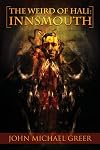
To quote the inimitable Firesign Theatre, "Everything you know is wrong." Owen Merrill, Army veteran turned graduate student at Miskatonic University is writing his thesis in the History of Ideas on the works of H.P. Lovecraft. But strange things start to happen to him after he discovers a previously unknown letter about Lovecraft's occult interests. Then a newly forming department at the university seems oddly determined to recruit him. A visit to Innsmouth, setting for certain of show more Lovecraft's tales does nothing to dispel the oddness. Gradually he realizes that reality is not as he has assumed and choices must be made. When it comes to life vs. rationality, whose side are you on? show less

John Michael Greer brings a logical and informed mind, an educated skepticism and a willingness to research all sides of an issue to the question of UFOs. He refuses to reduce the question to the extraterrestrial vs. the null (nothing is happening) hypotheses. His conclusions, may indeed irritate both sides. His suggestion that several of the larger UFO flaps may have been produced and publicized by US armed forces to cover the testing of high technology flight seems more than reasonable. He show more rounds off his arguments by proposing seven falsifiable predictions. It will be interesting to how these play out. Even if you are not interested in UFOs, this is a valuable study of how social movements and belief systems are formed. show less
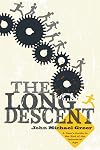
'The Long Descent' makes a very valuable point that deserves wider consideration: that presently there are two main narratives of the future, endless economic growth and material accumulation vs apocalyptic collapse, chaos, and die-off. Both are mythic stories of a sort, linked to and influenced by religious traditions. Neither forms a realistic or helpful assessment of what is actually likely to happen in years to come. Greer systematically critiques these unrealistically optimistic and show more pessimistically survivalist positions very effectively.
Greer concentrates his discussion almost exclusively on peak oil, pointing out that other sources of energy, renewable and otherwise, rely on oil as a key support, for instance to the manufacture of power station machinery, the mining of coal, and the transport of gas. In some ways, the arguments he puts forward would be strengthened by more coverage of climate change. It is mentioned as an aggravating factor to energy shortages, but in my view not given the weight it deserves in his theory of collapse. On the other hand, I think that the extremes of weather that climate change brings weaken any predictions of the future, however circumspect. It's also fair to say that peak oil and climate change are closely linked issues, and a lot of Greer's points apply just as well to both.
As well as applying a theoretical approach, known as catabolic collapse, to the present, Greer sets out practical things that people can do now to prepare for the Long Descent into a future of expensive energy. These chapters reinforced something I have thought a lot about; that America is screwed in a future of peak oil and rapid climate change. The built environment, economy, society, and culture is wholly dependent upon cheap oil. Climate change will likely bring drought to its agricultural areas and terrible storms to its densely populated cities. Moreover, the populace possesses 300 million guns. It seems more legitimate to tend towards a more apocalyptic vision of the future if you're in the US, frankly. Reading this book reminded me how lucky I am to live in Europe.
In addition to the sparse references to climate change, I felt this book was lacking consideration of the ways in which a catabolic collapse in the developed world of the 21st century would differ from that of, say, the Roman Empire or the Mayans. Greer considers a variety of such historical parallels, without discussing the unique aspects of life today. For instance, could the internet survive peak oil and for how long? I am genuinely curious about this. Also, surely we should be looking to the developing world for lessons upon how to live in a less resource-intensive manner? Cuba, for instance, manages to keep its populace amazingly healthy despite being very poor in financial and resource terms. I like it when books make me think of further questions to research elsewhere, however, and this book is only 240 pages long so cannot cover vast amounts of ground.
There is much to be said for writers that acknowledge peak oil and climate change are not information deficit problems (in other words, if the public & politicians knew the true facts & costs they would act rationally to deal with both). Academic work, especially in more quantitative fields, has a foolish tendency to assume this. Rather, peak oil and climate change are predicaments that will inevitably arrive sooner or later, which cannot be adequately addressed without shifting the infinite-growth-and-progress mythos to something more pragmatic. Greer understands this well. He's also a druid, but I don't hold it against him. show less
Greer concentrates his discussion almost exclusively on peak oil, pointing out that other sources of energy, renewable and otherwise, rely on oil as a key support, for instance to the manufacture of power station machinery, the mining of coal, and the transport of gas. In some ways, the arguments he puts forward would be strengthened by more coverage of climate change. It is mentioned as an aggravating factor to energy shortages, but in my view not given the weight it deserves in his theory of collapse. On the other hand, I think that the extremes of weather that climate change brings weaken any predictions of the future, however circumspect. It's also fair to say that peak oil and climate change are closely linked issues, and a lot of Greer's points apply just as well to both.
As well as applying a theoretical approach, known as catabolic collapse, to the present, Greer sets out practical things that people can do now to prepare for the Long Descent into a future of expensive energy. These chapters reinforced something I have thought a lot about; that America is screwed in a future of peak oil and rapid climate change. The built environment, economy, society, and culture is wholly dependent upon cheap oil. Climate change will likely bring drought to its agricultural areas and terrible storms to its densely populated cities. Moreover, the populace possesses 300 million guns. It seems more legitimate to tend towards a more apocalyptic vision of the future if you're in the US, frankly. Reading this book reminded me how lucky I am to live in Europe.
In addition to the sparse references to climate change, I felt this book was lacking consideration of the ways in which a catabolic collapse in the developed world of the 21st century would differ from that of, say, the Roman Empire or the Mayans. Greer considers a variety of such historical parallels, without discussing the unique aspects of life today. For instance, could the internet survive peak oil and for how long? I am genuinely curious about this. Also, surely we should be looking to the developing world for lessons upon how to live in a less resource-intensive manner? Cuba, for instance, manages to keep its populace amazingly healthy despite being very poor in financial and resource terms. I like it when books make me think of further questions to research elsewhere, however, and this book is only 240 pages long so cannot cover vast amounts of ground.
There is much to be said for writers that acknowledge peak oil and climate change are not information deficit problems (in other words, if the public & politicians knew the true facts & costs they would act rationally to deal with both). Academic work, especially in more quantitative fields, has a foolish tendency to assume this. Rather, peak oil and climate change are predicaments that will inevitably arrive sooner or later, which cannot be adequately addressed without shifting the infinite-growth-and-progress mythos to something more pragmatic. Greer understands this well. He's also a druid, but I don't hold it against him. show less

Greer takes an unconventional look at the elections of 2016 and 2020. First he analyses the current political scene on the premise that both the Democrats and the Republicans have embraced a philosophy that ignored the needs of working class Americans by off-shoring manufacturing, free trade agreements, unrestricted illegal immigration and other policies that deprived the wage classes of full time, well paying jobs. Such policies however favored the salary class of college educated urban show more workers in both government and private enterprise. Further, the elites heap scorn on the wage classes, blaming them for the stagnation and decline. In Greer's view Trump deliberately played on this and many people, tired of voting for the lesser of evils decided to vote for someone who was not part of the establishment. What makes this book more than a conventional political analysis is that Greer pays attention to the chans--the people on the internet boards that were anonymous and provided a place for censor free discussion. Various "coincidences" convinced some of the chan posters that their use of chaos magic was affecting real events--such as H. Clinton's near collapse after a speech at the World Trade Center commemoration. Trumps victory was followed in turn by left wing magicians attempting to get rid of Trump or to do things such as block the nomination of Judge Kavanaugh, with notable lack of success. It would be an understatement to note that Greer's take on the politics of recent times is controversial. Read it and make up your own mind. show less
Lists
You May Also Like


Associated Authors
Statistics
- Works
- 143
- Also by
- 9
- Members
- 5,142
- Popularity
- #4,844
- Rating
- 4.0
- Reviews
- 113
- ISBNs
- 248
- Languages
- 11
- Favorited
- 15