
Aleister Crowley (1875–1947)
Author of The Book of Thoth: A Short Essay on the Tarot of the Egyptians
About the Author
Aleister Crowley was born Edward Alexander Crowley in Leamington Spa, England on October 12, 1875. His parents belonged to the Plymouth Brethren, a strict fundamentalist Christian sect, so he was raised with a thorough knowledge of the Bible. He attended Trinity College at Cambridge University, but show more left before completing his degree. He became a member of the Hermetic Order of the Golden Dawn, an occult society which taught magic, qabalah, alchemy, tarot, and astrology, in 1898, but the group disbanded in 1900. In 1903, he married Rose Kelly, who began entering trance states and sending him messages from Horus, an Egyptian god. These messages formed the first three chapters of The Book of the Law, which introduced Crowley's main concept of Thelema. He founded his own occult society. He was a prolific writer, who published works on a wide variety of topics. His works include The Book of Thoth, The Vision and the Voice, 777 and Other Qabalistic Writings, The Book of Lies, Little Essays Toward Truth, and The Confessions of Aleister Crowley. He also wrote fiction including plays, novels, and poems. His fictional works include Moonchild, Diary of a Drug Fiend, The Stratagem and Other Stories, White Stains, Clouds without Water, and Hymn to Pan. Three of his compositions, The Quest, The Neophyte, and The Rose and the Cross were included in the 1917 collection The Oxford Book of English Mystical Verse. He died on December 1, 1947 at the age of 72. (Bowker Author Biography) show less
Series
Works by Aleister Crowley
The Law Is For All: The Authorized Popular Commentary of Liber Al Vel Legis Sub Figura CCXX, the Book of the Law (1975) 347 copies, 1 review
The Vision & the Voice With Commentary and Other Papers: The Collected Diaries of Aleister Crowley, 1909-1914 E.V. (Equinox) (1998) 217 copies
Commentaries on the Holy Books and Other Papers: The Equinox (Equinox, Vol 4, No 1) (1996) 184 copies, 1 review
The Three Magical Books of Solomon: The Greater and Lesser Keys & The Testament of Solomon (2017) 105 copies
The Works of Aleister Crowley: With Portraits (Collected Works of Aleister Crowley) VOLUME 2 (1974) 92 copies
The Works of Aleister Crowley: With Portraits (Collected Works of Aleister Crowley) (1974) 92 copies
The Works of Aleister Crowley: With Portraits (Collected Works of Aleister Crowley) Vol. Three (1974) 81 copies
The I Ching: A New Translation of the Book of Changes by the Master Therion (2004) 41 copies, 1 review
The Writings of Aleister Crowley: The Book of Lies, The Book of the Law, Magick and Cocaine (2018) 32 copies
A Symbolic Representation of the Universe: Derived by Doctor John Dee Through the Scrying of Sir Edward Kelly (2001) 10 copies
Amor Divina — Author — 10 copies
The Writings of Aleister Crowley 2 (Annotated): White Stains, The Psychology of Hashish and The Blue Equinox (2019) 10 copies
The Aleister Crowley Collection (Annotated): The Book of the Law, The Book of Lies and Diary of a Drug Fiend (2014) 9 copies
Heart of the Master 8 copies
Hasheesh: The Herb Dangerous; High Writings of Aleister Crowley and Other Celebrated Haschischins of the Early Twentieth Century Vol. I (1974) 8 copies
The Aleister Crowley Collection: 5-Book Paperback Boxed Set (Arcturus Classic Collections) (2023) 8 copies
Hymn to Pan 7 copies
The Equinox: Volume 3, Numbers 3 & 4 7 copies
Duty 7 copies
Rituale Corvorum : Containing the Common Ceremonial and Codified Conduct of Cultic Crowleyanity (2022) 5 copies
Thelemic Magick Unexpurgated / Commented - Part 1 (Being The Oriflamme, Volume VI Number 5) (1987) 5 copies
Simon Iff: The Big Game 4 copies
The Soldier & the Hunchback 4 copies
The Writings of Aleister Crowley 3 (Annotated): Konx Om Pax, Essays on Intoxication and Diary of a Drug Fiend (2021) 4 copies
Jack the Ripper 4 copies
Yi King 4 copies
The High History of the Good Sir Palamedes and of His Following of the Questing Beast (1910) 4 copies
The Rites of Eleusis (Box Set) 4 copies
Aleister Crowley Collection Vol. 2 - White Stains, The Soldier and the Hunchback ! And ? and Cocaine (Illustrated) (2014) 3 copies
Poetical Flavours of the Great Beast 3 copies
Liber Liberi vel Lapidis Lazuli 3 copies
Liber NU : Sub Figura XI 3 copies
Equinox of the Gods, The 3 copies
Complete Astrological Writings, The 3 copies
O.T.O. System Outline 3 copies
Book 4 Part Two 3 copies
The Necronomicon: Dedication on the one hundredth anniversary of the nativity of the poet (2015) 3 copies
The Ship 2 copies
Sir Palamedes 2 copies
The Giant's Thumb 2 copies
The Stratagem and Other Stories 2 copies
A.A., The 2 copies
Liber HHH 2 copies
The Rite of Jupiter 2 copies
The Rite of Sol 2 copies
The Rite of Mars 2 copies
Black Magic (Purple Vinyl) 2 copies
Liber CI 2 copies
Liber HHH 2 copies
An O.T.O. Study Guide 2 copies
The Amalantrah Working (Liber 729) 2 copies
Leerboek voor Praktische Magie 2 copies
LIBER HAD Sub Figura DLV 2 copies
Across the Gulf 2 copies
Liber III vel Jugorum 2 copies
Technical Extracts 2 copies
The Invocation of Hoor — Author — 2 copies
Liber MCCLXIV 2 copies
Law of Liberty, The 2 copies
Liber Oz: The Book of Strength 2 copies
Three Great Hoaxes of the War: Blessed Are Those Who Have Not Seen& Yet Have Believed. (1993) 2 copies
Original Wax Recordings (Record) 2 copies
The Dangers of Mysticism + Liber HHH 2 copies
Liber Samekh And Liber DCCC 2 copies
Oracles 2 copies
Cocaine 1 copy
The Forbidden Lecture 1 copy
Official Rituals and Instructions of Thelema: Technical Writings of Aleister Crowley - Publications in Class D 1 copy, 1 review
Liber LXI Vel Cavsae 1 copy
Probationer's Textbook 1 copy
The Ship A Mystery Play 1 copy
Thoth Tarot Gold Edition 1 copy
Liber Porta Lucis 1 copy
Rare Aleistar Crowley / SCENTED GARDEN OF ABDULLAH THE SATIRIST OF SHIRAZ Facsimile [Hardcover] Crowley, Aleistar 1 copy, 1 review
Liber 777 Revised 1 copy
LIBER CXCIV 1 copy
Liber LXV Commented 1 copy
The Gods & Good Hunting 1 copy
Book 4 Part IV, The Law 1 copy
Liber CCXVI 1 copy
The Complete Works 1 copy
Baphomet XI: Liber XV (PL) 1 copy
Liber LXV Liber Cordis Cincti Serpente with Commentary by The Master Therion (Aleister Crowley) 1 copy
L'Equinozio degli Dei 1 copy
Magick Hardcover 1 copy
Last Ritual 1 copy
An Improvement on Psycho-Analysis: The Psychology of the Unconscious The Dinner-Table Consumption 1 copy
INRI O.T.O. Introduction 1 copy
The Libri of the Neophyte: Official Neophyte Reading Syllabus of the A∴A∴ (A∴A∴ Curriculum Series) 1 copy
The Libri of the Zelator: Official Zelator Reading Syllabus of the A∴A∴ (A∴A∴ Curriculum Series) 1 copy
Berashith 1 copy
The Nature of The Beast 1 copy
England, Stand Fast! 1 copy
The Golden Dawn, 1 copy
The Opium Smoker 1 copy
Aleister Crowley Collection: Clouds Without Water, Crowley On Christ, Why Jesus Wept (Volume 3) (2014) 1 copy
Dédicace 1 copy
The Artistic Temperament 1 copy
Poems from the Equinox 1 copy
Ali Sloper 1 copy
Doctor Bob and The Tango 1 copy
Liber LXX 1 copy
Mr. Todd A Morality 1 copy
The Rite of Venus 1 copy
Eleusinian Rites 1 copy
The Germer Letters 1 copy
Blasphemy 1 copy
Liber X - Liber Porta Lucis 1 copy
How to Make Your Own McOTO 1 copy
Equinox 1 copy
Enochian Keys 1 copy
Simon Iff Abroad — Author — 1 copy
The Progradior's Progress 1 copy
The Rite of Luna 1 copy
Rites of public celebration 1 copy
Early Poetic Works 1 copy
- poems - 1 copy
Liber trigrammaton : sub figura XXVII, being the book of the trigrams of the Mutations of the Tao with the Yin and the Yang (1909) 1 copy
Astrologie : Archétypes de l'univers astral selon la mythologie et les traditions occidentales (Horizons ésotériques) (1981) 1 copy
The Great Drug Delusion 1 copy
Slugs on Strawberries 1 copy
Leben und Werk des TIERES 1 copy
Liber CL DE LEGE LIBELLUM 1 copy
Crowley on drugs : essays, diaries & poetry concerning drugs, making, mysticism & consciousness (2001) 1 copy
The Goetia: The Lesser Key of Solomon the King: Lemegeton - Clavicula Salomonis Regis: Luciferian Edition (2014) 1 copy
CCXXVIII 1 copy
Associated Works
The Moons at Your Door: An Anthology of Hallucinatory Tales (Strange Attractor Press) (2016) — Contributor — 54 copies, 1 review
The Weiser Book of Horror and the Occult: Hidden Magic, Occult Truths, and the Stories That Started It All (2014) — Contributor — 52 copies
American Aphrodite: A Quarterly for the Fancy-Free (Volume 1, Number 1) (1951) — Contributor — 3 copies
American Aphrodite: a Quarterly For The Fancy-Free (Volume 4, Number 14) (1954) — Contributor — 2 copies
American Aphrodite: A Quarterly for the Fancy-Free (Volume 4, Number 13) (1954) — Contributor — 2 copies
The Uncertain Element: An Anthology of Fantastic Conceptions — Contributor — 1 copy
The Reviewer, Volume III, Numbers 1-12 (April 1922-July 1923) — Contributor — 1 copy
Tagged
Common Knowledge
- Canonical name
- Crowley, Aleister
- Legal name
- Crowley, Edward Alexander
- Other names
- The Master Therion
Perdurabo
Baphomet
The Great Beast
To Mega Therion, Τὸ Μεγα Θηρίον
Carr, H. D. (show all 17)
Quiller Jr., A.
Innocent, Lemuel S.
Crowley, Robinson C.
A.C.
O.H.
St.John, John
F.
A Mourner Clad in Green
Khan, Khaled
Shivaji, Mahatma Guru Sri Paramahamsa
Haddo, Oliver - Birthdate
- 1875-10-12
- Date of death
- 1947-12-01
- Gender
- male
- Education
- Trinity College, Cambridge (English Literature)
Ebor School, Cambridge - Occupations
- poet
artist
writer
journalist
author
mountain climber (show all 9)
occultist
editor (of the International)
Great Beast - Organizations
- Hermetic Order of the Golden Dawn
Ordo Templi Orientis
A∴A∴
Plymouth Brethren - Awards and honors
- 33rd Degree, Scottish Rite (irregular)
11th Degree, Ordo Templi Orientis
10=1, AA
Outer Head of the Order of the Ordo Templi Orientis (1924-1947)
Magus of the AA whose word is Thelema
Prophet of the Law (show all 7)
Grand Elect Mysophilote - Relationships
- Summers, Montague (friend)
Gardner, Gerald B. (friend)
Marlow, Louis (friend)
Hamilton, Gerald (flatmate)
Neuburg, Victor B. (friend)
Leverson, Ada (lover) (show all 17)
Yorke, Gerald (student)
Jones, Charles Stansfeld (student)
Pessoa, Fernando (friend)
Bennett, Alan (mentor)
Regardie, Israel (student, secretary)
Grant, Kenneth (student, secretary)
Cabell, James Branch (correspondent)
Germer, Karl (student)
Fuller, J. F. C. (student)
Butts, Mary (student)
Wilkinson, Oliver Marlow (godson) - Short biography
- Born Alexander Edward Crowley
- Nationality
- UK
- Birthplace
- Royal Leamington Spa, Warwickshire, UK
- Places of residence
- London, Middlesex, England, UK
New York, New York, USA
Cefalu, Italy
Paris, Île-de-France, France
Netherwood, Hastings, England, UK
Boleskine, Foyors, Scotland, UK (show all 7)
Leamington, Warwickshire, England, UK - Place of death
- Hastings, East Sussex, UK
- Burial location
- Hampton, New Jersey, USA (cremated, ashes scattered)
- Map Location
- England, UK
Members
Reviews
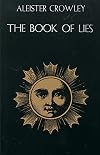
I love this book. Meant to be taken in small doses, it's the best and worst of Uncle Al, with jokes, puns and outright snarkiness on so many levels. Many of it is inside jokes, so if you don't have a background in Western Hermetic Qabalah and/or general Crowley, it wont be as much fun. I'd always recommend his Autohagiography first
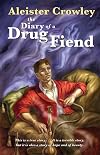
Crowley writes superbly, a surprising conclusion to make about one who was once called “the wickedest man in the world.” His descriptions come at you from an unexpected angle and one is forced to pause, to slow down at the sheer uniqueness of what is being said. A cursory reading will miss his subtlety and, while not deserving of a slow reading per se, we should call it 'slower than normal' reading. Then, we would approach the book properly.
There is a sensuality to the language which is show more decadent in same way that the music of the Grateful Dead somehow brings to mind the idea of overripe fruit. I have to wonder, however, if I am being slowly corrupted by this book. Crowley writes like a man whose familiar associations arrive from a dimension different from ours. About such folk, we might have once said ". . . not quite right" which only means they don't fit our particular social paradigm. The 21st century reader struggles to accommodate Crowley's phrases and metaphors, whose effect is to gently push one out of a comfortable reality . . . especially since the subject matter is the overuse of cocaine and heroin. If there is an agenda here, it may be precisely to accomplish that gentle push.
The story of Peter Pendragon and his lover Lou Laleham unfolds in three parts, Paradiso, Inferno, and Purgatorio, a take off on Dante's tour of the afterlife. The couple travel through Europe on stipends from Peter's inheritance, gradually succumbing to the enflaming passions created by a heroin and cocaine addiction. As the addiction becomes more pronounced and the propensity for self-knowledge rises, the perspective turns increasingly wild and, for this reason, spiritual. It is an unaccustomed spirituality: that of the liberated mind, the insane mind, a mind that no longer turns automatically from questionable things. There is a coming-to-terms period in the second section of the book, called Inferno, which touches on these mad things. The perspective is utterly fascinating – a good exposure to things beyond the ken of most of us.
Having said that, this reader felt a kinship with that narrator's internal monologue. These voicings ring similar to what form spontaneously on the basis of immediate experience. In some cases, they may be felt only briefly before cultural cues have had their chance to redirect them into more acceptable cliches. We all live inside the gated communities of our expectations. Those gates and walls are quite invisible to ordinary perception. It is from within these walls we knowingly pass judgement on the world "out there. "What is good? and what is bad?” Typically we are supplied with the answers by culture, along with a corresponding judgment. Such judgments. . . in fact, all judgments. . . are (as a bottom line) based on the need to have a reliable handle on the world. They vital to the survival of that squirming little creature we call 'self.'
A strange book, possibly a 'gateway' book (to further questionable activities), and a worthwhile reading experience. You're a reader. Have some courage. show less
There is a sensuality to the language which is show more decadent in same way that the music of the Grateful Dead somehow brings to mind the idea of overripe fruit. I have to wonder, however, if I am being slowly corrupted by this book. Crowley writes like a man whose familiar associations arrive from a dimension different from ours. About such folk, we might have once said ". . . not quite right" which only means they don't fit our particular social paradigm. The 21st century reader struggles to accommodate Crowley's phrases and metaphors, whose effect is to gently push one out of a comfortable reality . . . especially since the subject matter is the overuse of cocaine and heroin. If there is an agenda here, it may be precisely to accomplish that gentle push.
The story of Peter Pendragon and his lover Lou Laleham unfolds in three parts, Paradiso, Inferno, and Purgatorio, a take off on Dante's tour of the afterlife. The couple travel through Europe on stipends from Peter's inheritance, gradually succumbing to the enflaming passions created by a heroin and cocaine addiction. As the addiction becomes more pronounced and the propensity for self-knowledge rises, the perspective turns increasingly wild and, for this reason, spiritual. It is an unaccustomed spirituality: that of the liberated mind, the insane mind, a mind that no longer turns automatically from questionable things. There is a coming-to-terms period in the second section of the book, called Inferno, which touches on these mad things. The perspective is utterly fascinating – a good exposure to things beyond the ken of most of us.
Having said that, this reader felt a kinship with that narrator's internal monologue. These voicings ring similar to what form spontaneously on the basis of immediate experience. In some cases, they may be felt only briefly before cultural cues have had their chance to redirect them into more acceptable cliches. We all live inside the gated communities of our expectations. Those gates and walls are quite invisible to ordinary perception. It is from within these walls we knowingly pass judgement on the world "out there. "What is good? and what is bad?” Typically we are supplied with the answers by culture, along with a corresponding judgment. Such judgments. . . in fact, all judgments. . . are (as a bottom line) based on the need to have a reliable handle on the world. They vital to the survival of that squirming little creature we call 'self.'
A strange book, possibly a 'gateway' book (to further questionable activities), and a worthwhile reading experience. You're a reader. Have some courage. show less
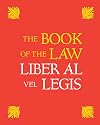
It is always going to be difficult to review a religious text especially one produced only 120 years or so ago (1904). Such a text is going to be regarded by some as holy beyond criticism and by others as arrant nonsense wholly to be disregarded.
I come between the two positions in seeing such texts as insights into particular mind-sets at particular times and places in history and their reception indicating hidden, or shall we say 'occult', psychological needs - in this case in the show more post-decadent Edwardian era as much as in Crowley himself.
A lot of this particular text is nonsense - romantic egypto-mania synthesising many different influences in the mind of the creative narcissist called the Beast (Aleister Crowley). The religious text, numerology, the tarot, a sub-Nietzchean Will and whatever comes to hand makes the whole.
On the other hand, we also see a restless 29-year old adventurer who had a poetic sensibility in a stuffy conformist culture already sensing that it had peaked. If Crowley was writing nonsense, it was still a poetic response to the nonsense that was the post-Victorian British Imperial 'hive'.
The book, very short and exclamatory and, of course, contradictory, is made for 'ekstasis' and declamation. Crowley was a poet of the decadent type before he started publishing rather than performing magickal works.
By the time he wrote the Book of the Law in Egypt, he had had nearly a decade of hyper-sexualisation, occultism and foreign adventuring behind him. The Book of the Law is a poetic yell centred on the essence of what this was all about - the will to freedom from social constraint.
It was not enough though to just say 'I will' and be a libertarian individualist. He needed to find meaning in his will. The meaning lay in the freedom to desire and to be (the two things appearing to be much the same thing in him).
An ambiguous egalitarian individualistic "every man and every woman is a star" was contradicted by a form of salvationary elitism for those who understood this maxim - so that we have a touch of the Robespierre in Crowley perhaps.
The message was not this (after all, it was just a statement of fact in his mind) so much as "love is the law, love under will". This is not crassly to be interpreted as a merely sexual position but as something that underpins all existence and to which one's True Will is aligned.
Perhaps if he had just said this in non-poetic terms, it would have been easier for everyone but this would not have fitted Crowley's penchant for the dramatic or allowed him to take a leadership role in attracting people into his orbit, creating an image that was later to draw in many creative people.
Although no stranger to scandal, indeed generally seeking it, where would be the fun in just looking Edwardian Britain in the eye and simply giving it a rationalised alternative model of libertarian being that it would have discounted as 'mad'? Later, Jack Parsons could be rational enough for us.
We have to recognise that Crowley was not only a narcissist but also sincere in his lust for a life of both freedom and meaning. To construct the conditions for an occult religion with a supernatural intervention and himself as prophet fitted his demonstrable love of the dramatic.
I suspect most people reading "The Book of the Law"are either going to lose themselves in the nonsense while picking up on those two key phrases as the hook for their own lives or they are going to be puzzled and then uninterested in the effort of trying to unravel Crowley's meaning.
Although everyone has the potential to be a star (divine) in Crowley's vision, that potential required each person to 'get' the revelation of their own freedom and True Will. This meant paradoxically overcoming both the world in which ones lives and the Thelemite alternative.
There is little consistency and a lot of ego in Crowley. This was no Kantian system-builder. His existentialism was intellectually rocky to say the least. But as dramaturge he went beyond any reasonable statement of freedom and desire to create its absurd artistic opportunity.
In this respect he was insidiously culturally important, especially to the Sixties Generation, and reached deep into popular culture, largely through musical appreciation of the creative link between music and the occult and, thence, through later adolescent identification, into the other popular arts.
On balance, unless you have the passion to become a Thelemite, Liber AL vel Legis (the Book of the Law) can probably be passed by but it should not be dismissed as unimportant. Crowley's poetic and dramatic magickal intervention did change our world. show less
I come between the two positions in seeing such texts as insights into particular mind-sets at particular times and places in history and their reception indicating hidden, or shall we say 'occult', psychological needs - in this case in the show more post-decadent Edwardian era as much as in Crowley himself.
A lot of this particular text is nonsense - romantic egypto-mania synthesising many different influences in the mind of the creative narcissist called the Beast (Aleister Crowley). The religious text, numerology, the tarot, a sub-Nietzchean Will and whatever comes to hand makes the whole.
On the other hand, we also see a restless 29-year old adventurer who had a poetic sensibility in a stuffy conformist culture already sensing that it had peaked. If Crowley was writing nonsense, it was still a poetic response to the nonsense that was the post-Victorian British Imperial 'hive'.
The book, very short and exclamatory and, of course, contradictory, is made for 'ekstasis' and declamation. Crowley was a poet of the decadent type before he started publishing rather than performing magickal works.
By the time he wrote the Book of the Law in Egypt, he had had nearly a decade of hyper-sexualisation, occultism and foreign adventuring behind him. The Book of the Law is a poetic yell centred on the essence of what this was all about - the will to freedom from social constraint.
It was not enough though to just say 'I will' and be a libertarian individualist. He needed to find meaning in his will. The meaning lay in the freedom to desire and to be (the two things appearing to be much the same thing in him).
An ambiguous egalitarian individualistic "every man and every woman is a star" was contradicted by a form of salvationary elitism for those who understood this maxim - so that we have a touch of the Robespierre in Crowley perhaps.
The message was not this (after all, it was just a statement of fact in his mind) so much as "love is the law, love under will". This is not crassly to be interpreted as a merely sexual position but as something that underpins all existence and to which one's True Will is aligned.
Perhaps if he had just said this in non-poetic terms, it would have been easier for everyone but this would not have fitted Crowley's penchant for the dramatic or allowed him to take a leadership role in attracting people into his orbit, creating an image that was later to draw in many creative people.
Although no stranger to scandal, indeed generally seeking it, where would be the fun in just looking Edwardian Britain in the eye and simply giving it a rationalised alternative model of libertarian being that it would have discounted as 'mad'? Later, Jack Parsons could be rational enough for us.
We have to recognise that Crowley was not only a narcissist but also sincere in his lust for a life of both freedom and meaning. To construct the conditions for an occult religion with a supernatural intervention and himself as prophet fitted his demonstrable love of the dramatic.
I suspect most people reading "The Book of the Law"are either going to lose themselves in the nonsense while picking up on those two key phrases as the hook for their own lives or they are going to be puzzled and then uninterested in the effort of trying to unravel Crowley's meaning.
Although everyone has the potential to be a star (divine) in Crowley's vision, that potential required each person to 'get' the revelation of their own freedom and True Will. This meant paradoxically overcoming both the world in which ones lives and the Thelemite alternative.
There is little consistency and a lot of ego in Crowley. This was no Kantian system-builder. His existentialism was intellectually rocky to say the least. But as dramaturge he went beyond any reasonable statement of freedom and desire to create its absurd artistic opportunity.
In this respect he was insidiously culturally important, especially to the Sixties Generation, and reached deep into popular culture, largely through musical appreciation of the creative link between music and the occult and, thence, through later adolescent identification, into the other popular arts.
On balance, unless you have the passion to become a Thelemite, Liber AL vel Legis (the Book of the Law) can probably be passed by but it should not be dismissed as unimportant. Crowley's poetic and dramatic magickal intervention did change our world. show less

Crowley is never boring, although sometimes his poetry is. This work of fiction is very much of its time (post-WWI Europe), complete with the sexism, racism, antisemitism and colonialism of a British gentleman of the era (I'm not sure if Crowley was considered a gentleman at the time but I am sure he considered himself one). The plot is about a couple of a certain station in life who meet, marry and debauch themselves, all with the help of cocaine and heroin. It's quite harrowing. The last show more few chapters tells how they redeem their lives through the practice of Thelema taught to them by a character who is very much Crowley himself by another name. Crowley said this was fictionalized autobiography and while I am sure that is true for the story of addiction and degradation, the depiction of Crowley's actual Abbey of Thelema, already is in operation at the time of his writing of the book, was a dump and far cry from the starry-eye utopia envisioned in the novel.
At any rate, it's an interesting look at that moment of history and an interesting look at what Crowley thought it would look like, a far cry from what he managed to do with his own life. show less
At any rate, it's an interesting look at that moment of history and an interesting look at what Crowley thought it would look like, a far cry from what he managed to do with his own life. show less
Lists
el (2)
You May Also Like


Associated Authors
Statistics
- Works
- 501
- Also by
- 27
- Members
- 19,926
- Popularity
- #1,086
- Rating
- 3.9
- Reviews
- 122
- ISBNs
- 835
- Languages
- 19
- Favorited
- 67


