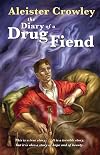
Crowley writes superbly, a surprising conclusion to make about one who was once called “the wickedest man in the world.” His descriptions come at you from an unexpected angle and one is forced to pause, to slow down at the sheer uniqueness of what is being said. A cursory reading will miss his subtlety and, while not deserving of a slow reading per se, we should call it 'slower than normal' reading. Then, we would approach the book properly.
There is a sensuality to the language which is decadent in same way that the music of the Grateful Dead somehow brings to mind the idea of overripe fruit. I have to wonder, however, if I am being slowly corrupted by this book. Crowley writes like a man whose familiar associations arrive from a dimension different from ours. About such folk, we might have once said ". . . not quite right" which only means they don't fit our particular social paradigm. The 21st century reader struggles to accommodate Crowley's phrases and metaphors, whose effect is to gently push one out of a comfortable reality . . . especially since the subject matter is the overuse of cocaine and heroin. If there is an agenda here, it may be precisely to accomplish that gentle push.
The story of Peter Pendragon and his lover Lou Laleham unfolds in three parts, Paradiso, Inferno, and Purgatorio, a take off on Dante's tour of the afterlife. The couple travel through Europe on stipends from Peter's inheritance, gradually succumbing to the enflaming passions created show more by a heroin and cocaine addiction. As the addiction becomes more pronounced and the propensity for self-knowledge rises, the perspective turns increasingly wild and, for this reason, spiritual. It is an unaccustomed spirituality: that of the liberated mind, the insane mind, a mind that no longer turns automatically from questionable things. There is a coming-to-terms period in the second section of the book, called Inferno, which touches on these mad things. The perspective is utterly fascinating – a good exposure to things beyond the ken of most of us.
Having said that, this reader felt a kinship with that narrator's internal monologue. These voicings ring similar to what form spontaneously on the basis of immediate experience. In some cases, they may be felt only briefly before cultural cues have had their chance to redirect them into more acceptable cliches. We all live inside the gated communities of our expectations. Those gates and walls are quite invisible to ordinary perception. It is from within these walls we knowingly pass judgement on the world "out there. "What is good? and what is bad?” Typically we are supplied with the answers by culture, along with a corresponding judgment. Such judgments. . . in fact, all judgments. . . are (as a bottom line) based on the need to have a reliable handle on the world. They vital to the survival of that squirming little creature we call 'self.'
A strange book, possibly a 'gateway' book (to further questionable activities), and a worthwhile reading experience. You're a reader. Have some courage. show less
There is a sensuality to the language which is decadent in same way that the music of the Grateful Dead somehow brings to mind the idea of overripe fruit. I have to wonder, however, if I am being slowly corrupted by this book. Crowley writes like a man whose familiar associations arrive from a dimension different from ours. About such folk, we might have once said ". . . not quite right" which only means they don't fit our particular social paradigm. The 21st century reader struggles to accommodate Crowley's phrases and metaphors, whose effect is to gently push one out of a comfortable reality . . . especially since the subject matter is the overuse of cocaine and heroin. If there is an agenda here, it may be precisely to accomplish that gentle push.
The story of Peter Pendragon and his lover Lou Laleham unfolds in three parts, Paradiso, Inferno, and Purgatorio, a take off on Dante's tour of the afterlife. The couple travel through Europe on stipends from Peter's inheritance, gradually succumbing to the enflaming passions created show more by a heroin and cocaine addiction. As the addiction becomes more pronounced and the propensity for self-knowledge rises, the perspective turns increasingly wild and, for this reason, spiritual. It is an unaccustomed spirituality: that of the liberated mind, the insane mind, a mind that no longer turns automatically from questionable things. There is a coming-to-terms period in the second section of the book, called Inferno, which touches on these mad things. The perspective is utterly fascinating – a good exposure to things beyond the ken of most of us.
Having said that, this reader felt a kinship with that narrator's internal monologue. These voicings ring similar to what form spontaneously on the basis of immediate experience. In some cases, they may be felt only briefly before cultural cues have had their chance to redirect them into more acceptable cliches. We all live inside the gated communities of our expectations. Those gates and walls are quite invisible to ordinary perception. It is from within these walls we knowingly pass judgement on the world "out there. "What is good? and what is bad?” Typically we are supplied with the answers by culture, along with a corresponding judgment. Such judgments. . . in fact, all judgments. . . are (as a bottom line) based on the need to have a reliable handle on the world. They vital to the survival of that squirming little creature we call 'self.'
A strange book, possibly a 'gateway' book (to further questionable activities), and a worthwhile reading experience. You're a reader. Have some courage. show less
Wilson depicts the drive toward constant happiness as a kind of misguided fundamentalist ideal. The melancholic is an individual who looks unflinchingly at the the world, having lived richly enough to know that the response to life is a choice between a beautiful and rich uncertainty and a shallow and simplistic clarity. Happy people do not create great works of art. For that, we are indebted to uncertainty, to despair, and depression, To experience all of these things is to experience life versus only pretending at life. Well-written, sublimely thought out. . . but not for the practical minded or those who would reduce experience to abstraction.
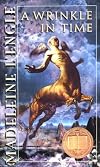
Approaching this work for the first time as a sixty-something, I was intrigued by how surprisingly contemporary was the depiction of an Earth in the throes of an epic struggle - a struggle all but unknown to its inhabitants (can you say: "Matrix?" can you say "Illuminati?" "Cabal?"). The allegory, intentional or not, thickens as the protagonists journey to a distant region of space dominated by an entity which transforms its captured inhabitants into zombified cattle. How does this occur? By creating a society in which deviation from group-think is, literally, unthinkable.
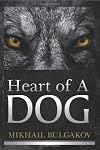
A strange tale about a starving Moscow street dog metamorphized into something resembling a human, at least in the essential respects of human biology. Unruly to begin with, the dog soon develops into a creature displaying an amplified capacity for uncouth and selfish behaviors. This, we are led to believe, is the result of the human glands that were sewn into him having, which were taken from a drunkard. But a question asked here (and there are many interpretations of this work) is: would the dog have been different if the glands had been taken from a 'Spinoza' level human being?
Despite the professor’s best efforts to cultivate him into a decent Bourgoise citizen, the former dog takes on the ethics of a working class Proletarian, fueled by Bolshevik ideals, seemingly bound by no aesthetic, and basically intent on survival in a bureaucracy-driven world. All of this provides fuel for interpretations of this work as a satire of Bolshevism, set against the old-world order and affectations of the Bourgeoisie. "They're dogs, anyway," the book seems to cry. If that be the case, then perhaps the Bourgeoisie are all cats. . . whom the transformed creature continued to hate savagely.
While the dilemma of the professor's household in dealing with his creation is comical and revealing, this reader confesses to having no dog in the hunt. . . Fun and gracefully short.
Despite the professor’s best efforts to cultivate him into a decent Bourgoise citizen, the former dog takes on the ethics of a working class Proletarian, fueled by Bolshevik ideals, seemingly bound by no aesthetic, and basically intent on survival in a bureaucracy-driven world. All of this provides fuel for interpretations of this work as a satire of Bolshevism, set against the old-world order and affectations of the Bourgeoisie. "They're dogs, anyway," the book seems to cry. If that be the case, then perhaps the Bourgeoisie are all cats. . . whom the transformed creature continued to hate savagely.
While the dilemma of the professor's household in dealing with his creation is comical and revealing, this reader confesses to having no dog in the hunt. . . Fun and gracefully short.
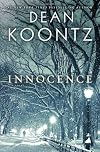
An interesting premise, suggesting that real innocence is so damning to the beholder that even reasonable humans are moved to act violently when confronted with it - so well does it highlight their dark places. I particularly admired Koontz's deft description of time in chapter sixty-two when Father explained why there was no such thing as luck. . .
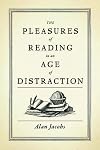
I have begun to suspect that my brain may be ruined. Short-circuited. Re-programmed. Made over into a Borg-like artifact of the 21st century – now that I have subjected myself for so many years to the buzzing, pinging Siren call of the cell phone, the Tweet, the Facebook wall, the RSS feed with the short bursts of attention that such online reading requires. And, enabling my discovered addiction to video gaming, there are both solo and online multiuser role-playing opportunities, each promising visual and auditory immersion and some rather compelling story lines. Is it still possible to become so transported by a book that we forget who and where we are? More to the point, where have the unbroken stretches of two and three hours gone? I find it difficult, anymore, to stay focused on one thing for any length of time. I remember days when nothing was more alluring than a good book in a quiet house.
Alan Jacobs’ book, "The Pleasures of Reading in an Age of Distraction," is a timely call to arms and a healthy tonic for those readers who struggle with this daily deluge of modern media. His book is cleverly and thoughtfully written: it takes the form of one long essay, penned in notes of commiseration, humor and encouragement, but broken by a series of bold-faced headings into sub-topics (‘Yes, we can!,’ ‘Whim,’ ‘Slowly, slowly’. . .), any of which could easily be read in a sitting of ten to twenty minutes.
Jacobs encourages readers to champion the authority of show more self in their reading – a force which he calls Whim (with a capital ‘W’), in which one’s inner passion determines what course he or she follows in choosing reading material, in which great books are marvelous opportunities for growth, not obligatory hurdles on some pedantic to do list. Not surprisingly, he encourages us to throw off the binding chains of those canonical book lists of Adler, van Doren and Fadiman, and more especially those of the newer '1000 Books to Read Before You Die' ilk. At least, he says, do not religiously follow these paths simply because somebody 'more important' than you said it would be good for you. When significant works are read primarily for accomplishment, or when 'strip-mined' for content (as much online media is designed to be), books lose their primary capacity to involve and radically change you, he says. Slow down. This is actually harder to do than it sounds.
I believe it is true that our brains are being re-wired by the highly connected, electronic society we live in. But the process is not inherently evil – witness the ‘Arab Spring’ and ‘Occupy’ phenomena which have sprung largely out of the ability to instantly communicate with one another. And it is not irrevocable: “The amazing thing about our brains is not that they are hard-wired to accomplish some particular task, but that they are not.” This is good news, indeed. I agree with Jacobs: books are not in danger of becoming extinct. However, we have choices to make: how to read and why to read. And in making them, we should heed the authority of our personal journey. show less
Alan Jacobs’ book, "The Pleasures of Reading in an Age of Distraction," is a timely call to arms and a healthy tonic for those readers who struggle with this daily deluge of modern media. His book is cleverly and thoughtfully written: it takes the form of one long essay, penned in notes of commiseration, humor and encouragement, but broken by a series of bold-faced headings into sub-topics (‘Yes, we can!,’ ‘Whim,’ ‘Slowly, slowly’. . .), any of which could easily be read in a sitting of ten to twenty minutes.
Jacobs encourages readers to champion the authority of show more self in their reading – a force which he calls Whim (with a capital ‘W’), in which one’s inner passion determines what course he or she follows in choosing reading material, in which great books are marvelous opportunities for growth, not obligatory hurdles on some pedantic to do list. Not surprisingly, he encourages us to throw off the binding chains of those canonical book lists of Adler, van Doren and Fadiman, and more especially those of the newer '1000 Books to Read Before You Die' ilk. At least, he says, do not religiously follow these paths simply because somebody 'more important' than you said it would be good for you. When significant works are read primarily for accomplishment, or when 'strip-mined' for content (as much online media is designed to be), books lose their primary capacity to involve and radically change you, he says. Slow down. This is actually harder to do than it sounds.
I believe it is true that our brains are being re-wired by the highly connected, electronic society we live in. But the process is not inherently evil – witness the ‘Arab Spring’ and ‘Occupy’ phenomena which have sprung largely out of the ability to instantly communicate with one another. And it is not irrevocable: “The amazing thing about our brains is not that they are hard-wired to accomplish some particular task, but that they are not.” This is good news, indeed. I agree with Jacobs: books are not in danger of becoming extinct. However, we have choices to make: how to read and why to read. And in making them, we should heed the authority of our personal journey. show less
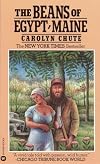
I was struck by this blackly humorous, northern counterpart to Dorothy Allison's 'Bastard Out of Carolina.' Rough-hewn, hopeless and fatalistic, "The Beans of Egypt Maine" underscores a truism: that a culture of poverty and ignorance is self-perpetuating, that people born into such a world have very few options other than what their families give them. Family is both curse and blessing here, for out of it comes not only one's limiting world view, but also a fierce independence that prepares one to cope with it.
Chute's writing is fresh and on-target. The book jacket mentions her closeness to that lifestyle while growing up, and this believability certainly comes through. The humor is pure comic relief for what, to our eyes, must feel like a world of chaos and desperation. But there is another truism here: people are usually doing the best they can under their circumstances. Being from rural Virginia, I have known (of) families like the Beans here in the South, as well. The brutal effect of poverty is everywhere the same, and it is often countered by an enviable toughness. If there be live counterparts to the Beans, I might shrink from an invitation to meet them. But that does not prevent me from carrying a respect for the particular path they are fated to walk: in which just getting by is its own brand of heroism.
Chute's writing is fresh and on-target. The book jacket mentions her closeness to that lifestyle while growing up, and this believability certainly comes through. The humor is pure comic relief for what, to our eyes, must feel like a world of chaos and desperation. But there is another truism here: people are usually doing the best they can under their circumstances. Being from rural Virginia, I have known (of) families like the Beans here in the South, as well. The brutal effect of poverty is everywhere the same, and it is often countered by an enviable toughness. If there be live counterparts to the Beans, I might shrink from an invitation to meet them. But that does not prevent me from carrying a respect for the particular path they are fated to walk: in which just getting by is its own brand of heroism.
The Western Lit Survival Kit: An Irreverent Guide to the Classics, from Homer to Faulkner by Sandra Newman
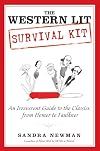
This is a fun romp through the western canon with an irreverent apologist to light the way. Newman's effect is best realized if we are already familiar with a given work, in which case, the chapters read like a series of wonderfully fresh book reports prepared by some irrepressibly precocious high school student. The language is approachable and contemporary, the opinions enviously on-target at times. Other times, however, Newman tends to overreach in her comments, and the effect is more snarky than fresh. The book seems best taken in random dips and with books with which one is already familiar.
 This review was written for LibraryThing Early Reviewers.
'The Rosicrucian Mysteries' functions as a kind of primer for the Rosicrucian Fellowship and, by extension, the mystery teachings of the western occult tradition. Its author, Max Heindel, became the early 20th century messenger of Rosicrucianism; it is now the first decade of the twenty-first century, and this communication is approximately one hundred years old. Mr Heindel makes a reference in the introductory chapter to his having been 'chosen' as the modern bearer of these teachings by an order of non-physical beings intent on revealing the material to a modern civilization. With the arrival of the twentieth century, Heindel writes, it was realized that something must be done to make religion scientific and science religious. The body of his writings - to which this current volume forms an approachable introduction - appears not only to impart a great deal of information on the esoteric Christian tradition, but also form an early attempt to synthesize science and religion, whose two paths had by then already diverged.
Speaking to us from the 1900's however, Heindel's scientific terms are somewhat dated, and so his references to innovations like the dynamite bomb, the x-ray machine and the modern telescope cause his material to come across as an antique curiosity at times. Social mores, when referred to, are based on 19th century conceptions. And a passage suggesting that racial characteristics will correspond to degrees of spiritual maturity can neither be overlooked show more nor accepted by a contemporary audience, regardless of the spirit in which it was intended. In this sense, it may be more worthwhile nowadays to turn to any number of contemporary writers who have sought to spin the implications of quantum theory into mysticism. So at times, one must read as a kind of esoteric archaeologist, and it profits one to be already familiar with the basic concepts. But it must be remembered that this work is an 'elementary exposition,' and was very likely written to attract the attention of large numbers of people. Those craving more meat would eventually turn to more complex volumes and eventually graduate to Heindel's magnum opus, The Rosicrucian Cosmo-Conception.
Though dated in tone, this book still resonates with a subtle power. There are hints that great treasure and deep inner communion can be found by the sincere seeker. If read quietly, without mental clamor, the underlying precepts continue to speak for themselves. show less
Speaking to us from the 1900's however, Heindel's scientific terms are somewhat dated, and so his references to innovations like the dynamite bomb, the x-ray machine and the modern telescope cause his material to come across as an antique curiosity at times. Social mores, when referred to, are based on 19th century conceptions. And a passage suggesting that racial characteristics will correspond to degrees of spiritual maturity can neither be overlooked show more nor accepted by a contemporary audience, regardless of the spirit in which it was intended. In this sense, it may be more worthwhile nowadays to turn to any number of contemporary writers who have sought to spin the implications of quantum theory into mysticism. So at times, one must read as a kind of esoteric archaeologist, and it profits one to be already familiar with the basic concepts. But it must be remembered that this work is an 'elementary exposition,' and was very likely written to attract the attention of large numbers of people. Those craving more meat would eventually turn to more complex volumes and eventually graduate to Heindel's magnum opus, The Rosicrucian Cosmo-Conception.
Though dated in tone, this book still resonates with a subtle power. There are hints that great treasure and deep inner communion can be found by the sincere seeker. If read quietly, without mental clamor, the underlying precepts continue to speak for themselves. show less
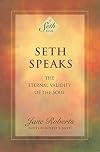
For this review I admit that I am torn between preaching to the choir, holding the book at skeptic's length, and becoming a New Age apologist.
'Seth Speaks: The Eternal Validity of the Soul' is, at face value, a channelled work. You may accept or deny that premise. I am - in this reality - choosing to accept it, and that decision makes a huge difference in the way I now regard my thoughts and my experiences. Let us hypothetically 'go there' for a while and see what happens. Obviously the immortality of the soul, the concept of reincarnation, parallel dimensions, and the elasticity of time and space are all fundamental premises for this kind of thing, so I will neither explain nor defend them.
Given the fact that the channeling sessions from which this book was written took place in 1970-71, this book has already been regarded as a kind of modern classic on the subject. Indeed, one can see how much New Age thought can have originated in its pages. It was, in effect, 'New Age when New Age wasn't cool.' (A recommended companion volume to this and a must-read among Seth aficionados is "The Nature of Personal Reality," 1974, also channelled by Jane Roberts.) Well, given all of that: I found this book to be an engrossing examination of how extraordinarily fluid and filled with unseen possibilities life is. There is way too much content to describe in a review, of course (and stuff which the choir already knows), so I just want to hit a high point or two.
Seth explains (via Jane show more Roberts, medium and physical author of the book) how intertwined our waking and dream states are, and more to the point for me: how our dream state may have as much continuity as the waking state. Apparently, what we manage to remember upon waking are tiny shards of a much larger, coherent experience that we may return to night after night. The apparent weirdness and silliness of those recalled fragments are already poor, symbolic substitutions for a deeper set of experiences than could be translated to the waking mind. . . Well, what an outrageous and wonderful gospel! I love the concept - that we could be largely blind to a whole other 'life' that is being lived while we sleep. I recall an old sci-fi novel, "Wine of the Dreamers," by John D. MacDonald which touched upon a variant of this idea.
Of particular interest is the section wherein Seth explains that some lifetimes are intentionally-created living canvases, meant to be relived many times over. As such, these are exercises in probable realities for the soul. Such lives (and you may be living one now) are intended as experimental media upon which many variations may be played after the initial life is finished. The soul, intending such a use for that lifetime, can relive and reshape events after the fact, much as an artist applies a brush to a canvas, experimenting and reshaping outcomes as he or she pleases. Each experiment spins off a new probable reality – as real and concrete an existence as the 'original.' It's a fantastic idea. This of course makes me wonder whether this particular life, wherein I am writing this review, is or has been lived already on some level. Perhaps it is merely my soul continuing to experiment with outcomes. Strange. . . I suddenly have the feeling I have written this sentence before! Wonderful.
In other news: multiple lifetimes are not sequential - they happen concurrently. Time is an illusion, made necessary by the workings of our conscious mind and the nature of physical reality. At deeper levels of consciousness, we share information, premonitions and deja vu experiences back and forth between lives. And good news! Your silly little ego will indeed survive intact, but only to find it is one of many. I begin to sound tonue-in-cheek here, but Walter, this is serious!
If you like fantasy and science fiction, this book will appeal to you. If you desperately need all this to be true, then God loves you, I love you, and this book will appeal to you. And if you don't mind opening your mind, dreaming the dream and walking where visionaries and loons might fear to tread, this book will appeal to you (and I greet you, brother). Really, I think we may all be extraordinarily surprised - each of us - upon the occasion of our death. Personally, I would much rather be surprised than not. . . show less
'Seth Speaks: The Eternal Validity of the Soul' is, at face value, a channelled work. You may accept or deny that premise. I am - in this reality - choosing to accept it, and that decision makes a huge difference in the way I now regard my thoughts and my experiences. Let us hypothetically 'go there' for a while and see what happens. Obviously the immortality of the soul, the concept of reincarnation, parallel dimensions, and the elasticity of time and space are all fundamental premises for this kind of thing, so I will neither explain nor defend them.
Given the fact that the channeling sessions from which this book was written took place in 1970-71, this book has already been regarded as a kind of modern classic on the subject. Indeed, one can see how much New Age thought can have originated in its pages. It was, in effect, 'New Age when New Age wasn't cool.' (A recommended companion volume to this and a must-read among Seth aficionados is "The Nature of Personal Reality," 1974, also channelled by Jane Roberts.) Well, given all of that: I found this book to be an engrossing examination of how extraordinarily fluid and filled with unseen possibilities life is. There is way too much content to describe in a review, of course (and stuff which the choir already knows), so I just want to hit a high point or two.
Seth explains (via Jane show more Roberts, medium and physical author of the book) how intertwined our waking and dream states are, and more to the point for me: how our dream state may have as much continuity as the waking state. Apparently, what we manage to remember upon waking are tiny shards of a much larger, coherent experience that we may return to night after night. The apparent weirdness and silliness of those recalled fragments are already poor, symbolic substitutions for a deeper set of experiences than could be translated to the waking mind. . . Well, what an outrageous and wonderful gospel! I love the concept - that we could be largely blind to a whole other 'life' that is being lived while we sleep. I recall an old sci-fi novel, "Wine of the Dreamers," by John D. MacDonald which touched upon a variant of this idea.
Of particular interest is the section wherein Seth explains that some lifetimes are intentionally-created living canvases, meant to be relived many times over. As such, these are exercises in probable realities for the soul. Such lives (and you may be living one now) are intended as experimental media upon which many variations may be played after the initial life is finished. The soul, intending such a use for that lifetime, can relive and reshape events after the fact, much as an artist applies a brush to a canvas, experimenting and reshaping outcomes as he or she pleases. Each experiment spins off a new probable reality – as real and concrete an existence as the 'original.' It's a fantastic idea. This of course makes me wonder whether this particular life, wherein I am writing this review, is or has been lived already on some level. Perhaps it is merely my soul continuing to experiment with outcomes. Strange. . . I suddenly have the feeling I have written this sentence before! Wonderful.
In other news: multiple lifetimes are not sequential - they happen concurrently. Time is an illusion, made necessary by the workings of our conscious mind and the nature of physical reality. At deeper levels of consciousness, we share information, premonitions and deja vu experiences back and forth between lives. And good news! Your silly little ego will indeed survive intact, but only to find it is one of many. I begin to sound tonue-in-cheek here, but Walter, this is serious!
If you like fantasy and science fiction, this book will appeal to you. If you desperately need all this to be true, then God loves you, I love you, and this book will appeal to you. And if you don't mind opening your mind, dreaming the dream and walking where visionaries and loons might fear to tread, this book will appeal to you (and I greet you, brother). Really, I think we may all be extraordinarily surprised - each of us - upon the occasion of our death. Personally, I would much rather be surprised than not. . . show less
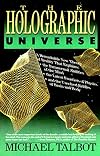
I know intellectually that quantum physics is the domain of some of the strangest phenomena imaginable. I know it may be possible to create a sub-atomic particle merely by searching for it, and that two particles separated by many miles can apparently influence each others behavior in ways that suggest either faster-than-light interaction or that the apparent separation between them is not real. I have read that space as we know it may be illusory, that time as a linear process may also be an illusion. All of these things fascinate me, and books like 'The Dancing Wu-Li Masters,' The Tao of Physics,' and 'The Holographic Universe' by Michael Talbot feed that fascination. These works are challenging, exciting and, by their extraordinary nature, suspect.
We know this era as one of hard-edged rationalism, linear thinking and cynicism. These traits are normal and easy to share because they are so prevalent, and because, really, no socially-engaged human wants to be regarded as a 'loon' (per another reviewer's dismissive remarks). So on one hand, my responsibility as a modern rational human is to dismiss the ideas of writers like Talbot, who take cutting edge physics as a point of departure and spin it into parallel universes, telepathic and clairvoyant explanations, and into all manner of strange and wonderful possibilities. Like other similar books, 'The Holographic Universe' suggests that mysticism and spirituality may provide useful metaphors for phenomena that scientific show more investigation is only beginning to sense the existence of . . . and will quite probably experience difficulty describing objectively. Predictably, these suggestions remain largely ignored by mainstream science. It is not comfortable or productive for a professional to publicly hold them.
But on the other hand, there is something both intriguing and intuitively truthful about the idea that mind may determine its reality. Talbot's observations about the way in which quantum particles appear to behave according to how the observer thinks about them certainly provokes some thought. Such 'quantum entanglement' has apparently been observed on the molecular level , as well. Is it possible that perception and creation are two sides of one coin? Are we so in charge of our world that it is exactly as we have judged? Perhaps our thinking is too 'hard' at times. Perhaps James Randi's skeptical challenge to 'prove it,' in fact insures the very outcome that he expects. I wonder.
There is in cosmology a kind of dividing line, which separates individuals by the way they choose to think about reality. Either 1) we populate a mechanistic universe in which consciousness has arisen out of the chaos of matter, or 2) the universe as we know it is a property of mind, and matter has arisen from consciousness. So . . . which of these is the fundamental property of reality? Unfortunately, it seems unprovable, one way or the other. As an adult, I have tended to oscillate back and forth on that question.
So, in order to accept the possibility of alternate dimensions, 'higher realms,' or the validity of near-death experiences, a rational thinker must make a decision to accept an argument which is based on circumstantial evidence. That kind of argument is the real stock-in-trade of 'The Holographic Universe,' if not most calls for acceptance of the numinous. Talbot cites volumes of near-death accounts in which the experiencer corroborates exact operating room procedures; countless telepathic and clairvoyant 'coincidences'; accounts of past-lives remembered under hypnosis in which buildings and geographical layouts are later supported by visits to actual locations. Investigating the sheer volume of notes and references Talbot cites causes that evidence to become weighty indeed. But is it sufficient?
Finally, one must decide for oneself. And continue the search. Good luck! show less
We know this era as one of hard-edged rationalism, linear thinking and cynicism. These traits are normal and easy to share because they are so prevalent, and because, really, no socially-engaged human wants to be regarded as a 'loon' (per another reviewer's dismissive remarks). So on one hand, my responsibility as a modern rational human is to dismiss the ideas of writers like Talbot, who take cutting edge physics as a point of departure and spin it into parallel universes, telepathic and clairvoyant explanations, and into all manner of strange and wonderful possibilities. Like other similar books, 'The Holographic Universe' suggests that mysticism and spirituality may provide useful metaphors for phenomena that scientific show more investigation is only beginning to sense the existence of . . . and will quite probably experience difficulty describing objectively. Predictably, these suggestions remain largely ignored by mainstream science. It is not comfortable or productive for a professional to publicly hold them.
But on the other hand, there is something both intriguing and intuitively truthful about the idea that mind may determine its reality. Talbot's observations about the way in which quantum particles appear to behave according to how the observer thinks about them certainly provokes some thought. Such 'quantum entanglement' has apparently been observed on the molecular level , as well. Is it possible that perception and creation are two sides of one coin? Are we so in charge of our world that it is exactly as we have judged? Perhaps our thinking is too 'hard' at times. Perhaps James Randi's skeptical challenge to 'prove it,' in fact insures the very outcome that he expects. I wonder.
There is in cosmology a kind of dividing line, which separates individuals by the way they choose to think about reality. Either 1) we populate a mechanistic universe in which consciousness has arisen out of the chaos of matter, or 2) the universe as we know it is a property of mind, and matter has arisen from consciousness. So . . . which of these is the fundamental property of reality? Unfortunately, it seems unprovable, one way or the other. As an adult, I have tended to oscillate back and forth on that question.
So, in order to accept the possibility of alternate dimensions, 'higher realms,' or the validity of near-death experiences, a rational thinker must make a decision to accept an argument which is based on circumstantial evidence. That kind of argument is the real stock-in-trade of 'The Holographic Universe,' if not most calls for acceptance of the numinous. Talbot cites volumes of near-death accounts in which the experiencer corroborates exact operating room procedures; countless telepathic and clairvoyant 'coincidences'; accounts of past-lives remembered under hypnosis in which buildings and geographical layouts are later supported by visits to actual locations. Investigating the sheer volume of notes and references Talbot cites causes that evidence to become weighty indeed. But is it sufficient?
Finally, one must decide for oneself. And continue the search. Good luck! show less
Primal Body-Primal Mind: Empower Your Total Health The Way Evolution Intended (...And Didn't) by Nora T. Gedgaudas
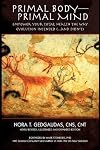
An eyeopener on the disadvantages of the standard 'modern' diet, i.e., the past 10,000 years. The basic premise of the paleolithic diet (in a nutshell) is that 300-500 generations of human development is insufficient for the human genome to have adapted sufficiently to the dietary changes/challenges posed by the agricultural revolution, i.e. the influx of grains and legumes during the neolithic period. If you have food allergies, this is probably why - not to mention the crazy amount of food additives and sugar in nearly everything. Prior to the advent of agriculture, the homo sapien diet is thought to have consisted of mostly meats and animal fats, foraged nuts, vegetables and fruits. It is challenging, but not overly difficult to simulate this diet today (and yes, you get to cook your food. . . ) One of the most comprehensive treatments of the paleolithic dietary theory to date.

Like the song by Simon and Garfunkle, John Steinbeck drove off, “to look for America” in a truck named Rocinante and a poodle named Charley. In the process, he discovered a mysterious substance he called 'the American character,' shared in common by all descents and ethnicities purely because they have taken up residence within the United States.
There may be truth to that romantic notion, as the sprawling borders, the changing landscape and the very youth of the county we call 'America' gave rise – at least until recently – to a feeling of separate goodness and a brawling, innocent fervor which justifies its own rowdy truth. As he made his travel memoir, Steinbeck claimed never to have met a stranger.
That was the sixties, and the end of what some consider a more innocent time in U.S. history, when regional variations in language were only just being erased due to the flattening effect of television and radio – a phenomenon which Steinbeck despised. On the other hand, Steinbeck was well aware that parochial and racist attitudes went hand in hand with regional isolation. The sixties also marked the beginnings of the civil rights movement, the fallout from which Steinbeck witnessed first hand during his travels through the South. The sixties are a time which I barely remember as a child, and which I found during the reading of this book that I long for dearly. Travels With Charley is a wistful, colorful and perhaps overly rosy memoir of an otherwise confusing show more period in U.S. history. I never understood them when I lived through them, and I have often wondered whether I could successfully transplant myself from this time period to the sixties without adverse effects. But alas, the cosmic rule would likely be: wisdom garnered from the intervening period must also be relinquished. show less
There may be truth to that romantic notion, as the sprawling borders, the changing landscape and the very youth of the county we call 'America' gave rise – at least until recently – to a feeling of separate goodness and a brawling, innocent fervor which justifies its own rowdy truth. As he made his travel memoir, Steinbeck claimed never to have met a stranger.
That was the sixties, and the end of what some consider a more innocent time in U.S. history, when regional variations in language were only just being erased due to the flattening effect of television and radio – a phenomenon which Steinbeck despised. On the other hand, Steinbeck was well aware that parochial and racist attitudes went hand in hand with regional isolation. The sixties also marked the beginnings of the civil rights movement, the fallout from which Steinbeck witnessed first hand during his travels through the South. The sixties are a time which I barely remember as a child, and which I found during the reading of this book that I long for dearly. Travels With Charley is a wistful, colorful and perhaps overly rosy memoir of an otherwise confusing show more period in U.S. history. I never understood them when I lived through them, and I have often wondered whether I could successfully transplant myself from this time period to the sixties without adverse effects. But alas, the cosmic rule would likely be: wisdom garnered from the intervening period must also be relinquished. show less
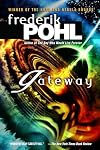
This is a book I didn't like. . . until shortly after I finished it. This is because the truth of the book - the conflict around which the entire story is based - only appears in the last couple of pages. That conflict centers around the implications of a black hole's event horizon. Everything else: the discovered technology of an ancient race, which makes faster than light travel possible, the AI therapist to whom the main character goes for help, the tunnel -ridden asteroid housing the mysterious Heechee space ships. . . all of this becomes an entire novel's worth of interesting background against which that one unifying situation is finally cast. So, after plodding though all of this for two hundred and fifty some pages, you close the book. . . you think a few minutes. . . and then you realize: 'hmm, that's an interesting idea.'
In this sense, the tale feels like it has the scope of a short story. However, Pohl gives it the space of a novel. And this is why I felt at times like I was plodding though developments that seemed to be going nowhere. Added to this is the fact that Pohl's book seems dated now, written as it was in 1976: the lines of computer printout that resemble BASIC programming, the revelation that a screen image is digitally generated, the overt notices about second hand cigarette smoke. All would have been forward-thinking issues for the '70s, but for a modern reader, just dated enough to distract. I cannot say that Pohl is one of my favorite sci-fi show more writers. To me, his prose seems. . . soul-less, perhaps. I feel as though I should have read him back in the day. Realizing that there are additional books in this series, Gateway may be best judged against the context of the whole. However, taken by itself, I can't say I was 'carried off' by this one novel. show less
In this sense, the tale feels like it has the scope of a short story. However, Pohl gives it the space of a novel. And this is why I felt at times like I was plodding though developments that seemed to be going nowhere. Added to this is the fact that Pohl's book seems dated now, written as it was in 1976: the lines of computer printout that resemble BASIC programming, the revelation that a screen image is digitally generated, the overt notices about second hand cigarette smoke. All would have been forward-thinking issues for the '70s, but for a modern reader, just dated enough to distract. I cannot say that Pohl is one of my favorite sci-fi show more writers. To me, his prose seems. . . soul-less, perhaps. I feel as though I should have read him back in the day. Realizing that there are additional books in this series, Gateway may be best judged against the context of the whole. However, taken by itself, I can't say I was 'carried off' by this one novel. show less

Well, it's done: I got through Rabelais. I plowed this 16th century classic of arse-wind symphonies, infarctious bum-hole fruppery, codpiece flip-flappery, and vertiginous piles of latinate verbiage, much of which only a scholar from the Beansquiddle School of Counterposed Argumentation and Juxtiperous Scholary Assidification would understand, or profit therefrom. . .
And for all that, it was fun. Yes, the complaint that I formed early on was that the writing was overwhelmingly verbose. Despite the outlandishly bawdy humor, it took forever to get through what I took for pointless descriptions, words piled up in a groaning sideboard of verbiage, chapters with no apparent aim toward what I supposed should be the meat of the enterprise: advancing the plot. But that complaint, I finally realized, was really my 20th-century American upbringing speaking: my get-out-of-my-way-I'm-in-a-hurry, time-is-money, let's-be-serious-I-don't-have-time-for this, nose-to-the-grindstone, and put-it-in-a-sound-byte upbringing.
By comparison, today's novels are written almost in short hand where an economy of words wins. Blogs must be digestible in two minutes or less. We can quit any newspaper article after only three sentences and come away with its essential point. We've basically re-written Descartes to: I stress, therefore I exist. . .
On the other hand, with 'Gargantua and Pantagruel' you have sat down with someone from the 16th-century and you must not be interested in getting anywhere show more in a hurry. You must be prepared to sacrifice the entire afternoon to careless, rambling conversation where the person repeats himself, gets sidetracked in colorful but pointless tangents, tells lewd jokes, flirts with passersby, pauses frequently to order more beer, farts at will, and has a love for rattling off endless lists: of popular games, of foods appearing at a banquet, of ways to run someone through with a weapon, or the best materials to use in an outhouse.
The characters Gargantua and Pantagruel are of a race of giants, and in a satire the figure of a giant is often a device for showing human traits writ large. It occurs to me that Rabelais' use of this literary device may be seen as a kind of rejoinder to Plato's 'Republic'. In 'The Republic,' man was writ large in the form of an ideal city to explore the question: how should a man live? Then, in 'Gargantua and Pantagruel,' perhaps the corollary occurs: the city or society is writ large in the form of a giant man to explore the question: what is the end of life?
And if this be the case, then Rabelais tell us, in effect, to chill! There you go! There's your modern urge to reduce everything to one formulaic pithy equation: just chill. Rabelais seems to be saying: what's the use in being so pretentious and tight-assed? Humanity is funny, flawed, tragic, comic, both beautiful and ugly - and driven by passion and appetite more so than its rationality. Relax, understand this, and stop pushing. If you don't mind bawdy jokes, gutter humor, satire, and enough crude body functions to start a riot in a whorehouse, this will be a delightful, if somewhat long read. Let it have its effect on you. On other hand, “If you say to me, master, it would seem that you were not very wise in writing to us these flimflam stories, and pleasant fooleries...” as Rabelais writes, near the end of Book II, “I answer you that you are not much wiser to spend your time reading them." Tis a sentiment truer than meets the eye, because to respond out of impatience to this book is to have missed much of the point. show less
And for all that, it was fun. Yes, the complaint that I formed early on was that the writing was overwhelmingly verbose. Despite the outlandishly bawdy humor, it took forever to get through what I took for pointless descriptions, words piled up in a groaning sideboard of verbiage, chapters with no apparent aim toward what I supposed should be the meat of the enterprise: advancing the plot. But that complaint, I finally realized, was really my 20th-century American upbringing speaking: my get-out-of-my-way-I'm-in-a-hurry, time-is-money, let's-be-serious-I-don't-have-time-for this, nose-to-the-grindstone, and put-it-in-a-sound-byte upbringing.
By comparison, today's novels are written almost in short hand where an economy of words wins. Blogs must be digestible in two minutes or less. We can quit any newspaper article after only three sentences and come away with its essential point. We've basically re-written Descartes to: I stress, therefore I exist. . .
On the other hand, with 'Gargantua and Pantagruel' you have sat down with someone from the 16th-century and you must not be interested in getting anywhere show more in a hurry. You must be prepared to sacrifice the entire afternoon to careless, rambling conversation where the person repeats himself, gets sidetracked in colorful but pointless tangents, tells lewd jokes, flirts with passersby, pauses frequently to order more beer, farts at will, and has a love for rattling off endless lists: of popular games, of foods appearing at a banquet, of ways to run someone through with a weapon, or the best materials to use in an outhouse.
The characters Gargantua and Pantagruel are of a race of giants, and in a satire the figure of a giant is often a device for showing human traits writ large. It occurs to me that Rabelais' use of this literary device may be seen as a kind of rejoinder to Plato's 'Republic'. In 'The Republic,' man was writ large in the form of an ideal city to explore the question: how should a man live? Then, in 'Gargantua and Pantagruel,' perhaps the corollary occurs: the city or society is writ large in the form of a giant man to explore the question: what is the end of life?
And if this be the case, then Rabelais tell us, in effect, to chill! There you go! There's your modern urge to reduce everything to one formulaic pithy equation: just chill. Rabelais seems to be saying: what's the use in being so pretentious and tight-assed? Humanity is funny, flawed, tragic, comic, both beautiful and ugly - and driven by passion and appetite more so than its rationality. Relax, understand this, and stop pushing. If you don't mind bawdy jokes, gutter humor, satire, and enough crude body functions to start a riot in a whorehouse, this will be a delightful, if somewhat long read. Let it have its effect on you. On other hand, “If you say to me, master, it would seem that you were not very wise in writing to us these flimflam stories, and pleasant fooleries...” as Rabelais writes, near the end of Book II, “I answer you that you are not much wiser to spend your time reading them." Tis a sentiment truer than meets the eye, because to respond out of impatience to this book is to have missed much of the point. show less

I don't know whether 'review' is the right word here. Can one pass judgment on a work so seminal to the Western literary canon? Whether the reader be Christian or merely curious, The Confessions of St. Augustine conveys a remarkable look into the interior life of a man living in the latter stages of the Roman empire, circa 400CE. As a confession, the book is cast as an open letter to God, with all of humanity as coincidental readers who, it is hoped, would thereby profit from his story. These comments cover the first eight chapters, or fully half the book, which proceeds chronologically from his birth to the time of his conversion at the age of thirty-two.
I had access to two translations from the Latin. The first, by Edward Bouverie Pusey, is available in the public domain and as Volume 18 of the Encyclopedia Britannica's Great Books of the Western World, 1952 edition. And the second translation was by one R.S. Pine-Coffin (now there's a creatively hyphenated last name). I read the first four chapters using the Pusey and then switched to the Pine-Coffin. I do not recommend the Pusey which is very Victorian, ornate and cumbersome. It requires lots of effort to read comfortably, usually obscuring rather than illuminating the meanings which Augustine wished to make clear.
Augustine was – to put it bluntly – obsessed with feelings of guilt and remorse to a degree which makes modern day expressions of faith and humility sound pale and whiny in comparison. I am sunk in show more 'flagitious concupiscence,' he says (what ??!) - courtesy Pusey trans. - when all he did during his libertine days, apparently, was to attend the theater, read popular fiction and speak to unmarried women. And the worst crime he can remember, the one which highlights his youthful evil spree, was to have stolen pears from a neighbor's tree, not out of hunger but to throw to some hogs. In between outpourings of humility and adoration, impressive not only for their earnestness but for their command of Biblical references, Augustine wrestles with determinism, the problem of evil, the substance of God, and the Manichean influence he fell under as a young man. A summarizing quote: "What profited me then my nimble wit,' he writes, 'in those sciences and all those most knotty volumes, unraveled by me without aid from human instruction; seeing I erred so foully, and with such sacrilegious shamefulness in the doctrine of piety?"
On the whole (or half, in this case – my reading plan has me returning to the second part later this year..,), The Confessions is a good workout, heavy at times, famous for its place in early Christian thought and western cultural history. show less
I had access to two translations from the Latin. The first, by Edward Bouverie Pusey, is available in the public domain and as Volume 18 of the Encyclopedia Britannica's Great Books of the Western World, 1952 edition. And the second translation was by one R.S. Pine-Coffin (now there's a creatively hyphenated last name). I read the first four chapters using the Pusey and then switched to the Pine-Coffin. I do not recommend the Pusey which is very Victorian, ornate and cumbersome. It requires lots of effort to read comfortably, usually obscuring rather than illuminating the meanings which Augustine wished to make clear.
Augustine was – to put it bluntly – obsessed with feelings of guilt and remorse to a degree which makes modern day expressions of faith and humility sound pale and whiny in comparison. I am sunk in show more 'flagitious concupiscence,' he says (what ??!) - courtesy Pusey trans. - when all he did during his libertine days, apparently, was to attend the theater, read popular fiction and speak to unmarried women. And the worst crime he can remember, the one which highlights his youthful evil spree, was to have stolen pears from a neighbor's tree, not out of hunger but to throw to some hogs. In between outpourings of humility and adoration, impressive not only for their earnestness but for their command of Biblical references, Augustine wrestles with determinism, the problem of evil, the substance of God, and the Manichean influence he fell under as a young man. A summarizing quote: "What profited me then my nimble wit,' he writes, 'in those sciences and all those most knotty volumes, unraveled by me without aid from human instruction; seeing I erred so foully, and with such sacrilegious shamefulness in the doctrine of piety?"
On the whole (or half, in this case – my reading plan has me returning to the second part later this year..,), The Confessions is a good workout, heavy at times, famous for its place in early Christian thought and western cultural history. show less
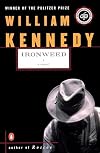
Most of us live a long way from life, which is to say we live sheltered from the intimacy of death. We have routine, warm beds, full bellies, idealistic lives, and therefore: a drastically softened relationship with 'truth.' The characters in William Kennedy's 'Ironweed' are not saints, they are not Rousseau's noble wild innocents, they are no more deserving of love or hatred than anyone else. They may be bums and dregs of society, but there is something truthful about them, something vital and hard to pin down. The circumstances of hardship have an amplifying effect on character. The same pettiness, the same nobility that we are all capable of, becomes writ large in Kennedy's work.
Francis Phelan is a bum, down on his luck, struggling for each meal and a warm place to sleep out of the Albany wind. He lies, steals, kills, shows compassion, remorse, and a fierce resistance to death. But his character partakes in that glaring truthfulness of experience that is hard to ignore. Perhaps it is really the closeness of death, the lack of cushion between the living and the dying (for in this book some poor soul is always freezing in an alley or otherwise kicking off – without much fanfare) that creates an edgy quality to the events in this novel. You want to throw down the book at times and cry: 'there, but for the grace of God go I . . . ' A great read, an enjoyable tale, and a superb blending of tragedy, comedy and whimsy. If we look hard enough, we see ourselves after all.
Francis Phelan is a bum, down on his luck, struggling for each meal and a warm place to sleep out of the Albany wind. He lies, steals, kills, shows compassion, remorse, and a fierce resistance to death. But his character partakes in that glaring truthfulness of experience that is hard to ignore. Perhaps it is really the closeness of death, the lack of cushion between the living and the dying (for in this book some poor soul is always freezing in an alley or otherwise kicking off – without much fanfare) that creates an edgy quality to the events in this novel. You want to throw down the book at times and cry: 'there, but for the grace of God go I . . . ' A great read, an enjoyable tale, and a superb blending of tragedy, comedy and whimsy. If we look hard enough, we see ourselves after all.
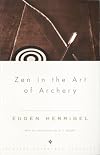
One of my favorite 'small books', Zen in the Art of Archery so well captures what it is to practice any discipline as an exercise in no-self. It is so paradoxical to most of us that the culmination of one's training and study should not be to become 'larger' and 'better,' but rather to essentially disappear so that no credit is taken for what is accomplished.
Other than practicing a little sitting Zen from time to time, I am on the outside looking in to this great tradition. It is humbling to read a work such as this, and realize what is apparently possible, given the proper frame of mind. Or perhaps: given the absence of any frame of mind.
Other than practicing a little sitting Zen from time to time, I am on the outside looking in to this great tradition. It is humbling to read a work such as this, and realize what is apparently possible, given the proper frame of mind. Or perhaps: given the absence of any frame of mind.
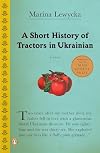
This is a clever little comedy, and one which would likely enjoy success as an independent film, were it to be made. The flamboyant Ukranian tart Valentina is a catalyst who arrives in this family of two squabbling sisters and an aging eccentric and love-struck father "like a fluffly pink grenade." The father is completely infatuated with Valentina to the utter consternation of the sisters; and meanwhile, we get excerpts from his magnum opus: a history of the tractor. By the story's end, conflicts are resolved, everyone undergoes a change, and all live happily ever after. Formulaic in that respect. . . but. The novel provides an amusing little window, of necessarily limited scope, into the transplanted Slavic family and its mindset - a condition full of history, tragedy and quirkiness. I have been trying to think why this work would be be considered one of the '1001 books I must read before I die,' and I conclude it may be primarily because of its unique comedic Slavic voice. An easy read.
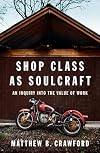
This work compares favorably with Pirsig's Zen and the Art of Motorcycle Maintenance. For me, the early chapters come across a little on the dense side, however, as Crawford seems to be establishing his credentials as a serious philosopher. I bogged down a little bit there. But I confess to being attracted to and reading Shop Class as Soulcraft primarily for its value to me as a kind of remedial course in the value of hands-on work -- especially work that converts me from being a kind of spectator in some assemble-by-the-numbers charade to becoming a genuine here-and-now mechanical problem solving Zen master. Thanks, Matthew, for the pep talk. I have broken out my Craftsman manuals again with their exploded diagrams and detailed bills of materials, and have begun to order parts - subsequently to tear into and finally repair some of the ailing machines in my tool shed! From experience, I know that the process will not be without some improvisation, as rusted bolts and missed tolerances inevitably will depart from the ideal. But via Crawford's book I am reminded of the value and reward of working through these unanticipated details.