
Éliphas Lévi (1810–1875)
Author of Transcendental Magic
About the Author
Image credit: Wikipedia
Works by Éliphas Lévi
Cours de philosophie occulte : Lettres àu Baron Spédalieri de la Kabbale et de la science des nombres (1977) 19 copies, 2 reviews
The mysteries of magic: A digest of the writings of Eliphas Levi [i.e. A. L. Constant] (1974) 10 copies
Einweihungsbriefe in die Hohe Magie und Zahlenmystik. Briefe an Baron Spedalieri (1861-1863) (1990) 7 copies
Origens da Cabalá, As 3 copies
The Kabalistic and Occult Philosophy of Eliphas Levi - Volume 1: Letters to Students (2017) 2 copies
Το μέγα απόρρητο ή ο αποκαλυμμένος αποκρυφισμός : Η βασιλική τέχνη ή η τέχνη της υποταγής των… (2013) 2 copies
Les Mystères de la Kabbale: ou l'harmonie occulte des deux Testaments (French Edition) (1990) 2 copies
Le Livre Rouge: Résumé du Magisme, des Sciences Occultes et de la Philosophie Hermétique (2019) 1 copy
A Chave dos Grandes Mistérios: de acordo com Henoch, Abraão, Hermes Trismegisto e Salomão (2001) 1 copy
Der Schlüssel zu den großen Mysterien nach Henoch, Abraham, Hermes Trismegistos und Salomon (2008) 1 copy
O livro dos esplendores - O misterio hieratico ou os documentos tradicionais da alta iniciacao (Em Portugues do Brasil) (2019) 1 copy, 1 review
Η βίβλος της ελευθερίας 1 copy
The Kabbalistic Prayer, The Book Of Formation, And The Magical Ritual Of The Sanctum Regnum (2005) 1 copy
Τυπικόν της υψηλής μαγείας 1 copy
Ιστορία της Μαγείας τ.2 1 copy
The Spirit of Magic 1 copy
High Magic [Excerpt] 1 copy
Selected Writings of 1 copy
Το Μέγα Απόρρητο ή Ο Αποκαλυμμένος Αποκρυφισμός, Β' Μέρος, Τα Μυστήρια των Ιεροφαντών ή Η Τέχνη να… 1 copy
Věda duchů: Zjevení tajného dogmatu kabbalistů, skrytý smysl evangelia a vysvětlení nauk a fenomenů spiritistických (1991) 1 copy
Associated Works
The Prophecies of Paracelsus: Magic Figures and Prognostications made by Theophrastus Paracelsus about Four Hundred Years Ago (1915) — Preface, some editions — 26 copies
Tagged
Common Knowledge
- Canonical name
- Lévi, Éliphas
- Legal name
- Constant, Alphonse-Louis
- Other names
- Zahed, Eliphas Levi
Alphonse Louis Constant - Birthdate
- 1810-02-08
- Date of death
- 1875-05-31
- Gender
- male
- Education
- Saint-Sulpice Seminary
- Occupations
- esotericist
poet
writer
occultist
ceremonial magician - Organizations
- Roman Catholic Church (deacon)
- Nationality
- France
- Birthplace
- Paris, Île-de-France, France
- Places of residence
- Paris, France
- Place of death
- Paris, Île-de-France, France
- Associated Place (for map)
- Paris, Île-de-France, France
Members
Reviews
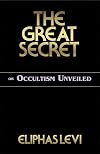
The two documents published together as The Great Secret were in all likelihood the final doctrinal work composed by the nineteenth-century French adept Alphonse Louis Constant, better known as Eliphas Levi. They were written for manuscript circulation among Levi's pupils, and published only posthumously. Another prior section that makes of these two a set of three was published as The Book of Splendours. However, the content of that volume (on "The Hieratic Mystery") is not strongly show more connected to the issues in this one (on "The Royal Mystery" and "The Sacerdotal Mystery"), and The Great Secret can be read to full benefit without prior reading of The Book of Splendours, which consists of Levi's glosses of qabalistic and Masonic doctrines, along with cross-cultural comparisons of the Christ myth.
"Let it be well understood that we are not writing for the profane masses, but for the instructed of a later age than ours and for the pontiffs of the future." (105)
Much of The Great Secret addresses theological issues, and in a most bewildering manner. Levi, who had at one point trained for the priesthood, consistently professes himself to be a loyal Catholic, and to champion the Roman Church as the sole legitimate repository of magical power. At the same time, he relentlessly criticizes both doctrines and practices of the Church in his day, often proposing alternatives informed by advances in materialist science as well as comparisons with non-Abrahamic religions. Levi's occult terminology is generally straight out of the Mesmerist milieu of the early nineteenth century, with a great deal of attention given to "magnetism" in its various manifestations.
A highlight is the chapter on "The Magnetism of Evil," where Levi spends a lot more time describing and illustrating the likely (extra-)moral consequences of an objective view of the natural world than he does contradicting them with an orthodox theology to assert the solicitude for humanity by a sovereign ruler of the Universe. (In Jason Colavito's blog, he has supplied a fresh translation of this chapter, noting its presentiments of both Lovecraftian cosmicism and "ancient astronaut" Nephiliphilia.)
"The present writer is a Catholic of the desert. However, there is nothing frightful about the Thebaid, and he has always preferred the Abbey of Thelema, founded by Rabelais, to the Hermitage of Saint Anthony." (173)
The ante-penultimate chapter is itself titled "The Great Secret," and the arcanum is one well-circulated among Thelemites today. "There is no part of me that is not of the gods" (Papyrus of Ani via Liber XV). Deus est homo. "I am clothed with the body of flesh; I am one with the Eternal and Omnipotent God" (Liber LXV I:53). There is no god but man. Levi reached this conclusion in parallel to Ludwig Feuerbach in the same window of European history. Although they wrote for vastly different audiences, both men had difficulty making themselves understood. As Aleister Crowley would later remark, "An indicible arcanum is an arcanum that cannot be revealed." show less
"Let it be well understood that we are not writing for the profane masses, but for the instructed of a later age than ours and for the pontiffs of the future." (105)
Much of The Great Secret addresses theological issues, and in a most bewildering manner. Levi, who had at one point trained for the priesthood, consistently professes himself to be a loyal Catholic, and to champion the Roman Church as the sole legitimate repository of magical power. At the same time, he relentlessly criticizes both doctrines and practices of the Church in his day, often proposing alternatives informed by advances in materialist science as well as comparisons with non-Abrahamic religions. Levi's occult terminology is generally straight out of the Mesmerist milieu of the early nineteenth century, with a great deal of attention given to "magnetism" in its various manifestations.
A highlight is the chapter on "The Magnetism of Evil," where Levi spends a lot more time describing and illustrating the likely (extra-)moral consequences of an objective view of the natural world than he does contradicting them with an orthodox theology to assert the solicitude for humanity by a sovereign ruler of the Universe. (In Jason Colavito's blog, he has supplied a fresh translation of this chapter, noting its presentiments of both Lovecraftian cosmicism and "ancient astronaut" Nephiliphilia.)
"The present writer is a Catholic of the desert. However, there is nothing frightful about the Thebaid, and he has always preferred the Abbey of Thelema, founded by Rabelais, to the Hermitage of Saint Anthony." (173)
The ante-penultimate chapter is itself titled "The Great Secret," and the arcanum is one well-circulated among Thelemites today. "There is no part of me that is not of the gods" (Papyrus of Ani via Liber XV). Deus est homo. "I am clothed with the body of flesh; I am one with the Eternal and Omnipotent God" (Liber LXV I:53). There is no god but man. Levi reached this conclusion in parallel to Ludwig Feuerbach in the same window of European history. Although they wrote for vastly different audiences, both men had difficulty making themselves understood. As Aleister Crowley would later remark, "An indicible arcanum is an arcanum that cannot be revealed." show less
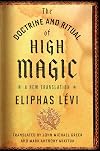
A long slow slog. Some interesting content; the concept that Levi introduced to Western magic the idea that deeds were accomplished by the trained and focused will of the magician rather than through the aid of spiritual beings such as angels or demons is important. If I desired a career in magic further study and even reading in the original French might repay the effort. Since I do not desire such a career I shall pass the book on to others.
El libro de los esplendores : El Sol Judaico - La gloria cristiana y la estrella flamígera by Éliphas Lévi

"El libro de los esplendores" de Eliphas Lévi es una obra esotérica que profundiza en la cábala, el simbolismo masónico y las tradiciones místicas. Lévi explora la relación entre el judaísmo, el cristianismo y los principios ocultos que han influenciado el pensamiento filosófico y espiritual a lo largo de la historia. La obra se divide en secciones que abordan temas como el Idra Suta, la Gloria Cristiana y la Estrella Flamígera, conectando conceptos cabalísticos con show more interpretaciones masónicas show less
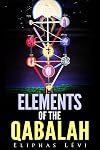
What it says on the tin. Useful breakdown for someone who started reading about Thelema and was immediately overwhelmed by information about the Qabalah.
Lists
Awards

You May Also Like


Associated Authors
Statistics
- Works
- 95
- Also by
- 2
- Members
- 2,403
- Popularity
- #10,674
- Rating
- 3.7
- Reviews
- 34
- ISBNs
- 310
- Languages
- 15
- Favorited
- 8