
About the Author
Eric Lindner is an attorney and entrepreneur. A hospice volunteer since 2009, he lives outside Warrenton, VA.
Works by Eric Lindner
Tiger in the Sea: The Ditching of Flying Tiger 923 and the Desperate Struggle for Survival (2021) 30 copies, 3 reviews
Tagged
Common Knowledge
There is no Common Knowledge data for this author yet. You can help.
Members
Reviews
Tiger in the Sea: The Ditching of Flying Tiger 923 and the Desperate Struggle for Survival by Eric Lindner
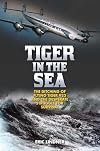
That was book wound up on one of my reading lists is a commentary on how I'm always ready to pick up a good disaster at sea story; even better if it also involves aviation.
Be that as it may, having previously written a memoir about working in an end-of-life hostel, Lindner has a main interest in examining how people cope during and in the wake of life-threatening events, particularly in the case of Flying Tiger 923's captain, John Murray; it just so happens that Murray was Lindner's show more father-in-law.
Lindner finds a lot to admire in how all involved in the event comported themselves, particularly in pulling together their shattered emotional and psychological states going forward.
This is all well and good, but I would have liked to have known more about the root causes of this crash, and what that said about how Flying Tiger operated, since this was one of a number of fatal incidents the airline suffered. Lindner might say the same thing, since a lot of documentation of the last flight of Flying Tiger 923 seems to have disappeared into thin air.
Since I spent 30-plus years working for the U.S. National Archives, I was amused by Lindner's account of doing research at the facility in College Park (MD), getting dinged for a number of security gaffs, and then talking about the paucity of the files with one Joe Schwartz, who I was well-aware of as a fellow employee. Schwartz's conclusion was that the files were probably yanked by the CIA, and if Schwartz believed this, I believe he was sincere. Frankly, this sounds like someone suspected that there was a sabotage campaign going on against an organization that was treated as a para-military associate of the U.S. government at the time.
As for myself, and a running theme through Lindner's account, it's hard to overestimate how much work it took to keep these machines running, and one has to wonder if Flying Tiger was running too lean of an operation and was just not keeping on top of the necessary maintenance schedules.
Anyway, all in all, quite worth reading. show less
Be that as it may, having previously written a memoir about working in an end-of-life hostel, Lindner has a main interest in examining how people cope during and in the wake of life-threatening events, particularly in the case of Flying Tiger 923's captain, John Murray; it just so happens that Murray was Lindner's show more father-in-law.
Lindner finds a lot to admire in how all involved in the event comported themselves, particularly in pulling together their shattered emotional and psychological states going forward.
This is all well and good, but I would have liked to have known more about the root causes of this crash, and what that said about how Flying Tiger operated, since this was one of a number of fatal incidents the airline suffered. Lindner might say the same thing, since a lot of documentation of the last flight of Flying Tiger 923 seems to have disappeared into thin air.
Since I spent 30-plus years working for the U.S. National Archives, I was amused by Lindner's account of doing research at the facility in College Park (MD), getting dinged for a number of security gaffs, and then talking about the paucity of the files with one Joe Schwartz, who I was well-aware of as a fellow employee. Schwartz's conclusion was that the files were probably yanked by the CIA, and if Schwartz believed this, I believe he was sincere. Frankly, this sounds like someone suspected that there was a sabotage campaign going on against an organization that was treated as a para-military associate of the U.S. government at the time.
As for myself, and a running theme through Lindner's account, it's hard to overestimate how much work it took to keep these machines running, and one has to wonder if Flying Tiger was running too lean of an operation and was just not keeping on top of the necessary maintenance schedules.
Anyway, all in all, quite worth reading. show less

Eric Lindner is looking for a way to give back and decides in 2009, to become a Hospice volunteer. In HOSPICE VOICES, he shares his experiences, his conversations, and the lessons he learned in his time with those at the end of their journey. The book begins with the story of Lindner's first patient, Bob Zimmerman. He was fortunate to have his first patient be someone he was truly able to share some memories with. Throughout the book he then shares about other patients who made an impact on show more his life and what they taught him about living and about dying.
As a previous Hospice social worker and then volunteer, I was drawn to this book. Aside from being a mom, working in Hospice was my favorite job. People always assumed it was depressing and couldn't understand how I could do my job. What I found was I couldn't wait to go to work every day. Sure, not all the patients were people that I made a connection with, much like the author, but everyone had a story to tell.
Lindner finds a way to tell their stories that help the reader imagine the people both in their younger days as well as presently. He shares their secrets with dignity and you can tell he was truly listening and cared about the patients and their families. I loved that with each patient he found a way to make a connection either through food, through a hobby, or through his talents. I also appreciated his honesty regarding being nervous about meeting a new patient. It isn't easy to go into people's homes and feel like you are intruding on their "last days". It truly is a privilege, as a volunteer, to be able to share in that final journey with the patient and their family.
There is a a lot to learn from pages in this book, especially from his humbling Dos and Don'ts chapter at the end. As you read the stories you will see pain, sadness and the ever-looming terminal diagnosis, but you will also be rewarded with laughter, gratitude and surprisingly, hope. show less
As a previous Hospice social worker and then volunteer, I was drawn to this book. Aside from being a mom, working in Hospice was my favorite job. People always assumed it was depressing and couldn't understand how I could do my job. What I found was I couldn't wait to go to work every day. Sure, not all the patients were people that I made a connection with, much like the author, but everyone had a story to tell.
Lindner finds a way to tell their stories that help the reader imagine the people both in their younger days as well as presently. He shares their secrets with dignity and you can tell he was truly listening and cared about the patients and their families. I loved that with each patient he found a way to make a connection either through food, through a hobby, or through his talents. I also appreciated his honesty regarding being nervous about meeting a new patient. It isn't easy to go into people's homes and feel like you are intruding on their "last days". It truly is a privilege, as a volunteer, to be able to share in that final journey with the patient and their family.
There is a a lot to learn from pages in this book, especially from his humbling Dos and Don'ts chapter at the end. As you read the stories you will see pain, sadness and the ever-looming terminal diagnosis, but you will also be rewarded with laughter, gratitude and surprisingly, hope. show less
Tiger in the sea : the ditching of Flying Tiger 923 and the desperate struggle for survival by Eric Lindner
This is a gripping, emotional account of the ditching of Flying Tiger 923, a Lockheed Super Constellation that ended its working life with three engines unserviceable. The captain, John Murray, managed to ditch in the north Atlantic in September, and 48 of the 76 people on board survived. The book describes the lead-up to the crash, the aftermath, and the investigation into the crash. The book contains black-and-white photos after every chapter, and it provides detailed accounts of what show more happened to the survivors. In addition, it describes how the families of those involved in the crash were affected—such secondary trauma is not often discussed. The author of this book likely thought to include it because he is married to one of the daughters of Captain Murray; he therefore has a unique perspective on the event. I would recommend this for those interested in aviation and particularly in aviation safety. show less
I was rather hesitant about agreeing to review this book because I thought it would have me crying my eyes out and would be nothing but depressing. Was I ever wrong!
Eric takes us on his journey as a Hospice volunteer with honesty, compassion and even humor. Each patient was very different in their wants and needs, and Eric flawlessly adjusted as he went.
This book should be read by everyone. It will help you understand that one of the hardest times in your life can also be made a little show more easier with the help of Hospice.
Eric Lindner has a very real talent for writing, and I enjoyed this book very much. show less
Eric takes us on his journey as a Hospice volunteer with honesty, compassion and even humor. Each patient was very different in their wants and needs, and Eric flawlessly adjusted as he went.
This book should be read by everyone. It will help you understand that one of the hardest times in your life can also be made a little show more easier with the help of Hospice.
Eric Lindner has a very real talent for writing, and I enjoyed this book very much. show less
Lists
Statistics
- Works
- 2
- Members
- 54
- Popularity
- #299,229
- Rating
- 4.0
- Reviews
- 8
- ISBNs
- 9